
Why the 'Single-Person Household Money Flow' Trend Matters: Changing Spending and Saving Patterns
The term 'Single-Person Household Money Flow' (1인가구머니무브) reflects where the money of single-person households is moving and how these flows should be adjusted. Recently, fixed expenses like dining out, food delivery, subscription services, small appliances, and studio apartment rent have increased, making savings more challenging than expected.
Thus, this topic is not just a passing trend but a practical signal to reassess spending habits and adjust savings rates. Even without higher salaries, changing the structure of expenses can lead to different amounts being saved, which is particularly noticeable in single-person households.
The Core Meaning of Single-Person Household Money Flow
This term describes how money flows rapidly toward specific industries as single-person household spending concentrates on a few items. Unlike before when families shared costs, the shift to individual spending has increased the proportion of expenses for food, housing, and lifestyle services.
Single-person households often pay immediately rather than postponing purchases, making small expenses accumulate quickly. For example, a few cups of coffee, several delivery orders, or multiple app subscriptions can significantly impact monthly budgets.
You can find similar articles on this topic in one place.
View Related ArticlesStructural Reasons for Increased Spending
Single-person households tend to opt for small, frequent purchases and immediate consumption rather than buying in bulk for long-term use. It's harder to stock up on groceries in a small fridge, and cooking alone often leads to leftover ingredients, naturally shifting toward dining out or food delivery.
When combined with the desire to save time, spending accelerates further. People spend more on convenience foods, deliveries, and meal kits instead of grocery shopping and cooking after work, while also increasing payments for services that enhance daily life.
Spending Patterns Making Savings Difficult
A key aspect of understanding Single-Person Household Money Flow is fixed costs. As expenses like rent, management fees, communication bills, and insurance increase, savings should shift from being what's left after spending to an intentional act of setting money aside first.
For example, with a salary of 2.5 million won and fixed expenses of 1.5 million won, the remaining 1 million won must cover food, leisure, and irregular costs. Without intentionally saving 300,000 won each month, what's left tends to disappear quickly.
A common mistake is thinking, 'I spent less this month, so I'll save next month.' In single-person households, schedule changes can lead to larger spending fluctuations, making deferred savings easy to postpone indefinitely.
Practical Examples of Adjusting Living Expenses
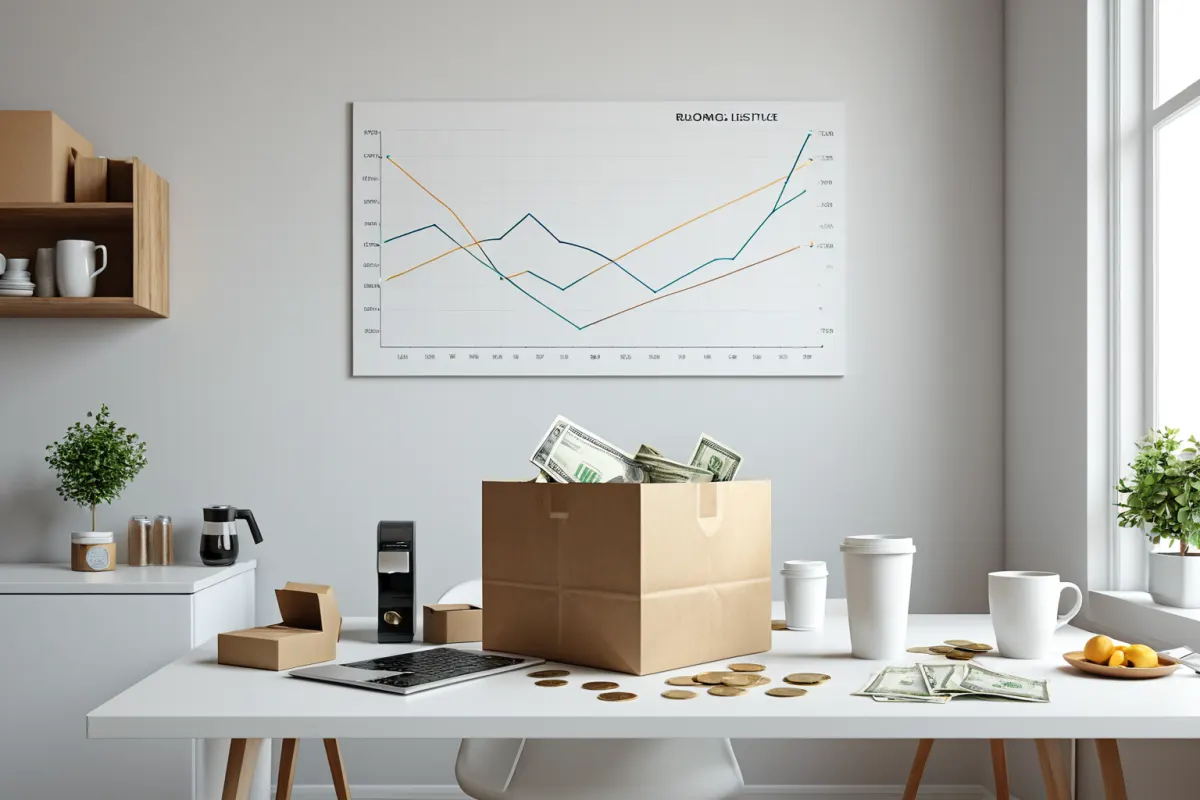
A realistic approach is not necessarily cutting down on expenses drastically but setting clear benchmarks for recurring costs. For instance, reducing food delivery from three times a week to once, and replacing the other two instances with simple grocery shopping or meal kits.
The same applies to coffee. If switching entirely to home-brewed coffee daily isn't feasible, reducing consumption from five cups a week to three can make a noticeable difference in monthly spending. Small adjustments like this reduce stress while still yielding significant results.
For example, if food expenses were 400,000 won per month, aiming to reduce it to 300,000 won could be a realistic target. Instead of managing every meal perfectly, adjusting for days with more dining out can already make a meaningful difference.
Common Habits of Those Who Save
The reason behind the need for Single-Person Household Money Flow is to visualize where money is leaking. People who save effectively often don't decide on purchases immediately but double-check before paying.
They also separate their accounts, keeping living expenses and savings distinct. By transferring a portion of their salary directly into a savings account on payday and managing the rest for monthly needs, they create clear spending guidelines.
Using only one or two main credit cards instead of multiple ones makes tracking easier. While multiple cards may offer more benefits, scattered usage can make it difficult to track spending patterns effectively.
Creating a Savings Flow That Works for Single-Person Households
Starting a savings flow doesn't require grand gestures. Simply setting aside small amounts like 100,000 won or 200,000 won through automatic transfers on payday can change spending habits significantly. What matters most is the sequence, not the amount.
It's helpful to divide monthly budgets into fixed costs, variable costs, and savings. For example, setting fixed costs at 1.5 million won, variable costs at 700,000 won, and savings at 300,000 won can prevent money from flowing away unnecessarily.
If leftover cash is rare, tracking expenses using apps or notes can reveal unexpected spending patterns, such as frequent food deliveries, snacks, or impulse purchases of daily items.
Additional Points to Consider When Reviewing Expenses
When considering Single-Person Household Money Flow, it's important not just to focus on saving but also on the efficiency of spending. For example, buying cheaper products repeatedly might be less efficient than investing in a higher-quality item that lasts longer.
Purchasing items like appliances, bedding, or furniture—those directly affecting daily satisfaction—should involve setting criteria rather than simply trying to save money. Conversely, for impulse-buy items like snacks and consumables, setting spending limits is more effective.
Since single-person households make all consumption decisions alone, the lack of clear guidelines can lead to easily fluctuating expenses. Therefore, it's more realistic to determine where to spend and where to cut back rather than just trying to save everywhere.
FAQ
Q. Does 'Single-Person Household Money Flow' mean strictly cutting costs?
No. It's not about saving money at all costs but observing where the money is flowing in single-person households and adjusting spending and savings ratios accordingly.
Q. Can I start saving even with a low income?
Yes. Instead of focusing on large amounts, starting with small transfers from your salary into a savings account can make it easier to begin.
Q. What's the easiest expense to reduce first?
Many people start by reviewing repetitive but less noticeable expenses like food delivery, coffee, and subscription services. However, since individual spending patterns vary, checking personal spending records is recommended first.
The concept of Single-Person Household Money Flow ultimately aims to help single-person households understand how their money flows and gently redirect it toward savings. Simply reorganizing your current spending structure can lead to noticeable changes in the following month.
Recent consumer statistics and living cost trends may vary over time, so it's advisable to consult the latest data when planning actual expenses.
Continue exploring similar topics.
View Category ArticlesFAQ
Does 'Single-Person Household Money Flow' mean strictly cutting costs?
No. It's not about saving money at all costs but observing where the money is flowing in single-person households and adjusting spending and savings ratios accordingly.
Can I start saving even with a low income?
Yes. Instead of focusing on large amounts, starting with small transfers from your salary into a savings account can make it easier to begin.
What's the easiest expense to reduce first?
Many people start by reviewing repetitive but less noticeable expenses like food delivery, coffee, and subscription services. However, since individual spending patterns vary, checking personal spending records is recommended first.
Korean Source
This article is an English localization of a Korean-language report from BlogScore. Original: 1인가구머니무브가 필요한 이유: 소비·저축 흐름 변화