
Why South Korea's Government Should Adopt Physical AI: Benefits and Considerations


The reason why the government should adopt Physical AI goes beyond simply testing a new technology. Physical AI refers to artificial intelligence that connects with physical entities like machines, sensors, robots, and equipment in the real world. In other words, it's AI that doesn't just operate on screens but participates in decision-making and actions within actual field environments.
This concept is important because it has the potential to simultaneously improve efficiency and safety in areas where direct human verification is difficult, such as public services, disaster response, manufacturing safety, and logistics operations. However, government adoption requires careful design, considering factors like budget, legal responsibility, personal data protection, and security—differing from private sector approaches.
Physical AI Directly Engages with the Real World
Physical AI typically involves sensors detecting surrounding conditions, AI interpreting this data, and then robots or equipment taking action. For example, in a warehouse, it could recognize object locations and calculate movement paths for autonomous transport vehicles. This approach offers greater flexibility than simple automation to respond to changing situations.
The government is interested because public sectors involve many repetitive and dangerous tasks. Tasks like facility inspections, road condition checks, disaster site monitoring, and unmanned patrols can become more efficient when combined with Physical AI. However, before implementation, the technology's stability and responsibility in case of malfunction must be thoroughly reviewed.
You can explore similar articles on this topic all at once.
View Related ArticlesThe Key Reasons Behind the Government’s Interest in Physical AI Are Clear
First, there's a shortage of personnel. Due to aging populations and imbalances in workforce supply, fewer people are available for repetitive and dangerous tasks, making Physical AI a potential auxiliary tool. Second, consistency in public services. It can standardize tasks that vary based on human condition or expertise.
Third, safety management. Instead of humans entering hazardous areas, Physical AI can first inspect them or detect anomalies in real time to reduce accidents. Fourth, data-driven governance. Physical AI accumulates field data that can inform policy decisions. However, keep in mind that government policies and implementation plans may change frequently, so checking official websites is essential.
Start Small with Pilot Projects
To make it easier for beginners to understand, consider local governments using Physical AI for facility inspections. Instead of people directly checking underground facilities, power equipment, or warehouse interiors, sensors and mobile devices first survey the area and signal any abnormalities. The key here is not complete automation but having humans conduct final verification as a supporting step.
At the government level, it's more practical to start with pilot projects rather than nationwide implementation. For instance, testing in specific public buildings, logistics warehouses, or disaster response zones allows for quicker problem identification. Here’s a simple sequence:
- Identify repetitive and dangerous tasks within operations
- Determine the scope requiring sensors, robots, and AI
- Test stability and security in pilot areas
- Gradually expand once results are confirmed
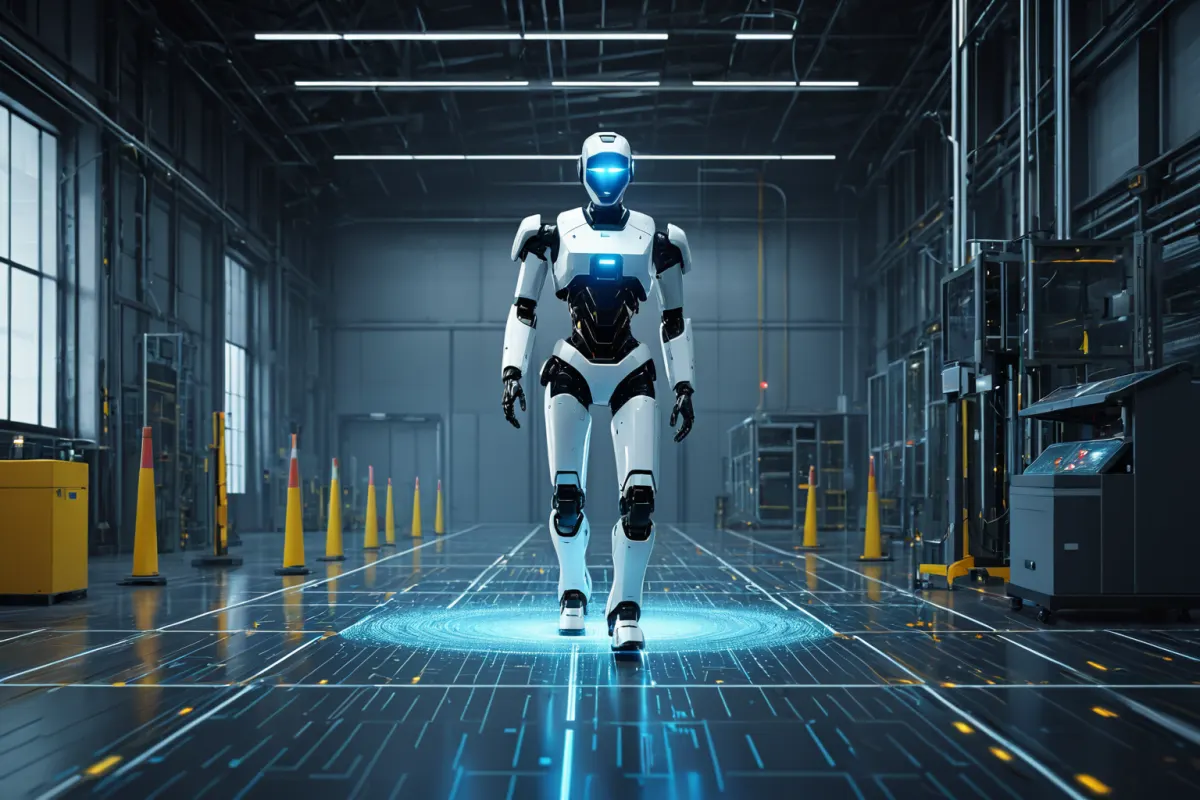
When designing this process, adjustments to public environments are necessary rather than directly adopting private sector technology. Public sites have more regulations and varied exceptional situations. For example, during disasters, network instability may occur, or external access might need to be restricted for security reasons. These conditions must be considered to ensure a system that operates smoothly in real-world settings.
The Benefits Go Beyond Cost Savings
The expected benefits of government Physical AI should be viewed more broadly than just reducing labor costs. First, it can reduce dangerous tasks and improve safety. Second, automating repetitive long-term tasks allows public staff to focus on higher-level decision-making. In other words, the goal isn't replacing humans but enhancing their roles.
Another benefit is improved service speed. For example, AI-based systems can respond faster in time-sensitive tasks like facility anomaly detection or logistics movement. However, these benefits don't always appear immediately; initial implementation may increase costs due to training, maintenance, and error handling. Therefore, both expected benefits and actual costs should be calculated together.
Common Mistakes for Beginners: Overestimation and Rushed Implementation
A common mistake is viewing Physical AI as a universal solution. In reality, performance varies significantly based on data quality, equipment durability, communication stability, and the complexity of field environments. For instance, it may work well in clean laboratories but face higher errors in dusty or noisy settings. Relying solely on 'it should work' to allocate budget often leads to failure.
Another mistake is addressing ethics and accountability later. In public sectors, responsibility must be clear in case of accidents, and the potential for personal data inclusion must be reviewed. Therefore, it's essential to design not just technology performance but also operational regulations and audit systems. Always check official websites for the latest laws and administrative guidelines.
In Summary: Physical AI Requires Careful Development
The reason behind government adoption of Physical AI is its potential to enhance safety, efficiency, and response speed in public services. Especially valuable is reducing dangerous tasks, assisting human judgment, and using field data for policy-making. However, what matters most isn't the technology itself but where, how, and with what accountability structure it's applied.
Beginners should view Physical AI not as 'robots doing all the work' but as a system that helps make fields safer and more accurate. While promising in the broader trend, actual success depends on a balance of pilot projects, security, operations, budgeting, and legal review. Therefore, maintaining a balanced perspective between expectations and verification is key.
FAQ: Common Questions
Q1. How does government Physical AI differ from general AI?
General AI primarily operates in digital environments for tasks like data analysis, document writing, or predictions. Physical AI connects with physical entities such as sensors, equipment, and robots to perform actions in the real world.
Q2. Can the government implement Physical AI nationwide immediately?
Nationwide implementation is less practical than pilot projects and gradual expansion. Public sectors require safety, accountability, budget, and security reviews, making small-scale testing more suitable.
Q3. When can benefits of Physical AI be confirmed?
This varies by task type and field conditions. Short-term results include improved operational convenience and detection performance; long-term outcomes may show reduced accidents or enhanced work efficiency. However, check official websites for the latest implementation schedules.
Note: This article is for general information purposes only. Always verify actual policies, budgets, laws, and project details with relevant official sources and announcements.
Continue exploring similar topics.
Browse Category ArticlesFAQ
How does government Physical AI differ from general AI?
General AI primarily operates in digital environments for tasks like data analysis, document writing, or predictions. Physical AI connects with physical entities such as sensors, equipment, and robots to perform actions in the real world.
Can the government implement Physical AI nationwide immediately?
Nationwide implementation is less practical than pilot projects and gradual expansion. Public sectors require safety, accountability, budget, and security reviews, making small-scale testing more suitable.
When can benefits of Physical AI be confirmed?
This varies by task type and field conditions. Short-term results include improved operational convenience and detection performance; long-term outcomes may show reduced accidents or enhanced work efficiency.
Korean Source
This article is an English localization of a Korean-language report from BlogScore. Original: 정부 피지컬AI 도입이 필요한 이유와 기대 효과 총정리