
Why Search Intent Matters More Than Search Volume in SEO


Is There Anything More Important Than Search Volume?
When starting SEO, many people think:
"If I target high-volume keywords, more visitors will come."
Of course, search volume matters.
But if you only focus on search volume when writing content, you often won't get the expected results.
Why?
Because you haven't understood what users are actually looking for.
Search isn't just typing keywords—it's a process to solve problems.
The core of SEO is creating content that best solves those problems.
What Is Search Intent?
Search intent refers to the true purpose behind a user typing keywords into the search bar.
For example,
let's say someone searches "AdSense"
People may want different things:
Some might be looking for
how to join AdSense
Others could want to know
the approval time for AdSense
And another person might be curious about
AdSense earnings
The same keyword can have different desired answers.
This is search intent.
Google Analyzes Search Intent First
Google doesn't just read keywords.
It first analyzes what users want.
Then it tries to show the most relevant content for that query.
For example,
if someone searches "iPhone 17 price"
and gets a page explaining iPhone history, they won't be satisfied.
Instead,
a page with prices, release dates, and pricing tables by storage would give users what they need immediately.
Google highly values this user satisfaction.
The Four Main Types of Search Intent
Search intent can be broadly categorized into four types.
1. Informational Searches
When users want to learn or understand something.
Examples include:
What is SEO?
AdSense approval time
What is Bitcoin?
These keywords require detailed explanations.
2. Navigational Searches
When users are looking for a specific website they already know about.
Examples include:
Naver
YouTube
Blogscore
The main goal here is to reach the homepage directly.
3. Transactional Searches
When users are comparing products or services before purchasing.
Examples include:
Laptop recommendations
iPhone 17 price
SEO book recommendations
Content with comparison tables and pros/cons works best for these keywords.
4. Navigational Searches (Action-Oriented)
When users want to take direct action, like installing software or applying for a service.
Examples include:
How to install WordPress
Apply for AdSense
Create a Google account
Content with step-by-step instructions and images gets better ratings.
Misaligned Content Fails
For example,
If someone searches "AdSense approval time"
but the article mostly explains AdSense history, what happens?
The user is unlikely to find what they need and will likely click back immediately.
On the other hand,
if the first paragraph says:
"AdSense approval typically takes 1-2 weeks."
the user satisfaction increases significantly.
This small difference can greatly impact SEO performance.
Analyze Search Results First
Before writing new content, there's one essential step:
Check the actual search results directly.
If you search a keyword on Google,
you can easily see what top-ranking articles cover.
For example,
if "laptop recommendations" shows most pages with comparison tables and product suggestions,
this means users want that information.
The search results themselves often reveal the search intent.
The First Paragraph Is Crucial
Users want answers before long explanations.
So good SEO content starts by answering the core question immediately in the first paragraph.
For example,
Question:
"What is SEO?"
Good opening paragraph:
SEO is a method to optimize content so search engines better understand it and display it to users.
By providing the answer upfront, user satisfaction increases.
Search Intent Changes Over Time
The same keyword can have different intent as time passes.
For example,
"ChatGPT"
was initially searched mostly for:
"What is it?"
But now, interest has shifted to:
How to use it
Pricing
Use cases
APIs
Business applications
Therefore, SEO isn't just about writing content—it also requires monitoring how search intent evolves.
The More AI-Driven the Era, the More Important Search Intent Becomes
Lately, anyone can quickly write articles using AI tools.
But not all AI-generated content is good.
Content that doesn't understand search intent struggles to rank well.
On the other hand,
content created with AI that still addresses users' actual questions can be excellent SEO material.
How to Write Content That Matches Search Intent
Before writing, ask yourself these questions:
Why would a user search this keyword?
What's the first thing they want to know?
Can this one article fully address their question?
Am I providing helpful, actionable information?
Will users be satisfied after reading it?
Answering these five questions can significantly improve content quality.
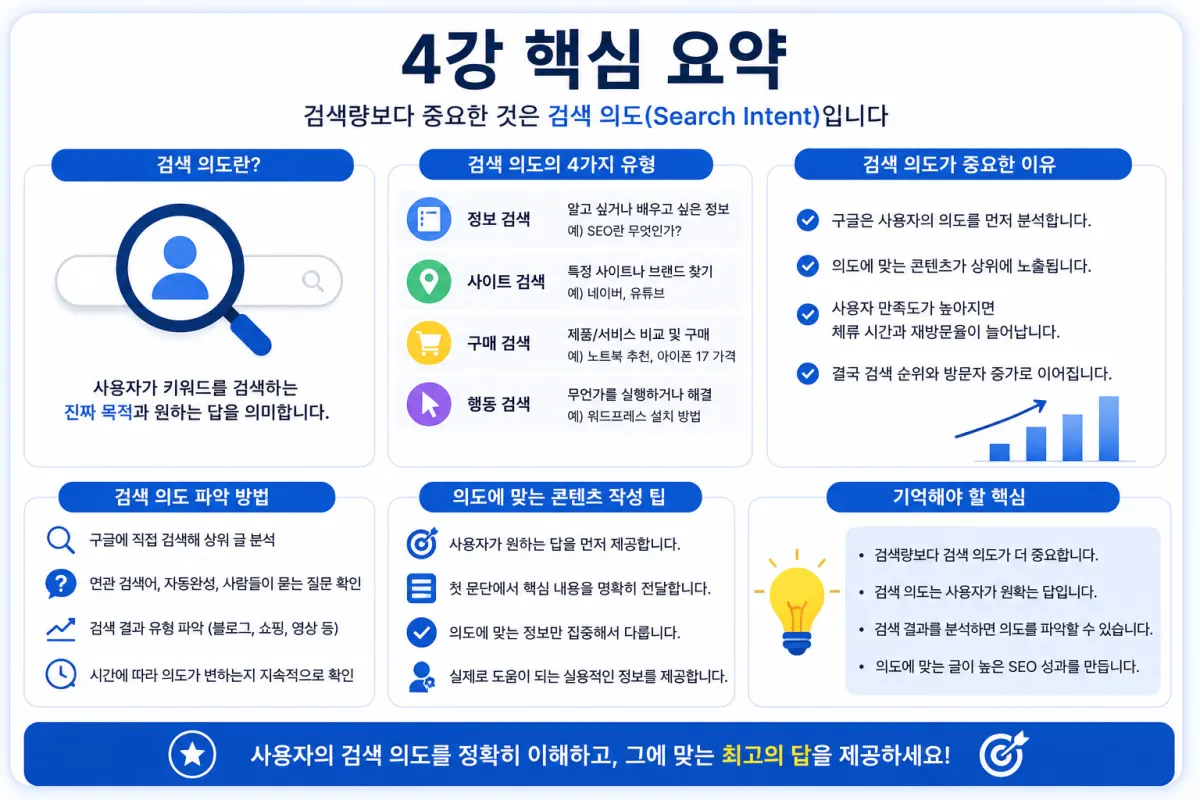
Key Takeaways from This Lesson
This lesson focused on the importance of search intent (Search Intent).
The key points to remember are:
Search intent matters more than search volume.
Search intent is what users truly want to find.
Google prioritizes user satisfaction in its ranking.
Analyzing search results reveals search intent easily.
Providing the core answer early improves satisfaction.
Search intent changes over time.
Great content that solves user questions beats AI-generated content alone.
Understanding search intent allows you to achieve better SEO results with the same keywords.
In our next lesson, we'll cover "How to Write SEO Titles That Increase Click-Through Rates," sharing practical tips for creating titles that get more clicks in search results.
FAQ
What is search intent?
Search intent refers to the true purpose behind a user's search query, such as seeking information, finding a specific site, making a purchase, or taking action.
Why should I focus on search intent over keyword volume?
High-volume keywords might not match what users are actually looking for. Content aligned with search intent leads to higher engagement and better SEO results.
Korean Source
This article is an English localization of a Korean-language report from BlogScore. Original: [SEO 4강] 검색량보다 중요한 검색 의도(Search Intent) 이해하기