
What Is Rainbow Robotics? Understanding Korea's Collaborative Robot Company


Rainbow Robotics is a domestic robotics company specializing in collaborative robots and autonomous mobile robots. The company develops industrial robots that work alongside humans, providing equipment to reduce repetitive tasks in manufacturing and logistics settings.
When searching for terms like 'collaborative robot,' 'service robot,' or 'robot arm,' the core focus remains: Rainbow Robotics is a technology company that safely handles tedious human tasks with robots. Rather than simply selling robots, they connect robot hardware, control technologies, and application equipment to tailor solutions for specific industrial needs.
Core Business of Rainbow Robotics
Rainbow Robotics' most well-known area is collaborative robots. These are robot arms designed to work safely alongside humans in shared spaces using safety features and sensors.
Main applications include product assembly, inspection, transfer, and packaging—tasks that repeat frequently. Since factory automation doesn't always require large-scale equipment, collaborative robots are highly useful even in tighter spaces.
The company also develops autonomous mobile robots. These move parts or goods within warehouses or production lines, reducing the need for workers to push carts manually.
See more articles on similar topics in one place.
View Related ArticlesWhy Collaborative Robots Are Gaining Attention
Collaborative robots are gaining attention because they reduce the burden of installation and operation. Traditional industrial robots often required safety fences or large dedicated spaces, but collaborative robots minimize these constraints.
For example, a small manufacturer might need to insert parts in the same spot hundreds of times a day, which could strain workers' wrists and shoulders. With collaborative robots handling repetitive motions, workers can focus on quality checks and exception handling instead.
Rainbow Robotics has gained recognition for this approach—viewing robotics not just as large-scale equipment for big factories but as adaptable solutions that are easy to implement in real-world settings.
Difference Between Service Robots and Logistics Robots
Search terms like 'Rainbow Robotics service robot' or 'Rainbow service robot' may appear. Service robots transport items within restaurants or commercial spaces, carrying trays along set routes to reduce serving workload.
In contrast, logistics robots or mobile robots focus on moving materials and products inside warehouses, factories, and workspaces. While they seem similar, their application environments differ significantly, leading to variations in sensor configuration and navigation methods.
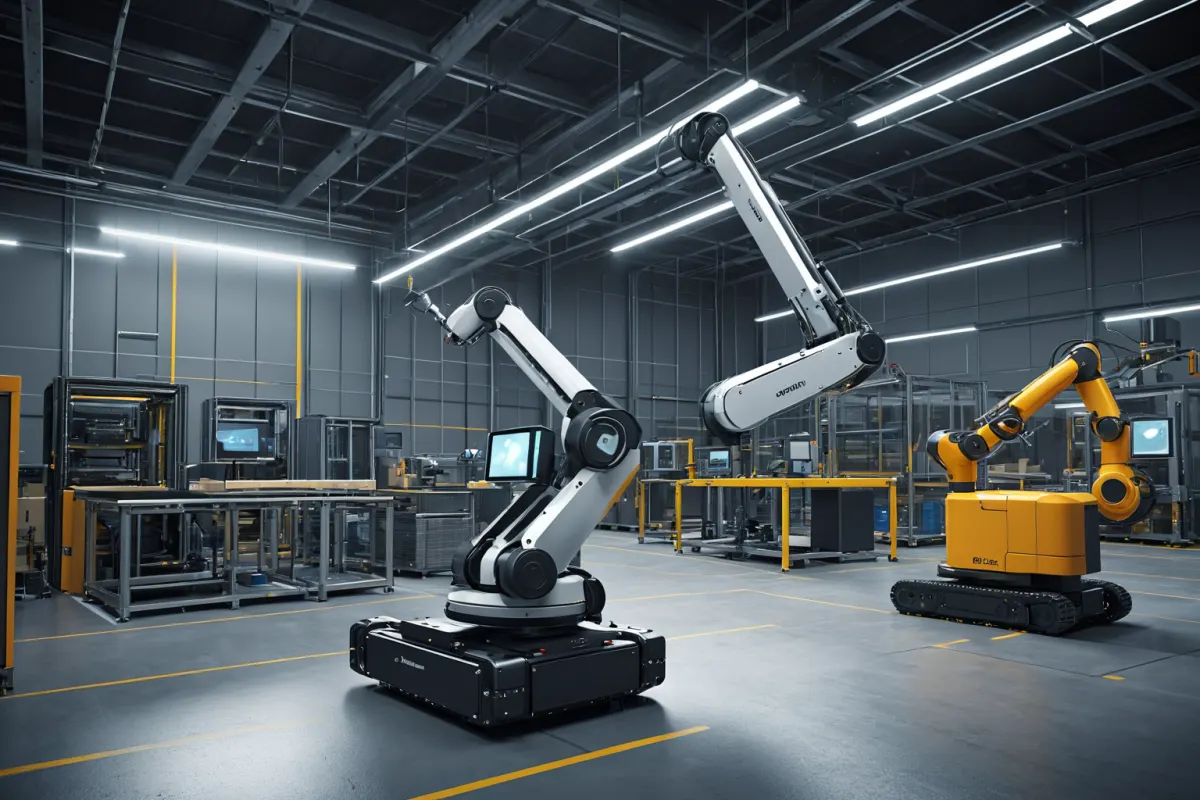
For instance, service robots suit cafes or restaurants better, while autonomous mobile robots are more suitable for sites handling parts transportation. Ultimately, the same robotic technology may be applied differently depending on the space and task.
Why Rainbow Robotics Is Viewed as a Technology Company
Rainbow Robotics stands out because it develops robots directly rather than acting as a distributor. Collaborative robots require precise joint control, path calculation, and collision detection—technologies where hardware and software must work together seamlessly.
While robot arms may look similar from the outside, performance depends on factors like repeat precision, control response speed, working range, and payload capacity. Thus, in real-world settings, customers prioritize 'how well a system handles specific tasks' over brand recognition.
This is why Rainbow Robotics is often compared not just by price but also by installation convenience, maintenance, and suitability for the workplace. Robots are long-term equipment—not one-time purchases.
Key Factors to Consider Before Implementation
When evaluating collaborative robots, it's better to start with your specific work purpose rather than focusing on company names. Even similar robots may require different load capacities, arm lengths, speeds, and safety features based on the task.
For example, a lightweight collaborative robot might suit moving 2kg parts repeatedly, while larger payloads would need higher capacity models. For tight spaces, working range becomes important.
A practical approach in practice:
- Determine what task you'll assign to the robot
- Check how many times it needs to move daily
- Match weight and workspace requirements
- Confirm if humans will work alongside it
- Verify post-implementation maintenance conditions
For example, food packaging lines prioritize stable repetition over speed, while inspection processes require precise positioning. Misunderstanding these differences can lead to unsatisfactory performance if only the product is compared without considering task specifics.
Related Search Terms for Rainbow Robotics
When searching, you might encounter terms like FRANKA EMika or Techman—they are comparison targets or similar brands in the collaborative robot industry.
The key point is to assess whether a brand fits your needs rather than focusing on its popularity. Choosing based solely on price often leads to failure; customization for the specific workplace is far more important.
Rainbow Robotics frequently appears as companies grow within Korea's expanding robotics sector. Interest spans manufacturing automation, logistics automation, and service robots, resulting in consistent search volume.
How to Summarize Rainbow Robotics in One Sentence
In short, Rainbow Robotics is a company that builds robots to work alongside or instead of humans—especially known for collaborative robots—and is viewed as a technology-driven company making factory automation more accessible.
If robotics seems complex, think of it simply: a company creating equipment to reduce repetitive tasks. Then explore subcategories like collaborative robots, service robots, and autonomous mobile robots.
FAQ
Q. What is Rainbow Robotics?
A. A robotics company developing collaborative robots and autonomous mobile robots, with strengths in safe human-robot teamwork for manufacturing and logistics tasks.
Q. How are collaborative robots different from traditional industrial robots?
A. Collaborative robots are designed to work safely alongside humans in shared spaces without requiring large dedicated areas or safety barriers.
Q. Why do prices vary so much for collaborative robots?
A. Prices differ based on load capacity, working range, speed, precision, safety features, and installation methods—depending on the intended use case.
Note: Robot product details and company information may change over time. Always verify current specifications, pricing, and service offerings before making a purchase or investment decision.
Continue exploring similar topics.
View Category ArticlesFAQ
What is Rainbow Robotics?
A robotics company developing collaborative robots and autonomous mobile robots, with strengths in safe human-robot teamwork for manufacturing and logistics tasks.
How are collaborative robots different from traditional industrial robots?
Collaborative robots are designed to work safely alongside humans in shared spaces without requiring large dedicated areas or safety barriers.
Why do prices vary so much for collaborative robots?
Prices differ based on load capacity, working range, speed, precision, safety features, and installation methods—depending on the intended use case.
Korean Source
This article is an English localization of a Korean-language report from BlogScore. Original: 레인보우로보틱스 협동로봇이 뭐하는 회사인가