
What Is a Cruise Missile Submarine? Understanding the Operational Structure
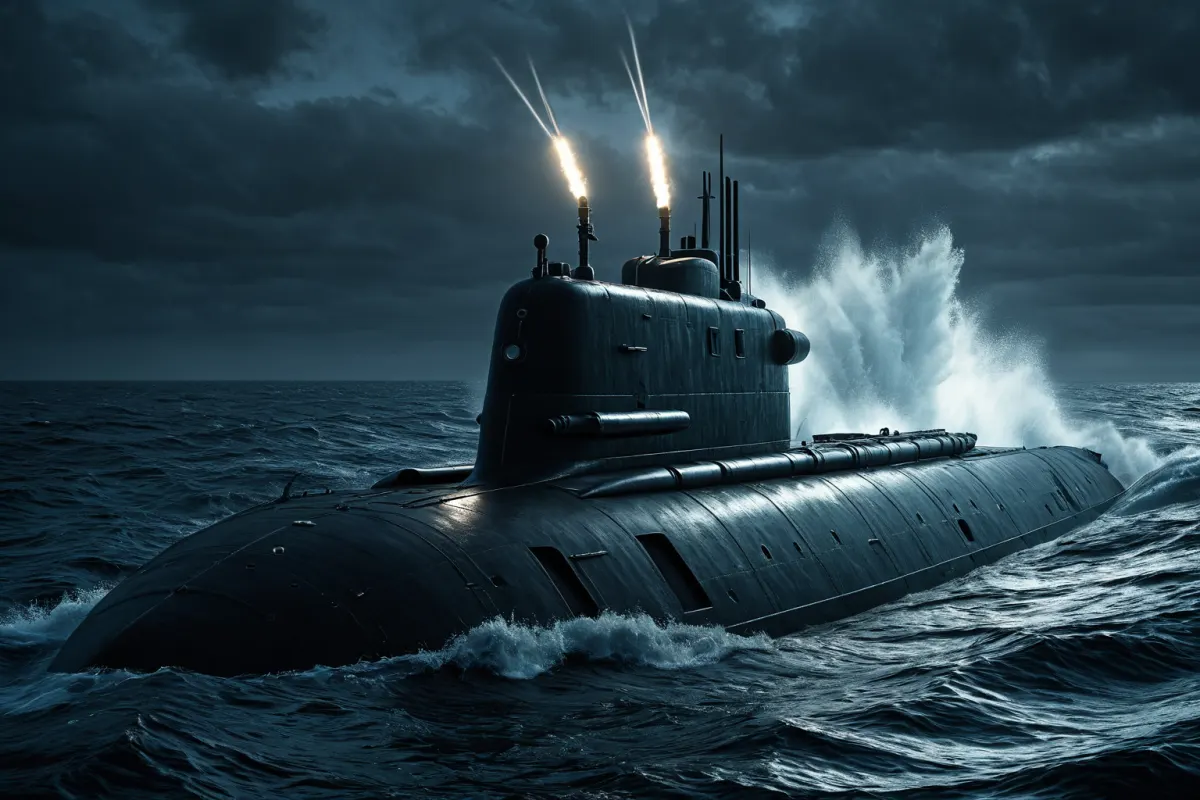
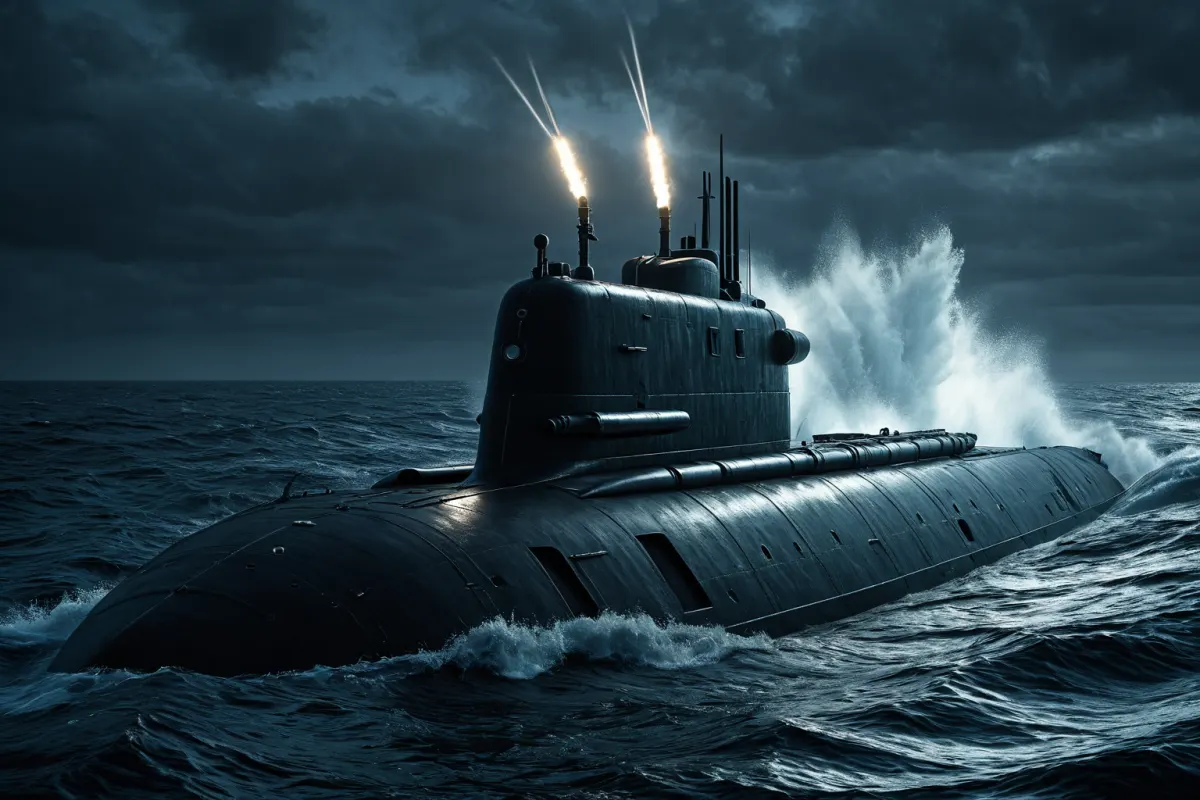
A cruise missile submarine refers to a submarine specifically designed or modified to launch cruise missiles. While it may look like a standard submarine on the surface, its key advantage lies in its ability to stealthily approach targets underwater and strike both naval vessels and ground targets at long range.
Therefore, this capability offers a broader attack range compared to conventional submarines, with the added benefit of remaining undetected by adversaries. Common questions from readers often focus on "how missiles are carried and launched" and "what distinguishes these submarines from regular ones."
The Core Concept of Cruise Missile Submarines
Cruise missiles differ from rockets in that they fly at relatively low altitudes for extended periods, approaching targets gradually. When launched from a submarine, this allows the vessel to remain hidden until the moment of launch, significantly enhancing survivability.
While conventional attack submarines primarily rely on torpedoes, cruise missile submarines add missile strike capabilities to their arsenal. However, not all submarines can fire missiles—those equipped with torpedo tubes or vertical launch systems are required for such operations.
You can explore more articles on similar topics in one place.
View Related ArticlesStructure for Launching Cruise Missiles from Submarines
There are two main methods for operating cruise missiles on submarines: using torpedo tubes or installing vertical launch systems inside the hull.
The torpedo tube method is relatively easier to implement on existing submarines but may have limitations in terms of missile capacity and operational efficiency. In contrast, vertical launch systems allow faster firing of multiple missiles and can be more systematically integrated if designed into the submarine from the outset.
Launching a cruise missile isn't as simple as pressing a button—it requires safely ejecting the missile underwater, igniting it once it reaches the surface, and transitioning to flight mode. This process must remain stable to maintain both the submarine's stealth and the missile's accuracy.

Differences from Conventional Attack Submarines
While they may appear similar on the surface, their mission profiles differ significantly. Conventional attack submarines focus primarily on targeting enemy ships, submarines, and monitoring sea lanes, whereas cruise missile submarines extend their capabilities to strike ground-based targets.
In other words, they go beyond mere naval combat to include strategic deterrence and long-range precision strikes. This is why cruise missile submarines are often described as "long-range strike platforms that move beneath the waves." For example, they can directly threaten distant facilities like enemy ports or command centers—a capability that creates significant pressure for adversaries since it's difficult to anticipate where the attack will originate.
Key Points in Operational Structure
To understand a cruise missile submarine's operational structure, one must consider stealth, strike range, and survivability together. By remaining submerged during transit, submarines are hard to detect, and launching missiles while hidden reduces the risk of retaliation.
Additionally, their ability to quickly withdraw from the battlefield after firing is crucial. Compared to aircraft or surface ships, submarines spend less time exposed, making them valuable for preemptive strikes and surprise deterrence.
However, carrying more missiles complicates internal space management and weight distribution, while noise control becomes more challenging. Therefore, successful operations prioritize stable concealment, movement, and firing over simply carrying a large number of missiles.
Practical Applications in Real-World Scenarios
Nations operating or developing cruise missile-equipped submarines consistently emphasize their long-range precision strike capabilities. They are frequently highlighted for disrupting enemy air defenses and military installations during early stages of conflict.
For instance, a submarine cruising underwater in distant waters could launch missiles unexpectedly, leaving adversaries with minimal response time. This is why cruise missile submarines are classified not just as naval assets but strategic weapons systems.
In practice, operational effectiveness depends on factors like mission range, missile type, and communication methods. Even the best missiles won't be effective if a submarine cannot receive secure command signals.
Commonly Confused Concepts
People often confuse cruise missile submarines with nuclear-powered submarines. These are distinct concepts: whether a submarine is nuclear-powered relates to its propulsion system, while carrying cruise missiles pertains to armament configuration.
In other words, diesel-powered submarines can also carry cruise missiles, and nuclear-powered ones can too. The key factor isn't the propulsion type but mission design and launch systems.
Another frequent question is how cruise missile launches differ from ballistic missiles. Ballistic missiles typically follow a higher trajectory and travel faster, while cruise missiles fly at lower altitudes with greater maneuverability. This leads to different operational approaches and target characteristics.
What to Look for When Evaluating Cruise Missile Submarines
To properly assess these vessels, one should consider not just the number of missiles but also launch methods, reload capability, stealth performance, and noise levels. Even within the same class, design differences can significantly impact actual combat effectiveness.
For example, a submarine with fewer missiles but superior guidance and stealth may hold greater operational value than one carrying more missiles but being easier to detect. Experts therefore prioritize "how well it avoids detection while approaching" over "how many missiles it carries," as survival underwater is essential for creating launch opportunities.
Frequently Asked Questions
Q1. Do cruise missile submarines refer to all submarines?
No, they specifically refer to submarines equipped with the necessary launch systems to fire cruise missiles.
Q2. What's the main difference between a torpedo-only submarine and a cruise missile submarine?
While torpedo-focused submarines excel at targeting naval vessels, cruise missile submarines extend their range to strike ground targets from long distances.
Q3. Why are cruise missile submarines gaining attention?
Their combination of stealthy underwater mobility and long-range precision strikes makes them difficult for adversaries to counter effectively.
Keep in mind that specific details about cruise missile submarine capabilities vary by country, depending on their force structure and deployment timelines; it's best to consult up-to-date sources for the latest developments.
Continue exploring similar topics within this category.
View Category ArticlesFAQ
Do cruise missile submarines refer to all submarines?
No, they specifically refer to submarines equipped with the necessary launch systems to fire cruise missiles.
What's the main difference between a torpedo-only submarine and a cruise missile submarine?
While torpedo-focused submarines excel at targeting naval vessels, cruise missile submarines extend their range to strike ground targets from long distances.
Why are cruise missile submarines gaining attention?
Their combination of stealthy underwater mobility and long-range precision strikes makes them difficult for adversaries to counter effectively.
Korean Source
This article is an English localization of a Korean-language report from BlogScore. Original: 순항미사일잠수함이란? 순항 미사일 운용 구조 정리