
What Does 'Physical' Really Mean in Physical AI Development?
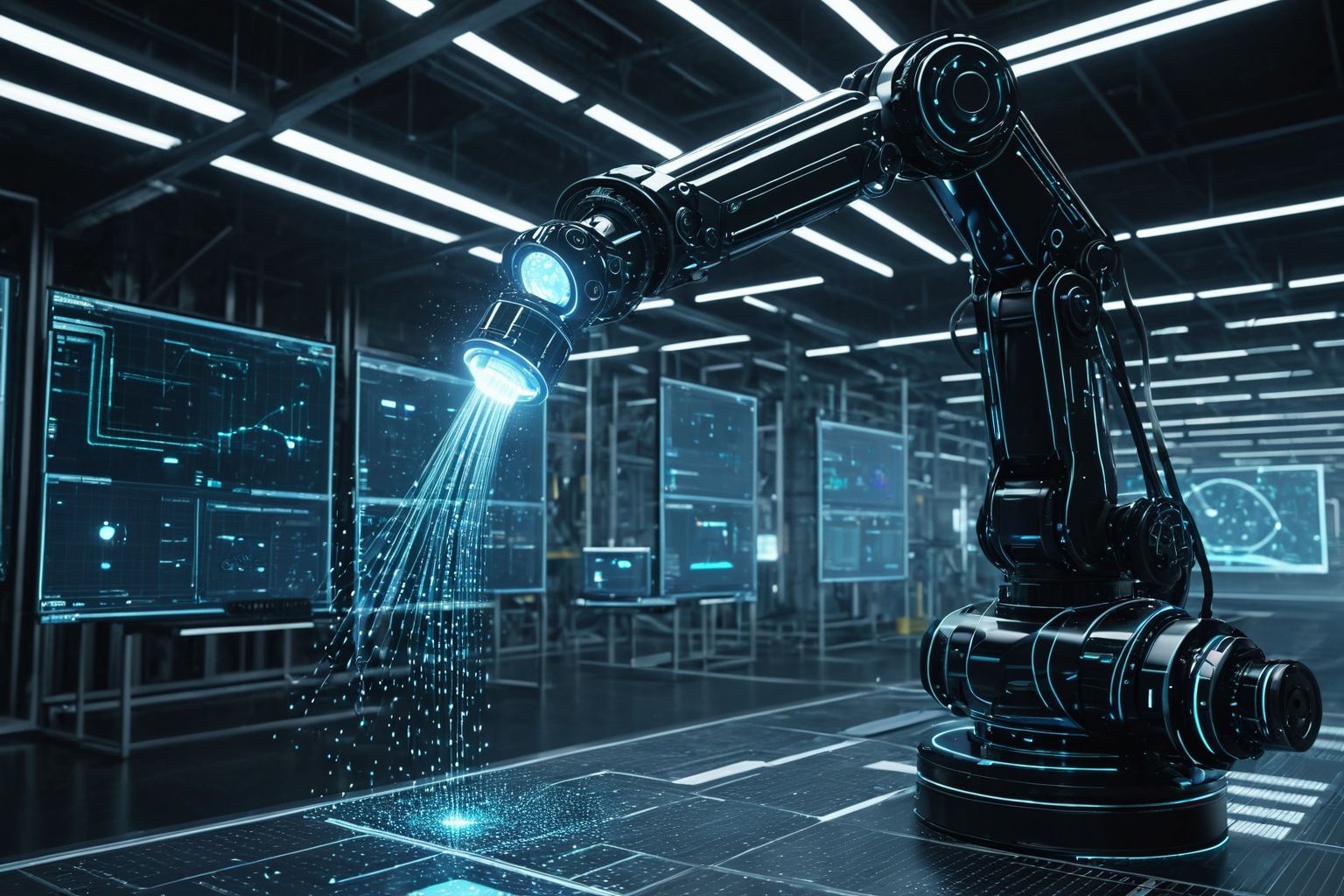
In Physical AI development, the term 'physical' doesn't simply mean having a good body—it refers to an AI's ability to connect directly with physical equipment in the real world, going beyond just providing answers on screen. This concept encompasses areas requiring actual movement and control, such as robots, manufacturing equipment, logistics systems, and autonomous driving systems.
Thus, 'Physical AI development' should be understood not as simply nurturing software, but as cultivating a comprehensive ecosystem including sensors, control systems, robotics, semiconductors, and data infrastructure.
The Meaning of 'Physical' in Physical AI
Here, 'physical' means 'physical,' referring to the real world. The key is for AI not just to generate text or create images but to perceive the outside world, calculate movements, and control actual devices.
For example, consider a factory robot that checks part positions with a camera before moving its arm to pick them up; logistics robots navigating around obstacles while moving; or autonomous vehicles adjusting speed based on road conditions.
You can find similar articles all in one place.
View Related ArticlesCore Directions of Physical AI Development
Physical AI development is best understood through three main axes. First, effectively collecting data; second, creating models that can learn and reason in real environments; third, safely connecting results to robots and equipment.
In this process, accuracy isn't the only consideration. Real-world variables mean factors like sensor errors, latency, collision risks, and power efficiency must also be considered. This is why it's much more challenging than screen-based AI.
For instance, even a robot designed to pick up objects may struggle if lighting changes or object positions shift slightly. Thus, Physical AI requires diverse training data, simulation, and real-world validation.
Why 'Physical AI Development' is Frequently Mentioned by the Government
The government frequently mentions 'Physical AI development' because it's directly tied to industrial competitiveness. Rather than just creating better chatbots, technologies that boost productivity in fields like manufacturing, logistics, defense, healthcare, and agriculture have greater impact.
Especially for countries with high manufacturing concentration like South Korea, the effects of robot automation and process optimization are significant. When AI and equipment replace manual labor, quality variations can be reduced, and repetitive work burdens lowered.
However, 'development' in policy doesn't mean creating a single product. It's more about advancing multiple elements simultaneously: talent cultivation, establishing demonstration environments, expanding component ecosystems, and accumulating data.
Physical AI Applications in Real-World Examples
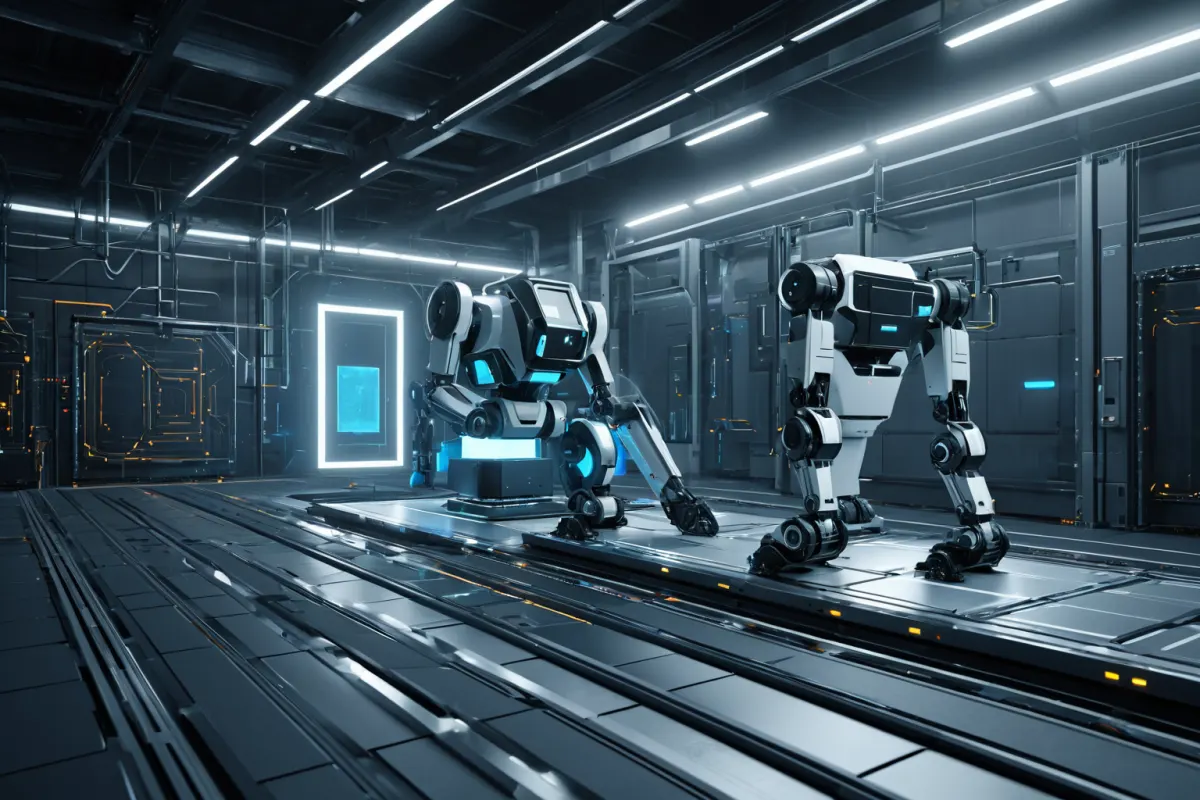
Physical AI is already being used across various industries. In smart factories, vision AI detects defects while robotic arms perform different actions based on inspection results. In logistics, sorting robots move quickly to improve work efficiency.
Autonomous driving also falls under Physical AI. Vehicles must recognize surrounding traffic, pedestrians, lanes, and signals before deciding steering and acceleration—making real-world connection crucial.
In healthcare, surgical assistance robots or rehabilitation devices serve as examples. Sensors read patient conditions while controlling minute movements, making accuracy and safety particularly important.
How Physical AI Differs from General AI
General generative AI typically takes input and produces output. In contrast, Physical AI inserts 'action' between input and output—converting the answer into actual movement.
This difference means evaluation criteria also change. Instead of focusing on sentence quality, failure rates, response latency, collision risks, maintainability, and field suitability become more important. Even small errors in industrial settings can lead to costs.
For example, a slightly awkward chatbot response might not be problematic, but if a robotic arm moves incorrectly, it could damage products or endanger people. Thus, Physical AI is considered technologically more demanding.
Essential Foundations for Physical AI Development
Developing Physical AI isn't just about creating good models—it requires high-performance sensors, edge computing, control software, communication stability, and battery efficiency to work together.
Simulation environments are also crucial. Testing directly in real settings involves high costs and risks, so virtual validation before applying to physical equipment is common practice. Well-established simulation reduces trial-and-error.
In domestic industries, these foundations are gaining more attention. Components procurement, on-site validation, and data collection need to work together seamlessly, meaning the entire ecosystem must move forward rather than individual companies alone.
Common Points of Confusion When First Learning About Physical AI
Many people associate Physical AI with robots only, but it's broader. Any physical device interacting with the real world—sensors-equipped smart devices, autonomous mobile machines, automated facilities—falls under this umbrella.
Another common confusion is whether 'physical' refers solely to hardware. In reality, it's more about how AI intelligently controls hardware and the connection structure—not just the hardware itself.
For example, a robot performing simple repetitive motions differs greatly from one that assesses surroundings and makes decisions independently. The latter aligns closer with Physical AI.
Future Changes to Watch
In the future, Physical AI may expand beyond manufacturing sites into everyday spaces. Home organizing robots, delivery robots, agricultural automation equipment—devices helping human hands and feet—are likely to diversify.
However, adoption speed will depend on safety and cost considerations. As technologies moving alongside people, legal standards, accountability issues, and field validation must keep pace. Thus, development policies are also expected to evolve toward not just technology but institutional frameworks.
Key Takeaways
In Physical AI, 'physical' means 'real-world execution connected with physical reality.' It's best understood as AI that perceives through sensors, makes judgments, and actually moves robots and equipment—not just creating text-based AI.
Physical AI development is about cultivating data, talent, equipment, and demonstration environments together to apply this technology across industries. So it's not merely a buzzword but an important keyword for manufacturing and automation competitiveness.
FAQ
Q1. Is Physical AI the same as robots?
Not exactly. Robots are a representative application, but Physical AI encompasses all sensor- and control-integrated autonomous devices.
Q2. Why is Physical AI development important?
Because it boosts productivity and safety in real-world fields like manufacturing, logistics, mobility, and healthcare—directly linked to industrial competitiveness.
Q3. What's the easiest way for regular people to understand?
Distinguish whether AI stays on screen or actually moves equipment. If physical action is involved, it's closer to Physical AI.
Latest government policies and industry development plans may vary depending on announcement timing, so checking related news and official announcements is recommended.
Continue exploring similar topics.
View Category ArticlesFAQ
Is Physical AI the same as robots?
Not exactly. Robots are a representative application, but Physical AI encompasses all sensor- and control-integrated autonomous devices.
Why is Physical AI development important?
Because it boosts productivity and safety in real-world fields like manufacturing, logistics, mobility, and healthcare—directly linked to industrial competitiveness.
What's the easiest way for regular people to understand?
Distinguish whether AI stays on screen or actually moves equipment. If physical action is involved, it's closer to Physical AI.
Korean Source
This article is an English localization of a Korean-language report from BlogScore. Original: 피지컬AI 육성에서 말하는 피지컬의 의미는?