
What Does 'Gagyeo' Mean? Understanding the Viral Misinterpretation in Korean Media
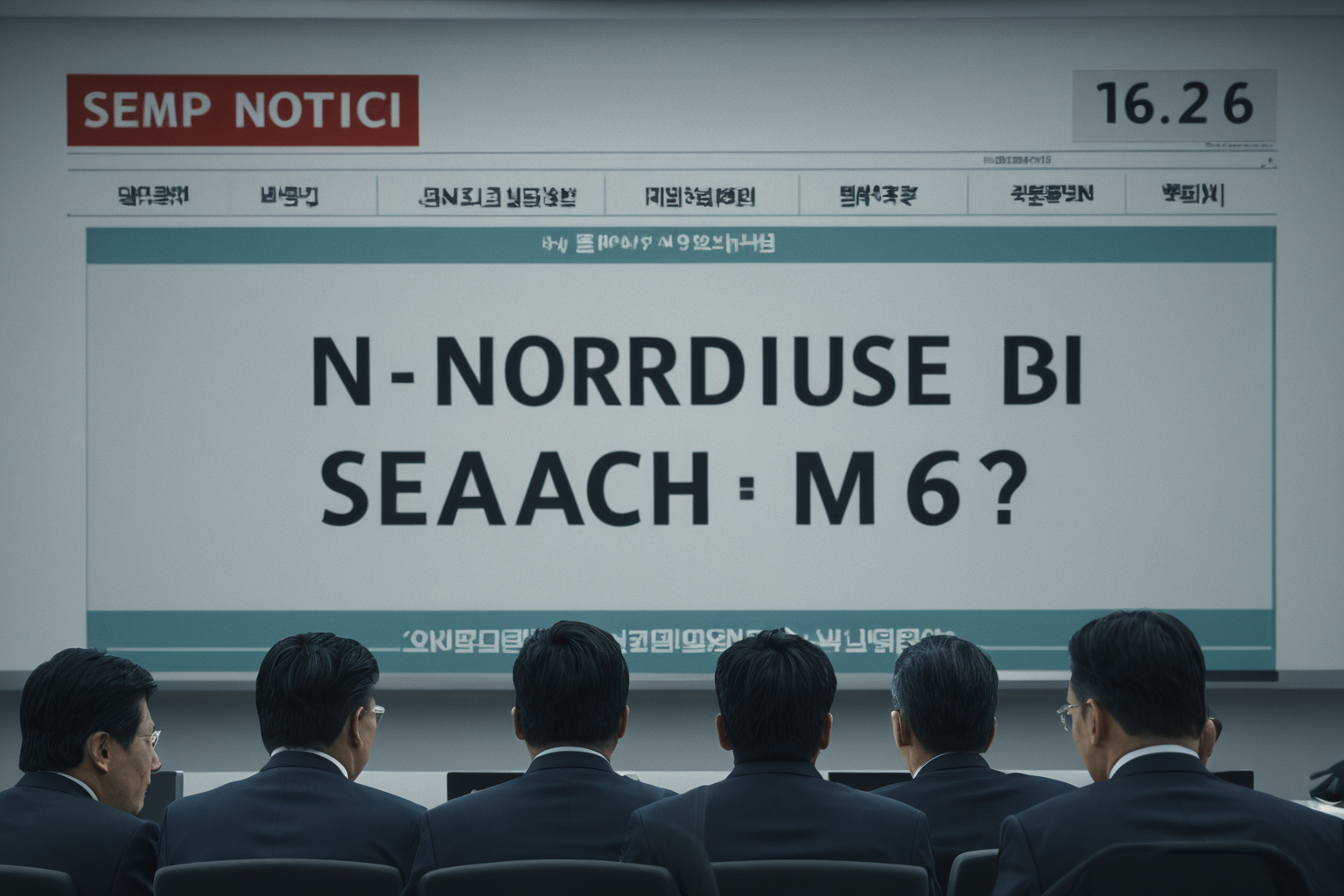
The term 'gagyeo' (가긍하다) is not an actual word in Korean, having gained attention after a misreported statement by Kim Yo-jong regarding reduced U.S.-South Korea military exercises. Her comment, "Seoul's position where war games can no longer be played, gagyeo," led to it becoming the top searched term on Korean portals.
The Origin and Context of 'Gagyeo'
On August 20, 2026, Kim Yo-jong mentioned in a statement about reducing U.S.-South Korea joint military exercises: "Seoul's position where war games can no longer be played, gagyeo." This phrase contained an apparent error, as 'gagyeo' does not exist in Korean.
Kim Yo-jong's remarks were intended to mock the reduction of U.S.-South Korea military drills. Media outlets widely misreported the term 'gagyeo,' likely due to a transcription error from her pronunciation of "gagyeon" (가긍한).
'Gagyeo' Tops Search Rankings
Due to Kim Yo-jong's statement, the term 'gagyeo' became the top searched word on Korean portals on August 22, 2026. This was a case of media misreporting an invented term that does not exist in the Korean language.
Korean online media and portals saw rapid popularity for the term 'gagyeo,' with related search terms generating significant public interest. What began as a simple transcription error expanded into a social phenomenon.
Kim Yo-jong's statement and the use of 'gagyeo' were made within a political context, leading to widespread debate between media outlets and the public. Despite lacking an actual meaning, the term spread widely, remaining absent from Korean dictionaries.

The Correct Meaning and Error Source
'Gagyeo' is not a valid Korean word. It was possibly intended as "gagyeon" (가긍한), but its exact meaning remains unclear.
Kim Yo-jong's phrase, "Seoul's position where war games can no longer be played, gagyeon," appears to be a linguistic error. The term 'gagyeo' was likely mistakenly recorded by journalists who misheard her pronunciation of "gagyeon" (가긍한).
Some media outlets speculated it might be a typo for "gajeokhi" (가급히), meaning "hastily" or "urgently," but this does not fit the context. 'Gajeokhi' is an actual Korean word, though unrelated to Kim Yo-jong's statement.
Reaction from South Korea's Unification Ministry
On August 21, 2026, a senior official at South Korea's Unification Ministry emphasized the need for "consideration and respect toward others" regarding Kim Yo-jong's remarks. This was interpreted as criticism of her perceived mocking tone.
The official also stated that "mocking or distorting others is unacceptable," urging media outlets to use accurate language in their reporting on the term 'gagyeo.'
Public Reaction and Media Coverage
The viral nature of 'gagyeo' drew public attention, with many curious about its meaning. Online communities generated various interpretations of the term.
Some netizens mistakenly assumed it was a typo for "gajeokhi," but this is inaccurate. Media outlets struggled to explain the term correctly, leading to widespread confusion.
Timeline of Key Events
August 20, 2026: Kim Yo-jong made her statement about reduced U.S.-South Korea military exercises, including the phrase "Seoul's position where war games can no longer be played, gagyeon." The remark was intended to mock the situation.
August 21, 2026: South Korea's Unification Ministry senior official criticized Kim Yo-jong's remarks for lacking respect toward others.
August 22, 2026: The term 'gagyeo' topped search rankings on Korean portals as a social issue.
Clarifying the Meaning and Correct Usage
'Gagyeo' does not exist in Korean, so its meaning cannot be confirmed. It was misreported by media outlets based on an error from Kim Yo-jong's speech.
Kim Yo-jong likely said "gagyeon" (가긍한), but journalists incorrectly wrote it as 'gagyeo.' This is a transcription error in Korean language usage, with no clear meaning.
Some assumed it was a typo for "gajeokhi," but this is also incorrect. 'Gajeokhi' means "hastily" or "urgently," which does not match the context of Kim Yo-jong's statement.
Response and Safety Information
The use of 'gagyeo' highlights the importance of accurate reporting in media. It is crucial for journalists to avoid spreading misinformation based on transcription errors.
The public should be cautious not to spread incorrect information about terms like 'gagyeo.' Since its meaning is unclear, it's important to verify information from reliable sources.
Both government and media organizations should take steps to prevent similar errors in the future. This can improve the accuracy and credibility of reporting.
Key Information to Verify
'Gagyeo' is not a real Korean word, having been misreported from Kim Yo-jong's speech. It was mistakenly used by media outlets without clear meaning.
Kim Yo-jong's remarks were related to the reduction of U.S.-South Korea military exercises, and 'gagyeo' was used in a mocking tone. This led to widespread media misreporting and public confusion.
The public and media should prioritize accurate information sharing and avoid overinterpreting words without clear meaning. This helps maintain media credibility and reduces unnecessary confusion.
Frequently Asked Questions
What is 'gagyeo'?
'Gagyeo' is not a real Korean word, stemming from a misreported statement by Kim Yo-jong. Its exact meaning cannot be determined.
What's the difference between 'gagyeo' and 'gajeokhi'?
'Gajeokhi' (가급히) is an actual Korean word meaning "hastily" or "urgently." 'Gagyeo' is a misreported term with no real meaning.
Can 'gagyeo' be used correctly?
No, as it does not exist. Media should correct the mistake and avoid using this invented term.
Frequently Asked Questions
'Gagyeo' is a term that appeared in Kim Yo-jong's statement about reduced U.S.-South Korea military exercises, but was misreported by media as an actual Korean word. It does not exist in the language and has no clear meaning.
This incident highlights the importance of careful reporting and public information verification. What began as a simple transcription error became a social phenomenon, reminding both media and the public to be cautious with unverified terms.
Accurate information sharing is critical for maintaining trust in media. As similar errors may occur in the future, exercising caution when encountering unfamiliar or unclear terms is essential.
You can explore more articles on this topic in one place.
View Related ArticlesFAQ
What is 'gagyeo'?
'Gagyeo' is not a real Korean word; it's a misreported term from Kim Yo-jong's speech about U.S.-South Korea military drills, leading to public confusion.
How did 'gagyeo' become popular?
It went viral after media mistakenly reported Kim Yo-jong's phrase as 'gagyeo,' causing it to top Korean search rankings on August 22, 2026.
What does 'gajeokhi' mean?
'Gajeokhi' (가급히) is a real Korean word meaning 'hastily' or 'urgently,' but it was mistakenly confused with the invented term 'gagyeo'.
Korean Source
This article is an English localization of a Korean-language report from BlogScore. Original: 가긍하다 뜻과 사용 예시 한 번에 알아보기