
Wang Yi's Visit to South Korea: Key Agreements and Analysis of the Sino-Korean Talks
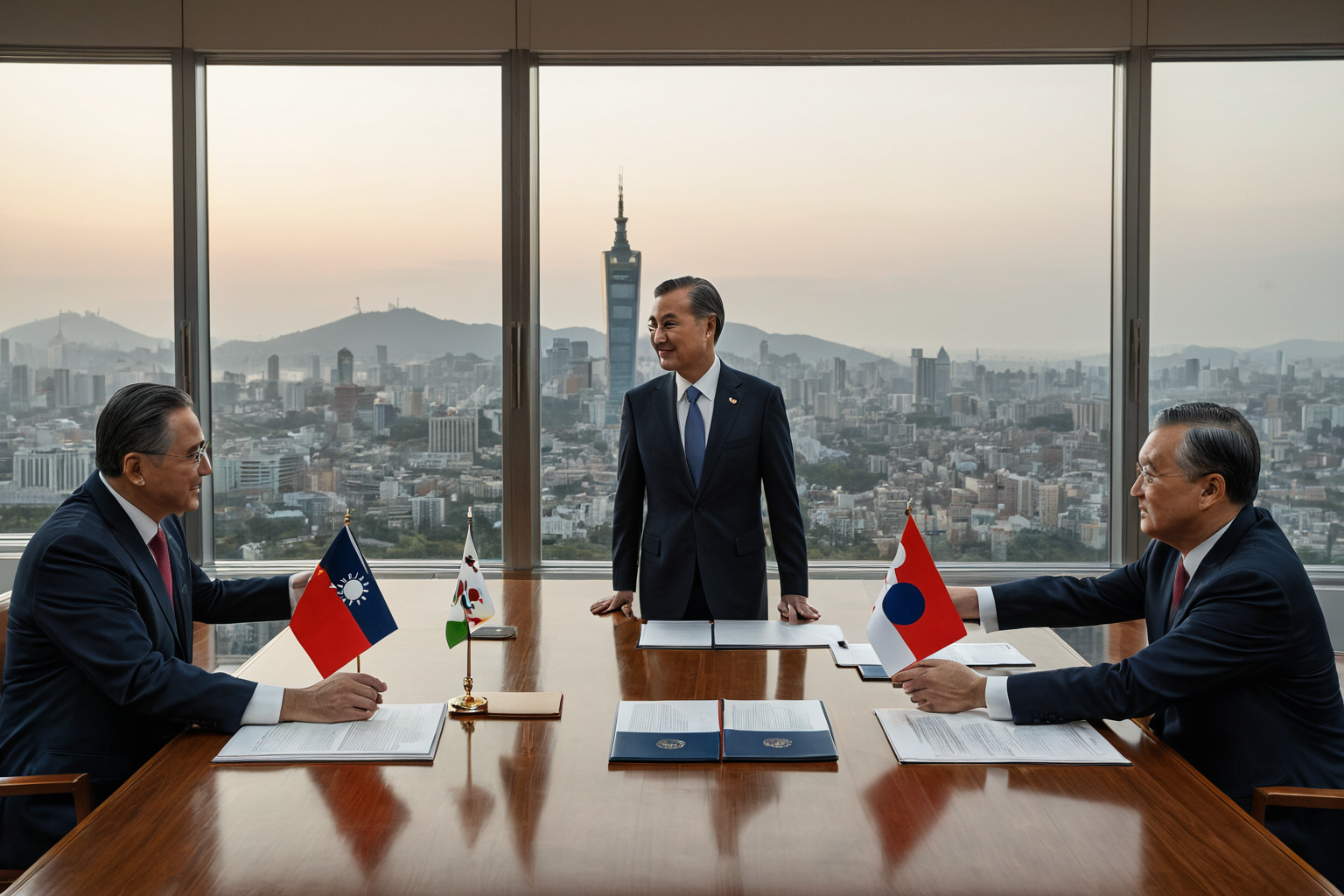
Wang Yi's Visit to South Korea: Key Agreements
Chinese Foreign Minister Wang Yi visited South Korea for a bilateral meeting with South Korean officials from August 19-20, 2026. China emphasized that 'China and South Korea are neighbors and cooperative partners,' while expressing optimism about peaceful coexistence on the Korean Peninsula.
However, South Korean Foreign Minister Wi Seong-jae raised serious concerns over China's use of the term 'two countries.' This could become a significant point of contention in Sino-South Korean relations.
Visit Schedule and Key Statements
The visit began on August 19, 2026, with Wang Yi meeting South Korean Foreign Minister Wi Seong-jae and President Lee Jae-myung. China reiterated that 'China and South Korea are neighbors and cooperative partners,' highlighting the importance of bilateral ties.
Wang Yi expressed optimism about peaceful coexistence on the Korean Peninsula, stating it was a matter for both countries to decide. However, during discussions on a peace plan for the Korean Peninsula, Chinese officials remained silent.
Foreign Minister Wi Seong-jae raised serious concerns over China's use of 'two countries,' which could become a significant point of contention in Sino-South Korean relations.
Analysis of Key Issues Discussed at the Sino-Korean Talks
The talks covered peace on the Korean Peninsula, but Chinese officials remained silent during discussions about South Korea's peace plan. This suggests China has not clearly defined its role in resolving issues on the Korean Peninsula.
The South Korean Foreign Ministry welcomed follow-up measures after the summit but did not disclose specific agreements.
Upcoming APEC Summit and Potential Xi Jinping Visit
With next year's APEC summit approaching, there are reports of a potential visit by Chinese President Xi Jinping to South Korea. This would be seen as a positive signal for improving Sino-South Korean relations, alongside progress in U.S.-China relations.
Preparations for the trilateral summit among China, Japan, and South Korea are also accelerating. In November 2023, Chinese and Japanese foreign ministers met in Busan to agree on preparations for a three-nation leaders' meeting.
China's Silence on Korean Peninsula Peace Plan
During the talks, China remained silent when discussing South Korea's peace plan. This indicates that China has not clearly defined its role in addressing issues on the Korean Peninsula.
The South Korean Foreign Ministry welcomed follow-up measures after the summit but did not disclose specific details. Public interest is growing regarding the future direction of Sino-South Korean relations.
Dispute Over 'Two Countries' Terminology in Sino-Korean Relations
Foreign Minister Wi Seong-jae raised serious concerns over China's use of the term 'two countries.' This could become a significant point of contention in Sino-South Korean relations.
The phrase 'two countries' may imply that South Korea and China should recognize each other as independent nations. However, South Korea considers this terminology inappropriate and has raised objections with China.
Key Outcomes of the Talks and Improving U.S.-China Relations
Both sides emphasized that 'China and South Korea are neighbors and cooperative partners,' though concerns over the term 'two countries' have cast doubt on progress in bilateral relations.
Preparations for a potential U.S.-China summit are ongoing, scheduled for November 2023. This will be an important moment for determining the future direction of both Sino-South Korean and U.S.-China relations.
Post-Talk Discussions on Korean Peninsula Peace Plan
Wang Yi expressed optimism about peaceful coexistence on the Korean Peninsula, stating it was a matter for both countries to decide. However, China remained silent during discussions of South Korea's peace plan at the talks.
This has raised questions about China's role in resolving issues on the Korean Peninsula. The South Korean Foreign Ministry welcomed follow-up measures but did not disclose specific agreements.
Future Outlook for Sino-South Korean Relations
With next year's APEC summit approaching, there are reports of a potential visit by Chinese President Xi Jinping to South Korea. This would signal progress in improving bilateral ties and is being viewed alongside U.S.-China relations as a key issue.
Preparations for the trilateral China-Japan-South Korea leaders' meeting are also accelerating. In November 2023, Chinese and Japanese foreign ministers met in Busan to agree on preparations for a three-nation summit, suggesting more active discussions on Korean Peninsula peace plans.
Information to Verify
Specific details of the agreements reached during the talks have not yet been disclosed. Reports about President Xi Jinping's potential visit ahead of next year's APEC summit are still in the reporting stage, with no specific schedule or coordination details available.
The South Korean Foreign Ministry welcomed follow-up measures but did not disclose specifics. Public interest is growing regarding the future direction of Sino-South Korean relations.
Frequently Asked Questions
When did Wang Yi visit South Korea?
Chinese Foreign Minister Wang Yi visited South Korea alone from August 19-20, 2026, for talks with South Korean officials and a meeting with President Lee Jae-myung.
What were the key agreements at the Sino-Korean talks?
China emphasized that 'China and South Korea are neighbors and cooperative partners,' expressing optimism about peaceful coexistence on the Korean Peninsula. However, China remained silent during discussions of South Korea's peace plan.
What issue did Foreign Minister Wi Seong-jae raise?
Foreign Minister Wi Seong-jae raised serious concerns over China's use of 'two countries,' which could become a significant point of contention in Sino-South Korean relations.
Frequently Asked Questions
The visit by Chinese Foreign Minister Wang Yi and the subsequent talks demonstrated both a commitment to improving bilateral relations and an underlying tension over diplomatic terminology. While China expressed optimism about peaceful coexistence on the Korean Peninsula, its silence during discussions of South Korea's peace plan has raised questions about its role in resolving regional issues.
With next year's APEC summit approaching, reports of a potential Xi Jinping visit to South Korea are emerging. This development, alongside progress in U.S.-China relations, will be crucial for determining the future direction of Sino-South Korean ties. Further details on specific agreements and schedules are expected.
You can explore more articles on similar topics in one place.
View Related ArticlesFAQ
When did Wang Yi visit South Korea?
Chinese Foreign Minister Wang Yi visited South Korea alone from August 19-20, 2026, for talks with South Korean officials and a meeting with President Lee Jae-myung.
What were the key agreements at the Sino-Korean talks?
China emphasized that 'China and South Korea are neighbors and cooperative partners,' expressing optimism about peaceful coexistence on the Korean Peninsula. However, China remained silent during discussions of South Korea's peace plan.
What issue did Foreign Minister Wi Seong-jae raise?
Foreign Minister Wi Seong-jae raised serious concerns over China's use of 'two countries,' which could become a significant point of contention in Sino-South Korean relations.
Korean Source
This article is an English localization of a Korean-language report from BlogScore. Original: 왕이 방한, 한중 회담 주요 합의 내용과 의제 분석