
Wang Yi's North Korea Policy and Pathways to Nuclear Resolution
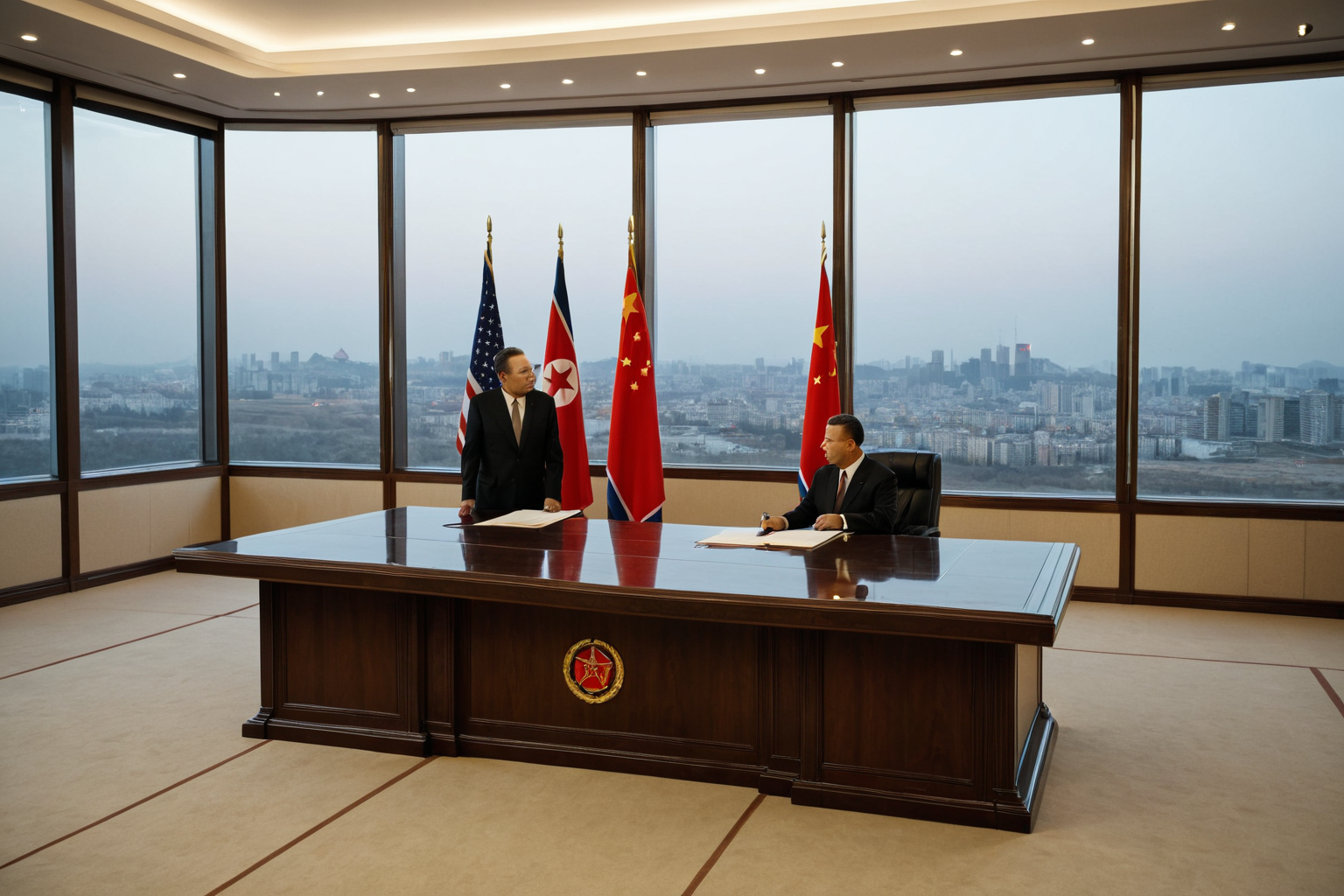
Wang Yi's North Korea Policy and Pathways to Nuclear Resolution
China's recent statements by Foreign Minister Wang Yi and the strengthening of China-North Korea relations have introduced a new variable into Korean Peninsula diplomacy. By criticizing U.S. policy toward North Korea and characterizing U.S.-North Korea talks as a bilateral issue, Wang Yi has pointed to international cooperation and multilateral dialogue as pathways for resolving the nuclear issue. Particularly, as China moves to openly treat its relationship with North Korea as a strategic alliance amid existing nuclear realities, the situation on the Korean Peninsula is becoming increasingly complex.
Wang Yi's Statements on U.S.-North Korea Talks and Chinese Policy
On August 19, 2026, Foreign Minister Wang Yi stated that U.S.-North Korea talks should be viewed as a bilateral issue and urged the United States to change its hostile North Korea policy. This statement clearly emphasized strengthening international cooperation for resolving the nuclear issue, presenting a new strategic opportunity for the Korean Peninsula situation. China has been prioritizing China-North Korea coordination over denuclearization, openly formalizing the relationship as a strategic alliance through the political return of Article 2 of the alliance treaty on June 10, 2026. This is interpreted as demonstrating China's resolve to maintain its position even within the framework of U.S.-China confrontation regarding North Korean nuclear issues.
Yi Jae-min Government's Strategy for Resolving Peninsula Issues
The Yi Jae-min government emphasized close strategic communication on August 20, 2026, to resolve peninsula issues. Foreign Minister Jo Hyun confirmed cooperation with U.S. Senator Mirubio during a phone call, reaffirming South Korea-U.S. collaboration approaches. This strategy considers multilateral dialogue and international cooperation for resolving the nuclear issue while emphasizing the need for creative approaches that consider relations with the United States. Notably, Foreign Minister Jo's conversation with Senator Mirubio reflects an intention to foster mutual understanding on resolving the North Korean nuclear issue through close South Korea-U.S. communication.
Status and Development of China-North Korea Strategic Alliance
On June 10, 2026, reports indicated the open formalization of the China-North Korea strategic alliance and the political return of Article 2 of the alliance treaty. This indicates that China is taking a confrontational stance with the United States regarding North Korean nuclear issues while developing its relationship with North Korea as an actual strategic alliance on the ground of existing nuclear realities. On June 9, 2026, President Xi Jinping emphasized prioritizing China-North Korea coordination over denuclearization and made remarks opposing hegemony and militarism. This demonstrates a new approach by China in resolving North Korean issues while urging international cooperation. Additionally, this shift in China-North Korea relations suggests that cooperative approaches to resolving the North Korean nuclear issue are needed within the context of U.S.-China confrontation.
On August 19, 2026, Foreign Minister Wang Yi's statements regarding U.S.-North Korea talks and on August 20, 2026, the Yi Jae-min government's announcement of its strategy for resolving peninsula issues are interconnected events that present pathways to resolving the nuclear issue through international cooperation and multilateral dialogue. In this context, China has clearly stated its position on resolving the North Korean nuclear issue without considering relations with the United States.
Direction of International Cooperation for Resolving Nuclear Issues
The United States consistently views denuclearization as a core goal, while creative approaches to North Korea policy that consider China-U.S. relations are being proposed. Emphasis is placed on international cooperation and multilateral dialogue for resolving the nuclear issue, with strengthening strategic communication between South Korea, the U.S., and China becoming a key solution. Particularly, considering the achievements of the Moon Jae-in government's inter-Korean relations in 2021, the current Yi Jae-min government continues to advance the peace process on the Korean Peninsula through improving inter-Korean relations.
President Xi Jinping's emphasis on prioritizing China-North Korea coordination over denuclearization and his remarks opposing hegemony and militarism on June 9, 2026, demonstrate a new approach by China in resolving North Korean nuclear issues while urging international cooperation. This is interpreted as showing China's resolve to maintain its position without considering relations with the United States during the process of resolving the North Korean nuclear issue.
North Korea Nuclear Issues and International Relations
Wang Yi's visit to North Korea has introduced a new variable into Korean Peninsula diplomacy, as China-North Korea relations are openly formalizing as a strategic alliance. This suggests that cooperative approaches to resolving the North Korean nuclear issue are needed within the context of U.S.-China confrontation. Particularly, considering China's subtle shift in stance regarding the 2016 North Korean hydrogen bomb launch and its move toward more moderate sanctions, the current strengthening of China-North Korea relations represents a new strategic approach different from past practices.
Foreign Minister Wang Yi's statements on August 19, 2026, urging the United States to change its hostile North Korea policy indicate that international cooperation for resolving nuclear issues is being clearly emphasized. This statement reflects China's resolve to maintain its position without considering relations with the United States during the process of resolving the North Korean nuclear issue.

Importance of Strategic Communication Between South Korea, U.S., and China
The Yi Jae-min government has emphasized close strategic communication to resolve peninsula issues, with Foreign Minister Jo Hyun confirming cooperation with Senator Mirubio during a phone call. This strategy considers multilateral dialogue and international cooperation for resolving the nuclear issue while emphasizing the need for creative approaches that consider relations with the United States. Particularly, strategic communication between South Korea, the U.S., and China serves as the foundation for international cooperation in resolving North Korean nuclear issues, potentially increasing the possibility of resolution.
Specific Pathways to Resolving Nuclear Issues
International cooperation and multilateral dialogue have been presented as key solutions for resolving North Korean nuclear issues. While there is debate over China's role, it is believed that enhancing international cooperation and multilateral dialogue can increase the possibility of resolution. Particularly, considering the achievements of the Moon Jae-in government's inter-Korean relations in 2021, the current Yi Jae-min government continues to advance the peace process on the Korean Peninsula through improving inter-Korean relations.
U.S.-China Confrontation Structure
The United States consistently views denuclearization as a core goal, while China emphasizes China-North Korea coordination. This shows that international cooperation for resolving nuclear issues is taking on complex forms. Particularly, the need for cooperative approaches to resolving North Korean nuclear issues within the context of U.S.-China confrontation is being highlighted.
Xi Jinping's Statements on Denuclearization
On June 9, 2026, President Xi Jinping emphasized prioritizing China-North Korea coordination over denuclearization and made remarks opposing hegemony and militarism. This demonstrates a new approach by China in resolving North Korean nuclear issues while urging international cooperation. Particularly, Xi's statements are interpreted as showing China's resolve to maintain its position without considering relations with the United States during the process of resolving the North Korean nuclear issue.
Possibility of Wang Yi's Visit to South Korea and Its Impact on Sino-Korean Relations
Foreign Minister Wang Yi may visit South Korea as early as next month, with Sino-South Korean foreign ministries currently coordinating. This is expected to contribute to enhancing strategic communication between China and South Korea as part of strengthening international cooperation for resolving nuclear issues. Particularly, Wang Yi's visit could serve as a catalyst for further developing relations between China and South Korea and reinforcing cooperative approaches to resolving the North Korean nuclear issue.
Frequently Asked Questions
What are the main goals of Wang Yi's North Korea policy?
Foreign Minister Wang Yi has urged the United States to change its hostile North Korea policy by characterizing U.S.-North Korea talks as a bilateral issue. China emphasizes prioritizing China-North Korea coordination over denuclearization.
How does China-North Korea relations impact the Korean Peninsula situation?
China-North Korea relations are openly formalizing as a strategic alliance, suggesting that cooperative approaches to resolving North Korean nuclear issues are needed within the context of U.S.-China confrontation.
Why is international cooperation necessary for resolving peninsula issues?
Resolving North Korean nuclear issues requires creative approaches considering the U.S.-China confrontation structure, and possibilities can be increased through international cooperation and multilateral dialogue.
You can view similar articles on this topic all at once.
View Related ArticlesFAQ
What are the main goals of Wang Yi's North Korea policy?
Foreign Minister Wang Yi has urged the United States to change its hostile North Korea policy by characterizing U.S.-North Korea talks as a bilateral issue. China emphasizes prioritizing China-North Korea coordination over denuclearization.
How does China-North Korea relations impact the Korean Peninsula situation?
China-North Korea relations are openly formalizing as a strategic alliance, suggesting that cooperative approaches to resolving North Korean nuclear issues are needed within the context of U.S.-China confrontation.
Why is international cooperation necessary for resolving peninsula issues?
Resolving North Korean nuclear issues requires creative approaches considering the U.S.-China confrontation structure, and possibilities can be increased through international cooperation and multilateral dialogue.
Korean Source
This article is an English localization of a Korean-language report from BlogScore. Original: 왕이 대북 정책과 북핵 문제 해결 방안