
Wang Yi's Diplomatic Overhaul with China: New Economic Opportunities Emerge
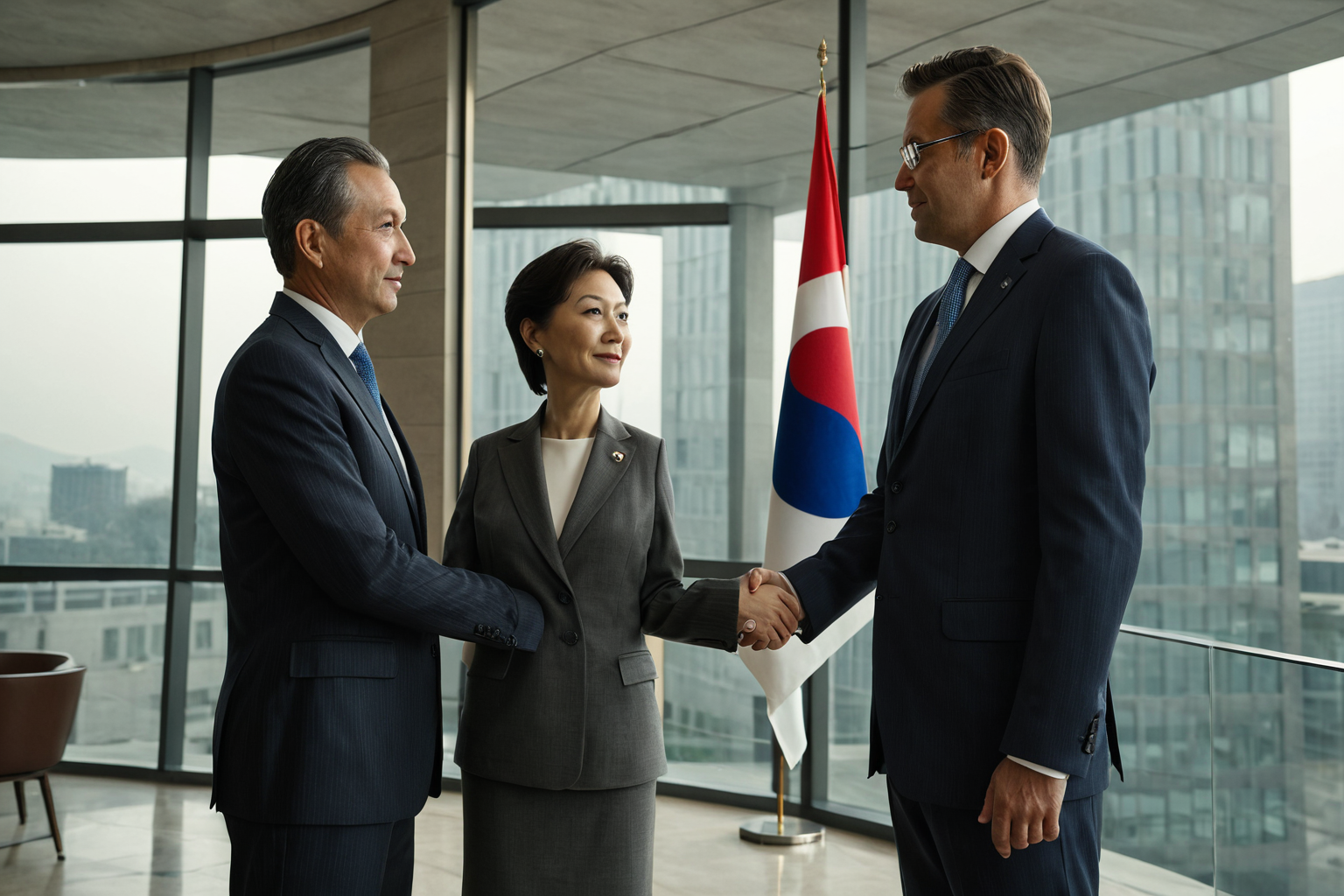
New Opportunities for Economic Cooperation Between South Korea and China
During talks between Chinese Foreign Minister Wang Yi and President Yoon Suk Yeol, South Korea emphasized full restoration of bilateral relations but did not mention 'denuclearization,' instead urging the realization of 'strategic autonomy.' China requested that South Korea maintain a neutral stance between the U.S. and China without taking sides, while President Yoon expressed commitment to continuing progress in restoring ties.
Expanding Economic Cooperation
The two countries have agreed to enhance economic cooperation through FTA services and investment negotiations, as well as supply chain stabilization. With the restart of a '10 million people exchange era,' economic collaboration opportunities are growing. Particularly, industries such as cosmetics, tourism, and entertainment are experiencing renewed vitality due to China's 'warm wind' policy, with South Korean companies anticipating new growth after eight years since the implementation of the 'Korean Wave' restrictions.
Strategic Communication and Diplomatic Dialogue
During Wang Yi’s visit to Seoul, discussions focused on restoring relations and strengthening economic collaboration. At the Asia Forum, he referenced a 'China Opportunity 2.0 era,' emphasizing the need for joint innovative integration. The Gwangyang Bay Economic Free Zone is being leveraged to open a new Silk Road for global expansion opportunities.
First Diplomatic Minister Call and Economic Collaboration
In their first phone call between foreign ministers, both sides expressed mutual understanding on the need to improve relations, with plans to create new innovation opportunities through FTA and AI cooperation. The Wang-Yoon Seoul meeting discussed restoring ties, FTA, and AI collaboration.
Nuclear Disputes and Forced Repatriation of North Korean Defectors
Differences between China and South Korea over nuclear development on the Korean Peninsula and the forced repatriation of North Korean defectors have complicated diplomatic negotiations. While China emphasized that the U.S. should abandon its hostile policies toward North Korea to achieve denuclearization and reduce tensions, no mention of 'denuclearization' was made during talks with South Korea.
Potential for Restoring Relations
Chinese Foreign Minister Wang Yi mentioned the coexistence of 'two countries' in the North-South context after being 16 minutes late to a diplomatic meeting, expressing views on the Korean Peninsula situation. This is interpreted as part of strategic communication aimed at both restoring relations and building peace on the peninsula.
Specific Fields of Economic Cooperation
The two countries have agreed to enhance economic cooperation through FTA services and investment negotiations, along with supply chain stabilization. The Gwangyang Bay Economic Free Zone is being used to open a new Silk Road for global expansion opportunities. With the restart of the '10 million people exchange era,' economic collaboration opportunities are expanding.

Key Elements in Restoring Relations
During talks between Chinese Foreign Minister Wang Yi and President Yoon Suk Yeol, South Korea emphasized full restoration of bilateral relations but did not mention 'denuclearization,' instead urging the realization of 'strategic autonomy.' China requested that South Korea maintain a neutral stance between the U.S. and China without taking sides, while President Yoon expressed commitment to continuing progress in restoring ties.
New Paradigm for Economic Cooperation
The two countries are aiming to improve cooperation quality through FTA services and investment negotiations, as well as supply chain stabilization. The restart of the '10 million people exchange era' has expanded economic collaboration opportunities. Industries such as cosmetics, tourism, and entertainment are thriving due to China's 'warm wind,' with South Korean companies expecting new growth after eight years since the implementation of restrictions.
Diplomatic Dialogue and Strategic Communication
During Wang Yi’s visit to Seoul, discussions focused on restoring relations and strengthening economic collaboration. At the Asia Forum, he referenced a 'China Opportunity 2.0 era,' emphasizing the need for joint innovative integration. The Gwangyang Bay Economic Free Zone is being leveraged to open a new Silk Road for global expansion opportunities.
Significance of First Foreign Minister Call
In their first phone call, both sides expressed mutual understanding on improving relations and plan to create innovation opportunities through FTA and AI cooperation. The Wang-Yoon Seoul meeting discussed restoring ties, FTA, and AI collaboration.
Nuclear Disputes and Forced Repatriation of North Korean Defectors
Differences between China and South Korea over nuclear development on the Korean Peninsula and the forced repatriation of North Korean defectors have complicated diplomatic negotiations. While China emphasized that the U.S. should abandon its hostile policies toward North Korea to achieve denuclearization and reduce tensions, no mention of 'denuclearization' was made during talks with South Korea.
Potential for Restoring Relations
Chinese Foreign Minister Wang Yi mentioned the coexistence of 'two countries' in the North-South context after being 16 minutes late to a diplomatic meeting, expressing views on the Korean Peninsula situation. This is interpreted as part of strategic communication aimed at both restoring relations and building peace on the peninsula.
Concrete Examples of Economic Cooperation
The two countries have agreed to enhance economic cooperation through FTA services and investment negotiations, along with supply chain stabilization. The Gwangyang Bay Economic Free Zone is being used to open a new Silk Road for global expansion opportunities. With the restart of the '10 million people exchange era,' economic collaboration opportunities are expanding.
Recent Changes in Relations
During talks between Chinese Foreign Minister Wang Yi and President Yoon Suk Yeol, South Korea emphasized full restoration of bilateral relations but did not mention 'denuclearization,' instead urging the realization of 'strategic autonomy.' China requested that South Korea maintain a neutral stance between the U.S. and China without taking sides, while President Yoon expressed commitment to continuing progress in restoring ties.
Future Outlook for Cooperation
The two countries are advancing relationship improvement through economic cooperation and increased people-to-people exchanges, with particular attention on enhancing collaboration quality via FTA services and investment negotiations, as well as supply chain stabilization. The restart of the '10 million people exchange era' has expanded economic collaboration opportunities.
Key Information to Verify
The focus should be on South Korea-China relations restoration and new economic cooperation opportunities, highlighting the emphasis on 'strategic autonomy' without mentioning 'denuclearization.' Specific areas of cooperation include FTA, supply chain stability, and renewed people-to-people exchanges. Diplomatic differences over nuclear issues and forced repatriation of North Korean defectors should also be noted.
Frequently Asked Questions
How is South Korea-China relations restoration progressing?
The two countries have expressed mutual understanding on improving relations through the first foreign minister phone call, with plans to create new innovation opportunities via FTA and AI cooperation.
What are the main fields of economic cooperation between South Korea and China?
Economic collaboration is focused on FTA services and investment negotiations, supply chain stabilization, and industries like cosmetics, tourism, and entertainment, which are experiencing renewed growth due to China's 'warm wind' policy.
How are nuclear issues and forced repatriation of North Korean defectors being handled?
Differences over North Korea's nuclear development and the forced repatriation of defectors have complicated diplomatic negotiations. While China has emphasized that the U.S. should abandon hostile policies toward North Korea for denuclearization, South Korea did not reference 'denuclearization' during talks.
Frequently Asked Questions
During talks between Chinese Foreign Minister Wang Yi and President Yoon Suk Yeol, South Korea emphasized full restoration of bilateral relations but did not mention 'denuclearization,' instead urging the realization of 'strategic autonomy.' China requested that South Korea maintain a neutral stance between the U.S. and China without taking sides, while President Yoon expressed commitment to continuing progress in restoring ties.
You can explore similar articles on this topic all at once.
View Related ArticlesFAQ
How is South Korea-China relations restoration progressing?
The two countries have expressed mutual understanding on improving relations through the first foreign minister phone call, with plans to create new innovation opportunities via FTA and AI cooperation.
What are the main fields of economic cooperation between South Korea and China?
Economic collaboration is focused on FTA services and investment negotiations, supply chain stabilization, and industries like cosmetics, tourism, and entertainment, which are experiencing renewed growth due to China's 'warm wind' policy.
How are nuclear issues and forced repatriation of North Korean defectors being handled?
Differences over North Korea's nuclear development and the forced repatriation of defectors have complicated diplomatic negotiations. While China has emphasized that the U.S. should abandon hostile policies toward North Korea for denuclearization, South Korea did not reference 'denuclearization' during talks.
Korean Source
This article is an English localization of a Korean-language report from BlogScore. Original: 왕이 한중관계 복원, 경제 협력의 새로운 기회는?