
Why the World Is Watching the US-China Dispute Over International Waterway Toll Fees
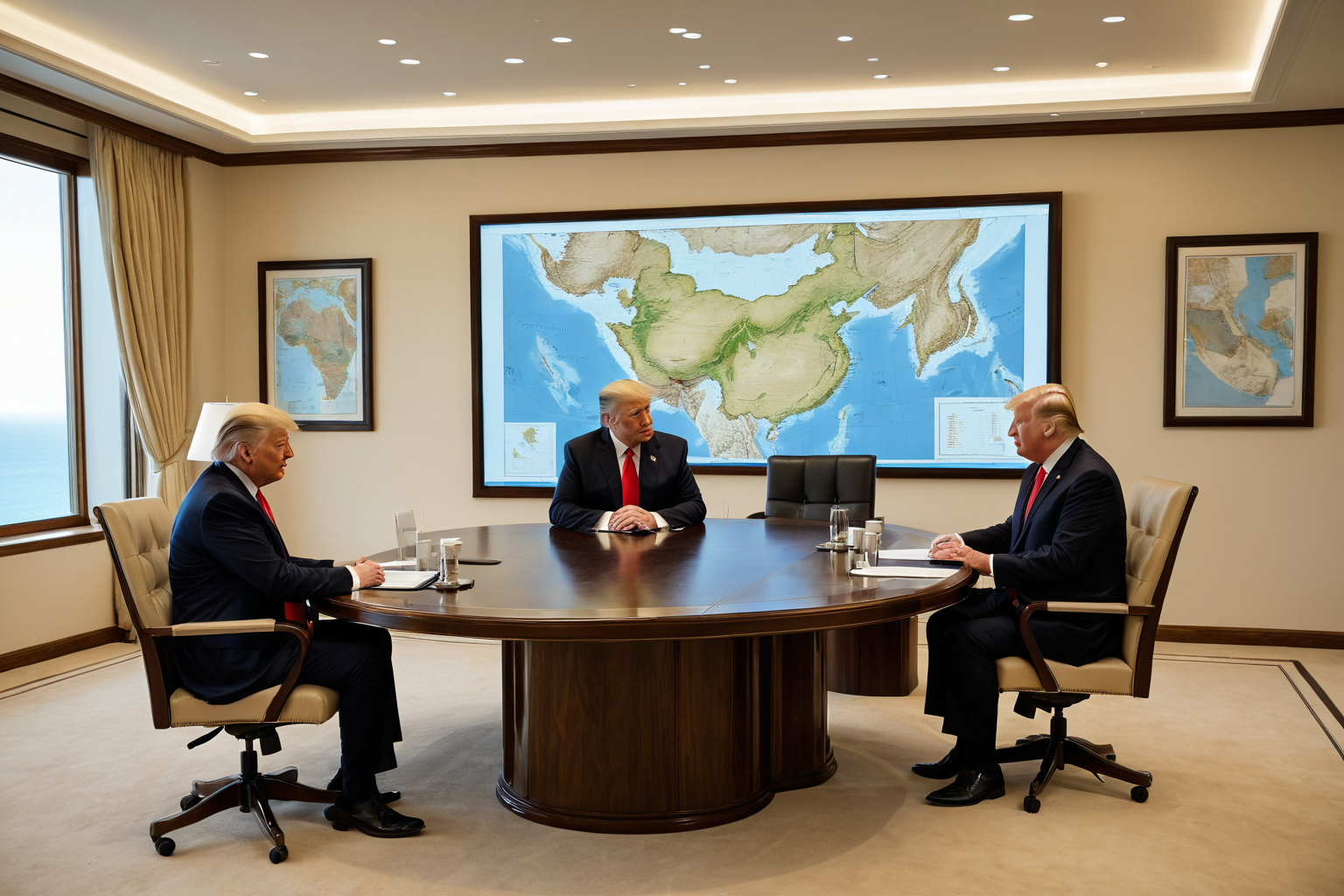
US-China Summit: Joint Opposition to International Waterway Toll Fees
On September 26, U.S. President Trump and Chinese President Xi Jinping announced a joint stance against the imposition of toll fees on international waterways during their summit. This strategic move aims to influence changes in how major international waterways, including the Strait of Hormuz, are managed, linking it to efforts to strengthen trade and technology cooperation.
The agreement to oppose toll fees on international waterways is expected to contribute to shifting Iran's management approach for energy transport routes. The Strait of Hormuz, a critical passage for global energy shipments, has long been a focal point of conflict over control of the region.
Key Outcomes of the US-China Summit
The September 26 summit resulted in eight agreements between the two nations. Among them were opposition to toll fees on international waterways, the establishment of an AI dialogue channel, and enhanced trade cooperation.
The U.S. and China announced a $30 billion tariff pause based on principles of mutual respect and equality. This marks the first step in strengthening cooperation in key areas such as rare earths and AI technology.
Strait of Hormuz and International Waterway Toll Issues
The Strait of Hormuz serves as a crucial energy transport route from the Middle East to Asia, with Iran currently controlling the area. Discussions about imposing toll fees on international waterways reflect the joint U.S.-China stance against changes in how Iran manages its energy transport routes.
As a passage responsible for 20% of global oil shipments, the Strait of Hormuz has seen ongoing conflicts over control. Both nations have stated their opposition to toll fees and commitment to maintaining openness in the region.
Agreement on Establishing an AI Dialogue Channel
The summit saw both countries agree to establish an AI dialogue channel to enhance cooperation in artificial intelligence. This strategic move aims to foster collaboration amid competition for technological supremacy.
The AI dialogue channel will facilitate discussions on technology cooperation, regulatory policy sharing, and support for trade sectors. It is expected to ease the competitive dynamics between the two nations while expanding collaborative opportunities.
Eight Points of Agreement on Tariff Reductions
Eight points were agreed upon regarding tariff reductions at the summit, though specific details and scope remain unspecified. Some reports indicate differing stances on issues like rare earths, AI technology, and Taiwan-related matters.
The $30 billion tariff pause was announced based on principles of mutual respect and equality, signaling the first step toward enhanced trade cooperation in areas such as rare earths and AI technology. Further negotiations are anticipated in these sectors.

Shared Opposition to Iran's Nuclear Weapons Program
The leaders jointly expressed opposition to Iran's possession of nuclear weapons, signaling a willingness to cooperate on regulating Iran's nuclear development. This is seen as an initial step toward resolving international security issues.
Both nations emphasized the need for further cooperation in addressing Iran's nuclear program and discussed potential international responses to ensure regulation of Iran's nuclear activities.
Control of the Strait of Hormuz and Management of International Waterways
The agreement to oppose toll fees on international waterways is analyzed as a measure that could alleviate pressure on Iran's strategy for controlling the Strait of Hormuz. This move may also contribute to stabilizing oil prices during mid-term election periods through strengthened U.S.-China cooperation.
Given its role as a critical energy transport route, conflicts over control of the Strait of Hormuz have persisted. Both nations reaffirmed their commitment to opposing toll fees and maintaining openness in the region.
Strengthening US-China Trade Cooperation
The agreement to oppose toll fees on international waterways is expected to bolster trade cooperation between the U.S. and China. As a strategic measure aimed at influencing management changes for key international waterways including the Strait of Hormuz, it could positively impact energy transport stability.
Both nations plan to advance various policies to strengthen trade relations, contributing to improved economic ties and global market stability.
Establishing an AI Cooperation Framework
The agreement to establish an AI dialogue channel was interpreted as a strategic step toward fostering collaboration amid competition for technological supremacy in AI. Discussions will cover technology cooperation, regulatory policy sharing, and support for trade sectors through this channel.
This initial step aims to strengthen international cooperation on AI development while easing competitive tensions between the two nations to create mutual benefits. The AI dialogue channel could also promote innovation by facilitating shared regulatory policies.
Unconfirmed Details Regarding Tariff Reduction Agreement
The eight points agreed upon regarding tariff reductions were not detailed in specifics, and their scope remains unclear. Some reports suggest differing positions on issues such as rare earths, AI technology, and Taiwan-related matters.
Further confirmation is needed for specific details of the tariff reduction agreement, with potential changes to be considered during ongoing negotiations. This represents an initial step toward improving U.S.-China trade relations, with further negotiations expected in the future.
International Significance of the US-China Summit
The joint opposition to toll fees on international waterways is viewed as presenting a new paradigm for managing global energy transport routes. This agreement aims to enhance international stability through U.S.-China cooperation and serves as an initial step toward resolving energy transport issues in the Middle East.
Both nations plan to develop additional policies to strengthen trade and technology cooperation, which are expected to positively impact the global economy and security. Cooperation on managing critical energy routes like the Strait of Hormuz is seen as contributing to international stability.
Additional Points for Verification
Certain aspects of the agreements announced at the summit lack specific details. Notably, comprehensive information about the eight points related to tariff reductions remains limited.
The following items require verification: (1) Specific scope of application for the joint opposition to toll fees on international waterways; (2) Timeline and main discussion topics for establishing the AI dialogue channel; (3) Detailed content of the eight points regarding tariff reductions.
Frequently Asked Questions
What is the significance of the agreement opposing toll fees on international waterways at the US-China summit?
The joint opposition to toll fees aims to strategically influence changes in Iran's management approach for energy transport routes. By maintaining openness in key international waterways including the Strait of Hormuz, it seeks to strengthen trade cooperation between the two nations.
What effect is expected from establishing an AI dialogue channel at the US-China summit?
The AI dialogue channel aims to enhance collaboration on AI technology while sharing regulatory policies to foster innovation. This initiative is expected to ease competitive dynamics in the AI sector and contribute to mutual benefits between the two countries.
What are the specific details of the eight points regarding tariff reductions?
The specific details of the eight points related to tariff reductions have not been publicly disclosed. Further information may be released as more details become available.
Frequently Asked Questions
The agreement opposing toll fees on international waterways is regarded as presenting a new paradigm for managing global energy transport routes. It aims to enhance international stability through U.S.-China cooperation and serves as an initial step toward resolving energy transport issues in the Middle East.
Both nations plan to develop additional policies to strengthen trade and technology cooperation, which are expected to positively impact the global economy and security. Cooperation on managing critical energy routes like the Strait of Hormuz is seen as contributing to international stability.
You can view more articles on similar topics in one place.
View Related ArticlesFAQ
What is the significance of the agreement opposing toll fees on international waterways at the US-China summit?
The joint opposition to toll fees aims to strategically influence changes in Iran's management approach for energy transport routes. By maintaining openness in key international waterways including the Strait of Hormuz, it seeks to strengthen trade cooperation between the two nations.
What effect is expected from establishing an AI dialogue channel at the US-China summit?
The AI dialogue channel aims to enhance collaboration on AI technology while sharing regulatory policies to foster innovation. This initiative is expected to ease competitive dynamics in the AI sector and contribute to mutual benefits between the two countries.
What are the specific details of the eight points regarding tariff reductions?
The specific details of the eight points related to tariff reductions have not been publicly disclosed. Further information may be released as more details become available.
Korean Source
This article is an English localization of a Korean-language report from BlogScore. Original: 미중 국제수로 통행료 문제, 왜 전 세계 관심?