
Understanding South Korea's Fire Administration Control Unit Activation
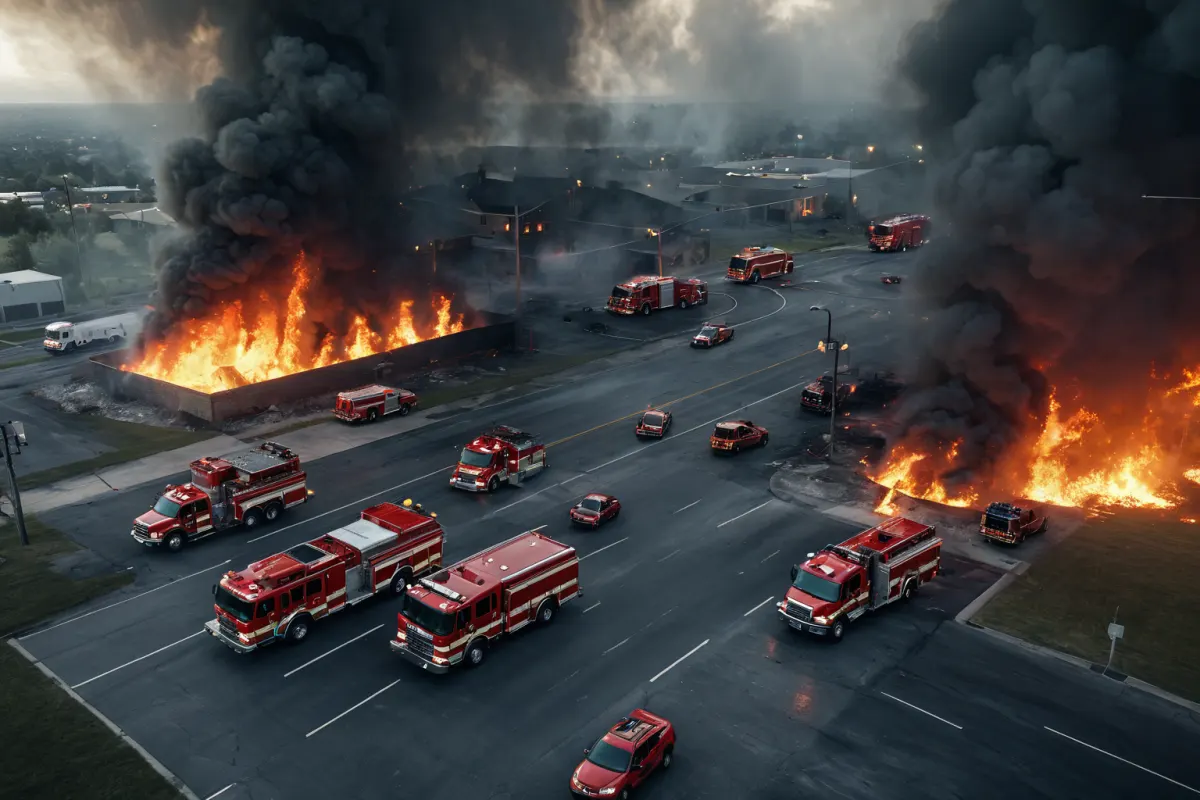
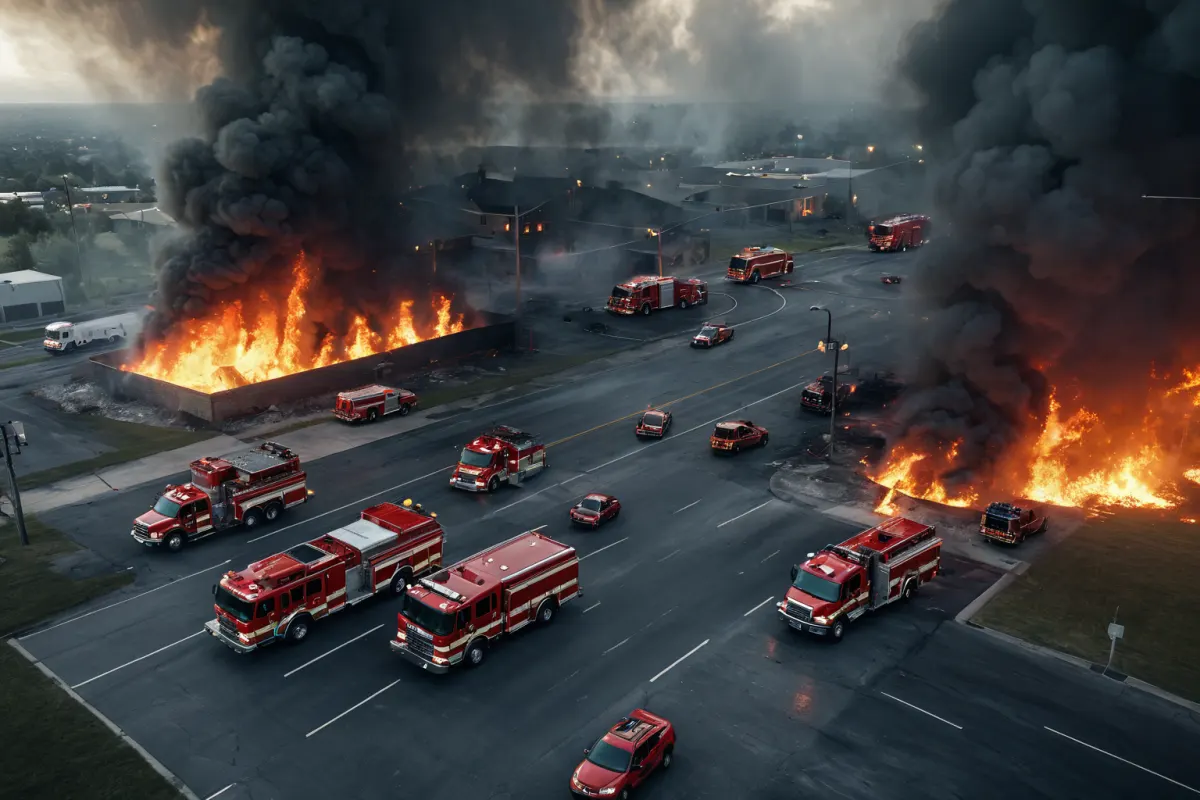
The activation of the Fire Administration Control Unit occurs when large-scale disasters or fires spanning multiple areas are expected to cause significant casualties. In short, it's a step taken by the Fire Administration to consolidate on-site response efforts when regular field command is insufficient.
The key questions are 'when' and 'how' the unit activates. Once operational, situation assessment, resource allocation, additional deployments, and coordination with relevant agencies happen more swiftly. Previously separate responses from individual fire stations now flow as one unified effort.
Activation Criteria for the Fire Administration Control Unit
The Fire Administration Control Unit doesn't activate simply upon receiving a fire report. It's typically considered when an incident is large in scale, has high potential for spreading, or requires both immediate rescue operations and long-term response planning.
Examples include major factory fires, rapidly spreading wildfires, large-scale accidents at public facilities, or widespread disaster scenarios that cannot be resolved with a single site response. It's best understood as an upper-level command structure added when local fire headquarters or on-site commanders are overwhelmed by the situation.
In practice, activation usually occurs after arriving at the scene and assessing the damage, not immediately upon receiving the report. Initial responses may start as standard deployments but can quickly transition to a Control Unit system if the situation escalates.
You can view similar articles on this topic in one place.
View Related ArticlesCore Responsibilities of the Control Unit
The Control Unit's primary role is to organize on-site command. It determines who handles which areas, where equipment and personnel are deployed, and what priorities should be for rescue versus firefighting operations.
In this process, resources like fire trucks, rescue teams, ambulances, helicopters, drones, and chemical response equipment move in coordination. Speed is critical at the scene; if each unit makes independent decisions, confusion can arise more easily.
Another key responsibility is information gathering. The Control Unit continuously verifies details such as the affected area, smoke dispersion direction, potential for additional collapses, and whether residents need evacuation to adjust response strategies. Thus, the Control Unit functions not just as an order-giving body but as a central hub that organizes the situation in real time.
Changes After Activation
The most noticeable change after Control Unit activation is the scale of deployment. More personnel and vehicles are mobilized simultaneously compared to usual, and road closures around the scene and evacuation guidance happen more rapidly.
Another change involves reporting structures. Instead of on-site firefighters reporting separately to headquarters or central command centers, information flows through the Control Unit, speeding up decision-making. This is why media often reports that authorities 'are directly controlling the situation.'

Consider a major warehouse fire: it might initially start as a single fire station response but require Control Unit activation if flames threaten to spread to neighboring buildings. At this point, interior firefighting must be coordinated with surrounding road management, power shutdown coordination, and resident safety measures.
Why the Control Unit is Frequently Mentioned
The Control Unit is often mentioned in news reports because it signals a significant escalation in response level for major incidents. It indicates that the situation has reached a point requiring national-level support beyond routine procedures.
Many searchers ask whether Control Unit activation always means a severe disaster, but this isn't necessarily true. Instead, it suggests that rapid upward coordination is needed when considering human safety or potential spread risks.
Another reason for frequent mentions is the similarity between related terms. Fire headquarters, on-site command teams, Control Units, and central response systems can be confusingly similar. Understanding that the Control Unit serves as the coordinating mechanism among these structures helps reduce confusion.
How General Public Can Respond Appropriately
If you hear about Control Unit activation, the first step is to avoid approaching the scene. Gathering near the disaster site delays rescue and firefighting efforts and can worsen secondary damage.
Residents nearby should prioritize following broadcast instructions and evacuation orders. Basic safety measures like closing windows to prevent smoke entry, checking evacuation routes, or wearing masks are more important than packing belongings during fire or smoke situations. In such scenarios, prioritizing personal safety over taking photos is always safer.
For example, during a factory fire near an apartment complex where smoke spreads through neighborhoods, staying indoors with mask on and avoiding unnecessary outings is preferable to going out for photos. During these incidents, the Control Unit works not only on firefighting but also on minimizing resident impact.
Understanding Related Terminology
To better understand Fire Administration Control Unit activation, it's helpful to see related terms together. Phrases like 'on-site command,' 'emergency rescue,' 'response stages,' and 'evacuation orders' often appear because they're part of a unified disaster response flow.
Specifically, the term 'activation' means the system has begun moving in practice, not just existing on paper. It indicates that personnel and authority are immediately deployed according to incident scale. Thus, when articles mention this activation, it signifies that response efforts have officially intensified.
Similar cases include rapidly spreading wildfires, tunnel accidents, hazardous chemical leaks, or large structural collapses. These incidents often require long-term responses beyond a single firefighting effort, making the Control Unit system particularly crucial.
FAQ
Q1. Who decides to activate the Fire Administration Control Unit?
A. The decision is made by the fire command structure based on the situation and damage assessment at the scene. Activation typically occurs after confirming that higher-level response is needed.
Q2. Should I evacuate immediately if the Control Unit activates?
A. Not necessarily, but you should follow evacuation instructions or alarms as soon as they're issued. Avoid approaching the scene regardless of whether evacuation orders are given.
Q3. Why is Control Unit activation frequently reported in news articles?
A. Because it signals that major disaster response has officially begun. It's a key indicator of incident scale and response level, which is why it appears often in reports.
Response stages and official announcements may vary by incident, so checking related coverage and official statements is recommended for the most accurate information.
Continue exploring similar topics.
View Category ArticlesFAQ
Who decides to activate the Fire Administration Control Unit?
The decision is made by the fire command structure based on the situation and damage assessment at the scene. Activation typically occurs after confirming that higher-level response is needed.
Should I evacuate immediately if the Control Unit activates?
Not necessarily, but you should follow evacuation instructions or alarms as soon as they're issued. Avoid approaching the scene regardless of whether evacuation orders are given.
Why is Control Unit activation frequently reported in news articles?
Because it signals that major disaster response has officially begun. It's a key indicator of incident scale and response level, which is why it appears often in reports.
Korean Source
This article is an English localization of a Korean-language report from BlogScore. Original: 소방청 통제단 가동, 언제부터 어떻게 움직이나