
Understanding the Differences Between Aircraft Carrier Types: Standard, Assault Landing, and Light Carriers
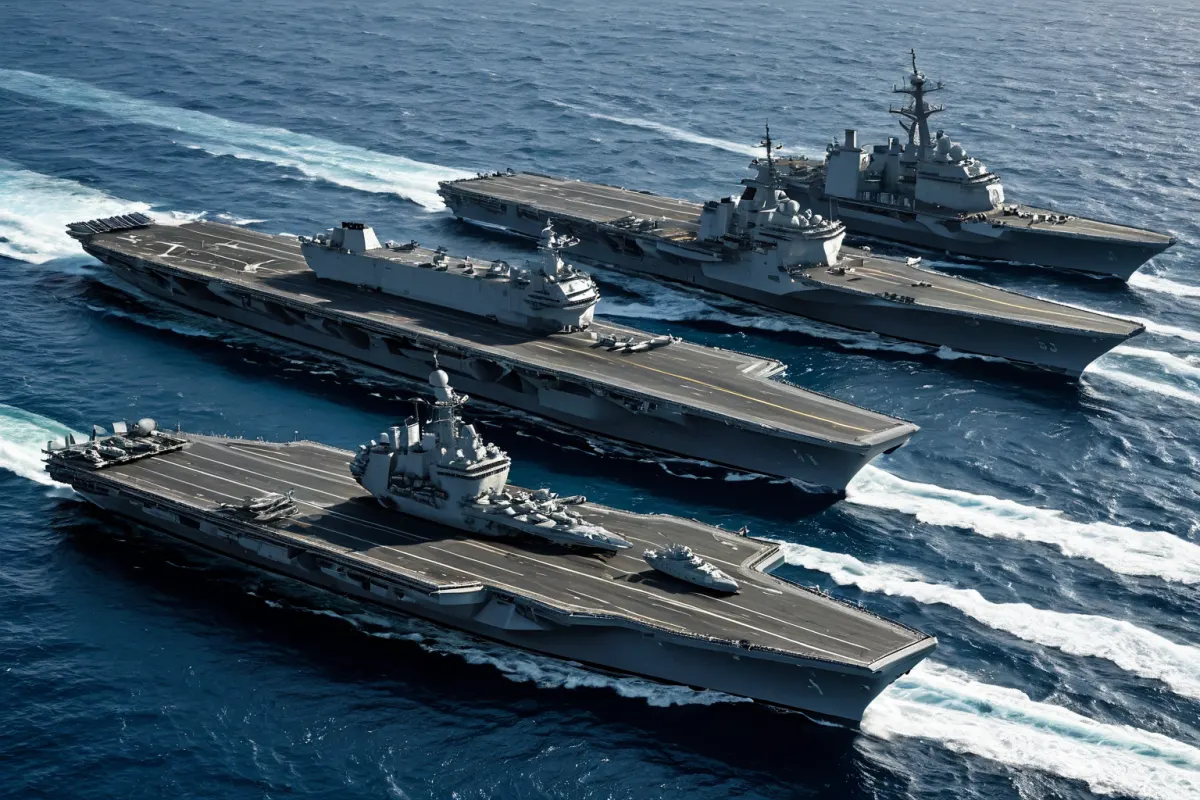
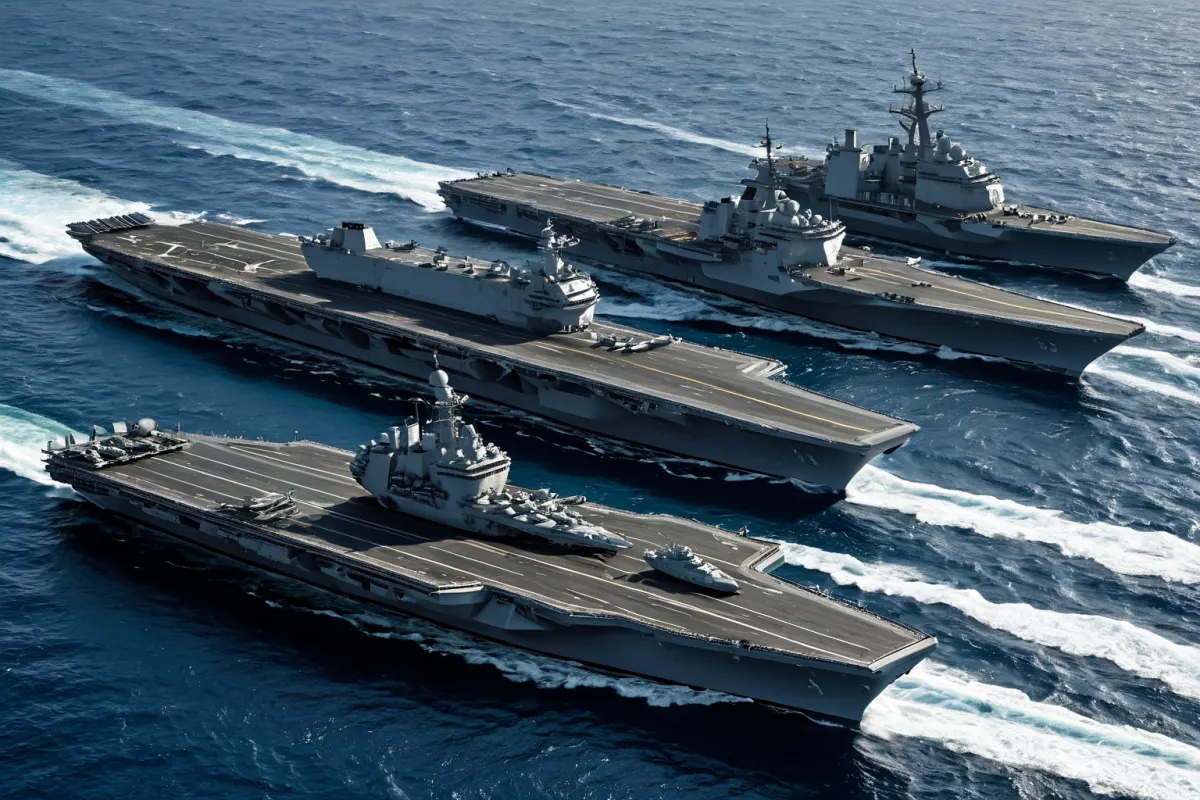
Aircraft carrier types can be broadly categorized into standard carriers, assault landing ships, and light carriers for easier understanding. While they may look similar at first glance, they differ significantly in operational purpose, deployed aircraft, and launch methods. In short, standard carriers are designed primarily for combat aircraft operations, assault landing ships focus on supporting troop landings and amphibious assaults, while light carriers are smaller vessels performing limited air operations.
A common point of confusion when searching is that even though all these vessels include "aircraft carrier" in their name, their actual roles vary greatly. Simply judging by size can lead to misunderstandings.
Basic Classification of Aircraft Carrier Types
The first distinguishing factor is how the onboard aircraft are operated. Standard carriers operate a wide range of aircraft including fighters, early warning planes, and anti-submarine helicopters, serving as the core of air power projection.
In contrast, assault landing ships prioritize amphibious operations, with significant emphasis on transporting troops, armored vehicles, and landing craft. Light carriers are smaller than standard carriers, typically carry fewer aircraft, and have more limited operational scope.
You can find similar articles in one place.
View Related ArticlesRole of Standard Aircraft Carriers
Standard aircraft carriers can be thought of as "mobile airfields in the sky." Examples include the U.S. Navy's Nimitz-class and Gerald R. Ford-class carriers, which conduct long-term operations at sea to secure air superiority and carry out strike missions.
The key features of this type are their large flight decks and a large number of aircraft. Because they can deploy numerous combat aircraft, they should be viewed as an aviation power platform rather than just support vessels.
For example, when pressuring enemy fleets or conducting airstrikes on land targets far from shore, the value of standard carriers becomes evident. However, their construction and maintenance costs are very high, requiring accompanying escort forces.
Purpose of Assault Landing Ships
Although assault landing ships may seem similar to aircraft carriers at first glance, they have a different purpose. These vessels focus on deploying marine troops from sea to land during amphibious assaults.
They do operate aircraft, but their primary focus is not fighters—they use helicopters and vertical take-off aircraft for landing support. Examples include the U.S. Navy's Wasp-class and America-class ships, which combine troop transport with amphibious assault support capabilities.
In practice, assault landing ships are also used in disaster relief and humanitarian operations. Their spacious decks and internal space allow them to simultaneously deploy helicopters, landing vehicles, and medical equipment.
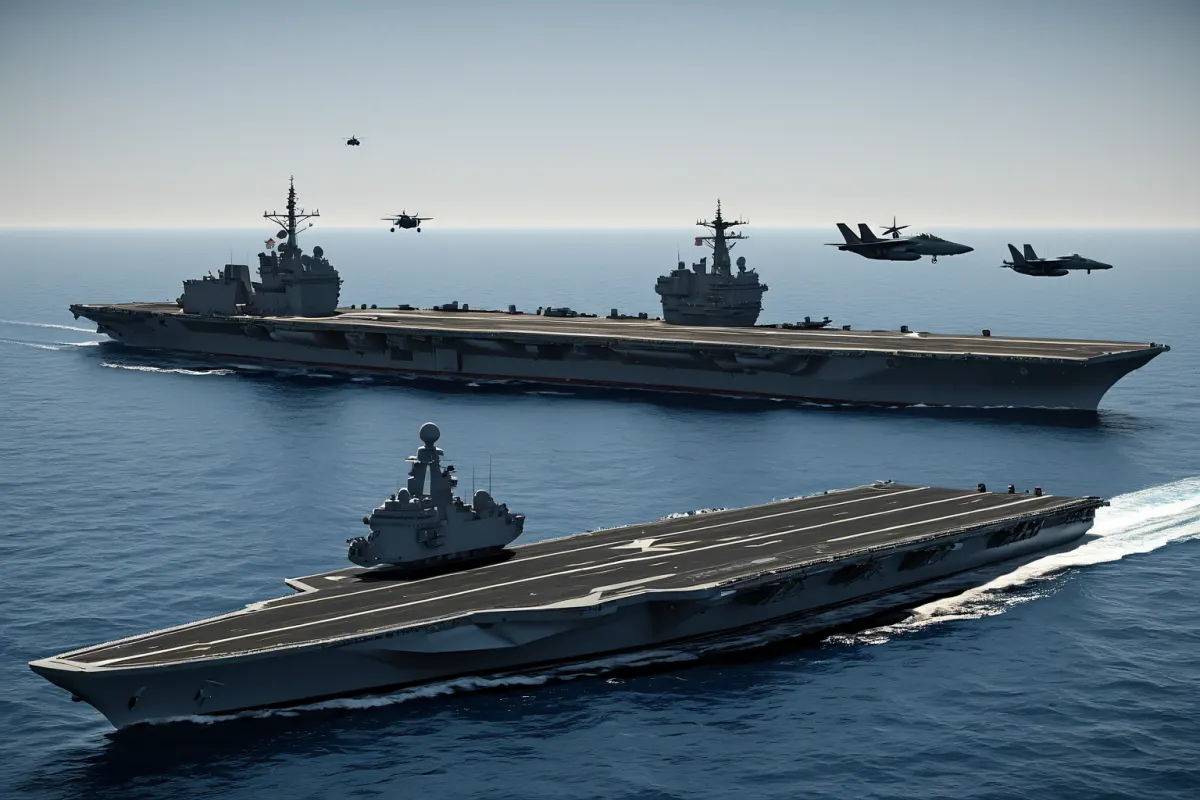
Operational Approach of Light Carriers
Light carriers are smaller and lighter than standard carriers. They typically carry fewer aircraft and have relatively shorter operational endurance. Definitions vary by country, so the line between large destroyers and light carriers can sometimes be blurry.
They often operate vertical take-off aircraft or lightweight fighters, making them suitable for specific regional defense, maritime patrols, and limited strike missions rather than forming large carrier groups.
For example, the UK's Queen Elizabeth-class is commonly classified as a light carrier, but its aircraft composition and operational concept differ from standard carriers. In essence, light carriers can be understood as "small but capable of performing necessary missions."
Operational Concept Over Size
When distinguishing between aircraft carrier types, size alone is not sufficient. What matters most is what power they carry and what mission they were designed for.
Standard carriers focus on air warfare at sea, assault landing ships on troop deployment and amphibious support, while light carriers are geared toward limited air operations. Even if they share similar flight decks, different purposes result in completely different operational characteristics.
For example, if the core mission involves fighter aircraft squadrons, a standard carrier is appropriate; for marine corps landings and helicopter operations, an assault landing ship would be more suitable. The choice varies depending on national budgets and surrounding maritime environments.
Why U.S. Aircraft Carrier Types Are Often Compared
The reason "U.S. aircraft carrier types" frequently appear together in searches is that the United States is widely regarded as the standard for aircraft carrier operations. The U.S. Navy operates a wide range of vessels including large nuclear-powered carriers, assault landing ships, and light carriers.
Therefore, even though they are called "aircraft carriers," these vessels may actually be carriers, assault landing ships, or amphibious assault ships that look similar. Focusing on the types of aircraft carried and their missions provides clearer differentiation than relying solely on names.
Key Points for Distinguishing in Practice
In practice, you can distinguish between these carrier types by focusing on three key points:
- Whether the deployed aircraft are fighter-focused or helicopter-focused
- Whether they have capabilities for transporting troops and landing vehicles
- Whether the mission is centered around air operations rather than size
For example, if a vessel has a large deck but also significant space for landing craft and troop transport, it's likely an assault landing ship. Conversely, if it has well-established fighter aircraft systems designed for long-range strikes, it's closer to a standard carrier.
One-Line Summary to Remember
To avoid confusion, remember: Standard carriers are the "center of air power," assault landing ships support "amphibious operations," and light carriers perform "limited air operations." When combined with aircraft types and mission purpose, distinguishing between them becomes much easier.
Especially in news articles, the same vessel may be described as either an aircraft carrier or a landing ship depending on perspective. Relying solely on names can cause confusion. Therefore, it's safest to always consider classification based on mission focus.
FAQ
Q1. Are aircraft carriers and assault landing ships the same type of vessel?
A1. No. While they may look similar externally, aircraft carriers are designed for fighter-centric operations, while assault landing ships focus on troop landing support.
Q2. Why are light carriers separated into their own category?
A2. They are smaller than standard carriers with fewer aircraft and more limited operational scope, warranting separate classification.
Q3. Why are U.S. aircraft carrier types frequently mentioned?
A3. The United States actively operates both large carriers and assault landing ships, making them a common reference point when understanding carrier classifications.
Note that aircraft carrier classification varies by country, so it's best to verify the latest fleet structure and individual vessel details as needed.
Continue exploring similar topics.
View Category ArticlesFAQ
Are aircraft carriers and assault landing ships the same type of vessel?
No. While they may look similar externally, aircraft carriers are designed for fighter-centric operations, while assault landing ships focus on troop landing support.
Why are light carriers separated into their own category?
They are smaller than standard carriers with fewer aircraft and more limited operational scope, warranting separate classification.
Why are U.S. aircraft carrier types frequently mentioned?
The United States actively operates both large carriers and assault landing ships, making them a common reference point when understanding carrier classifications.
Korean Source
This article is an English localization of a Korean-language report from BlogScore. Original: 항공모함종류 차이점:일반형·강습상륙·경항모 무엇이 달라?