
Trump-Xi Summit: Key Discussion Topics and Expected Shifts in International Relations
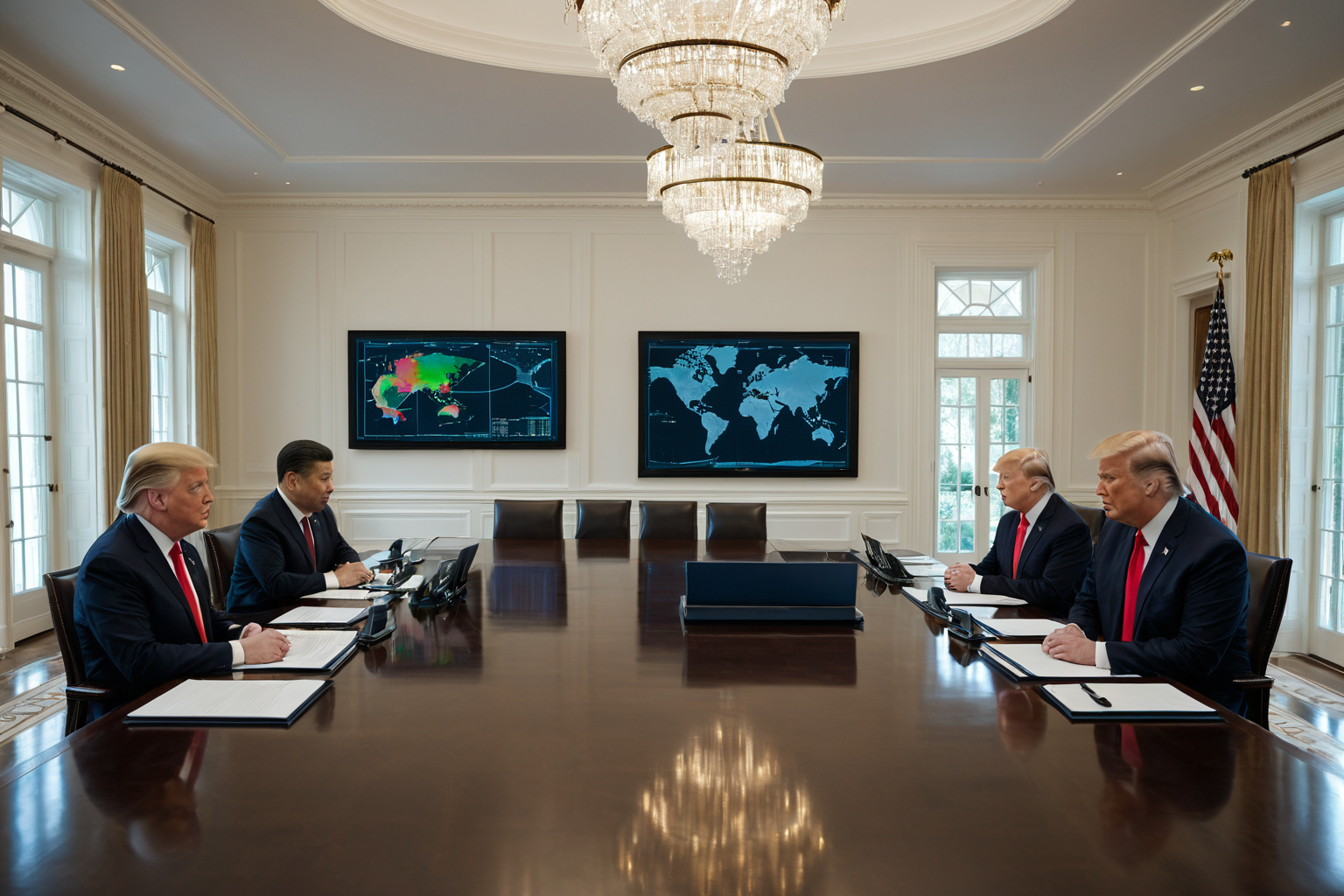
Trump-Xi Summit Schedule and Key Discussion Topics
The upcoming Trump-Xi summit scheduled for September 24, 2026, at the White House is expected to focus on establishing an AI dialogue channel, adjusting trade tariffs, and addressing rare earth supply chain issues. This meeting will serve as a significant opportunity to improve bilateral relations following their sixth in-person talks held on May 13-14, 2026.
Preparatory Discussions
Before the summit, U.S.-China economic and trade officials met in New York for preparatory discussions on September 20. The meeting focused on establishing an AI dialogue channel and a security notification system, with the Trump administration announcing a policy to ease tariff pressures on China. This aligns with President Xi's May remarks about maintaining friendly relations to avoid becoming 'adversaries.'
The Trump-Xi summit will be a central event during the 'diplomatic superweek' following the UN General Assembly, with discussions expected to include Iran conflict issues as well. U.S. Asian allies have expressed concerns about potential trust loss regarding Taiwan, with Japan and South Korea reportedly considering additional measures.
The Significance of the May 2026 Summit
During their two-day sixth in-person talks on May 13-14, 2026, President Xi stated he would handle Taiwan issues 'cautiously,' while Trump emphasized creating 'the best U.S.-China relationship.' Both sides pledged to maintain friendly relations without becoming 'adversaries,' though analysts predicted the situation might shift toward an 'uneasy truce' after the talks.
For the September summit, discussions on Iran-related policies and fentanyl issues are also expected. Stabilizing rare earth supply chains has emerged as a critical task, with potential acceleration in global supply chain restructuring if U.S.-China economic cooperation continues.
New Strategic Approach to U.S.-China Relations
The Trump administration is redefining its 'China policy' by easing trade tariffs while taking a cautious stance on Taiwan. This reflects efforts since the May summit to avoid becoming 'adversaries.' However, U.S. Asian allies have expressed concerns about trust loss over Taiwan issues, with South Korea and Japan currently reviewing additional diplomatic measures.
The preparatory meeting between economic and trade officials in New York on September 20 underscores the unprecedented importance of this summit. Discussions on establishing an AI dialogue channel are expected to contribute to rebuilding trust between the two nations.

Key Issues at the Summit: AI, Tariffs, Rare Earths
The main topics for Trump and Xi will include competition for AI dominance, trade tariff adjustments, and stabilizing rare earth supply chains. Establishing an AI dialogue channel aims to address both technological cooperation and security issues simultaneously, especially as AI development accelerates rapidly.
On tariffs, the Trump administration has shifted toward easing pressure on China, which can be seen as part of efforts to build trust since May. However, whether this tariff ceasefire will continue remains a crucial factor in determining the future of U.S.-China economic cooperation.
Rare earth supply chains are critical for global high-tech industries, and cooperation between the two nations is essential. Given China's dominance in rare earth production—accounting for over 70% globally—U.S.-China collaboration could significantly impact supply chain stability.
Taiwan Issue and Reactions from Asian Allies
The Taiwan issue will remain a key topic at the summit. President Xi stated during May's talks he would handle it 'cautiously,' while Trump has shown a cautious approach to relations with Taiwan.
However, U.S. Asian allies are concerned about potential trust loss over Taiwan. Japan and South Korea are reportedly reviewing additional diplomatic measures, with South Korea specifically considering actions related to Taiwan issues. This represents a warning signal regarding possible negative impacts on regional stability from improved U.S.-China relations.
Diplomatic Superweek Following the UN General Assembly
The Trump-Xi summit will be a central event during the 'diplomatic superweek' following the UN General Assembly, with discussions expected to include Iran conflict issues. This could serve as an important opportunity for both nations to explore joint responses to global security challenges.
During the UN General Assembly period, the U.S. emphasized strengthening international cooperation, with multilateral discussions on resolving the Iran conflict anticipated. The Trump administration is working to improve relations with Iran, which could positively impact economic cooperation between the two countries.
Discussions on Establishing an AI Dialogue Channel
Establishing an AI dialogue channel is one of the main topics for Trump and Xi. This initiative aims to address both technological collaboration and security issues simultaneously, especially as AI development accelerates rapidly.
The establishment of this channel is expected to serve as a new platform for discussing security concerns while easing technological competition between the two nations. It can be interpreted as a result of their efforts since May's summit to avoid becoming 'adversaries.'
Tariff Ceasefire and Economic Cooperation
The Trump administration has shifted toward easing tariff pressures on China, which is viewed as part of ongoing trust-building efforts following the May summit. However, whether this tariff ceasefire will continue remains a critical factor in determining the future of U.S.-China economic cooperation.
A tariff ceasefire could influence global trade patterns, with increased U.S.-China trade expected to benefit both economies positively.
Stabilizing Rare Earth Supply Chains
Rare earth supply chains are critical for high-tech industries globally, making cooperation between the two nations essential. Given China's dominance in rare earth production—accounting for over 70% of global output—U.S.-China collaboration could significantly impact supply chain stability.
Both countries are expected to pursue joint research and technological cooperation on rare earth supply chains, which could also contribute to enhancing global competitiveness in high-tech industries.
Predictions for the September 2026 Summit
The Trump-Xi summit scheduled for September 24, 2026, at the White House will serve as an important opportunity to improve bilateral relations. Discussions are expected to center on economic issues including AI, tariffs, and rare earths.
Particularly notable is whether the 'uneasy truce' that emerged after May's summit will further improve through this meeting. If U.S.-China economic cooperation continues, it could accelerate global supply chain restructuring.
Key Information to Verify
Schedule: September 24, 2026, at the White House. Preparatory discussions took place on September 20 in New York between U.S.-China economic and trade officials.
Main Discussion Topics: Establishing an AI dialogue channel, adjusting trade tariffs, stabilizing rare earth supply chains, and Iran conflict issues.
Taiwan Issue: During May's summit, Xi stated he would handle Taiwan issues 'cautiously,' while Trump has shown a cautious approach to relations with Taiwan.
Frequently Asked Questions
Q: What major topics are expected to be discussed at the Trump-Xi summit?
The Trump-Xi summit will focus on establishing an AI dialogue channel, adjusting trade tariffs, and stabilizing rare earth supply chains. This reflects efforts since May's summit to avoid becoming 'adversaries.'
Q: How will the Taiwan issue be addressed at this summit?
President Xi stated during May's talks he would handle Taiwan issues 'cautiously,' while Trump has shown a cautious approach. However, U.S. Asian allies are concerned about potential trust loss over Taiwan.
Q: What impact could U.S.-China economic cooperation have on global supply chains?
If U.S.-China economic cooperation continues, it could accelerate the restructuring of global supply chains. Stabilizing rare earth supply chains is particularly important for enhancing competitiveness in high-tech industries globally.
Frequently Asked Questions
The Trump-Xi summit is scheduled for September 24, 2026, at the White House, with discussions expected to center on economic issues including AI, tariffs, and rare earths. The key question is whether the 'uneasy truce' following May's summit will improve further.
If U.S.-China economic cooperation continues, global supply chain restructuring could accelerate, impacting high-tech industries and trade patterns significantly. However, concerns from U.S. Asian allies regarding Taiwan remain an unresolved challenge.
You can view more articles on similar topics in one place.
View Related ArticlesFAQ
What major topics are expected to be discussed at the Trump-Xi summit?
The Trump-Xi summit will focus on establishing an AI dialogue channel, adjusting trade tariffs, and stabilizing rare earth supply chains. This reflects efforts since May's summit to avoid becoming 'adversaries.'
How will the Taiwan issue be addressed at this summit?
President Xi stated during May's talks he would handle Taiwan issues 'cautiously,' while Trump has shown a cautious approach. However, U.S. Asian allies are concerned about potential trust loss over Taiwan.
What impact could U.S.-China economic cooperation have on global supply chains?
If U.S.-China economic cooperation continues, it could accelerate the restructuring of global supply chains. Stabilizing rare earth supply chains is particularly important for enhancing competitiveness in high-tech industries globally.
Korean Source
This article is an English localization of a Korean-language report from BlogScore. Original: 트럼프-시진핑 정상회담, 핵심 논의 주제와 국제 관계 변화 예상