
Trump's Policies and the Reinforcement of US Military Presence: Shifts in South Korea's Security Strategy

Trump Administration's Shift in Military Presence Strategy
The Trump administration has strengthened its military presence in Greenland through a deal with Denmark, aiming to secure permanent U.S. control over the territory. This aligns with broader plans to reorganize global U.S. military deployments, including reducing up to four units from an 80,000-strong European contingent.
Strengthened Military Presence in Greenland and Securing Control
The Trump administration announced a deal with Denmark on September 18, 2026, to strengthen the U.S. military presence in Greenland. This agreement aims at securing permanent U.S. control over Greenland, following negotiations between the U.S. and Danish governments. According to reports, President Trump emphasized on September 19 that 'Greenland should be under permanent American sovereignty.'
While Denmark approved the strengthened military presence, it also guaranteed Greenland's self-governance rights. However, the U.S. aims at securing permanent control, which ties into broader European troop reviews.
European Troop Reduction Plans
The U.S. Department of Defense began a comprehensive review of its European military presence on July 31, 2026, as part of Trump's 'new isolationism' security policy. The plan aims to reduce at least four units from the 80,000-strong European force. According to a defense department statement, reductions will be based on NATO allies' 'contribution levels,' reflecting an effort to improve strategic efficiency.
The U.S. announced it would finalize its troop reduction plans for Europe by November 2026, alongside potential withdrawals from the Persian Gulf and Middle East military forces as part of strategic preparations for a possible conflict with Iran.
US-South Korea Alliance and the Issue of US Troops in South Korea
The Trump administration's military reorganization policy is affecting the U.S.-South Korea alliance. In December 2025, President Trump outlined an Indo-Pacific strategy centered on Taiwan, suggesting increased expectations for South Korea's role. A congressional report indicated that the U.S.-South Korea alliance reached a turning point in September 2026.
On December 7, 2025, President Trump stated that 'South Korea has not received American support,' emphasizing the need to strengthen the alliance. This led to the passage of a defense bill including the maintenance of U.S. troops in South Korea by the Republican-led House on July 23, 2026.
Deepening Tensions Between US and Europe
The announcement of troop withdrawals from Europe has strained relations between the U.S. and European nations. Following President Trump's declaration of withdrawing troops from Europe on May 3, 2026, European countries strongly protested. Germany criticized the move as undermining 'American credibility,' while France reportedly considered additional military deployments.
In this context, the U.S. Department of Defense is moving forward with a review of its European troop presence, emphasizing the 'contribution level' standard. This approach reflects the U.S.'s effort to assess NATO allies' military contributions and improve strategic efficiency.
Trump Administration's Indo-Pacific Strategy
The Trump administration has announced a strategy focused on Taiwan within the Indo-Pacific region. This aims to intensify competition with China in East Asia, suggesting South Korea may be expected to play an expanded role. On December 6, 2025, President Trump stated that 'South Korea should strengthen its alliance with the U.S., similar to Taiwan.'
While reports suggest the South Korean government is considering expanding the U.S. military presence, specific plans have not yet been announced. However, a congressional report released in September 2026 indicated that the U.S.-South Korea alliance has reached a turning point.
Troop Reductions and Pressure on Allies
The Trump administration is also considering pressuring allies to deploy troops to the Strait of Hormuz. This aligns with broader shifts in military roles in Europe, as part of efforts to enhance strategic efficiency. The Strait of Hormuz is a key energy transit route in the Middle East, and U.S. troop presence is seen as necessary for stability.
The Defense Appropriations Act passed by the Republican-led House on July 23, 2026, includes provisions for maintaining U.S. troops in South Korea, reflecting support for the Trump administration's military reorganization policy.
Evaluating Military Contributions from Allies
The U.S. plans to adjust its European troop presence based on NATO allies' 'contribution levels,' suggesting a perception that European nations are not providing sufficient military support. The reduction plan announced on August 27, 2026, will determine the scale of troop cuts according to this standard.
European countries have protested against U.S. demands and are strengthening their military autonomy. France has announced plans to expand its own military capabilities, while Germany has begun discussions about compensation for the withdrawal of U.S. troops.
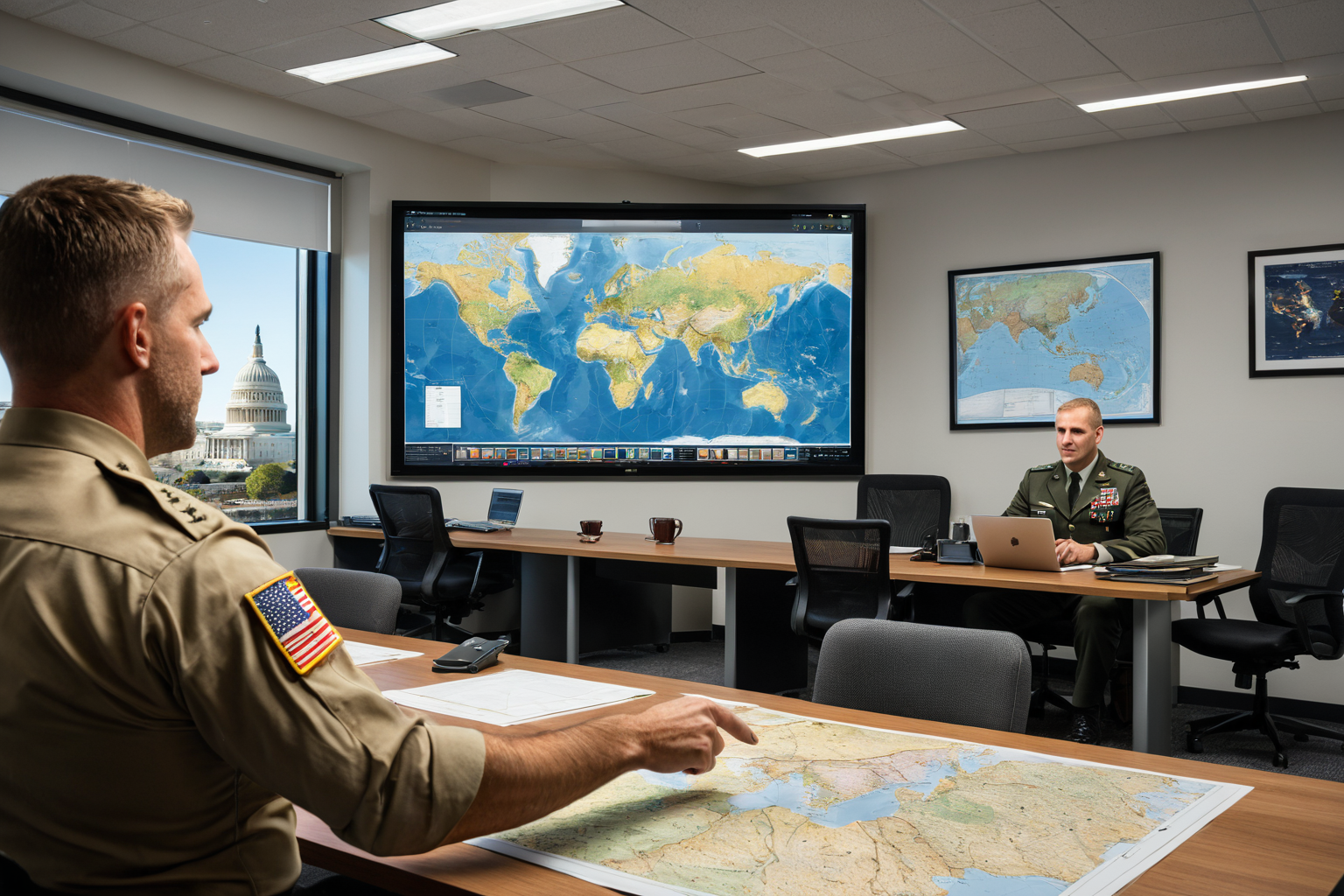
Strategic Goals and Conflicts in Trump's Administration
The Trump administration aims to expand U.S. strategic influence through securing permanent control over Greenland, reducing European troop presence, and focusing on a Taiwan-centered Indo-Pacific strategy. However, this approach risks worsening U.S.-European relations and creating a turning point for the U.S.-South Korea alliance. The potential reduction of U.S. troops in South Korea poses a significant challenge to the South Korean government.
Impact of US Strategic Shifts on Regional Security
The Trump administration's military reorganization policy could reshape security dynamics in Europe and Asia. Reduced U.S. troop presence in Europe may weaken responses to Russia, while increased focus on China in Asia is expected. South Korea might be positioned to play a role similar to Taiwan within the U.S. Indo-Pacific strategy, directly linking to potential reductions of U.S. troops in South Korea. A congressional report released in September 2026 highlighted that the U.S.-South Korea alliance has reached a turning point, indicating the need for South Korea to prepare for new strategic environments.
Trump's 'New Isolationism' Policy and International Relations
The Trump administration has declared a 'global reorganization of U.S. military presence' as part of its 'new isolationism' security policy. This signifies a shift toward reducing military roles in Europe and Asia while focusing on a Taiwan-centered Indo-Pacific strategy. However, the policy has heightened international uncertainty through strong reactions from European nations.
Verified Information
The Trump administration announced a deal to strengthen U.S. military presence in Greenland with Denmark on September 18, 2026, aiming for permanent U.S. control over Greenland. This policy aligns with plans to reduce at least four units from the European force of 80,000 troops.
The U.S. Department of Defense began a comprehensive review of its European military presence on July 31, 2026, as part of Trump's 'new isolationism' policy. Reductions will be based on NATO allies' 'contribution levels,' with the final plan to be announced by November 2026.
Frequently Asked Questions
Why is the Trump administration strengthening military presence in Greenland?
The Trump administration aims to secure permanent U.S. control over Greenland through strengthened military presence, aligning with broader global troop reorganization plans that include reducing up to four units from Europe's 80,000-strong force.
What is the basis for reducing U.S. troops in Europe?
The U.S. bases its European troop reductions on NATO allies' 'contribution levels,' reflecting a perception that European nations are not providing sufficient military support. The reduction plan announced on August 27, 2026, will determine cut sizes according to this standard.
What does the congressional report say about the U.S.-South Korea alliance reaching a turning point?
A congressional report released in September 2026 stated that the U.S.-South Korea alliance has reached a turning point. This relates to Trump's military reorganization policy, including potential reductions of U.S. troops in South Korea and increased expectations for South Korea's role.
FAQ
Why is the Trump administration strengthening military presence in Greenland?
The Trump administration aims to secure permanent U.S. control over Greenland through strengthened military presence, aligning with broader global troop reorganization plans that include reducing up to four units from Europe's 80,000-strong force.
What is the basis for reducing U.S. troops in Europe?
The U.S. bases its European troop reductions on NATO allies' 'contribution levels,' reflecting a perception that European nations are not providing sufficient military support. The reduction plan announced on August 27, 2026, will determine cut sizes according to this standard.
What does the congressional report say about the U.S.-South Korea alliance reaching a turning point?
A congressional report released in September 2026 stated that the U.S.-South Korea alliance has reached a turning point. This relates to Trump's military reorganization policy, including potential reductions of U.S. troops in South Korea and increased expectations for South Korea's role.
Korean Source
This article is an English localization of a Korean-language report from BlogScore. Original: 트럼프 정책으로 인한 미군 주둔 강화, 한국 안보 전략 변화