
South Korea's Ocean Warming Crisis: A Climate Change Priority


Korean Seas Warming at Twice the Global Rate
South Korea's ocean temperatures are rising more than twice as fast as the global average. This rapid warming trend is a critical focus in climate change research. In regions like Jeju and southern Gyeongsang Province, ecosystems are shifting and fisheries face challenges, with sea temperatures near Yeodo showing a two-fold increase compared to global averages. Over the past decade, South Korea's marine temperature has risen at an annual rate of 0.35°C—significantly exceeding the global average of 0.17°C. This phenomenon is attributed to changes in large-scale climate patterns, such as the North Pacific tropical current, particularly noticeable in areas with rapidly rising sea levels like the East and South Seas.
Ecosystem Shifts Due to High Temperatures
The accelerated warming near Yeodo has destabilized yellowtail and flounder fisheries. In southern Gyeongsang Province, high temperatures have triggered ecological disruptions, including increased jellyfish sightings. Coral deaths in Seogwipo and the discovery of Philippine corals highlight these ecosystem changes. Rising temperatures stress corals, causing bleaching events that reduce marine biodiversity. High-risk species like tuna and sharks are experiencing population declines due to habitat shifts, while squid—less temperature-sensitive—have seen a sharp increase in numbers.
Government Response Efforts
Gyeongsang Province has secured 480 million won in national funding for climate change adaptation aquaculture projects—the largest nationwide. The initiative focuses on transitioning to subtropical species and implementing region-specific marine forecasting services. Localized services like 'Jeonnam Sea Guide' aim to improve prediction and response to high temperatures. This three-year project, running until 2026, will support the transition of 15 aquaculture sites to subtropical species. Additionally, the Ministry of Oceans and Fisheries is implementing comprehensive measures for summer seas expected to be 1°C warmer than usual, including real-time monitoring systems for seafood safety.
Key Focus in Climate Change Research
The warming of South Korean waters extends beyond fisheries, affecting entire ecosystems. Efforts to find new aquaculture species and address jellyfish outbreaks are providing valuable data for climate change research. A bill for supporting the restructuring and closure of aquaculture facilities is also under consideration, highlighting the urgent need for policy responses to sustainable fisheries development. Recent studies indicate that ocean warming leads to reduced oxygen levels, expanding low-oxygen zones and directly impacting fish survival—accelerating habitat loss for temperature-sensitive species like yellowtail and flounder.
Accelerating Ecosystem Changes
Coral deaths in Seogwipo and the discovery of Philippine corals show accelerating ecosystem shifts. These changes, including threats to tuna and sharks alongside squid population surges, are significant research focuses. Coral mortality in Seogwipo waters began intensifying in 2023, linked to an increase in days exceeding 26°C—averaging over 15 days annually. Meanwhile, regions where Philippine corals were found exhibit new species typical of subtropical ecosystems. These shifts accompany marine life migration patterns and serve as important indicators for climate change research.
Government Policies and Strategic Response
The Ministry of Oceans and Fisheries is implementing comprehensive measures for summer seas expected to be 1°C warmer than usual, including high-temperature and red tide management plans. Gyeongsang Province's climate adaptation aquaculture project is the largest nationally, focusing on transitioning to subtropical species. Region-specific marine forecasting services like 'Jeonnam Sea Guide' are being considered, alongside a bill supporting climate change adaptation for aquaculture facilities. This legislation provides funding support and aids in developing new species and market entry strategies. Additionally, an AI-based data analysis platform for ocean ecosystem monitoring is under development.
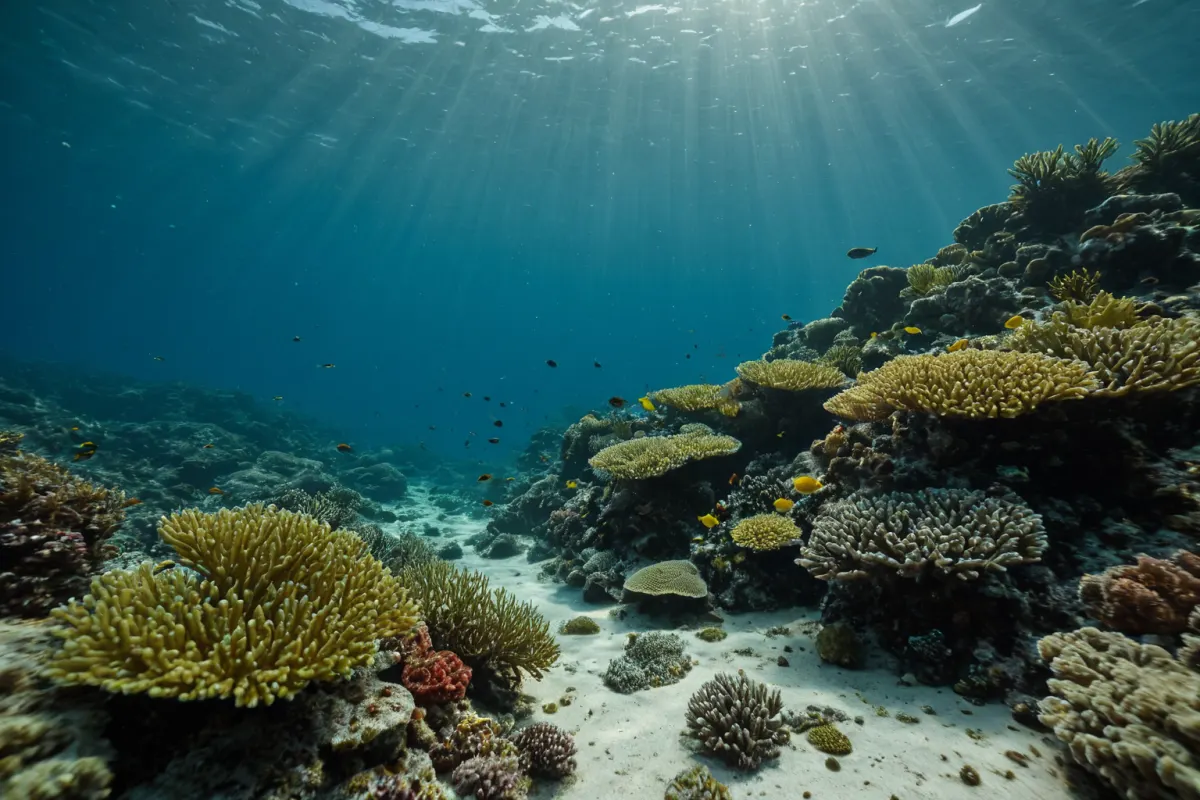
Necessity of Climate Adaptation Measures
Rising sea temperatures affect more than just fish stocks—they impact entire ecosystems. With yellowtail and flounder production bases destabilizing, the industry needs to develop new aquaculture species and improve adaptation strategies. Simultaneously, emerging ecological issues like jellyfish outbreaks must be addressed. Rising temperatures also reduce oxygen levels, slowing fish growth rates and altering breeding cycles—directly causing economic losses for aquaculture businesses. This underscores the urgent need for policy responses to ensure sustainable marine resource management.
Future Outlook and Research Directions
Collaboration between government and industry is essential to develop sustainable ocean resource management strategies in response to climate change. Key approaches include region-specific forecasting services and transitioning to subtropical species. Future research should analyze patterns of biodiversity changes due to temperature rises, informing policy recommendations. Additionally, marine ecosystem restoration projects must strengthen habitat preservation for critical groups like corals.
Key Information to Monitor
Important aspects to watch in climate change research include: Yeodo sea temperature rise rates, new aquaculture species development status, effectiveness of region-specific forecasting services, and the outcomes of policies supporting aquaculture facility closures due to climate change. For instance, Yeodo's annual temperature increase over the past decade is 0.35°C—approximately double the global average of 0.17°C.
Frequently Asked Questions
What species can replace yellowtail as production declines due to climate change?
Subtropical species are being explored for aquaculture transition. Gyeongsang Province has secured 480 million won in national funding for this purpose. Current focus includes sea bass, shellfish, and croaker—species with higher resilience in warmer conditions.
Why is Yeodo's sea temperature rising twice as fast as the global average?
South Korea's ocean warming rate exceeds the global average by more than double, which also affects Yeodo. The specific causes are still under study in climate research. Changes in large-scale climate patterns like the North Pacific tropical current likely play a significant role.
Is jellyfish outbreak directly caused by high temperatures?
High temperatures have been linked to increased jellyfish sightings. This demonstrates the correlation between rising sea temperatures and ecological changes. Jellyfish become more active in breeding when temperatures exceed 20°C, with higher frequency of outbreaks as warm periods extend.
You can view similar articles on this topic together.
View Related ArticlesFAQ
What species can replace yellowtail as production declines due to climate change?
Subtropical species are being explored for aquaculture transition. Gyeongsang Province has secured 480 million won in national funding for this purpose. Current focus includes sea bass, shellfish, and croaker—species with higher resilience in warmer conditions.
Why is Yeodo's sea temperature rising twice as fast as the global average?
South Korea's ocean warming rate exceeds the global average by more than double, which also affects Yeodo. The specific causes are still under study in climate research. Changes in large-scale climate patterns like the North Pacific tropical current likely play a significant role.
Is jellyfish outbreak directly caused by high temperatures?
High temperatures have been linked to increased jellyfish sightings. This demonstrates the correlation between rising sea temperatures and ecological changes. Jellyfish become more active in breeding when temperatures exceed 20°C, with higher frequency of outbreaks as warm periods extend.
Korean Source
This article is an English localization of a Korean-language report from BlogScore. Original: 전국 바다 고수온 현상, 기후 변화 연구에서의 주목 사항