
Solar and Lunar Eclipses Explained: Key Differences Between Total Solar and Total Lunar Eclipses
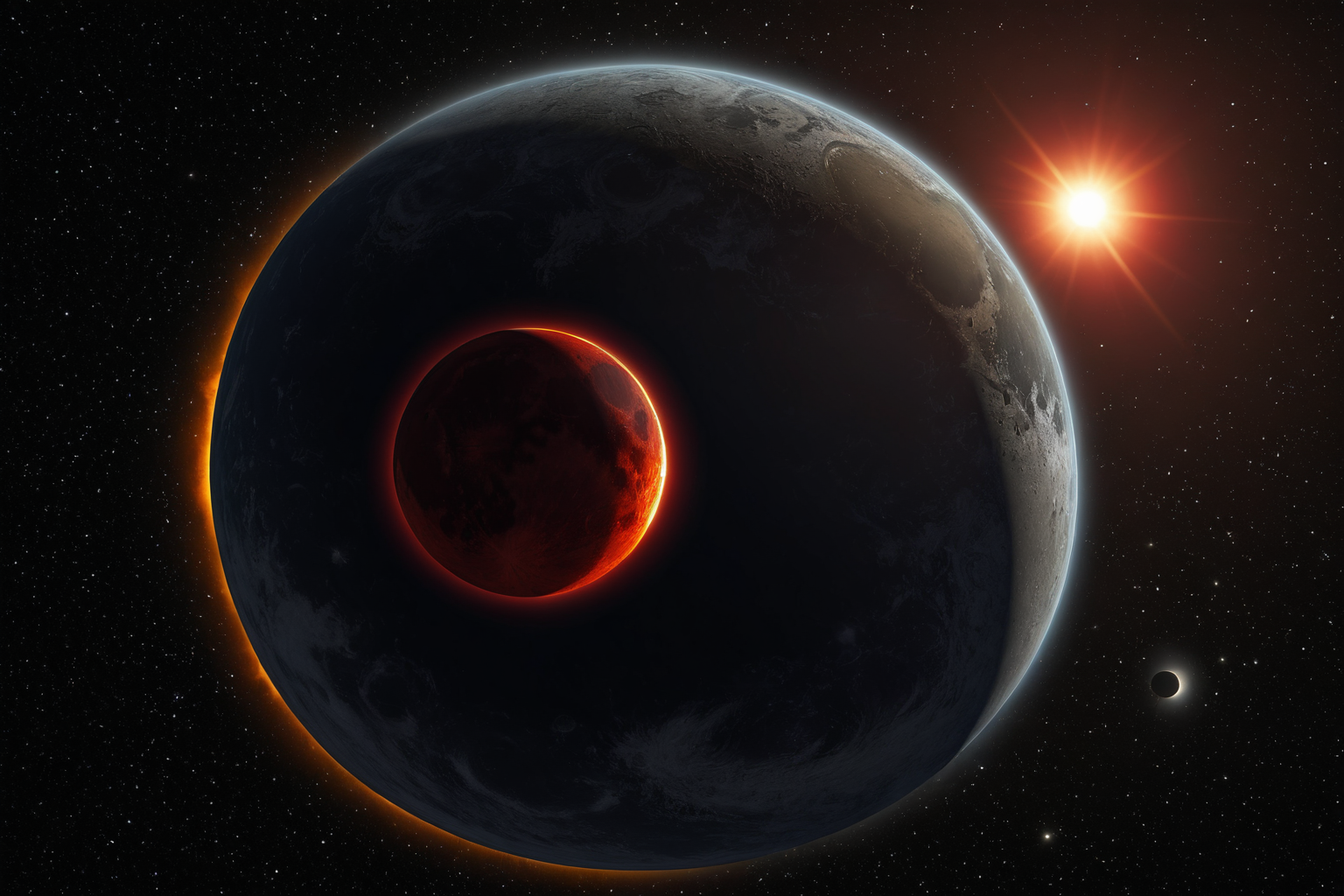
The Core Difference Between Solar and Lunar Eclipses
A total solar eclipse occurs when the Moon passes between Earth and the Sun, blocking the Sun's light and making it appear dark from Earth. A total lunar eclipse happens when Earth passes between the Sun and the Moon, casting its shadow on the Moon, which appears red—a phenomenon known as a 'blood moon.'
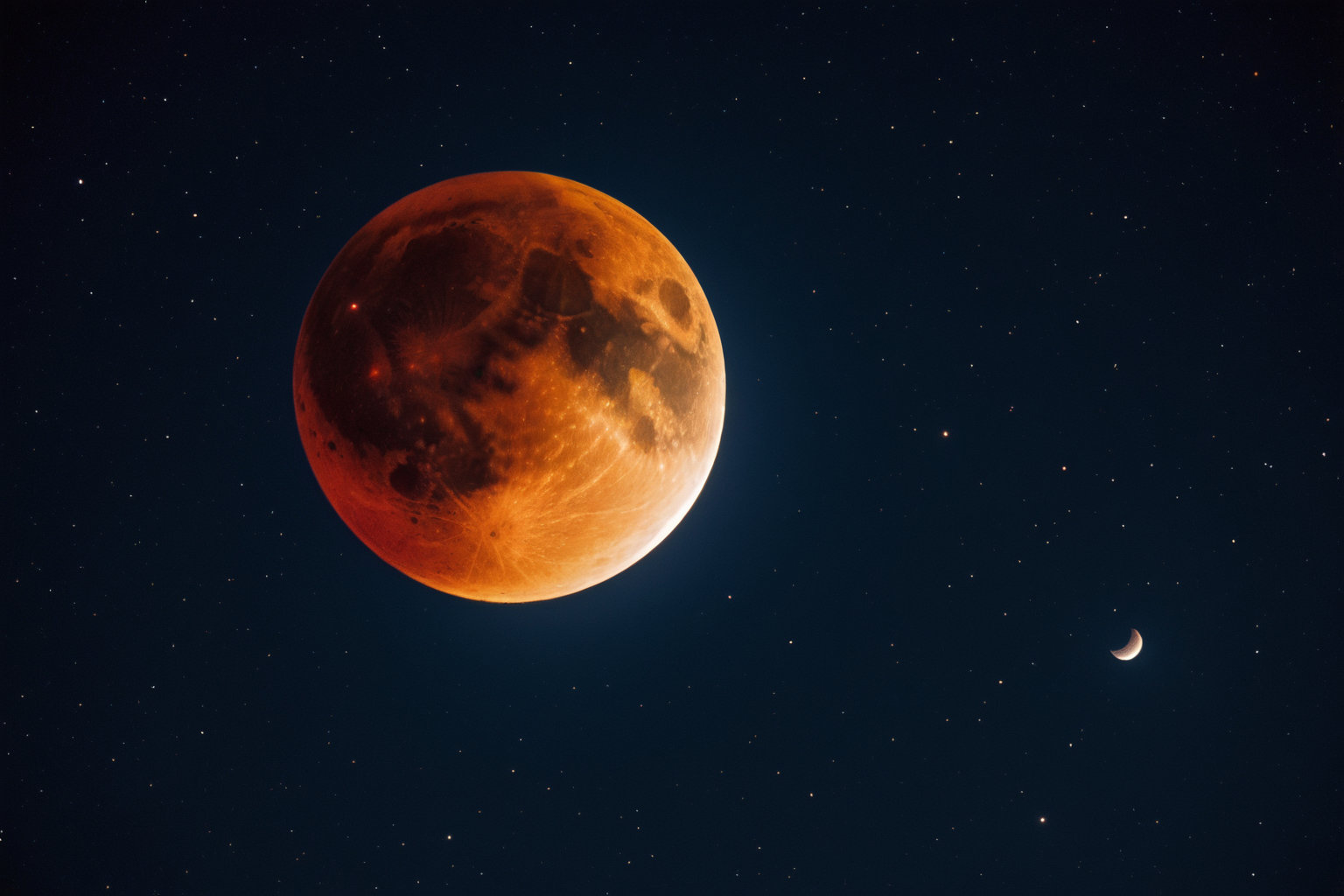
Definitions of Solar and Lunar Eclipses
A total solar eclipse occurs when the Moon is positioned between Earth and the Sun, blocking sunlight from reaching Earth. From Earth's perspective, the Sun appears completely obscured. In contrast, a total lunar eclipse happens when Earth is positioned between the Sun and the Moon, casting its shadow over the Moon. During this event, the Moon often appears red or 'blood moon.'
Both phenomena occur only when the Sun, Earth, and Moon align precisely. A solar eclipse occurs when the Moon is between Earth and the Sun; a lunar eclipse happens when Earth is between the Sun and the Moon.
Why the Moon Appears Red During a Total Lunar Eclipse
During a total lunar eclipse, the Moon appears red because sunlight passes through Earth's atmosphere, with red wavelengths reaching the Moon's surface. Earth's atmosphere refracts sunlight, allowing primarily red and orange light to reach the Moon. This differs from solar eclipses, where the Sun is blocked directly by the Moon.
This phenomenon, known as a 'blood moon,' is a distinctive feature of total lunar eclipses. It was observed during the total lunar eclipse on July 27, 2018.
Upcoming Total Lunar Eclipses
According to available data, total lunar eclipses are scheduled for September 7-8, 2025, and March 3, 2026. The September 2025 eclipse is noted as occurring after a three-year gap, making it particularly noteworthy. The March 2026 event is also anticipated by astronomers.
While both solar and lunar eclipses follow certain patterns, their specific conditions differ. A solar eclipse occurs when the Moon is between Earth and the Sun; a lunar eclipse happens when Earth is between the Sun and the Moon.
Differences in Observing Solar and Lunar Eclipses
Total solar eclipses are temporary events visible only from specific regions, requiring safe viewing methods. In contrast, total lunar eclipses can be observed across broad areas of Earth as the Moon moves into Earth's shadow.
When observing a solar eclipse, it is crucial to use proper eye protection; looking directly at the Sun can cause serious eye damage. Observing a lunar eclipse involves watching the Moon turn red and poses no direct risk.
Patterns of Solar and Lunar Eclipses
Solar and lunar eclipses occur with regular patterns but are difficult to predict precisely due to the complex orbital relationships between the Moon and Earth.
Total solar eclipses typically happen 2–5 times per year, while total lunar eclipses occur 0–3 times annually. However, these frequencies vary by location, and certain regions may experience rare events that draw significant attention.
Historical Examples of Solar and Lunar Eclipses
Many historical solar and lunar eclipses have been recorded. For example, the total solar eclipse on August 11, 1999, was visible across Europe and drew considerable interest even with modern technology.
The total solar eclipse in the U.S. in 2017 was widely observed, with many people witnessing it firsthand. A notable lunar eclipse occurred on July 27, 2018, which featured the characteristic red 'blood moon' appearance.
Common Misconceptions About Eclipses
Solar and lunar eclipses are often confused, but they represent distinct astronomical events. A solar eclipse involves the Moon blocking the Sun; a lunar eclipse occurs when Earth blocks sunlight from reaching the Moon.
Additionally, during a total lunar eclipse, the Moon appears red because Earth's atmosphere refracts sunlight, allowing mainly red and orange wavelengths to reach its surface. This differs from solar eclipses, where direct observation of the Sun is dangerous without proper protection.
Solar eclipses require safe viewing methods due to potential eye damage; lunar eclipses pose no such risk as they involve observing a reddened Moon.
Upcoming Eclipse Dates and Key Information
Total lunar eclipses are scheduled for September 7-8, 2025, and March 3, 2026. The September 2025 event is particularly notable as it marks the first such eclipse in three years, drawing attention from astronomers and enthusiasts alike.
During a total lunar eclipse, observers can witness the Moon entering Earth's shadow and turning red—a signature feature of these events that captivates many viewers.
The March 3, 2026, lunar eclipse is also expected to be widely observed as it will display the same reddened appearance when the Moon passes through Earth's shadow.
Scientific Significance of Solar and Lunar Eclipses
Solar and lunar eclipses are important subjects for astronomical research. They help scientists understand the orbital relationships between the Sun, Earth, and Moon, as well as properties of Earth's atmosphere.
Specifically, the red appearance during a total lunar eclipse provides valuable insights into how Earth's atmosphere refracts sunlight—a key area of study in atmospheric science and astronomy.
Viewing Tips for Solar and Lunar Eclipses
Total solar eclipses should only be viewed using proper eye protection. Directly observing the Sun can cause permanent eye damage, so special eclipse glasses or indirect viewing methods are recommended.
Observing a total lunar eclipse involves watching the Moon turn red, which poses no direct risk. It can be easily observed with the naked eye or through standard telescopes.
Frequently Asked Questions
Can you briefly explain the difference between solar and lunar eclipses?
A total solar eclipse occurs when the Moon blocks the Sun, while a total lunar eclipse happens when Earth blocks sunlight from reaching the Moon. During a solar eclipse, the Sun appears dark; during a lunar eclipse, the Moon often appears red—a 'blood moon.'
Why does the Moon appear red during a total lunar eclipse?
The Moon appears red because sunlight passes through Earth's atmosphere, with red wavelengths reaching its surface. Earth's atmosphere refracts sunlight, allowing primarily red and orange light to reach the Moon.
When is the next total lunar eclipse scheduled for 2025?
The next total lunar eclipse is scheduled for September 7-8, 2025. This event follows a three-year gap since the previous one and is expected to draw significant interest from astronomers and eclipse enthusiasts.
You can find more articles on similar topics in one place.
View Related ArticlesFAQ
Can you briefly explain the difference between solar and lunar eclipses?
A total solar eclipse occurs when the Moon blocks the Sun, while a total lunar eclipse happens when Earth blocks sunlight from reaching the Moon. During a solar eclipse, the Sun appears dark; during a lunar eclipse, the Moon often appears red—a 'blood moon'.
Why does the Moon appear red during a total lunar eclipse?
The Moon appears red because sunlight passes through Earth's atmosphere, with red wavelengths reaching its surface. Earth's atmosphere refracts sunlight, allowing primarily red and orange light to reach the Moon.
When is the next total lunar eclipse scheduled for 2025?
The next total lunar eclipse is scheduled for September 7-8, 2025. This event follows a three-year gap since the previous one and is expected to draw significant interest from astronomers and eclipse enthusiasts.
Korean Source
This article is an English localization of a Korean-language report from BlogScore. Original: 개기일식과 개기월식, 왜 다른 현상인지 설명해 드려요