
SEO Long-Term Strategy for Consistent Website Traffic

SEO Is a Marathon
Many people ask when their site will rank highly after starting SEO.
However, SEO isn't like advertising where results appear immediately.
Search engines evaluate sites based on factors including:
Content quality
Site credibility
Consistent maintenance
User satisfaction
Therefore, it's better to think of SEO as a marathon rather than a sprint.
Consistent Content Is Your Strongest Asset
Search engines prefer active sites.
A site that publishes 100 articles in one month but does nothing for six months will be viewed less favorably than a site consistently releasing new content weekly.
Consistency sends an important signal to search engines: "This site is actively maintained."
Focus on Topics, Not Just Individual Articles
A strong SEO site builds content around a single topic rather than individual articles.
For example, an SEO-focused site might create interconnected content covering:
SEO basics
Keyword research
User search intent
Title writing
Content creation
Image optimization
Google Search Console
IndexNow
This structure demonstrates expertise to search engines.
Maintain Existing Content Too
Simply creating new articles isn't enough.
Existing content also needs regular maintenance, such as:
Adding updated information
Including new images
Strengthening FAQs
Adding internal links
Correcting typos
When search engines see content being regularly updated, they're more likely to view the site as actively maintained.
Google Search Console Is Your Best Analytics Tool
SEO shouldn't be managed by guesswork.
Using Google Search Console allows you to see:
Which keywords are driving traffic
Which articles are ranking well
Articles with low click-through rates
Average rankings
Improving content based on this data is key to long-term growth.
User Satisfaction Is Most Important
Ultimately, search engines want content that satisfies users.
If users:
Read for longer periods
Visit other articles on your site
Find the information they need
Return to your site later
Search engines are more likely to view this positively.
The goal of SEO is users, not search engines.
Expand Internal Links Regularly
As your content grows, so should your internal linking structure.
For example, when creating new articles, link to relevant existing content.
This makes it easier for search engines to understand your site structure and helps users navigate through related topics more smoothly.
More internal links mean stronger SEO results.
AI Is an Efficiency Tool
AI can significantly speed up content creation, but there's still plenty for humans to do:
Keyword analysis
Understanding search intent
Incorporating real-world experience
Creating images
Building internal links
Updating content
The most effective approach combines AI with human oversight.
Trust Leads to Repeat Visits
SEO isn't just about ranking higher in search results.
If visitors feel your site is trustworthy, they'll return.
To build trust, focus on:
Accurate information
Up-to-date content
Clean design
Fast loading speed
Easily readable structure
Consistently Track Your Progress
Because SEO is about long-term growth, tracking your progress is essential.
Regularly monitor metrics like:
Monthly visitors
Search traffic
Indexed pages
Popular articles
Click-through rates
Average rankings
This data helps you understand your site's growth and guides future decisions.
SEO Is an Ever-Evolving Field
Search engines continue to evolve, with new algorithms emerging and user search behavior changing over time.
Therefore, it's important to:
Learn about new features
Stay updated on latest SEO information
Analyze current operational cases
Those who keep learning will achieve the best results.
Common Mistakes for Beginners
The most common mistakes in long-term SEO operations include:
Expecting short-term results only
Writing articles but not maintaining them
Failing to check Google Search Console regularly
Not building internal links
Leaving old content untouched
Focusing only on search engines, not users
Avoiding these mistakes alone can lead to steady SEO growth.
An Example SEO Routine
Successful sites typically follow a consistent routine:
New keyword research
Analyzing search intent
Creating content
Designing featured images
Building internal links
Checking indexing in Search Console
Analyzing performance
Updating existing articles
Repeating this process over time builds stronger content and better results.
SEO Builds Digital Assets
Advertising brings visitors only while you pay for it.
But SEO, as quality content accumulates, can bring visitors 24/7 through search queries year-round.
A single well-written article can continue to drive traffic for years.
This is why SEO is often called the process of building digital assets.
Summary of What We've Learned
We've covered all key aspects of SEO through 15 lessons:
Basic principles of SEO
How search engines understand content
Keyword research and search intent
Title and content writing techniques
Using H tags effectively
Internal linking strategies
Image optimization and ALT attributes
Meta descriptions and URL structure
Managing duplicate content
Indexing and IndexNow
Content update strategies
Using AI for SEO operations
Long-term site management techniques
All these elements work together to help search engines view your site more positively.
The Core Principles of SEO to Remember
There's no secret formula or quick fix for SEO success.
The most important principles are:
Create content that satisfies users
Consistently publish new content
Maintain existing content regularly
Analyze data and continuously improve
By following these four principles consistently, search traffic will grow steadily over time.
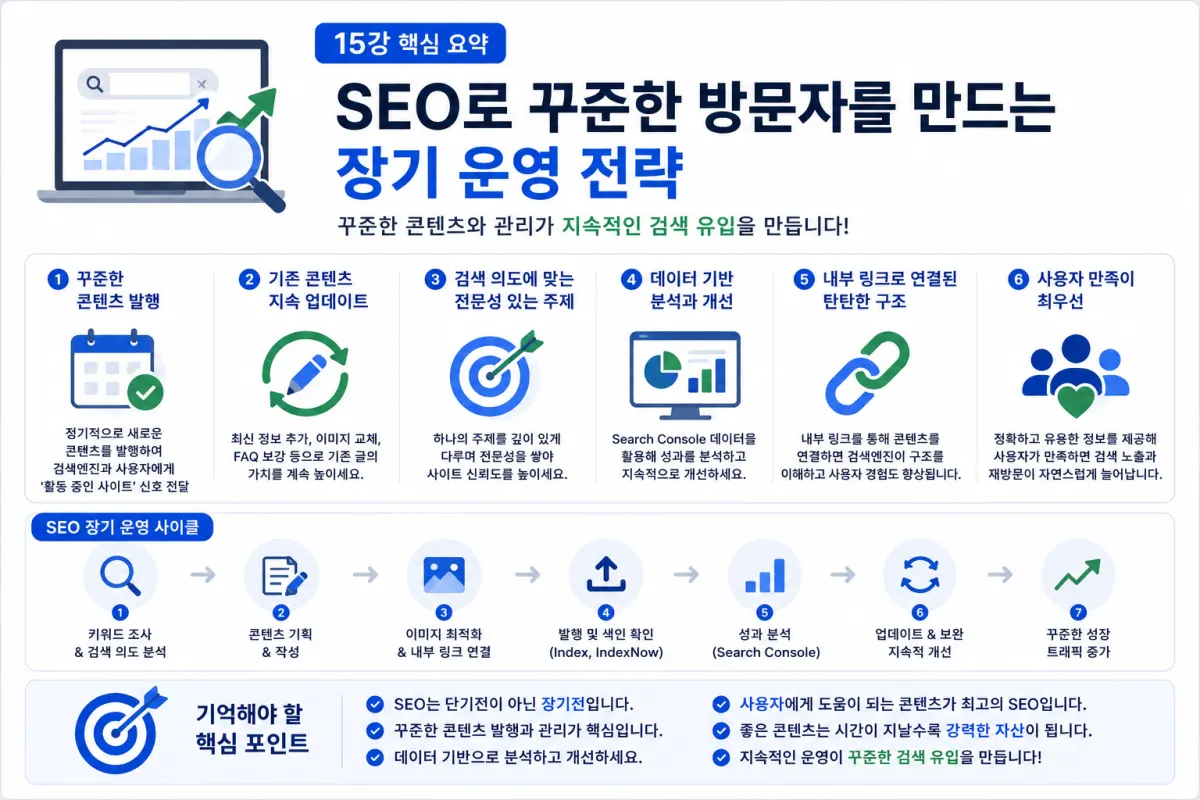
Key Takeaways from This Lesson
This lesson covered strategies for long-term SEO operations:
SEO is a long-term strategy, not short-term.
Consistent content publishing is most important.
Maintain existing content regularly.
Use Google Search Console data effectively.
Continuously expand internal links and site structure.
Use AI as an efficiency tool, not a replacement for human oversight.
User satisfaction is the ultimate SEO goal.
SEO builds digital assets that grow in value over time.
Congratulations!
You've now learned everything from basic SEO principles to practical operational strategies.
Start implementing what you've learned, one step at a time, and create consistent content for your site.
Remember: Search engines ultimately choose sites that provide the most help to users. If you keep this principle in mind, your blog will grow steadily over time.
FAQ
How long does it take to see results from SEO?
SEO is a marathon, not a sprint. Results typically appear after consistent effort over months, as search engines evaluate content quality and site maintenance over time.
Why should I maintain old content instead of just creating new articles?
Maintaining existing content signals to search engines that your site is actively managed, which improves rankings. It also keeps information up-to-date for users.
What's the most important factor in SEO success?
User satisfaction. Search engines prioritize sites that provide helpful content that users engage with and return to.
Korean Source
This article is an English localization of a Korean-language report from BlogScore. Original: [SEO 15강 완결편] SEO로 꾸준한 방문자를 만드는 장기 운영 전략