
The Rubin Vase: Its Identity, Origins, and Why It's So Often Cited
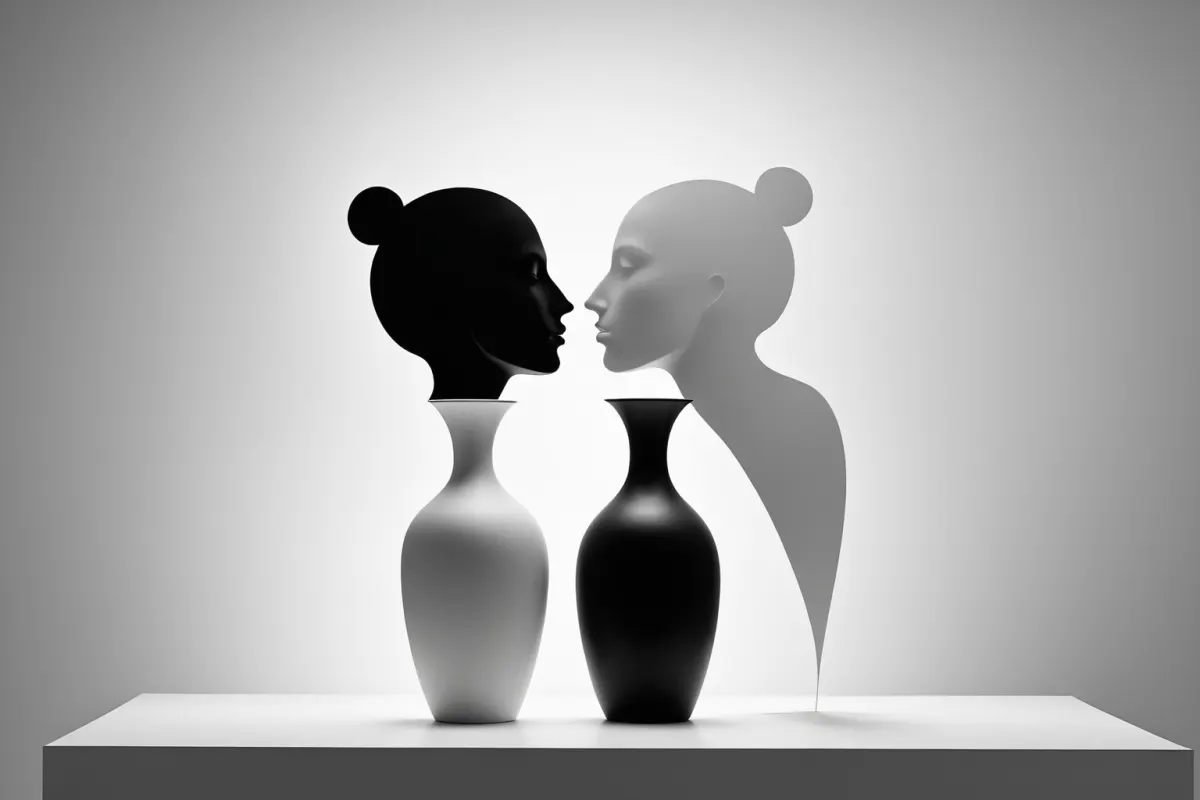
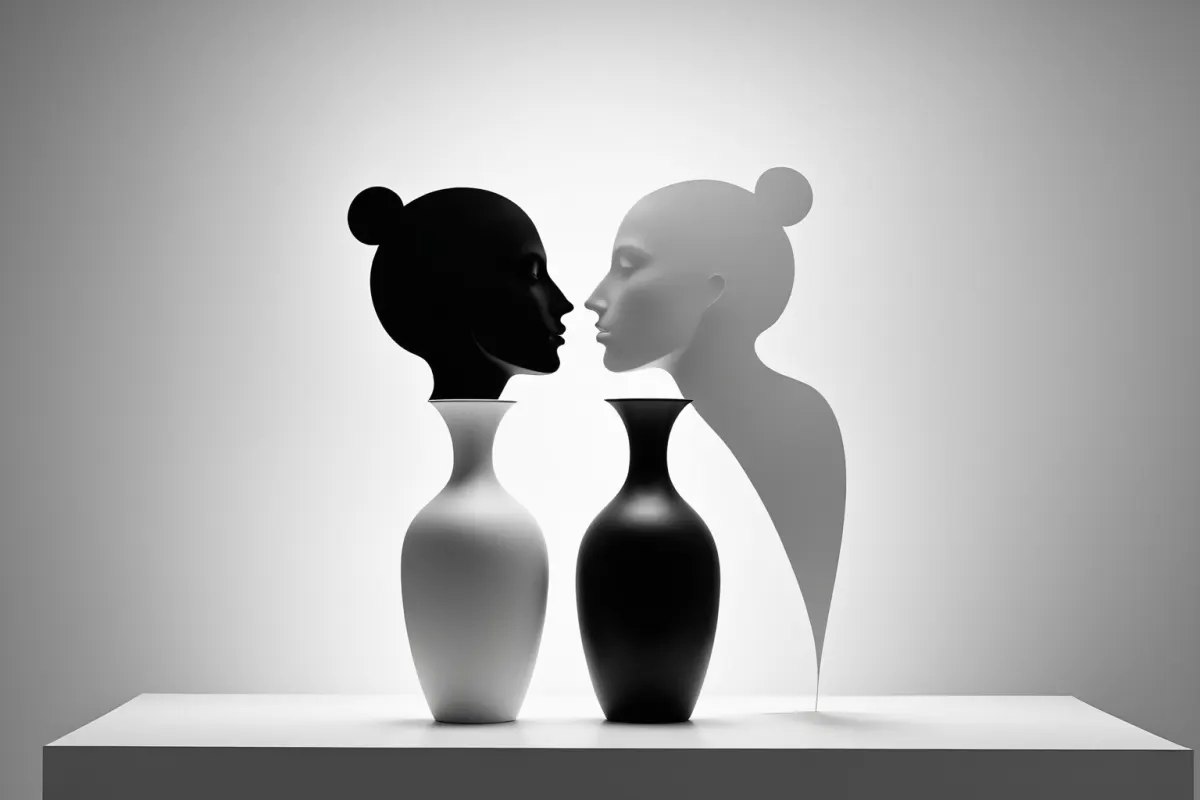
The Rubin vase is a well-known optical illusion featuring a single image that alternates between depicting a cup or two facing profiles. Its core lies not in what you see, but how you distinguish the elements—making it a frequent subject in psychology and perception studies.
At first glance, it appears simple, but where you focus your gaze determines whether the background becomes the foreground or vice versa. This is why many searching for this illusion are more curious about why such phenomena occur and why it remains so popular.
What Is the Rubin Vase?
The Rubin vase is a figure introduced by Danish psychologist Edgar Rubin, known in English as the "Rubin vase." It can be interpreted either as a central cup or vase or as two profiles facing each other on either side.
In essence, the image contains dual interpretations that coexist. It’s not a visual error but rather a perceptual choice made by the brain—deciding which part to perceive as the primary object.
You can find more articles on this topic in one place.
View Related ArticlesOrigins and Context
Rubin was not merely creating a playful image; he was studying how humans organize visual information. He noted that we don’t perceive the world as a whole but rather segment boundaries and forms to make sense of them.
This concept connects with Gestalt psychology, which emphasizes that our brains group points and lines into meaningful shapes rather than perceiving them individually. The Rubin vase became one of the most intuitive examples illustrating this principle.
Why Is It Often Cited?
The Rubin vase remains relevant despite being an old image because its simplicity makes it powerful. Anyone can experience moments like, "Why did I only see the cup until now?" or "Why do I suddenly see faces?"
Additionally, this image is frequently used in introductory psychology materials, design courses, advertising analysis, and discussions of creative thinking. Because different people initially perceive different elements in the same image, it’s an excellent tool for explaining cognitive biases and perspective differences.
In recent years, it has reappeared in online memes and educational resources. Though a simple classic image, it remains a useful example demonstrating how flexible human perception can be.
How the Illusion Works
This illusion arises from the brain’s habit of separating foreground and background. We don’t view all lines equally; instead, we prioritize more prominent features as the main focus.
In the Rubin vase, the central empty space can be seen as a cup, while the surrounding areas on either side can be perceived as faces. Choosing one element as the focal point pushes the other into the background, making it difficult to see both clearly at once.
For example, when viewing a simple logo with black silhouettes, some people read it as text first, while others see the image immediately. The Rubin vase works similarly—depending on your interpretive lens, the perception shifts.

How to Better Understand It by Looking
If you’re seeing this for the first time, look at the whole image briefly, then focus slowly on the central empty space. Alternatively, keeping your gaze on the outer edges will make the two faces appear more quickly.
A useful tip is not to try too hard to find one interpretation—it’s better to let your eyes relax slightly. Forcing yourself to see only one aspect can actually enhance the shift between foreground and background.
For instance, if you have a printed copy of the image, try pointing to the center and then the edges alternately with your finger. You’ll notice how perception changes as you shift focus—a method that also works well when explaining it to students or children.
Psychological Significance
The Rubin vase goes beyond a simple illusion; it’s a prime example of how human perception is interpretive. What we see isn’t just raw information—it’s filtered through the brain’s organizational framework.
This is why it’s often referenced in counseling, education, design, and advertising. It effectively demonstrates that the same visual can be interpreted entirely differently based on context or intent.
Especially when creating visual materials, it’s important to intentionally guide where the viewer’s eye lands. The Rubin vase serves as a useful reference for understanding how to direct attention through design.
Avoiding Confusion: Key Points
The name often causes confusion—this isn’t a product or brand but the specific term for this illusion. When searching, you might encounter similar terms, but the key is that it’s a psychological figure.
If you’ve seen references like "Rubin’s cup," they almost certainly refer to the same image. Slight variations in translation or spelling may make it look different, so focusing on the visual structure helps avoid confusion.
When showing it to others, describing it as "the image where the center looks like a vase" is usually the quickest way for newcomers to grasp the dual perception.
Comparing with Similar Illusions
While there are many similar illusions, the Rubin vase stands out due to its clear foreground-background boundary. This makes it ideal for explanation and immediate recognition by first-time viewers.
For example, other double-interpretation images might require finding hidden animals or numbers, demanding more focus. The Rubin vase’s simplicity allows it to immediately convey the message that perception changes based on perspective.
This is why search intent is clear: many people want to know "why does this happen?" rather than just "what is it?" Once understood, it helps viewers better appreciate other optical illusions too.
FAQ
Q1. What does the Rubin vase actually represent?
A. It’s an image that can be seen as either a cup or vase in the center, or two facing profiles on the sides—a dual-perception example where foreground and background switch.
Q2. Why do some people see the cup first while others see the faces?
A. Because of individual visual habits and brain interpretation styles—different people notice different contours first, leading to varied starting points.
Q3. Where is the Rubin vase commonly used?
A. In psychology classes, design explanations, visual perception education, and advertising analysis—it’s simple yet effective for illustrating perceptual principles.
This topic, though based on a classic image, may vary slightly in presentation or application across different sources; checking recent materials can help provide more context.
Check out more articles on similar topics.
View Category ArticlesFAQ
What does the Rubin vase actually represent?
It’s an image that can be seen as either a cup or vase in the center, or two facing profiles on the sides—a dual-perception example where foreground and background switch.
Why do some people see the cup first while others see the faces?
Because of individual visual habits and brain interpretation styles—different people notice different contours first, leading to varied starting points.
Where is the Rubin vase commonly used?
In psychology classes, design explanations, visual perception education, and advertising analysis—it’s simple yet effective for illustrating perceptual principles.
Korean Source
This article is an English localization of a Korean-language report from BlogScore. Original: 루빈의 컵 정체와 유래, 자주 언급되는 이유