
Raw Dog Food vs. Regular Kibble: A Balanced Comparison of Pros and Cons


Pros and Cons of Raw Dog Food
Raw dog food uses fresh ingredients, offering better palatability and digestibility. However, it has limitations due to microbial infection risks and higher costs. Compared to regular kibble, raw food minimizes nutrient destruction but requires strict safety management during preparation. Notably, since raw food isn't cooked, nutrients are preserved more effectively, leading to higher absorption rates in pets. This positively impacts their health and growth.
Raw vs. Regular Kibble: Key Differences
Raw dog food avoids heat processing, minimizing nutrient loss and improving bioavailability. In contrast, regular kibble may lose some nutrients due to high-temperature cooking. Raw food's palatability is about 20% higher than regular kibble, with superior digestibility.
Disadvantages include microbial infection risks, increased costs, and longer preparation times. While raw diets—made from uncooked meat and vegetables—may support brain function, inadequate bone removal can pose health hazards. For instance, bones mixed into raw food could damage a puppy's digestive system.
New Standards Coming in 2026
The National Institute of Animal Science established the 'Pet Food Nutritional Standard (2024)' in October 2024, which will take effect on January 1, 2026. Pet food will then be categorized as 'Complete Pet Food,' enhancing quality and safety standards. This standard clearly defines nutritional components and safety criteria to provide consumers with reliable information.
Domestic manufacturers are developing new products using straw-based high-temperature steam processing technology. Recent launches include the convenient raw wet food 'Mengban' by Mungmul Saesal (released April 28, 2022) and Royal Popori's health-focused products (launched November 27, 2023). These options cater to both pet owners and dogs' health needs.
Brands like BomBom use a cold chain distribution system from farm to delivery, ensuring ingredients remain frozen without thawing. They minimize air exposure time for raw materials and sterilize them in government-approved facilities. Additionally, BomBom prepares sous vide meals at temperatures and durations that eliminate pathogenic bacteria, storing them at -18°C before shipping. This approach minimizes microbial infection risks.
BomBom's monthly growth rate is 20%, with over 60% of customers repurchasing after a year. This reflects consumer trust in raw food safety and quality.
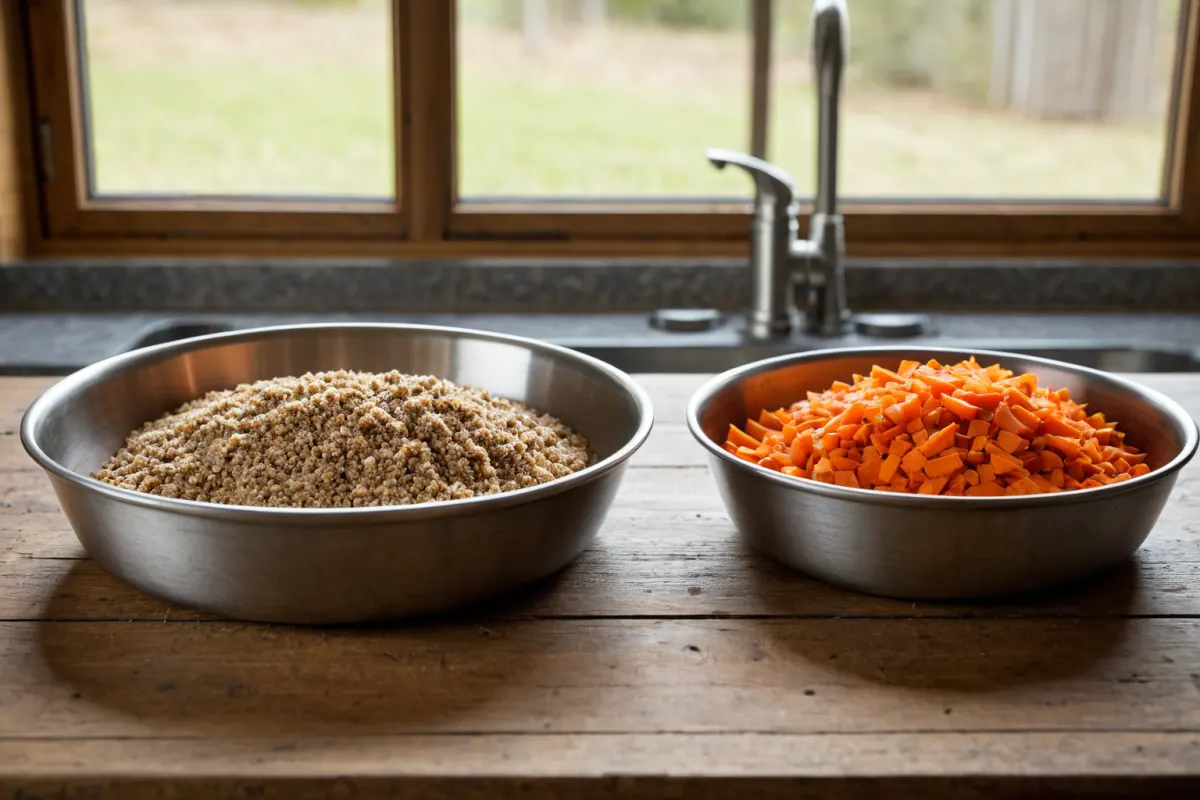
Things to Consider When Buying Raw Dog Food
Raw dog food's high digestibility relies on fresh ingredients, but microbial risks require cold chain logistics and sterilization in government-approved facilities. Some brands use sous vide cooking to eliminate pathogens and store products at -18°C for shipping.
Consumers should choose based on their pet's life stage and health status. Recently, convenient raw wet food options like 'Mengban' have gained popularity. These are served warm, balancing palatability and digestibility for puppies.
Ranking Changes and Future Outlook
Does raw dog food minimize nutrient loss compared to regular kibble?
Yes, because it avoids heat processing, reducing nutrient degradation.
How are microbial infection risks managed in raw dog food?
Risks are minimized through cold chain logistics and sterilization in government-approved facilities.
How will pet food regulations change from 2026 onward?
Starting January 1, 2026, pet food will be classified as 'Complete Pet Food,' with enhanced quality and safety standards.
You can find similar articles in one place.
View Related ArticlesFAQ
Does raw dog food minimize nutrient loss compared to regular kibble?
Yes, because it avoids heat processing, reducing nutrient degradation.
How are microbial infection risks managed in raw dog food?
Risks are minimized through cold chain logistics and sterilization in government-approved facilities.
How will pet food regulations change from 2026 onward?
Starting January 1, 2026, pet food will be classified as 'Complete Pet Food,' with enhanced quality and safety standards.
Korean Source
This article is an English localization of a Korean-language report from BlogScore. Original: 강아지 화식 사료 vs 일반 사료: 장점과 단점 비교 분석