
Proper Ceiling Height and Reinforcement for Large Ceiling Fans: A Guide


The recommended minimum ceiling height for installing a large ceiling fan is at least 2.3 meters from the floor to the bottom of the fan blades for safety. If the ceiling is too low, airflow efficiency decreases and may interfere with pedestrian traffic, so it's essential to check the height before installation.
Especially in apartments or commercial spaces with low ceilings, low-profile or adjustable downrod models may be more suitable than standard ceiling fans. However, the most important factor is whether the ceiling structure can support the fan's weight and rotation.
Recommended Ceiling Height for Large Ceiling Fans
Due to their large blade diameter, a generous space between the ceiling and floor must be maintained. In practice, professionals often recommend a minimum of 2.3 meters from the floor to the bottom of the blades, with an ideal range of 2.4–2.7 meters.
If the ceiling height is around 2.4 meters, standard large fans may feel cramped. In such cases, opting for a model that sits close to the ceiling or installing it in areas with higher ceilings, like the center of a living room or part of an upper floor, is preferable.
For example, mounting a 152cm-diameter large fan on a 2.35-meter-high ceiling can appear visually low. Conversely, ceilings over 2.7 meters allow for better spatial perception and more natural airflow distribution.
You can find similar articles on this topic in one place.
View Related ArticlesWhy Ceiling Reinforcement Is Necessary
Large ceiling fans carry more weight and vibration than they appear. The fan's own weight, combined with the subtle vibrations from rotation, makes it difficult to support using standard lighting mounting methods.
If mounted only on gypsum board or finish materials, long-term sagging may occur, leading to increased wobbling and noise. Therefore, before installation, you must verify the ceiling structure material and determine whether wood reinforcement or metal bracing is needed.
For concrete ceilings, anchor mounting is relatively straightforward but requires checking for embedded pipes and wiring first. Wooden ceilings require identifying joist direction for proper attachment, while lightweight ceilings often need additional reinforcing panels.
Selecting the Right Reinforcement Method
The reinforcement method depends on ceiling material and fan weight. The most common approach is to install a support beam followed by a dedicated mounting plate, especially if upper access is available for cleaner installation.
If the ceiling is recessed and internal access is limited, load-distributing brackets can be used instead. The key is to avoid concentrating force on a single point of attachment.
- Concrete ceilings: Combine anchors with dedicated brackets
- Wooden ceilings: Confirm joist direction before adding reinforcement beams
- Gypsum board ceilings: Internal reinforcement is essential; direct mounting alone is not recommended
For example, installing a large fan weighing around 8kg requires using both support beams and metal brackets rather than simple screws for stability. This minimizes vibration, which contributes to a smoother operation.
Key Dimensions to Check Before Installation
When considering installation, don't just look at the fan diameter—also consider ceiling height, blade drop length, and surrounding obstacles. The distance from walls to the outer edge of the blades is also important.
Especially, maintain a minimum 45cm gap between the wall and the fan blade's tip. If space is tight, air may flow unevenly or the fan may appear too large without providing adequate comfort.
A simple way to verify is by measuring from floor to ceiling with a tape measure, adding the product's total length as specified on its details page, then calculating the floor-based height. Be sure to check whether it's an integrated lighting model or includes a downrod.
Real Installation Examples
In homes where living room ceilings are 2.8 meters high, large ceiling fans fit well. There is no inconvenience passing underneath, and improved air circulation helps lower perceived temperature during summer months.
Conversely, in rooms with ceilings around 2.3 meters, the same fan may feel cramped. In such cases, consider installing it in higher-ceilinged areas like upper floors or near staircases instead of the entire room.
In commercial spaces like cafes or stores with many seats, both pedestrian traffic and sightlines above head height must be considered. While wind falling directly on seated customers can enhance comfort, too low a placement may create psychological discomfort.
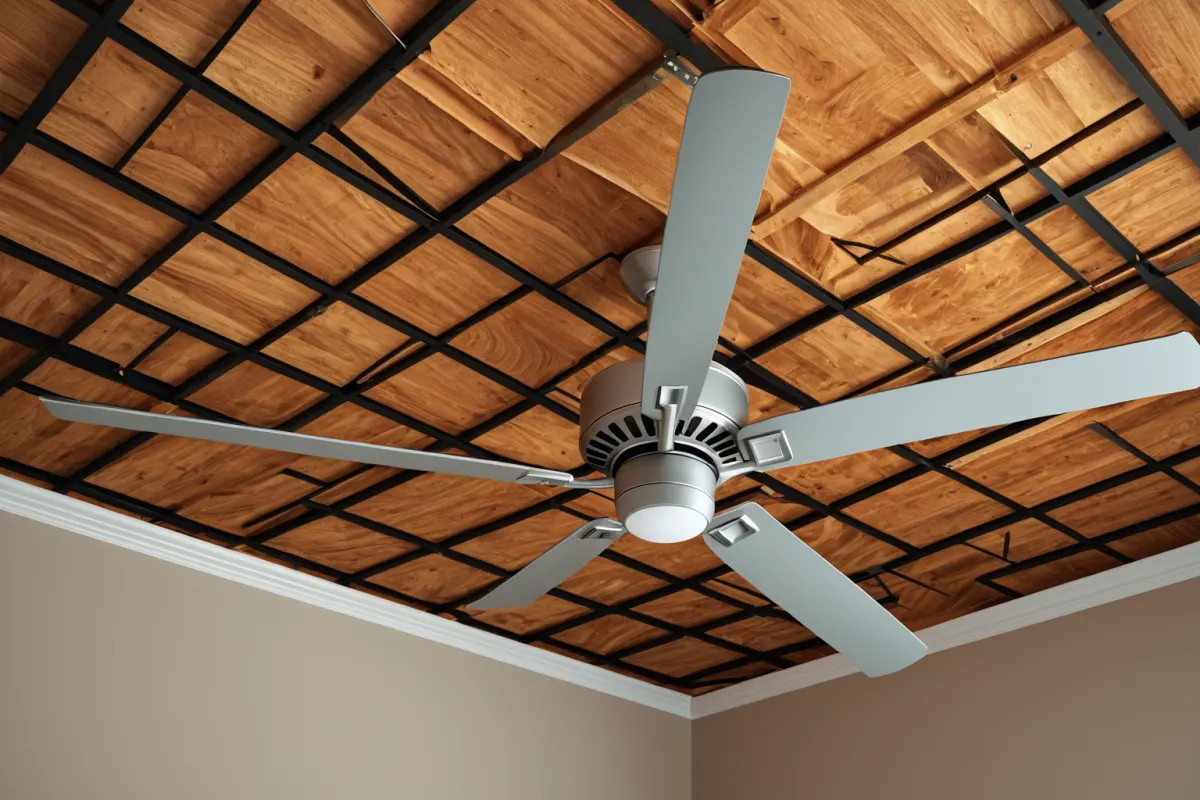
Post-Installation Wobble Check Points
After installation, don't immediately use the fan at full speed. Start with the lowest setting to test for wobbling before checking noise levels.
Focus on three key points: whether the fan body sways excessively side-to-side, if there's any noise at ceiling joints, and if there are shocks during rotation start or stop.
If even slight vibration is felt, it may indicate unbalanced blades or loose fastening. In such cases, immediate adjustment is necessary rather than postponing repairs.
Common Mistakes in Large Ceiling Fan Installation
The most common mistake is choosing a fan based solely on ceiling height without considering ceiling strength, lighting placement, and maintenance space—leading to later regrets.
Another frequent error is selecting an aesthetically pleasing model first and only checking reinforcement needs afterward. Large ceiling fans function more like structural elements than decorative items, so mounting method should take priority over design.
Ignoring remote control reception after installation can also cause issues. In high ceilings or areas with interference, the operational range may be shorter, so testing from intended usage positions in advance is recommended.
Final Checks Before Actual Use
On the day of installation, spend a day using it slowly to check sound and airflow direction. When used alongside air conditioning, adjusting rotation direction can prevent cold air from accumulating near the ceiling.
Ceiling reinforcement work is often invisible but critical for safety. Whether you can mount directly over existing light fixtures or need additional reinforcement depends on site conditions—so avoid making assumptions without proper assessment.
It's easy to think that just getting the height right will be enough, but actual satisfaction comes from both proper reinforcement and balance. Therefore, on-site verification should come before product selection.
FAQ
Q. What is the ideal ceiling height for installing a large ceiling fan?
A. A minimum of 2.3 meters from floor to blade bottom is recommended; higher ceilings generally lead to greater installation satisfaction.
Q. Can I install a large ceiling fan on gypsum board ceilings?
A. It's possible, but direct mounting alone should be avoided. Internal reinforcement or load-distributing structures are necessary.
Q. Are there cases where ceiling reinforcement isn't needed?
A. For concrete ceilings with dedicated anchors, it may be feasible, but you must verify the fan weight and site conditions first.
Proper installation of large ceiling fans requires checking both ceiling height and reinforcement status. Always refer to manufacturer guidelines for specific recommended heights and latest installation standards before proceeding.
Continue exploring similar topics.
View Category ArticlesFAQ
What is the ideal ceiling height for installing a large ceiling fan?
A minimum of 2.3 meters from floor to blade bottom is recommended; higher ceilings generally lead to greater installation satisfaction.
Can I install a large ceiling fan on gypsum board ceilings?
It's possible, but direct mounting alone should be avoided. Internal reinforcement or load-distributing structures are necessary.
Are there cases where ceiling reinforcement isn't needed?
For concrete ceilings with dedicated anchors, it may be feasible, but you must verify the fan weight and site conditions first.
Korean Source
This article is an English localization of a Korean-language report from BlogScore. Original: 대형실링팬 설치 높이 기준과 천장 보강 방법