
Physical AI Hubs: Key Pros and Cons Compared in 5 Points
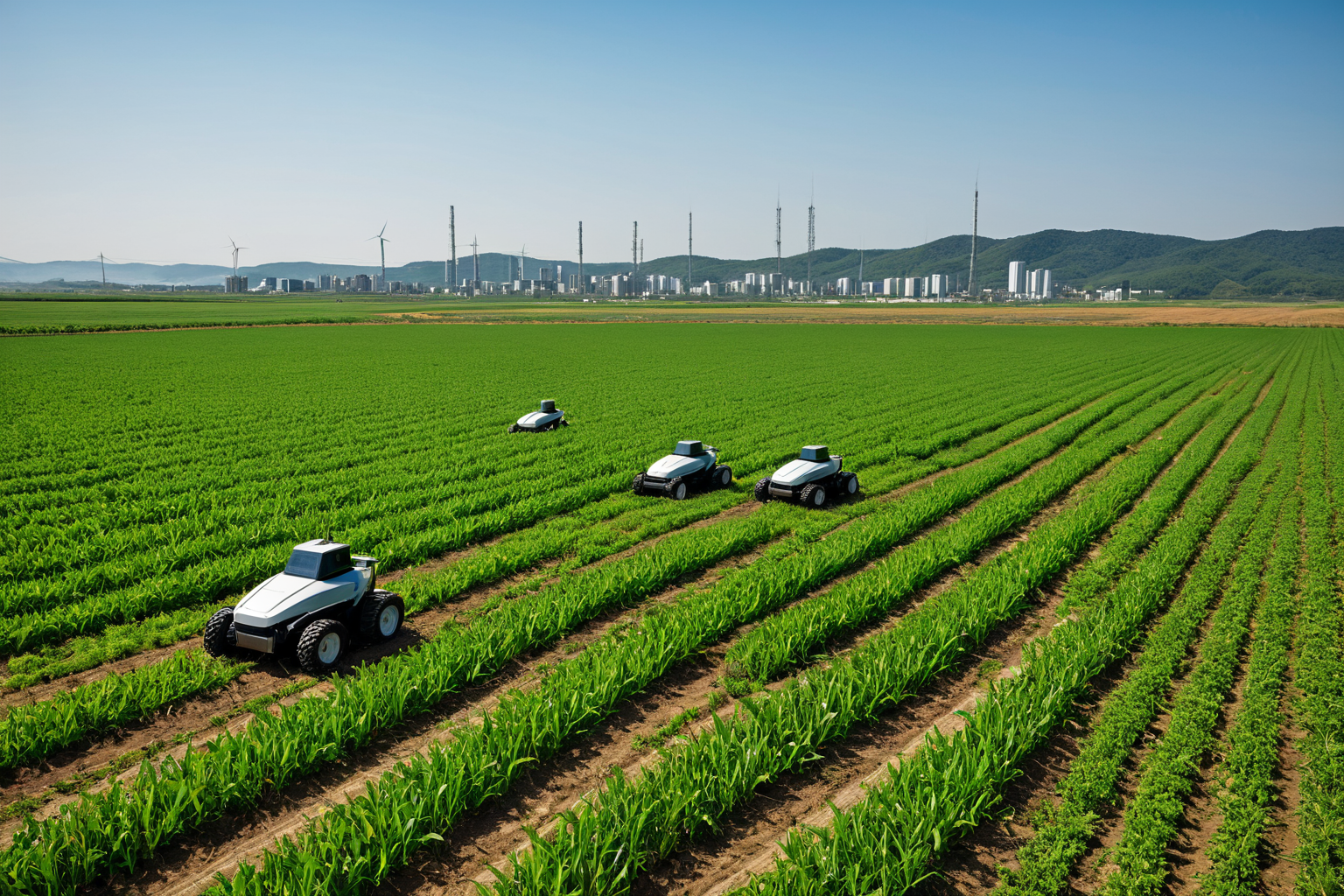
Policy Support Pros and Cons of Physical AI Hubs
Domestic physical AI hubs are expanding through policy support and investment in Jeonbuk, Gyeongbuk, and Gyeongsangnam provinces. The Financial Services Commission is nurturing these areas as 'physical AI hubs' while providing policy finance, and Hyundai Motor Group has invested 9 trillion won in Saemangeum to build AI, robotics, and energy centers. However, a lack of testing sites limits expansion.

Progress of Regional Physical AI Hubs Across South Korea
Jeonbuk is advancing a strategy to enhance its physical AI hub status starting in February 2026. Gyeongbuk Province is building industrial hubs based on its P.AX vision, with policy finance and local banks creating 'funding channels' for financial support. Gyeongsangnam Province is focusing on manufacturing sites to lead in physical AI adoption, signing an agreement with the Korea Development Bank in September 2026 to strengthen financial connections.
Pohang City plans to train 100,000 AI professionals by 2030, and NIA has completed South Korea's first on-site demonstration of AI-RAN and physical AI. Gumi was selected as a 'AX Demonstration Industrial Complex' by the Ministry of Trade, Industry and Energy in July 2026, driving manufacturing AI innovation across Daegu and Gyeongbuk.
Regional hub initiatives face limitations due to insufficient testing sites. The recent agreement between Gyeongsangnam Province and the Korea Development Bank, along with Governor Park Wan-su's emphasis on connecting physical AI with finance at manufacturing sites, is gaining attention as a new strategy.
Gumi's selection as an 'AX Demonstration Industrial Complex' in July 2026 shows its role in leading manufacturing AI innovation across Daegu and Gyeongbuk—a strategic approach to expanding physical AI testing sites.
NIA completed South Korea's first physical AI on-site demonstration in July 2026, marking a significant achievement that laid the groundwork for future expansion through technical validation. However, the lack of testing sites remains an unresolved challenge.
International Comparisons and Examples
Japan is advancing its physical AI strategy by establishing semiconductor co-development hubs in Kumamoto. In July 2026, Japan set up a semiconductor co-development hub in Kumamoto to begin its physical AI strategy. Tokyo has also established APTO's robot data collection hub, 'Toyosu Data Factory.'
While South Korea and Japan share similar approaches, Japan is taking a more strategic approach in the semiconductor sector. Japan's Toyosu Data Factory and Kumamoto hub focus on securing on-site testing and research for physical AI technology.
The Challenge of Insufficient Testing Sites
Physical AI requires on-site testing locations in physical spaces, but such sites are currently scarce, limiting technological expansion.
The recent agreement between Gyeongsangnam Province and the Korea Development Bank aims to strengthen financial connections to support site acquisition—a step toward addressing the lack of testing sites. However, securing sufficient sites remains a challenge.
While regional hub initiatives are active across South Korea, insufficient on-site testing locations are hindering progress. This is a major factor limiting physical AI's practical application and expansion.
Demonstration Achievements and Future Outlook
NIA's completion of South Korea's first on-site demonstration for AI-RAN and physical AI in July 2026 was an important achievement, demonstrating the feasibility of technical validation. On July 15, 2026, NIA completed this demonstration, showing that physical AI can be applied in real industrial settings.
Pohang City's plan to train 100,000 AI professionals by 2030 will proceed alongside efforts to secure testing sites, aiming to accelerate the spread of physical AI through both talent development and infrastructure expansion.
Comparing South Korea's regional hub initiatives with Japan's approach, Japan is taking a more strategic focus on semiconductors, while South Korea is actively applying physical AI in manufacturing and agriculture. However, the lack of testing sites continues to limit expansion.
The agreement between Gyeongsangnam Province and the Korea Development Bank in September 2026 is expected to help secure physical AI testing sites by strengthening financial connections—a new strategy for addressing this challenge.
Jeonbuk and Gyeongbuk are nurturing hubs through policy support, but they face limitations due to insufficient site availability. Overcoming these challenges will require enhanced regional collaboration and stronger financial support.
Searcher's Key Information
Physical AI hubs are expanding in Jeonbuk, Gyeongbuk, and Gyeongsangnam provinces through policy support and Hyundai Motor Group's investment. The lack of testing sites presents a limitation, while Japan is advancing its physical AI strategy with a semiconductor co-development hub in Kumamoto. NIA has completed South Korea's first on-site physical AI demonstration.
NIA's July 2026 demonstration success and the September 2026 agreement between Gyeongsangnam Province and the Korea Development Bank are expected to contribute to the spread of physical AI. However, the lack of testing sites remains a key challenge to address.
Frequently Asked Questions
What is a Physical AI Hub?
A physical AI hub is a regional location where AI technology is tested and applied in physical spaces, with active use at manufacturing and agricultural sites for robot learning and technical testing.
What are the main challenges facing domestic physical AI hubs?
The primary challenge is insufficient testing sites, limiting expansion. While policy support and investment are being made, there is a lack of actual spaces for technology testing.
How does Japan's physical AI strategy differ?
Japan has established semiconductor co-development hubs in Kumamoto to advance its physical AI strategy, with Tokyo hosting APTO's robot data collection hub 'Toyosu Data Factory.' Japan is taking a more strategic approach in the semiconductor sector.
Frequently Asked Questions
Physical AI hubs are expanding through policy support and investment but face limitations due to insufficient testing sites. Comparing South Korea's regional initiatives with Japan's strategic focus, securing testing sites remains critical. NIA's demonstration achievements and the Gyeongsangnam Province-Korea Development Bank agreement are expected to help address this challenge. Future expansion will require accelerated talent development and site acquisition.
You can view similar articles on this topic in one place.
View Related ArticlesFAQ
What is a Physical AI Hub?
A physical AI hub is a regional location where AI technology is tested and applied in physical spaces, with active use at manufacturing and agricultural sites for robot learning and technical testing.
What are the main challenges facing domestic physical AI hubs?
The primary challenge is insufficient testing sites, limiting expansion. While policy support and investment are being made, there is a lack of actual spaces for technology testing.
How does Japan's physical AI strategy differ?
Japan has established semiconductor co-development hubs in Kumamoto to advance its physical AI strategy, with Tokyo hosting APTO's robot data collection hub 'Toyosu Data Factory.' Japan is taking a more strategic approach in the semiconductor sector.
Korean Source
This article is an English localization of a Korean-language report from BlogScore. Original: 피지컬AI 거점 장단점 5가지로 쉽게 비교해보기