
The Pros and Cons of Physical AI Hubs: A Case Study Analysis
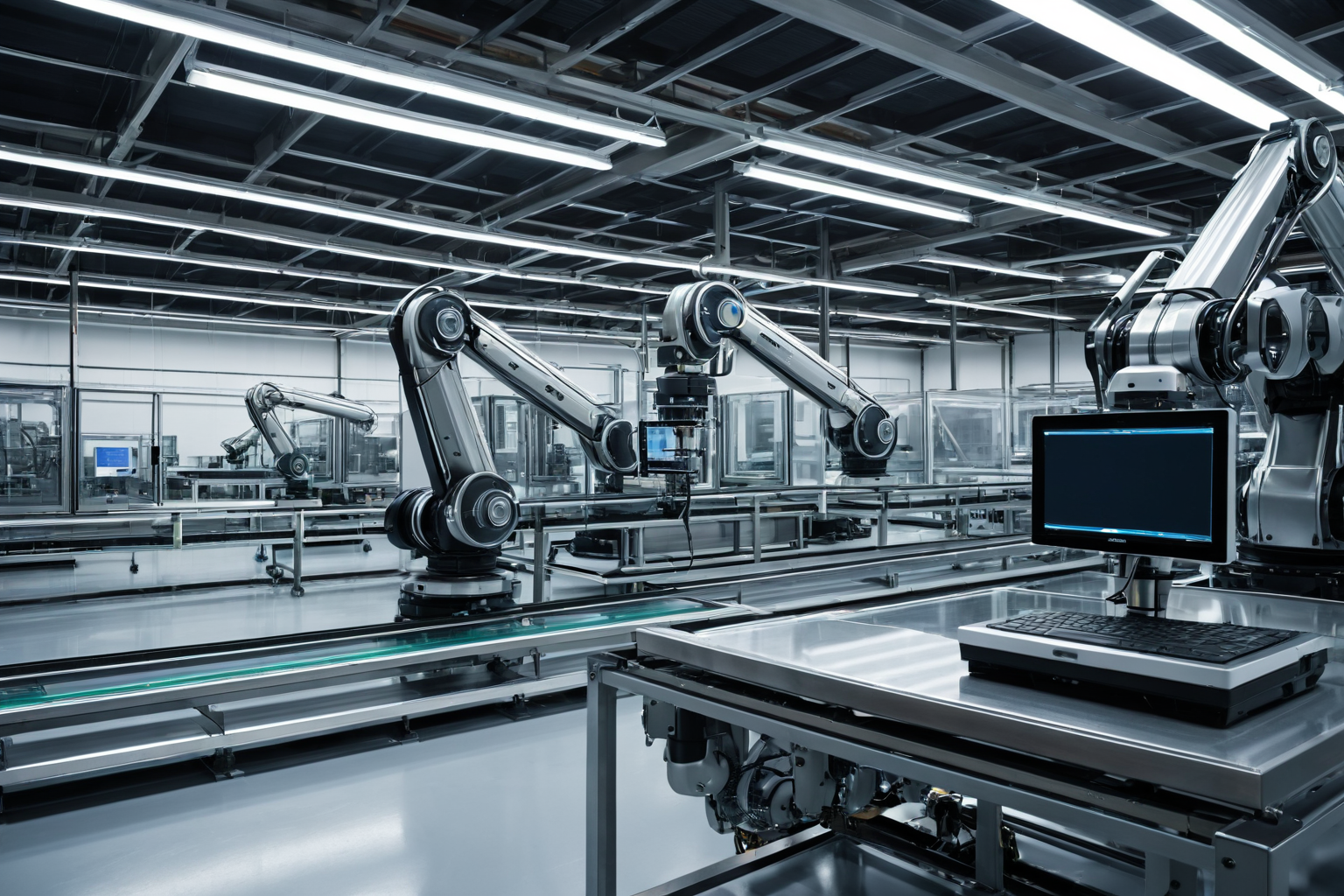
Physical AI Hub Strategy
Hyundai Motor Group's 900 billion won investment in SaeMangjin and Chairman Jeong Ui-seon's 'Physical AI Alliance' initiative are gaining attention as opportunities for industrial innovation in the Pusan-Ulsan-Gyeongnam (Busan-Ulsan-Gyeongnam) region. This strategic approach aims to integrate manufacturing with smart urban infrastructure, with Hyundai Motor Group planning to invest 900 billion won in SaeMangjin to establish a robotics, AI, and hydrogen innovation hub.
After Hyundai Motor Group announced its 900 billion won investment in SaeMangjin on February 27, 2026, Chairman Jeong Ui-seon revealed plans to create a 'Physical AI Alliance' with global big tech companies on July 26, 2026, aiming to smarten urban infrastructure. This coincides with the acceleration of policies supporting manufacturing and AI development in North Jeolla, North Gyeongsang, and South Gyeongsang provinces.
Physical AI Strategy in Regional Areas
In regions such as North Jeolla, North Gyeongsang, and South Gyeongsang, industrial innovation through the establishment and testing of 'Physical AI' hubs is underway. On September 22, 2026, policies for developing Physical AI were announced across these three provinces, focusing on revitalizing regional economies by combining manufacturing with AI technology.
Laonpeople announced on December 11, 2025, that it would participate in building the National Strategy K-Display AX test site. This initiative is expected to provide an experimental environment for practical application of Physical AI technology.
Siheung City launched its 'Physical AI Expansion Center' on May 13, 2026, aiming to develop into a manufacturing AI innovation hub. The center will promote Physical AI technology through collaboration with local businesses and contribute to industrial restructuring by conducting demonstrations and attracting enterprises.
Application of Physical AI in Manufacturing and Defense
Physical AI is driving on-site data-based innovation in manufacturing and defense sectors. On August 31, 2026, it was announced that Physical AI would be fully integrated into self-reliant defense initiatives.
The Seoul AI Hub is currently conducting specialized training for Physical AI talent. The training program concluded on September 1, 2026, at the Seoul AI Hub.
Development of Physical AI has been delayed due to insufficient testing facilities. This relates to China's 'inherent strategy' focusing on securing on-site data in competition with South Korea. On August 20, 2026, China announced it would strengthen its Physical AI competition through an 'inherent strategy' based on securing on-site data.

Corporate Physical AI Strategies
MakinaLacks is targeting 6,000 AI models to advance its Physical AI approach and aims for profitability by 2027. This plan was announced by the CEO on July 23, 2026.
MicroAI is expanding its Physical AI business through collaboration with China's Unitree. The partnership between MicroAI and China's Unitree was announced on August 19, 2026.
Bae Gyeong-hoon, Vice Minister of Science and Technology, stated that introducing 20,000 robots into industrial sites to accumulate data would strengthen South Korea's Physical AI competitiveness. This was mentioned in a report related to Gyeongsangnam-do on September 22, 2026.
On September 22, 2026, a global AI forum was held in Wonju to explore clinical applications of medical AI. This suggests the potential for Physical AI expansion into the healthcare sector.
Challenges in Implementing Physical AI
Gyeonggi Province's manufacturing sector faces a 'triple barrier' of investment costs, ROI, and talent acquisition when implementing Physical AI. A report on September 23, 2026, highlighted the challenges Gyeonggi's manufacturers face with adopting Physical AI.
Bernect attended a Gyeonggi Province Physical AI policy discussion meeting on September 23, 2026, contributing to discussions about implementation status and solutions across regions. This plays an important role in exploring ways to overcome adoption barriers.
Seong Min-soo, CEO of Ibecks, emphasized that 'mass production competitiveness is the key factor for Physical AI success.' This highlights how the success of implementing Physical AI in manufacturing directly depends on mass production efficiency.
Physical AI Development Policies
North Jeolla Province is advancing initiatives such as demonstration projects, attracting enterprises, and talent development to position itself as a core hub for Physical AI. On August 27, 2026, North Jeolla Province announced related policies.
Gyeongsangnam-do is promoting the introduction of Physical AI into manufacturing sites to increase the speed of financial and corporate connections. This was confirmed in reports related to Gyeongsangnam-do and Vice Minister Bae Gyeong-hoon on September 22, 2026.
Future Outlook
Physical AI hubs are leading innovation through demonstrations and enterprise attraction in manufacturing and healthcare sectors. This is expected to contribute to regional economic revitalization while enhancing global competitiveness.
By late September 2026, Physical AI policies across North Jeolla, North Gyeongsang, and South Gyeongsang provinces will be fully implemented, structured with tailored support based on regional characteristics and industrial structures. Additionally, talent development through the Seoul AI Hub and securing testing facilities have emerged as key challenges.
Verified Information
Hyundai Motor Group's SaeMangjin 900 billion won investment plan was announced on February 27, 2026, focusing on creating an innovation hub combining manufacturing and AI technology. Chairman Jeong Ui-seon's 'Physical AI Alliance' creation plan was unveiled on July 26, 2026.
Laonpeople's participation in the K-Display AX test site construction was announced on December 11, 2025, aiming to create an experimental environment for practical application of Physical AI technology.
MakinaLacks aims to advance its Physical AI strategy using 6,000 AI models and achieve profitability by 2027. This plan was announced by the CEO on July 23, 2026, representing a dual approach of technological development and market expansion.
Frequently Asked Questions
What is Physical AI? Physical AI refers to artificial intelligence technology based on data collected from actual manufacturing sites, driving innovation in the manufacturing and defense sectors.
What are the main obstacles to implementing Physical AI currently? In Gyeonggi Province's manufacturing sector, implementation faces a 'triple barrier' of investment costs, ROI, and talent acquisition.
How do Physical AI policies differ across regions? North Jeolla, North Gyeongsang, and South Gyeongsang provinces are developing Physical AI through demonstration projects, enterprise attraction, and talent development. Gyeongsangnam-do is promoting the introduction of Physical AI into manufacturing sites to accelerate financial and corporate connections.
Frequently Asked Questions
Physical AI drives innovation based on on-site data in manufacturing and defense sectors, and regions like North Jeolla, North Gyeongsang, and South Gyeongsang are innovating their industrial ecosystems through the establishment of Physical AI hubs. Hyundai Motor Group's 900 billion won investment in SaeMangjin and Chairman Jeong Ui-seon's 'Physical AI Alliance' initiative are expected to accelerate this trend.
Challenges such as development delays due to insufficient testing facilities and Gyeonggi Province's 'triple barrier' exist, but strategies including talent development through the Seoul AI Hub and responses to China's 'inherent strategy' are being implemented. This is anticipated to help South Korea secure a competitive edge in global Physical AI competition.
You can view similar articles on this topic all at once.
View Related ArticlesFAQ
What is Physical AI?
Physical AI refers to artificial intelligence technology based on data collected from actual manufacturing sites, driving innovation in the manufacturing and defense sectors.
What are the main obstacles to implementing Physical AI currently?
In Gyeonggi Province's manufacturing sector, implementation faces a 'triple barrier' of investment costs, ROI, and talent acquisition.
How do Physical AI policies differ across regions?
North Jeolla, North Gyeongsang, and South Gyeongsang provinces are developing Physical AI through demonstration projects, enterprise attraction, and talent development. Gyeongsangnam-do is promoting the introduction of Physical AI into manufacturing sites to accelerate financial and corporate connections.
Korean Source
This article is an English localization of a Korean-language report from BlogScore. Original: 피지컬AI 거점의 장점과 단점: 실제 사례로 분석