
Physical AI Development Strategies Compared: Government Support vs. Corporate Investment
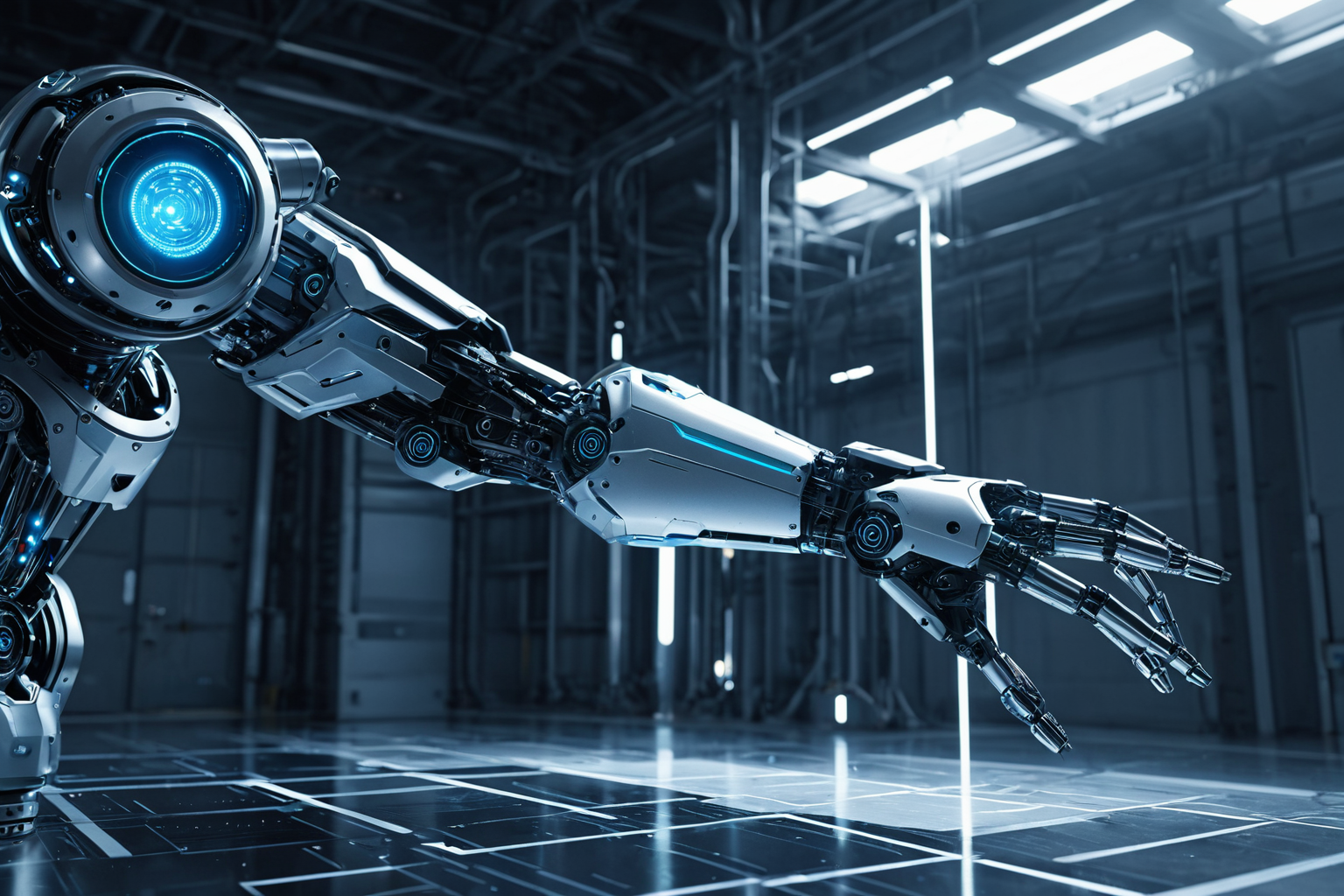

Physical AI refers to artificial intelligence that combines real-world movement and decision-making. Unlike screen-based AI solutions, it operates in tangible environments such as robots, autonomous vehicles, logistics automation systems, and manufacturing equipment, rapidly expanding across industries. This is why many are now focusing on understanding the differences between government support and corporate investment strategies for physical AI development.
While the terminology might seem complex at first glance, the core distinction is straightforward: governments focus on building industry foundations and ecosystems, while companies prioritize rapid product development and revenue generation. This article breaks down the main trends in physical AI development and explains how these two approaches differ and intersect.
Why Physical AI Is Gaining Attention Now
Physical AI is attracting attention because it delivers tangible results in real-world applications. For example, in factories it can reduce repetitive tasks, in logistics it enables more precise handling of goods, and in healthcare or caregiving settings it helps alleviate human workloads. Unlike simple generative AI, physical AI connects with actual equipment, sensors, robotic arms, and mobile systems, creating broader industrial transformation potential.
However, this technology requires more than just good software—it needs hardware integration, data infrastructure, safety protocols, communication networks, and real-world testing. This is why both national-level support and corporate investment are essential for physical AI development. When comparing strategies, it's more important to examine 'how resources are allocated' rather than simply 'who is investing more.'
You can find similar articles on this topic in one place.
View Related ArticlesGovernment Support Focuses on Building Foundations and Ecosystems
The key characteristic of government support is its emphasis on foundational development rather than direct commercialization. Government initiatives often focus on areas that private companies would find difficult to tackle alone, such as research funding, demonstration projects, regulatory improvements, talent cultivation, and public testing environments. In physical AI development, governments aim to ensure technology benefits the entire industry, not just specific companies.
For example, government support might include providing test facilities for small robotics companies to validate their solutions in actual factory settings or creating data infrastructure accessible to universities and research institutions. While these initiatives may not yield immediate revenue, they build long-term industrial competitiveness. Note that specific policies can vary by time period, so it's essential to check official websites for details on current programs.
Corporate Investment Targets Rapid Commercialization and Revenue
Corporate investment is much more direct compared to government support. Companies invest capital specifically to develop products they can sell in the market. In physical AI development, this typically involves robotics manufacturers, semiconductor companies, large corporations' automation divisions, and venture capital firms collaborating or competing.
The primary goals are clear: securing new technology, improving productivity, reducing costs, and entering new markets. For instance, a logistics company investing in warehouse automation can quickly improve operational efficiency and reduce labor costs. Similarly, manufacturers combining AI vision systems with robotic control can automate quality inspection processes. While corporate investment moves fast, it also carries higher failure risks, making real-world validation of technology especially important.

The Key Differences Lie in Purpose and Speed
The clearest way to understand the difference between these approaches is by examining 'whose benefit they serve.' Government support typically serves broader industry needs, regional balance, public interest, and long-term competitiveness. In contrast, corporate investment focuses on company profits, product competitiveness, and market share growth. Even within physical AI development, these different objectives mean fundamentally distinct approaches.
Speed also differs significantly. Government initiatives often involve lengthy processes including application, evaluation, selection, implementation, and monitoring, making them relatively slower. Corporate investments and internal decision-making can be faster, but they risk being discontinued if market response is poor. In simple terms, governments act as 'road builders' while companies function as 'road users.'
Maximum Impact When Government and Corporations Work Together
Physical AI development doesn't succeed with just one approach alone. Governments should create demonstration spaces and provide talent, while companies validate products in those environments before bringing them to market. For example, governments might establish smart manufacturing test zones where companies can trial robotic arms and AI control systems before implementing solutions at scale.
To simplify for beginners: governments create the 'environment for testing,' while companies develop the 'market-ready products.' If you're an entrepreneur or professional in this field, it's important to view these two streams as connected rather than separate. Checking support program details alongside identifying market-relevant problems leads to better outcomes.
Quick Tips for Beginners
When first exploring physical AI development information, start by separating government initiatives from corporate investment news. Government programs are typically announced through ministries, agencies, research foundations, and regional innovation centers. Corporate activities are often revealed through press releases, investor relations materials, investment news, and job postings.
For example, if researching a manufacturing automation startup, look for government keywords like 'demonstration support,' 'testbeds,' or 'regulatory exemptions' while tracking corporate indicators such as customer acquisition, mass production plans, fundraising, and partnerships. Keep in mind that policies and investment trends change frequently, so always verify information through official channels.
Common Beginner Mistakes to Avoid
The most common mistake is treating government support and corporate investment as the same thing. Both involve funding but have completely different purposes and evaluation criteria: governments prioritize public benefit and broader impact, while companies focus on profitability and execution speed. Without understanding this distinction, it's easy to confuse policy news with investment announcements.
Another error is viewing physical AI solely through the lens of robotics. In reality, it requires a combination of sensors, control algorithms, communication systems, safety protocols, and data learning. Finally, assuming 'more support equals guaranteed success' is dangerous—support creates opportunities but actual success depends on real-world validation and commercialization ability.
Key Takeaway: Role Division Is Crucial
When comparing physical AI development strategies, the key distinction is that government support focuses on building ecosystems and foundations while corporate investment targets commercialization and revenue generation. Neither approach alone is superior; success comes from leveraging both approaches together. Especially for fields like physical AI where real-world application matters, public demonstration projects and private investment are equally necessary.
Beginners can remember this as 'government builds the foundation, companies execute the implementation.' Using this framework to read news articles and compare case studies makes understanding related information much easier. Moving forward, it will become increasingly important to look beyond simple technology descriptions and understand who is driving physical AI development through what methods.
Quick FAQ
Q1. Why is physical AI development important?
Because it connects directly to real-world applications in robotics, manufacturing, logistics, and caregiving sectors—creating greater economic impact than basic AI applications alone.
Q2. Can industry grow with government support alone?
Government support builds foundational infrastructure but requires corporate involvement for actual product development and market expansion. Maximum effectiveness comes from both working together.
Q3. What should beginners look at first?
For government: official program announcements and press releases; for companies: investment announcements and business introduction materials. Always verify with official websites as information changes frequently.
Continue exploring similar topics.
View Category ArticlesFAQ
Why is physical AI development important?
Because it connects directly to real-world applications in robotics, manufacturing, logistics, and caregiving sectors—creating greater economic impact than basic AI applications alone.
Can industry grow with government support alone?
Government support builds foundational infrastructure but requires corporate involvement for actual product development and market expansion. Maximum effectiveness comes from both working together.
What should beginners look at first?
For government: official program announcements and press releases; for companies: investment announcements and business introduction materials. Always verify with official websites as information changes frequently.
Korean Source
This article is an English localization of a Korean-language report from BlogScore. Original: 피지컬 AI 육성 전략 비교: 정부 지원과 기업 투자 차이점