
Peter Pan Audiobook: 3 Creative Ways to Talk with Your Kids

Boosting Creativity with a Peter Pan Audiobook
How can you naturally foster creative conversations with your child while listening to a Peter Pan audiobook? Here are three practical methods that help children develop imagination and expression. In today’s digital age, where content is abundant, audiobooks have become a popular medium for sparking engaging dialogue between parents and kids. Classic stories like Peter Pan are particularly effective at stimulating imagination and creativity.
Starting Creative Conversations with the Peter Pan Audiobook
As your child dives into Peter Pan’s world of eternal youth, they’ll explore imaginative realms. Ask them about their feelings or questions during the audiobook, and conversations will flow naturally. For example, asking, "Why does Peter want to fly all the time?" might prompt your child to share their thoughts. The parent’s role isn’t just to ask questions but to guide the child toward finding their own answers. Try asking, "If you were Peter, where would you fly to?" This encourages more specific imaginative thinking.
Expanding Imagination: Exploring Story Locations
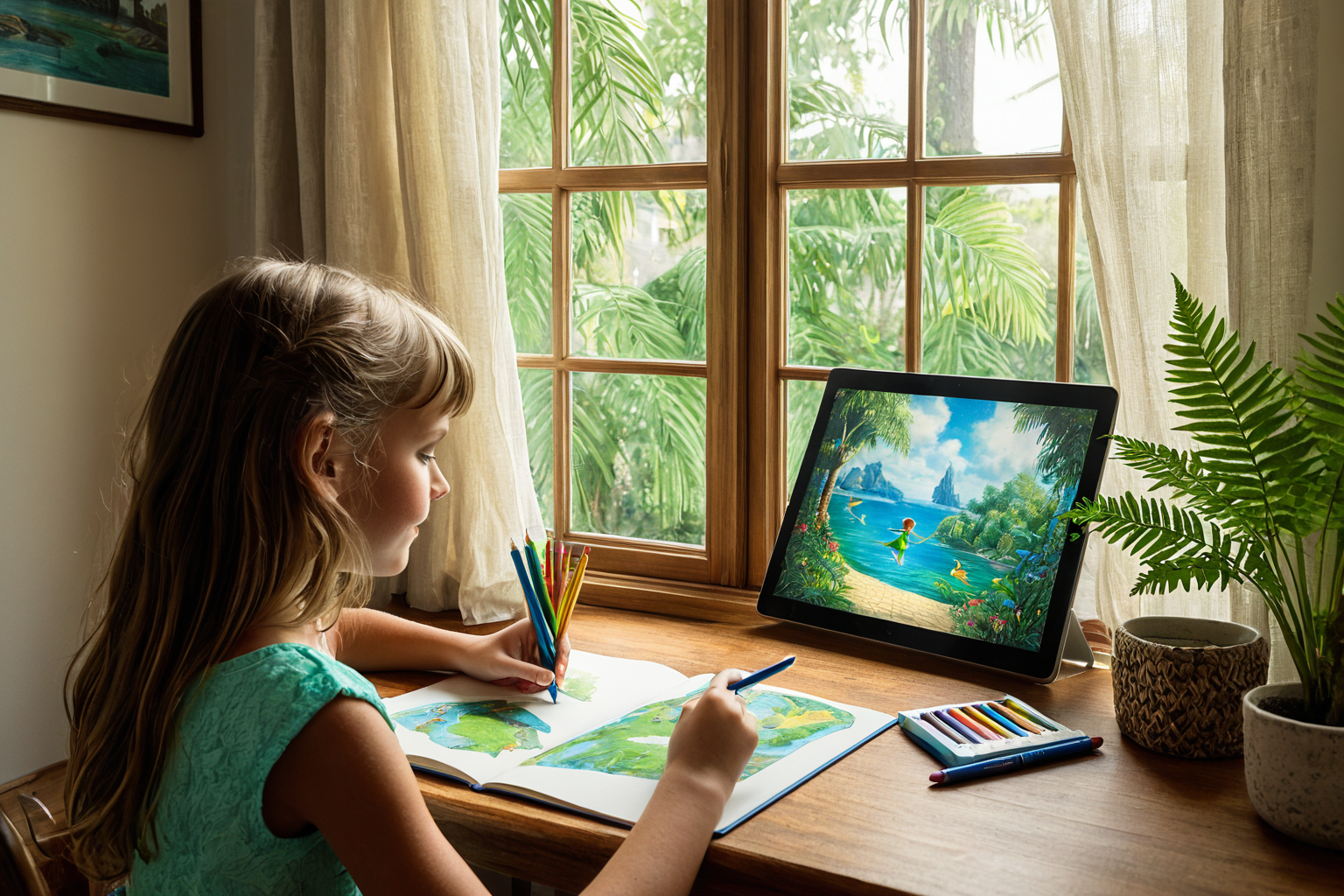
Imagine places from the Peter Pan audiobook together, like Neverland, the Jolly Roger ship, or the flying pirate ship. Let your child draw pictures of these settings or act out scenes as characters. They might say things like, "If I were on the flying pirate ship, where would I go?" This activity also helps develop spatial thinking. For instance, explaining how their drawing of Neverland connects to real-world geography can add educational value. You can even explore additional information about these story locations to make it more learning-focused.
Expressing Emotions: Connecting with Characters' Feelings
When Peter helps his friends, ask your child, "How do you think Peter feels when he helps others?" This encourages them to express their own emotions and deepens the conversation. At times, children may struggle to name their feelings, so offering words like "joy," "excitement," or "empathy" can help. This practice not only supports emotional expression but also enhances language development.
Problem-Solving Creatively: Creating New Stories Together
When Peter needs to avoid the pirate ship, ask your child, "What could we do?" They’ll brainstorm creative solutions, such as, "Could we fly away in an airplane?" Instead of simply agreeing with their idea, guide them by asking, "What are the advantages of that idea?" This helps build logical thinking and encourages children to organize their thoughts while solving problems.
Listening Tips for Parents
Pause during the audiobook based on your child’s reactions. Ask questions like, "What were you thinking about in this part?" This gives them a chance to share their thoughts. After listening, ask, "Which part of today’s story did you enjoy most?" Let them choose a scene they want to revisit, such as, "Would you like to hear the part where Peter flies again?"
Benefits of Creative Conversations
Engaging in creative conversations with your child goes beyond just listening to a story—it enhances their thinking and communication skills. The Peter Pan audiobook offers an excellent tool for exploring imaginative worlds. Through this, children learn to express their ideas verbally and develop creative problem-solving approaches. Research shows that such interactions accelerate language development and social growth in children, which are essential skills they’ll carry into adulthood.
Audiobook Listening Checklist
Prepare questions to keep your child engaged, like "What was the most interesting part of the story?" or "If you were on the flying ship, where would you go?" This stimulates imagination and keeps conversations flowing. Before starting, provide a brief background, such as, "The flying ship is called the Jolly Roger—it’s a special boat that flies!" to help your child immerse themselves in the story.
Additional Tips for Creative Conversations
After listening, extend the experience through drawing or role-playing. Let your child create their own illustrations and build on the story from there—this deepens creativity. You can also modify character names or traits to invent new stories together, like asking, "Where would Peter go if he boarded a pirate ship?" This activity encourages both creative thinking and language skills. Additionally, consider acting out scenes with family members as characters for an engaging group experience.
A Journey of Imagination with the Peter Pan Audiobook
Set off on a journey into imagination with your child using the Peter Pan audiobook. Through this process, they’ll learn to express their thoughts and convey emotions clearly. Creative conversations help broaden how children view the world and develop problem-solving skills. The concept of "eternal youth" in the story can also help kids respect their own feelings and imagination—a mindset that positively influences future social interactions.
FAQ: Creative Conversations with Your Child Using a Peter Pan Audiobook
1. What age group is the Peter Pan audiobook best suited for?
The Peter Pan audiobook is ideal for children aged 5 to 10. This age range is when imagination develops, and storytelling helps them express emotions.
2. What should I do if my child loses focus during the audiobook?
Pause after a short segment and ask, "What were you thinking about in that part?" This refocuses their attention on the story.
3. Are there other audiobooks recommended for fostering creative conversations?
Other stories can also nurture imagination and creativity. For example, "Baby Dinosaur Nest" or "Magic Book" are great options to consider.
FAQ
What age group is the Peter Pan audiobook best suited for?
The Peter Pan audiobook is ideal for children aged 5 to 10. This age range is when imagination develops, and storytelling helps them express emotions.
What should I do if my child loses focus during the audiobook?
Pause after a short segment and ask, "What were you thinking about in that part?" This refocuses their attention on the story.
Are there other audiobooks recommended for fostering creative conversations?
Other stories can also nurture imagination and creativity. For example, "Baby Dinosaur Nest" or "Magic Book" are great options to consider.
Korean Source
This article is an English localization of a Korean-language report from BlogScore. Original: 피터팬 오디오북으로 아이와 함께하는 창의적 대화법 3가지