
The Penrose Staircase: How Optical Illusions Create Impossible Structures
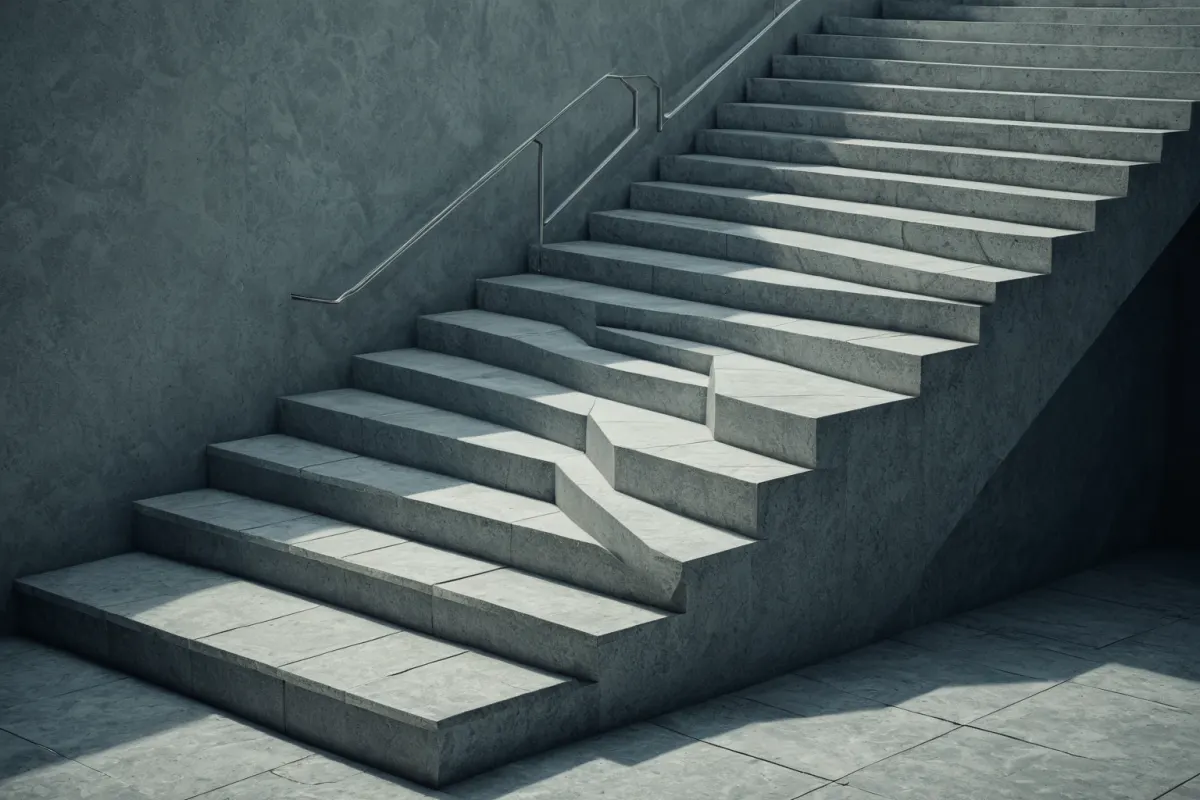
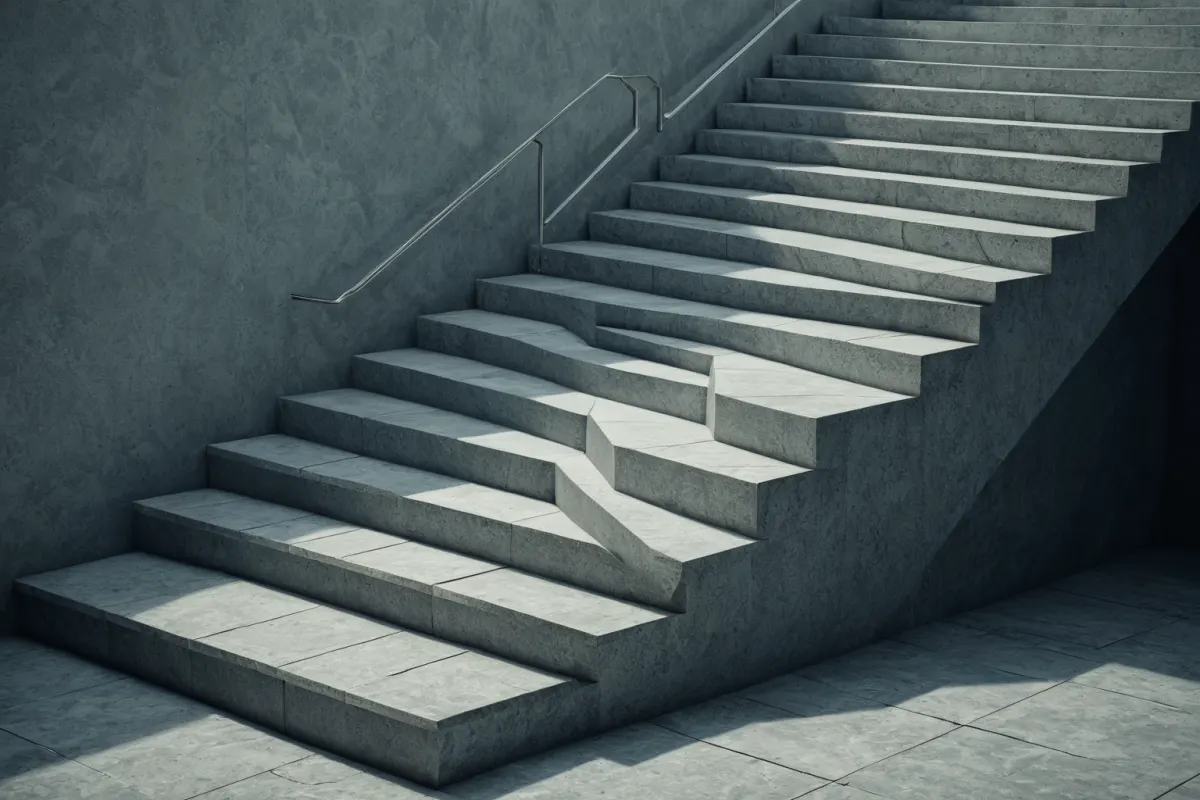
The Penrose staircase is a geometric illusion that appears to continuously ascend while actually forming an endless loop of impossible structure. At first glance, it seems like you're climbing stairs, but when viewed as a whole, the starting and ending points contradict each other, making it physically impossible.
This illusion isn't just about strange drawings—it occurs because our brains naturally interpret a two-dimensional image that looks three-dimensional into a 3D structure. That's why the Penrose staircase frequently appears in art, design, film, and psychology discussions.
The Meaning and Basic Structure of the Penrose Staircase
Popularized in the 1950s by mathematician Roger Penrose and artist Oscar Reutersvärd, the Penrose staircase's core concept is that each individual step appears normal on its own. However, when viewed as a whole, it forms a loop where you seem to be ascending or descending continuously without ever reaching an endpoint.
In essence, our eyes process each part separately while the brain connects these fragments into one continuous space. When perspective, shading, and overlapping align perfectly, the illusion becomes convincing—making it feel possible. Thus, the Penrose staircase is less about physical structure and more about cognitive contradiction.
You can find similar articles on this topic in one place.
View Related ArticlesWhy the Illusion Feels So Strong
When we look at objects, our brains don't process everything at once. Instead, they quickly apply familiar patterns to interpret what we see. For staircases with repeating patterns, this means automatically connecting height and direction into a 3D structure. In this process, the brain fills in gaps even when some information is ambiguous.
The Penrose staircase cleverly exploits these gaps. Each segment makes sense on its own, but when connected, it appears to move both up and down simultaneously. This creates visual conflict that results in a powerful illusion.
For example, if you draw stairs on paper with the left side appearing to ascend and the right side continuing at the same height, it looks like an endless upward climb from afar. However, changing your angle reveals that the structure is impossible to connect properly.
Key Points for Creating a Penrose Staircase
Creating a Penrose staircase may seem simple, but it requires precise alignment of perspective and connection points. Typically, these illusions are designed to look natural from one specific viewpoint—often straight on—and fall apart when viewed from other angles. This is why a single photograph can appear convincing, but the illusion breaks down in real space.
If you want to try drawing one yourself, follow these steps:
- Ensure each stair face has consistent thickness
- Position heights so they appear connected from the viewing angle
- Use similar shading for overlapping sections
- Hide the final connection point so the eye naturally follows
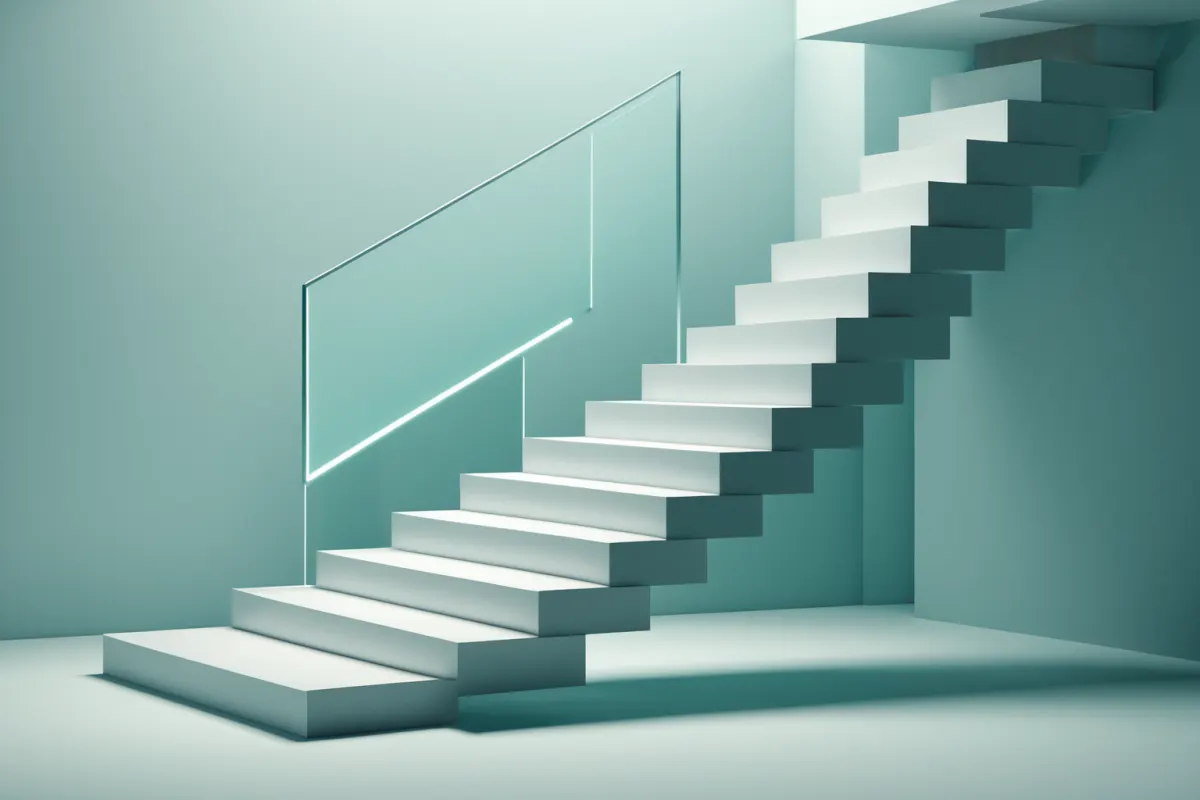
For instance, sketch a rectangular staircase divided into four segments. Rotate each segment 90 degrees and connect them. Initially, it looks like normal stairs, but with careful adjustment of the connections, you'll see a moment where it appears to form an impossible ascending structure. The most important aspect is maintaining consistent direction across all faces.
Why Penrose Staircase Memes Spread So Quickly Online
Penrose staircase memes spread rapidly on social media because they instantly convey a strong impression without complex explanations. The concept of an impossible structure is immediately clear, and short videos or images featuring repetitive up-and-down movements often feel humorous.
Another reason for their popularity is that they use something familiar—stairs—as the subject. Since stairs are part of daily life, seeing them transformed into something unreal creates a strong impact. This makes the Penrose staircase more than just a mathematical puzzle; it's become a popular visual meme.
Why It's Impossible in Real Space
The Penrose staircase works as an illusion on paper but is physically impossible in 3D space. Stairs must change height to connect properly, and the starting and ending points would need different positions. Yet the illusion makes it seem like these conditions are met simultaneously.
This contradiction only holds within a fixed two-dimensional perspective. The structure appears complete from one angle, but when viewed from another, the inconsistencies become obvious. That's why movie sets or exhibitions require precise camera placement to achieve the same effect.
You can find similar illusions elsewhere too. For example, murals that make staircases appear to connect horizontally or architectural photos with exaggerated perspective also use this principle. However, the Penrose staircase remains one of the most famous impossible figures.
Why It's Used as an Educational Tool
The Penrose staircase is a useful tool in education for explaining visual perception and spatial cognition. In math or art classes, it effectively demonstrates how what we see can differ from physical reality. Students often find it engaging at first, then quickly grasp why the illusion works.
It's especially helpful when teaching perspective, optical illusions, non-realistic spatial composition, and conceptual visual information. A single image can show just how fast and automatic our brain's interpretation process is—making complex theories more intuitive than words alone.
Misconceptions About the Penrose Staircase
A common misunderstanding is whether all unusual staircase photos on social media are examples of the Penrose staircase. Not necessarily—the key feature is its endless loop structure, not just a unique angle. Some photos may look odd but lack this continuous looping quality.
Another misconception is that it's a real structure you could build. While some installations or sculptures might appear to work from one angle, they reveal contradictions when viewed from other positions. Therefore, the term "impossible staircase" refers to a visual effect, not an actual physical structure.
FAQ
Q1. Can you physically build a Penrose staircase?
A. You can create models or photos that appear to work from a specific angle, but it's impossible to build a real staircase that ascends endlessly in three-dimensional space.
Q2. Is the Penrose staircase related to the Penrose triangle?
A. Both are impossible figures, but they use different visual principles. The staircase focuses on height and connection, while the triangle centers around contradictions in faces and edges.
Q3. Can beginners create a Penrose staircase illusion?
A. Yes! Start with a front-on view, repeat the stair segments at consistent ratios, and hide the connecting points to achieve basic optical effects.
To apply the Penrose staircase principle more accurately, perspective expression and viewpoint design are crucial. Referencing recent images or diagrams can help deepen your understanding of its structure.
Keep exploring similar topics.
Browse CategoryFAQ
Q1. Can you physically build a Penrose staircase?
You can create models or photos that appear to work from a specific angle, but it's impossible to build a real staircase that ascends endlessly in three-dimensional space.
Q2. Is the Penrose staircase related to the Penrose triangle?
Both are impossible figures, but they use different visual principles. The staircase focuses on height and connection, while the triangle centers around contradictions in faces and edges.
Q3. Can beginners create a Penrose staircase illusion?
Yes! Start with a front-on view, repeat the stair segments at consistent ratios, and hide the connecting points to achieve basic optical effects.
Korean Source
This article is an English localization of a Korean-language report from BlogScore. Original: 펜로즈의 계단 원리, 착시가 만들어내는 이유