
Naver Union Demands Unified Negotiation for Improved Working Conditions
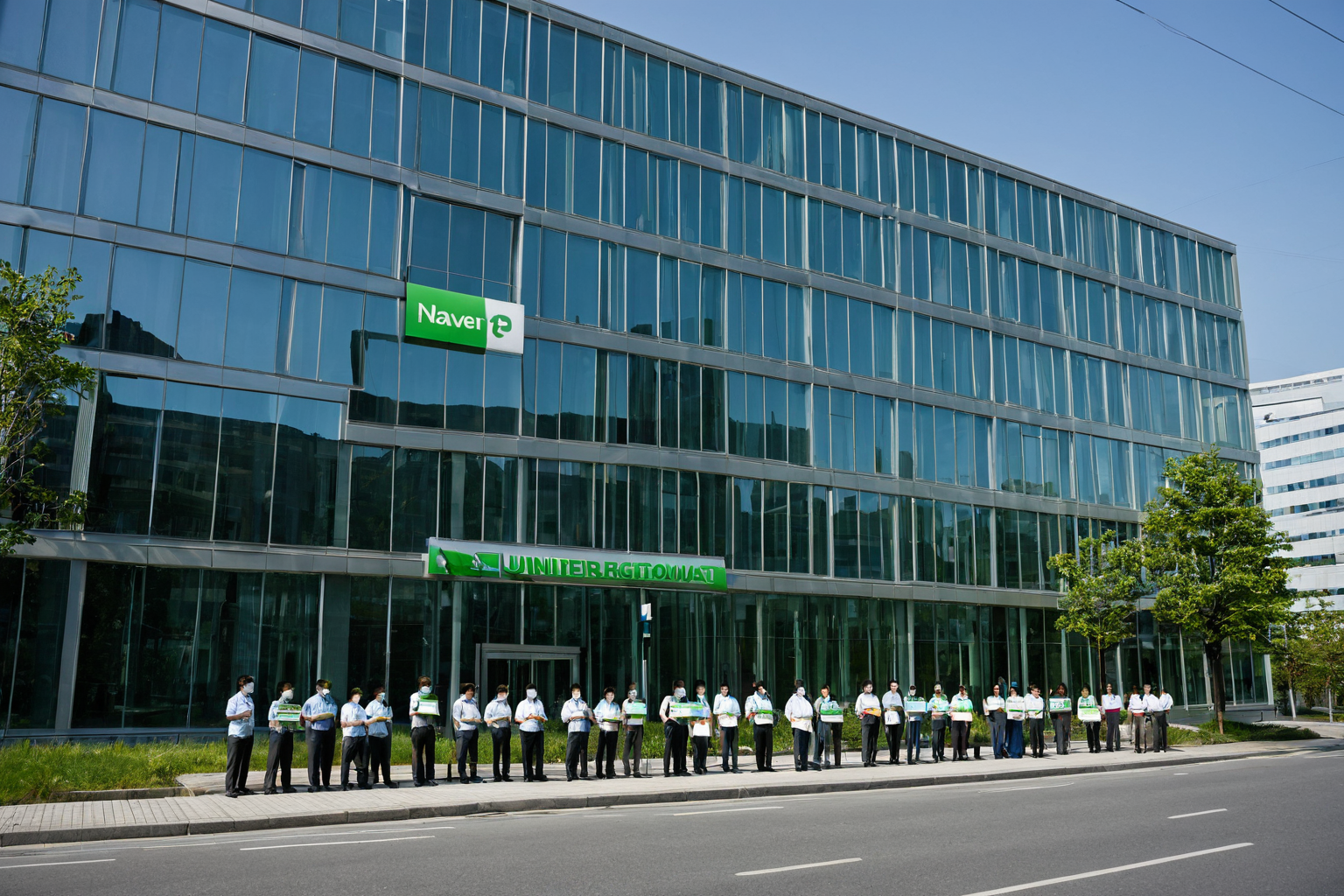
Naver Union's Unified Negotiation Demands Overview
The Naver union has ended eight years of individual negotiations and formally requested unified negotiations across all subsidiaries, announcing its 'five key demands.' This move is expected to have significant implications in the IT industry, with the union emphasizing that individual negotiations were wasteful and calling for the resolution of pay disparities.

Basis for Unified Negotiation Demands
The Naver union announced its call for unified negotiations and highlighted the inefficiency of individual negotiations on August 12, 2026. The union also revealed it had conducted 150 negotiation sessions, indicating long-standing dissatisfaction with the individual negotiation system.
The union presented five key demands aimed at resolving pay differences between subsidiaries and improving working conditions. This is the first instance in the IT industry where a unified negotiation across all subsidiaries has been requested, signaling a potential new phase in relations between labor and management.
Naver's Response and Threat of Collective Action
Naver has refused the request for unified negotiations, stating it lacks decision-making authority over its subsidiaries. This reflects Naver's operational structure where each subsidiary operates independently, with no clear response from management to address the union's demands.
On September 9, 2026, the union has announced plans for collective action, which appears to be a strategic move to secure more concrete outcomes in negotiations with management. This could mark the first large-scale collective action in the IT industry on this date and is being closely watched.
Testing Ground for 'User Authenticity' under Yellow Envelope Law
The Naver union introduced a negotiation approach aligned with actual operational structures, using the term 'genuine users.' This serves as a testing ground to verify the 'user authenticity' aspect of the Yellow Envelope Law.
The Yellow Envelope Law reviews labor union demands considering economic and social interests. The Naver union's request for unified negotiations is an important case that could determine the scope and limitations of this law. As such, it may set a new benchmark for labor-management relations in the IT industry.
Naver has also shown movement toward joining the Federation of Korean Trade Unions (Korean Chamber of Commerce) to establish its relationship with the union, indicating an effort to move beyond the existing individual negotiation system and explore new negotiation approaches.
Five Key Demands in Detail
The five key demands proposed by the Naver union are: First, establishing unified personnel policies to resolve pay disparities between subsidiaries. Second, improving work environments and time management for better working conditions. Third, expanding the labor union's decision-making authority and strengthening negotiation systems.
Fourth, building a regular dialogue system between management and unions. Fifth, standardizing job competency evaluation criteria and improving performance-based bonuses. These demands aim to standardize personnel and evaluation systems that previously varied by subsidiary to improve working conditions.
Significance and Impact of Unified Negotiation Efforts
The Naver union's demand for unified negotiations offers new insights in the IT industry. Ending the previous practice of negotiating individually per subsidiary and moving toward group-wide discussions on working conditions could provide a model to solve problems that large IT companies face.
Resolving pay disparities between subsidiaries directly impacts workers, offering an opportunity to build evaluation systems based on job competency and performance. However, if negotiations do not proceed smoothly due to Naver's refusal, labor-management tensions could intensify.
Labor-Management Conflict Structure
The Naver union emphasized that eight years of individual negotiations were wasteful, pointing out that such negotiations led to divergent outcomes and deepened pay disparities among workers across subsidiaries.
Conversely, Naver has refused the unified negotiation request by citing lack of decision-making authority over its subsidiaries, which reflects an operational structure where each subsidiary operates independently. While this is common practice, the union's demand for group-wide discussions represents a new approach.
Announcement of Collective Action and Future Outlook
By announcing collective action on September 9, 2026, the Naver union appears to be adopting a strategy to secure more concrete results in negotiations with management. Unlike previous individual negotiation systems, this approach presents consistent demands and aims to pressure management through large-scale collective action.
In terms of future outlook, reactions from other IT companies to Naver's push for unified negotiations will be closely watched. As the first case in the industry where such a request has been made, it could serve as a catalyst for other companies to attempt similar improvements to labor conditions.
Additionally, Naver's move toward joining the Korean Chamber of Commerce (KCCI) to establish its relationship with the union may present a new negotiation model for the IT industry. This could be an important turning point for improving labor-management relations and enhancing working conditions.
Evaluating Application of Yellow Envelope Law
The Naver union's use of the term 'genuine users' to describe its operational approach serves as a testing ground for verifying the 'user authenticity' aspect of the Yellow Envelope Law. This represents an attempt to negotiate at the group level rather than individual subsidiaries, which is being reviewed from a legal perspective.
The Yellow Envelope Law evaluates whether union demands align with economic and social interests. The Naver union's unified negotiation request could expand the scope of this law, meaning future labor-management relations in the IT industry may be shaped by how courts rule on this case.
Key Information to Verify
The specific details of the Naver union's five key demands have not yet been publicly disclosed. However, it has been confirmed that they aim to resolve pay disparities between subsidiaries and improve working conditions.
Naver's concrete response plan to its refusal of unified negotiations remains unclear. While management cited the lack of decision-making authority over subsidiaries as a reason for refusal, how they will respond in future negotiations is key.
The specific actions planned for September 9, 2026, and their potential impact are also being closely watched. The IT industry is anticipating whether this collective action could open a new chapter in labor-management relations.
Frequently Asked Questions
Why has the Naver union requested unified negotiations?
The union cited inefficiency in eight years of individual negotiations and requested unified negotiations to address pay disparities between subsidiaries and improve working conditions.
Why did Naver refuse unified negotiations?
Naver stated it lacks decision-making authority over its subsidiaries, reflecting its operational structure where each subsidiary operates independently.
What does 'testing ground for user authenticity' under the Yellow Envelope Law mean?
The Naver union proposed a negotiation approach aligned with actual operations using the term 'genuine users,' serving as a test case to verify the 'user authenticity' aspect of the Yellow Envelope Law.
Frequently Asked Questions
The Naver union's request for unified negotiations could mark a new milestone in the IT industry. Ending individual negotiations and moving toward group-wide discussions on working conditions may influence other IT companies to follow suit.
If labor-management conflict continues, there is concern about worsening relations due to collective action. However, Naver's move toward joining KCCI to explore new negotiation models suggests a potentially positive outlook for the future.
This case has the potential to become a new model for improving labor-management relations and working conditions in the IT industry. Additionally, it may clarify the application of 'user authenticity' under the Yellow Envelope Law through this case.
Key information readers are seeking includes the specific five demands, the background behind the unified negotiation request, and Naver's refusal reason. More details will be available through future reports.
You can view similar articles on this topic in one place.
View Related ArticlesFAQ
Why has the Naver union requested unified negotiations?
The union cited inefficiency in eight years of individual negotiations and requested unified negotiations to address pay disparities between subsidiaries and improve working conditions.
Why did Naver refuse unified negotiations?
Naver stated it lacks decision-making authority over its subsidiaries, reflecting its operational structure where each subsidiary operates independently.
What does 'testing ground for user authenticity' under the Yellow Envelope Law mean?
The Naver union proposed a negotiation approach aligned with actual operations using the term 'genuine users,' serving as a test case to verify the 'user authenticity' aspect of the Yellow Envelope Law.
Korean Source
This article is an English localization of a Korean-language report from BlogScore. Original: 네이버 노조 통합교섭 요구사항 정리: 근로 조건 개선