
Natural Evaporation Humidifiers: A Healthy Way to Manage Indoor Air Quality
Key Takeaways
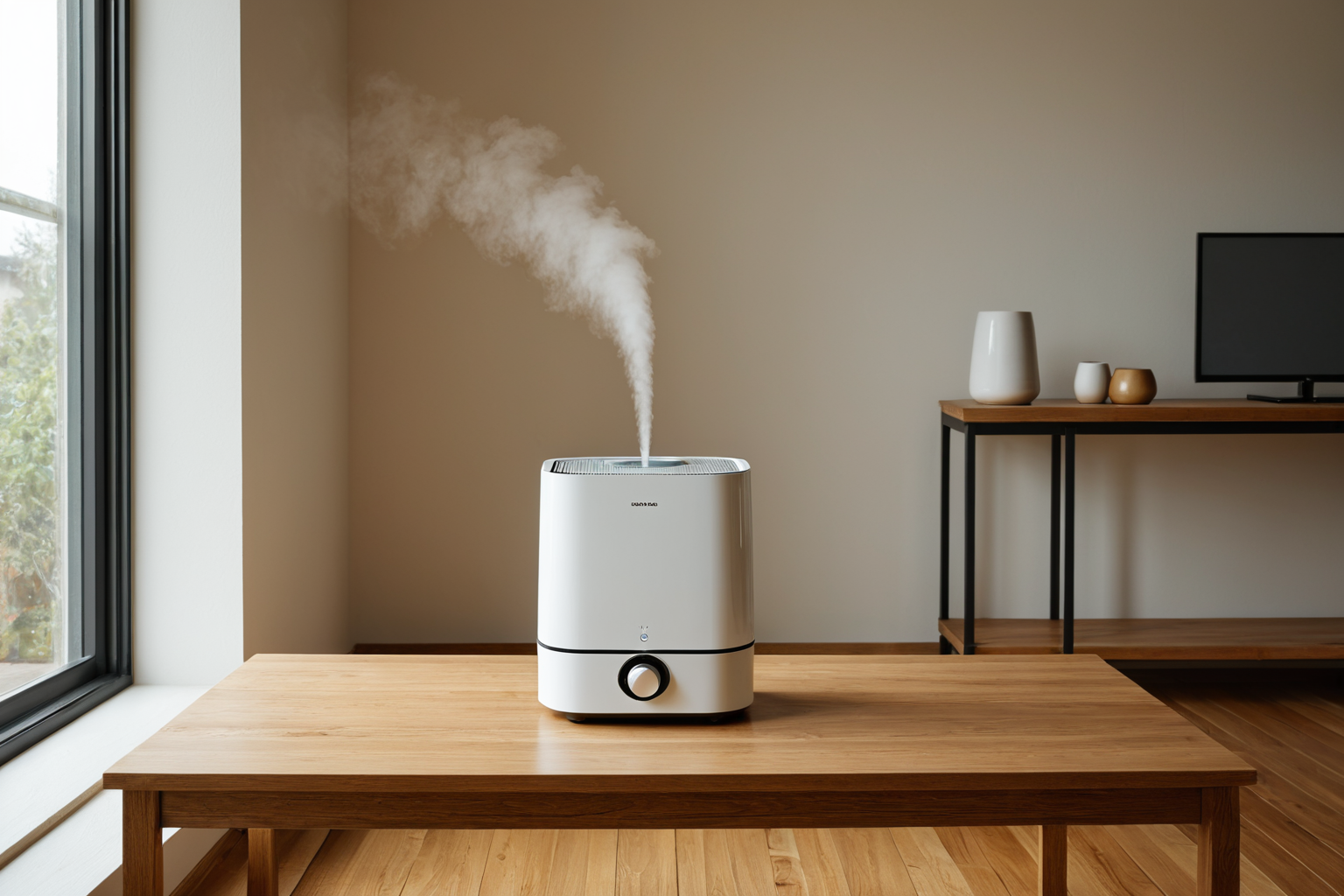
Maintaining indoor humidity between 40-60% during winter is effective for preventing respiratory and skin issues. Within this range, air becomes moist enough to alleviate symptoms like sore throats, sneezing, and dry skin, especially important for children and the elderly. Experts recommend maintaining appropriate humidity levels when using humidifiers; for a 35㎡ (about 10-pyeong) apartment, a spray rate of 500ml per hour is needed, while a 15-pyeong apartment requires 700ml per hour. This helps maintain proper moisture in indoor air, as excessive humidity can lead to mold growth and bacterial proliferation. Natural evaporation humidifiers release moisture through natural evaporation, making them energy-efficient with low power consumption. Unlike heated models, they pose less risk of burns and can operate continuously for up to 32 hours on a 4L tank. They maintain indoor humidity gradually without requiring filters, though some models do have replaceable filters that reduce bacterial growth risks—making them advantageous for health management. In contrast, heated humidifiers boil water to produce steam, offering better bacterial elimination and wider coverage but with higher noise levels and power consumption. Ultrasonic models are cheaper and quieter but require more hygiene maintenance due to impurities in the mist, while hybrid models are pricier and have lower sterilization capabilities than heated types. Recent releases include natural evaporation humidifiers from Cuckoo, Botokorea, and Bonedoko. Cuckoo introduced a model with a 4L tank offering up to 32 hours of continuous use, while Botokorea's 'Natural Evaporation Humidifier Season 2' sold out quickly. Bonedoko launched the 'EV-100' model, and their office-friendly 'Daily Moisture' natural evaporation humidifier is currently on sale at 50% off. All these models allow for hygienic use through filter replacement and feature automatic humidity control. Humidifiers and air purifiers should be used in separate spaces to prevent water droplets from entering the air purifier filters, which can cause bacterial growth and unpleasant odors. Therefore, it's best to operate them in distinct areas if using both simultaneously. Regular cleaning is essential when using humidifiers, with easy-to-remove filters or spray parts being a key feature. Proper indoor ventilation is also crucial; during winter, natural ventilation for at least 10 minutes every two hours is recommended, and this should be combined with HVAC use.Which type of humidifier is best?
Natural evaporation humidifiers are low-power, have a lower burn risk, and allow hygienic operation through filter replacement. Large-capacity models (4L tank) provide up to 32 hours of continuous humidity, making them convenient.Can I use a humidifier with an air purifier?
Humidifiers and air purifiers should be used in separate spaces; water droplets entering the air purifier filter can lead to bacterial growth and odors. Therefore, they should always be operated in distinct areas.What should I watch for when using a humidifier to maintain indoor humidity?
The indoor humidity level should be kept between 40-60%. Excessive humidity can cause mold growth and bacterial proliferation. Regular cleaning after use and filter replacement are necessary, along with maintaining the appropriate spray rate (500ml per hour for a 35㎡ apartment).References
- "When staying in a guesthouse, I went to Daiso first..." ··· 5000 won home appliances, essential for solo living (www.smartbizn.com)
- Using the wrong humidifier can lead to a 40x maintenance cost bill... Consumer Council recommends [Know It All] (www.donga.com)
- How to boost productivity in life: Everything you need to know about sleep (www.gqkorea.co.kr)
Find more articles on similar topics in one place.
View Related ArticlesFAQ
Which type of humidifier is best?
Natural evaporation humidifiers are low-power, have a lower burn risk, and allow hygienic operation through filter replacement. Large-capacity models (4L tank) provide up to 32 hours of continuous humidity, making them convenient.
Can I use a humidifier with an air purifier?
Humidifiers and air purifiers should be used in separate spaces; water droplets entering the air purifier filter can lead to bacterial growth and odors. Therefore, they should always be operated in distinct areas.
What should I watch for when using a humidifier to maintain indoor humidity?
The indoor humidity level should be kept between 40-60%. Excessive humidity can cause mold growth and bacterial proliferation. Regular cleaning after use and filter replacement are necessary, along with maintaining the appropriate spray rate (500ml per hour for a 35㎡ apartment).
Korean Source
This article is an English localization of a Korean-language report from BlogScore. Original: 자연기화식가습기 추천: 건강한 공기 관리 방법