
National AI Computing Center Infrastructure: Milestones and Challenges
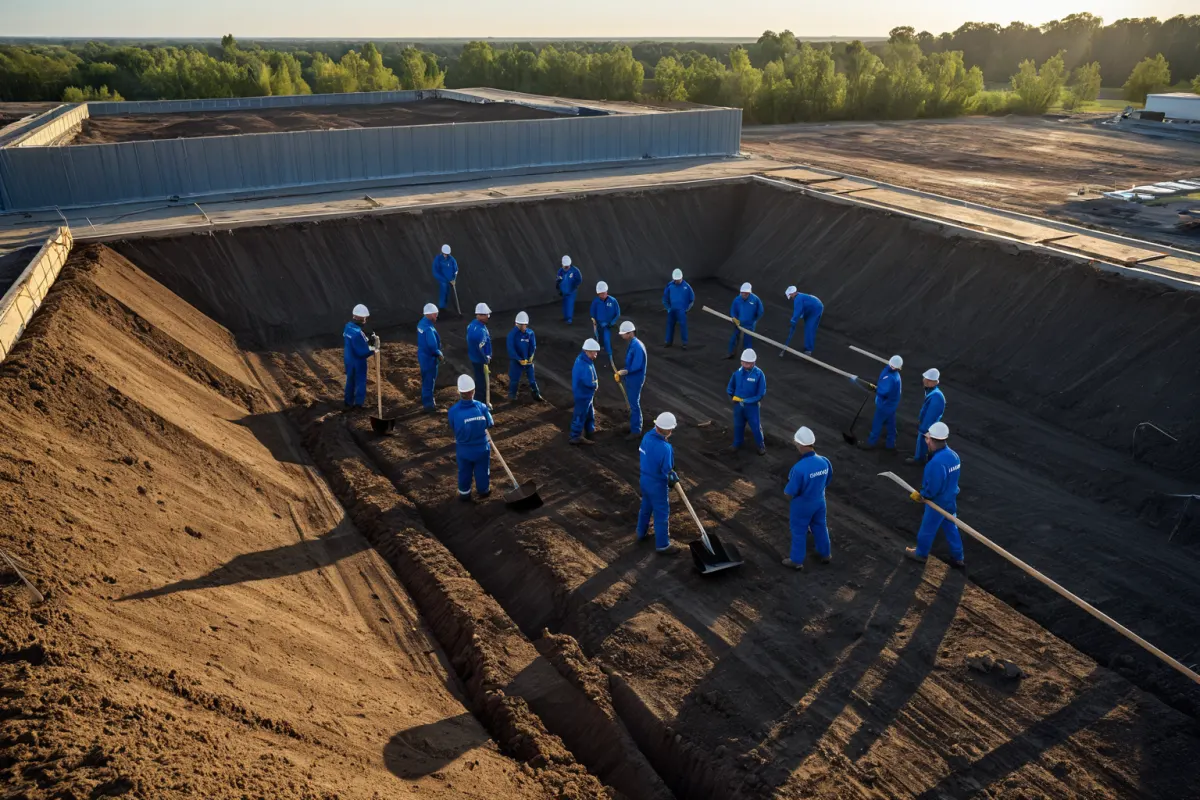
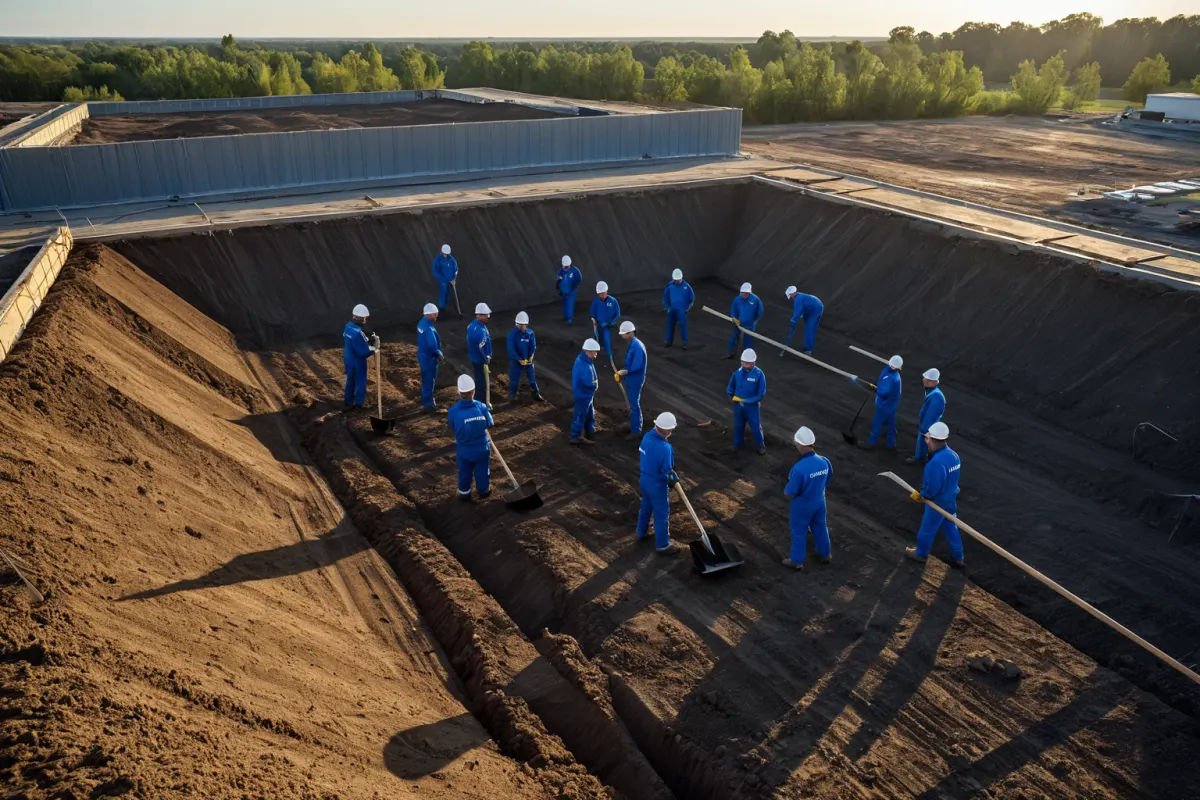
National AI Computing Center Infrastructure Breaks Ground
The National AI Computing Center (KACC) held its groundbreaking ceremony in Haenam on August 3, 2026, marking the first step for South Korea's 'AI highway.' The center, with a total investment of ₩2.5 trillion, plans to deploy 15,000 advanced GPUs. Samsung SDS will lead infrastructure construction, with completion expected by 2028.
Gwangju's 'AX Innovation Valley' and GPU Integration Strategy
Although Gwangju failed to secure the National AI Computing Center, it has declared its commitment to pursuing GPU integration. The city is investing ₩60 billion to advance its 'AX Innovation Valley,' officially confirmed following approval of exemption from pre-feasibility assessment for Phase 2 AI projects on August 25, 2025.
On August 25, 2025, Gwangju City announced it would proceed with the 'AX Innovation Valley' initiative after securing final approval for exemption from pre-feasibility assessment for its Phase 2 AI project. This strategic move aims to strengthen the city's AI industry competitiveness through focused GPU infrastructure development.
Government's AI Action Plan and Budget Expansion
The government has identified GPU acquisition, data management, and talent cultivation as key priorities in its 'AI Action Plan.' A detailed plan announced on December 15, 2025, revealed a fourfold increase in annual budget for GPU procurement to ₩3 trillion.
On May 3, 2026, NIPA Director Park Yun-gyu explained during the foundation work of the AI highway that 'the government is significantly increasing its budget for GPU acquisition.' This represents a core element of the government's strategy to expand AI infrastructure alongside the National AI Computing Center.
Gwangju's Push for 'National NPU Computing Center'
Gwangju City is actively advancing plans for a 'National NPU Computing Center,' which was officially confirmed on March 10, 2026. The initiative has been viewed as a strategic move to enhance AI industry competitiveness.
On March 12, 2026, Gwangju City announced it had established a strategy for strengthening AI industry competitiveness through the 'National NPU Computing Center,' focusing on GPU integration and aiming for technological independence in AI.
AI Applications Across Education and Science & Technology
The government plans to invest ₩16.7 billion to establish 118 AI-integrated education facilities across schools nationwide, part of the broader initiative to mobilize AI across eight key sectors in science and technology under the 'K-Moonshot' program launched on February 25, 2026.
The government's 'K-Moonshot' initiative for eight science and technology sectors leverages AI to simultaneously pursue technological advancement and innovation. The Ministry of Science and ICT and Financial Services Commission also announced plans to invest ₩1 trillion this year to nurture a domestic 'K-NVIDIA,' targeting GPU-based AI technology independence.
Concerns Over Achieving an AI Powerhouse
The government has allocated a total of ₩100 billion for becoming an AI powerhouse, but critics argue this represents a one-sided investment lacking sufficient focus on talent development and indigenous technology. This suggests the need for comprehensive support across all aspects of the AI industry.
Gwangju's 'AX Innovation Valley' Detailed Plan
'AX Innovation Valley' is an initiative being actively pursued by Gwangju following final approval of exemption from pre-feasibility assessment for Phase 2 AI projects. The project aims to create a testing ground for AI-based industrial innovation and support the commercialization of various AI technologies.
On August 20, 2025, Gwangju City publicly outlined its specific plans for 'AX Innovation Valley' in a Bridge Economy report, aiming to foster an AI industry ecosystem and revitalize local economic activity. This is viewed as an alternative strategy developed after failing to secure the National AI Computing Center.
Details of National AI Computing Center (KACC)
The National AI Computing Center (KACC) is located in Haenam, with its groundbreaking ceremony held on August 3, 2026. With a total investment of ₩2.5 trillion, it plans to deploy 15,000 advanced GPUs. Samsung SDS will lead infrastructure construction, with completion expected by 2028.
The center aims to provide cutting-edge infrastructure for AI research and development, focusing on enhancing AI performance through GPU acquisition. Its establishment is one of the key initiatives outlined in the government's 'AI Action Plan,' designed to support talent cultivation and indigenous technology development.
Government Investment and Nurturing 'K-NVIDIA'
The Ministry of Science and ICT and Financial Services Commission plan to invest ₩1 trillion this year to nurture a domestic 'K-NVIDIA'—a goal focused on achieving independence in GPU-based AI technology. This strategy is expected to strengthen the competitiveness of domestic companies like Samsung SDS.
In its 'AI Action Plan,' the government has designated GPU acquisition, data management, and talent cultivation as priority innovation areas, aiming to become one of the world's top three AI nations. This reflects a strategic focus on long-term technological independence rather than just short-term infrastructure development.
Expansion of AI Education and Eight-Sector K-Moonshot
The government plans to invest ₩16.7 billion to establish 118 AI-integrated education facilities across schools nationwide, as part of mobilizing AI across eight key sectors in science and technology under the 'K-Moonshot' program launched on February 25, 2026.
The eight-sector 'K-Moonshot' initiative in science and technology aims to simultaneously pursue AI technological innovation, talent cultivation, data acquisition, and indigenous technology development. This represents a concrete implementation of the government's goals outlined in the 'AI Action Plan,' serving as a core component of its comprehensive AI strategy.
Gwangju's Strategy: Not Giving Up on GPU Integration
Despite failing to secure the National AI Computing Center, Gwangju City has reaffirmed its commitment to pursuing GPU integration. This demonstrates the city's strategic focus on building infrastructure based on GPUs to strengthen its AI industry competitiveness.
Gwangju is advancing its 'AX Innovation Valley' initiative to simultaneously pursue commercialization of GPU-based AI technology and local economic revitalization. Viewed as an alternative strategy developed after failing to secure the National AI Computing Center, this approach is expected to play a significant role in forming Gwangju's AI industry ecosystem.
Challenges and Concerns for Achieving AI Powerhouse Status
The government's investment has made GPU acquisition feasible, but concerns have been raised that this represents a one-sided investment lacking sufficient focus on talent development and indigenous technology. This suggests the need for comprehensive support across all aspects of the AI industry.
Information to Verify
Specific budget allocations for Gwangju's 'AX Innovation Valley,' detailed plans related to GPU integration, and the exact procedures and criteria for final approval of exemption from pre-feasibility assessment for Phase 2 AI projects require further verification. Additionally, the progress of the National AI Computing Center (KACC) groundbreaking ceremony and its detailed plan for completion by 2028 warrant close attention.
Frequently Asked Questions
When did the National AI Computing Center (KACC) break ground?
The groundbreaking ceremony was held on August 3, 2026, in Haenam.
How much is Gwangju investing in its 'AX Innovation Valley'?
Gwangju City is investing ₩60 billion to advance the 'AX Innovation Valley.'
How much budget will the government allocate for nurturing 'K-NVIDIA' this year?
The Ministry of Science and ICT and Financial Services Commission plan to invest ₩1 trillion this year to nurture a domestic 'K-NVIDIA. '
Frequently Asked Questions
The National AI Computing Center (KACC) construction and Gwangju's 'AX Innovation Valley' initiative represent strategic collaborations between the government and local authorities aimed at strengthening South Korea's AI industry competitiveness. The focus on GPU infrastructure is marking the first steps toward becoming one of the world's top three AI nations.
Despite criticism regarding a lack of balanced investment in talent development and indigenous technology, the government has prioritized infrastructure expansion through its 'AI Action Plan,' designating GPU acquisition, data management, and talent cultivation as key priorities. Gwangju City is pursuing its own strategy for strengthening AI industry competitiveness through focused GPU infrastructure development while advancing its 'AX Innovation Valley' initiative.
If the government and local authorities enhance comprehensive support for technological independence and talent development in the future, South Korea has a high potential to become one of the world's top three AI nations. With current infrastructure expansion complemented by stronger efforts in talent cultivation and technology development, competitiveness across all areas of the AI industry is expected to improve significantly.
You can view similar articles on this topic at once.
View Related ArticlesFAQ
When did the National AI Computing Center (KACC) break ground?
The groundbreaking ceremony was held on August 3, 2026, in Haenam.
How much is Gwangju investing in its 'AX Innovation Valley'?
Gwangju City is investing ₩60 billion to advance the 'AX Innovation Valley.'
How much budget will the government allocate for nurturing 'K-NVIDIA' this year?
The Ministry of Science and ICT and Financial Services Commission plan to invest ₩1 trillion this year to nurture a domestic 'K-NVIDIA.'
Korean Source
This article is an English localization of a Korean-language report from BlogScore. Original: 국가 AI 컴퓨팅센터 인프라 구축 단계별 성과와 과제