
Middle East Economic Impact from Strait of Hormuz Navigation Ban
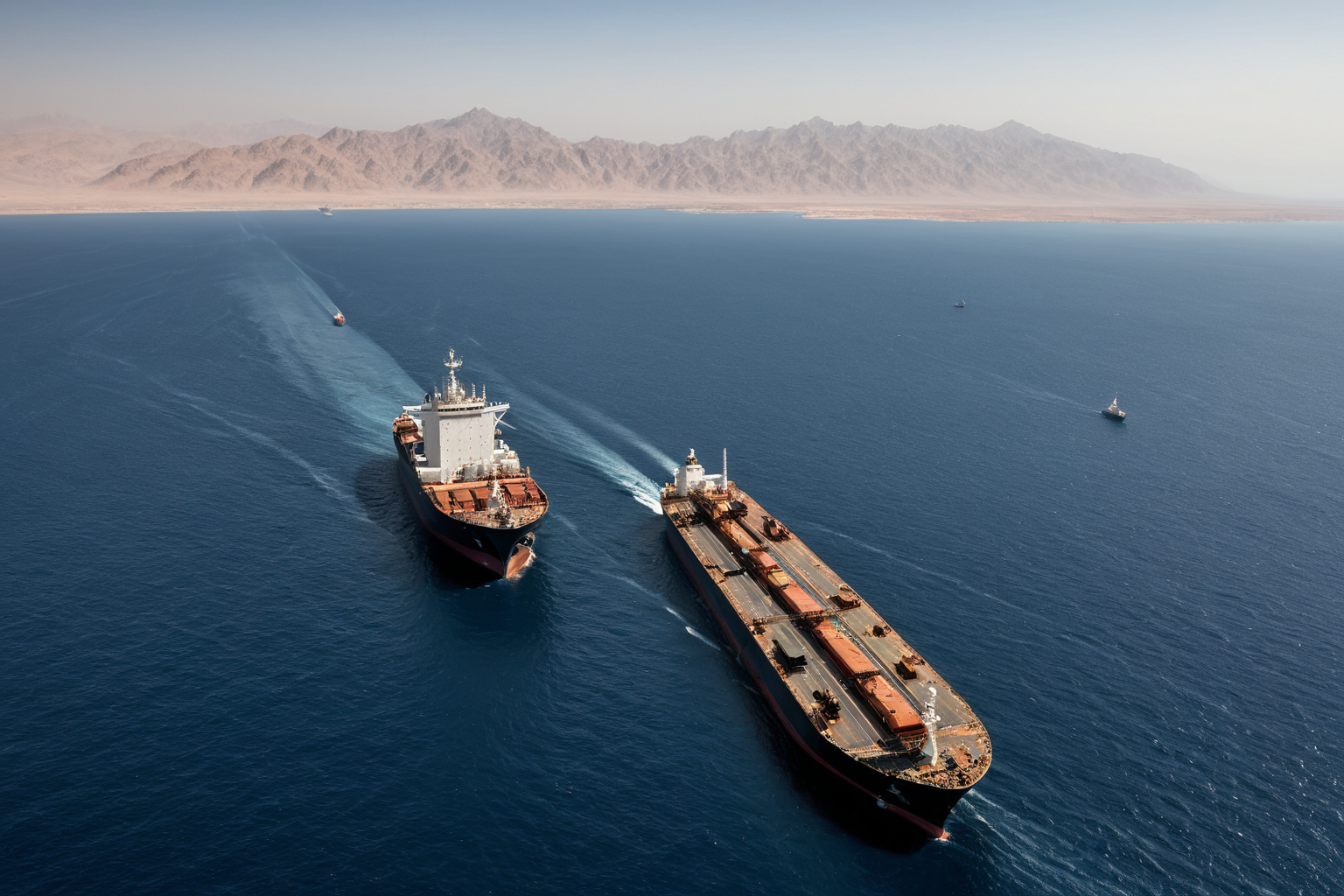
Overview of the Strait of Hormuz Navigation Ban
Iran's prohibition on military vessel passage through the Strait of Hormuz has triggered a sharp rise in global oil prices, marking the first significant economic shock to the Middle East region in four days. Iran claims it will not allow military vessels to pass even if the strait is open, leading to a 80% drop in cargo volume and a tripling of tanker freight rates.
Rising Oil Prices and Economic Impact
The blockade of the Strait of Hormuz has caused a collapse in energy supply chains, resulting in a 3% surge in global oil prices within four trading days. This has had negative effects on the broader Middle Eastern economy. Although a coalition of 40 European and Asian countries led by Europe is pushing for normalization of the strait, rising inflation due to high oil prices and currency fluctuations persist.
Economic Ripple Effects of the Strait of Hormuz Blockade
The uncertainty around navigation through the Strait of Hormuz has driven up global oil prices. On March 4, 2026, cargo volume dropped by 80% while tanker freight rates tripled, directly impacting Middle Eastern economies. South Korea, which relies on the Middle East for 70% of its crude oil and 20% of its LNG, joined international efforts to prevent industrial disruption due to supply chain issues.
Iran's military vessel passage ban was announced by the Iranian government on August 27, 2026. This led to incidents of ship attacks in the Strait of Hormuz and a rise in global oil prices, significantly affecting the Middle East economy. A coalition of 40 European and Asian countries led efforts to normalize the strait starting April 3, 2026, with French and Japanese vessels passing through first.
South Korea's Dependence on the Middle East and Response Measures
Given South Korea's reliance on the Middle East for 70% of its crude oil and 20% of its LNG, supply chain disruptions from the Strait blockade could have impacted industries across the board. In response, the South Korean government joined a statement by seven countries condemning Iran's blockade of the strait and worked with allies to develop countermeasures.
The government has been strengthening international cooperation through dialogue with allies on contribution plans for the Strait of Hormuz, closely monitoring outcomes from the Trump-Takahashi summit. On April 17, 2026, a South Korean tanker became the first to pass through the Red Sea after the blockade was lifted, contributing to Middle Eastern economic recovery.
Normalization of the Strait and Ongoing Impacts
The Strait has been normalized under the leadership of a coalition of 40 European and Asian countries, with French and Japanese vessels passing through first. However, inflation due to high oil prices and currency fluctuations continue to persist, with supply chain normalization in Ulsan's economy expected to take up to two years.
The blockade also negatively impacted global markets, with the Dow Jones Industrial Average falling 0.85% as global oil prices rose by 3%. Recovery for the Middle East region is expected to be slow and challenging.
Investigation of Causes and Key Information
The primary cause of the Strait blockade was Iran's military vessel passage ban, announced on August 27, 2026. This led to ship attacks in the Strait and a rise in global oil prices, significantly affecting Middle Eastern economies.
On March 4, 2026, reports indicated an 80% drop in cargo volume and a tripling of tanker freight rates due to the blockade, directly impacting Middle Eastern economies. South Korea's heavy reliance on Middle Eastern crude oil (70%) and LNG (20%) meant that supply chain disruptions from the Strait blockade could have affected industries broadly.
Response Measures and Safety Information
The international cooperation led by a coalition of 40 European and Asian countries to normalize the strait is being evaluated as an international standard. The rise in oil prices and drop in cargo volume due to Iran's military vessel ban are expected to continue affecting Middle Eastern economic recovery.
South Korea has been strengthening international cooperation through dialogue with allies on contribution plans for the Strait of Hormuz, closely monitoring outcomes from the Trump-Takahashi summit. On April 17, 2026, a South Korean tanker passed through the Red Sea for the first time since the blockade was lifted, contributing to Middle Eastern economic recovery.
Frequently Asked Questions
How much did oil prices rise due to the Strait of Hormuz blockade?
Global oil prices rose by 3% within four trading days following the Strait of Hormuz blockade, negatively impacting the broader Middle Eastern economy.
What measures has South Korea taken in response to the Strait blockade?
South Korea, which relies on the Middle East for 70% of crude oil and 20% of LNG, joined a statement by seven countries condemning Iran's blockade and worked with allies to develop countermeasures.
When was the Strait normalized?
A coalition of 40 European and Asian countries led efforts to normalize the strait starting April 3, 2026, with French and Japanese vessels passing through first.
Frequently Asked Questions
The Middle East economic shock from the Strait blockade included a 3% oil price surge, an 80% drop in cargo volume, and tripling of tanker freight rates. Iran's military vessel ban was announced on August 27, 2026, after which Europe-Asia 40-country coalition pushed for normalization. While high oil prices continue to drive inflation and currency fluctuations, supply chain normalization in Ulsan is expected to take up to two years.
International cooperation and energy supply chain stabilization are essential for Middle Eastern economic recovery, requiring long-term strategic approaches. The stable operation of the Strait of Hormuz will play a crucial role not only for the Middle East economy but also for the global economy.
The information provided in this article is based on verified facts. Continuous monitoring is necessary regarding market volatility and related developments.
You can view similar articles all at once.
View Related ArticlesFAQ
How much did oil prices rise due to the Strait of Hormuz blockade?
Global oil prices rose by 3% within four trading days following the Strait of Hormuz blockade, negatively impacting the broader Middle Eastern economy.
What measures has South Korea taken in response to the Strait blockade?
South Korea, which relies on the Middle East for 70% of crude oil and 20% of LNG, joined a statement by seven countries condemning Iran's blockade and worked with allies to develop countermeasures.
When was the Strait normalized?
A coalition of 40 European and Asian countries led efforts to normalize the strait starting April 3, 2026, with French and Japanese vessels passing through first.
Korean Source
This article is an English localization of a Korean-language report from BlogScore. Original: 호르무즈 해협 통항 금지로 인한 중동 지역 경제 영향