
The Difference Between Mid-Term and Re-election Systems in South Korea's Politics
The Difference Between Mid-Term and Re-election Systems
Discussions about the presidential term system in South Korea's politics are intensifying. A mid-term system allows for re-election every four years, with the possibility of extending the term through mid-term evaluations. In contrast, a re-election system permits the president to be continuously appointed under specific conditions.
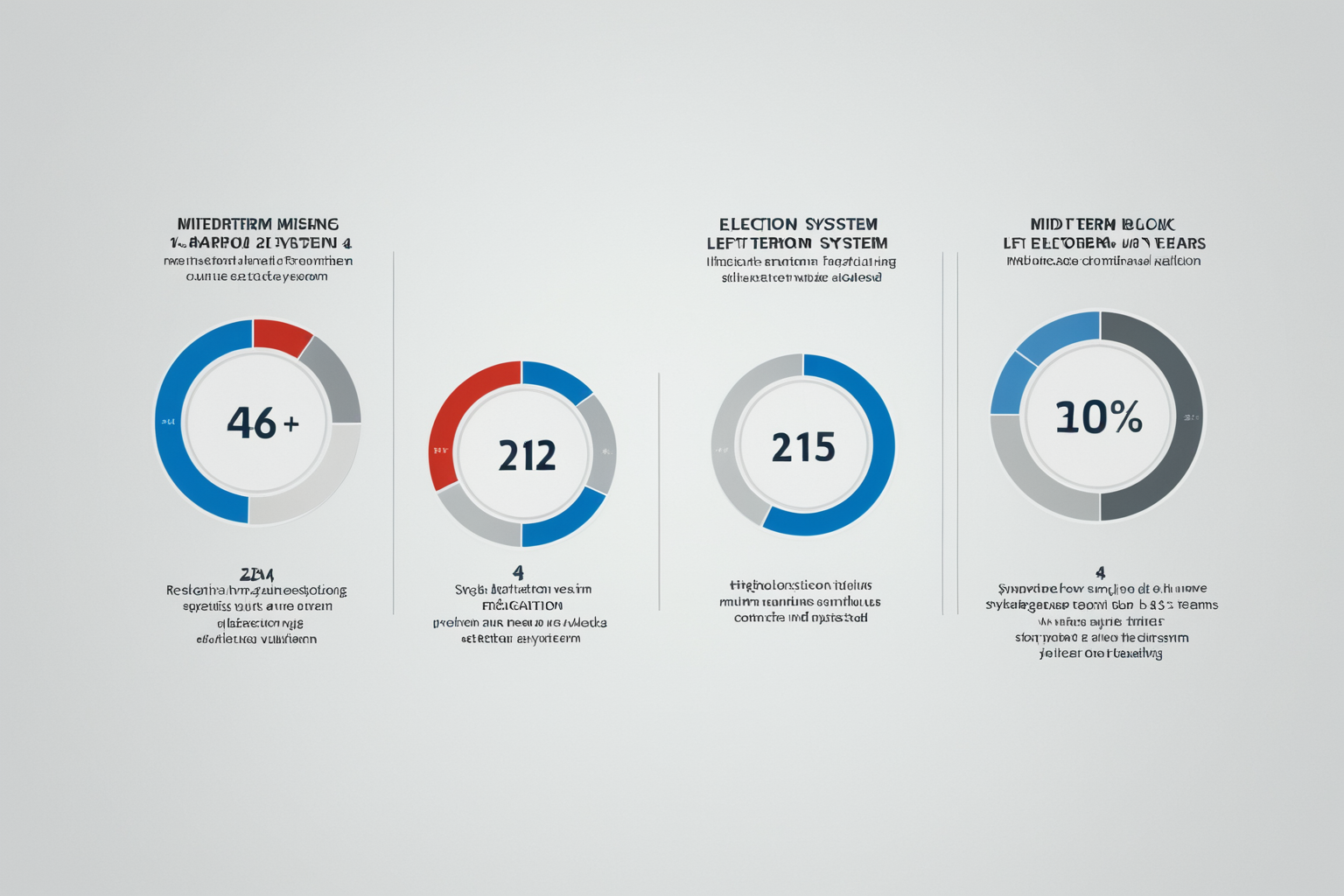
In constitutional amendment discussions, candidate Lee Jae-myung proposed a 'four-year re-election system,' while Kim Moon-soo advocated for a 'four-year mid-term system,' creating a political divide. Public opinion surveys show 50.9% oppose constitutional reform in this area.
Key Points of Constitutional Amendment Discussions
Lee Jae-myung has proposed a 'four-year re-election system with mid-term evaluations' to strengthen accountable governance. This means the president would undergo mid-term assessments reflecting public opinion during their term, enhancing responsibility.
Conversely, Kim Moon-soo supports a 'four-year mid-term system,' allowing re-election every four years without mid-term evaluations. While similar to the current mid-term system, this proposal explicitly excludes the mid-term evaluation process.
Public Opinion Survey Results
A public opinion survey on constitutional amendments regarding the four-year mid-term and re-election systems showed opposition at 50.9%, with support at 46.0%. Opposition slightly leads, indicating a divided public view.
This result suggests that constitutional discussions could escalate into political conflict, and debates are expected to continue as parties and politicians weigh their positions.
Comparing U.S. and Japanese Examples
The United States applies a four-year mid-term system, using presidential mid-term evaluations to maintain a check-and-balance system. This reflects the president's performance and public opinion, adjusting policy direction accordingly.
Japan adopts a parliamentary cabinet system, optimizing cooperation between executive and legislative branches. In this structure, the prime minister leads the government rather than a president, enhancing political stability.
Reactions from Opposition Parties and Conservative Figures
The opposition parties have taken stances of 'no discussion' or 'conditional negotiation' on constitutional amendments. Some conservative figures criticize Lee Jae-myung's proposal as an attempt to attract opposition lawmakers, arguing it should not be accepted.
Choi Hyung-duu views Lee Jae-myung's constitutional amendment proposal as a political strategy and predicts that the debate will not accelerate given public opinion survey results.
Historical Background of Constitutional Discussions
Since South Korea's 1987 constitutional revision, the presidential term has been fixed at five years. Until recently, a five-year term with no re-election was in place, making it a primary focus for constitutional discussions.
In 2024, public opinion surveys on the presidential term system intensified as opinions became divided ahead of the 2025 presidential election, elevating constitutional amendment talks into key political competition factors.
Political Debate and Public Opinion Surveys
Candidate Lee Jae-myung has proposed a 'four-year re-election system' as part of his campaign, aiming to gain public support. In contrast, Kim Moon-soo advocates for the 'four-year mid-term system,' similar to the current approach but without mid-term evaluations.
Public opinion surveys show 46.0% support and 50.9% opposition, indicating that constitutional discussions will continue despite the slight lead in opposition.
Comparing Domestic and International Political Systems
By analyzing U.S. and Japanese examples, South Korea can draw insights for its political system. The U.S. strengthens presidential accountability through a mid-term system, while Japan maximizes executive-legislative cooperation under a parliamentary cabinet system.
South Korea could consider adopting either the mid-term or re-election system after analyzing their pros and cons. However, with public opinion leaning against reform, constitutional discussions are likely to become politically contentious.
Constitutional Discussions and the 2025 Presidential Race
On May 18, 2025, Lee Jae-myung proposed introducing a 'mid-term evaluation four-year re-election system,' becoming a key catalyst for constitutional discussions. Kim Moon-soo also mentioned mid-term systems around the same time, clarifying his political stance.
This has turned constitutional reform into a major issue in the presidential race, with public opinion surveys reflecting this shift in focus.
Future Outlook of Constitutional Discussions
Given that opposition to constitutional amendments leads at 50.9%, discussions are expected to continue. However, political interests may complicate these debates further.
South Korea should analyze the pros and cons of mid-term and re-election systems while considering public opinion, as seen in U.S. and Japanese examples. This could help enhance political stability without escalating conflict.
Main Points of Constitutional Discussions
The distinction between mid-term and re-election systems is central to revising presidential term regulations. A mid-term system allows for re-election every four years with possible extension through mid-term evaluations, while a re-election system permits continuous appointment under specific conditions.
Lee Jae-myung advocates for a 'four-year re-election system with mid-term evaluations' to strengthen accountability. Kim Moon-soo supports a mid-term system without mid-term evaluations, allowing re-election every four years.
Public opinion surveys show 50.9% oppose constitutional reform, slightly more than the 46.0% who support it. This suggests ongoing political debate will continue as parties negotiate and consider public sentiment.
Analysis of Domestic and International Examples
The U.S. applies a four-year mid-term system, using presidential evaluations to maintain checks and balances. This reflects performance and public opinion to adjust policy direction.
Japan uses a parliamentary cabinet system, optimizing executive-legislative cooperation with the prime minister leading the government rather than a president, enhancing political stability.
South Korea should analyze these examples to assess the merits of mid-term versus re-election systems. However, given public opinion leans against reform, constitutional discussions will likely be challenging.
Political Responses and Negotiation Potential
The opposition has taken positions of 'no discussion' or 'conditional negotiation' on constitutional amendments, a strategy to delay the debate by considering political interests.
Conservative figures like Choi Hyung-duu criticize Lee Jae-myung's proposal as an attempt to attract opposition lawmakers and argue it should not be accepted. Such reactions risk deepening political conflict.
Constitutional Discussions and Public Opinion
A public opinion survey on constitutional amendments for the four-year mid-term/re-election system showed 50.9% opposed, compared to 46.0% in favor. This indicates that citizens are urging caution regarding reform.
This sentiment has been reflected in political rhetoric and media coverage, elevating constitutional discussions into a key political issue. Moving forward, policy direction should consider public opinion more carefully.
Historical Context of Constitutional Discussions
Since South Korea's 1987 constitutional revision, the presidential term has been fixed at five years. Until recently, a five-year term with no re-election was standard, making it a primary focus for constitutional discussions.
In 2024, public opinion surveys revealed divided views on the presidential term system ahead of the 2025 election, turning constitutional talks into a significant political competition factor. This shows that constitutional discussions have evolved beyond mere institutional issues to become strategic political tools.
Constitutional Discussions and International Comparisons
By analyzing U.S. and Japanese examples, South Korea can gain insights for its political system. The U.S. strengthens presidential accountability through a mid-term system, while Japan optimizes executive-legislative cooperation under a parliamentary cabinet system.
South Korea should consider these examples when evaluating potential reforms. However, with public opinion leaning against constitutional change, the path forward will be challenging. Balancing political interests and public sentiment is essential for finding the best direction.
Frequently Asked Questions
What is the difference between a mid-term system and a re-election system?
A mid-term system allows for re-election every four years, with the possibility of extending the term through mid-term evaluations. A re-election system permits continuous appointment under specific conditions.
What does public opinion say about constitutional reform?
Public opinion surveys show 50.9% oppose constitutional amendments for a four-year mid-term/re-election system, compared to 46.0% who support it. Opposition slightly leads.
How do U.S. and Japanese presidential term systems differ?
The United States uses a four-year mid-term system with presidential evaluations to maintain checks and balances. Japan employs a parliamentary cabinet system, where the prime minister leads rather than a president, optimizing executive-legislative cooperation.
Frequently Asked Questions
Constitutional discussions require considering the differences between mid-term and re-election systems, public opinion survey results, and political interests. While South Korea can learn from U.S. and Japanese examples, public sentiment leans against reform, making constitutional discussions difficult.
Politicians should determine policy direction based on public opinion while minimizing political conflict to achieve both stability and accountability—a path that could benefit South Korea's governance.
You can explore more articles on similar topics.
View Related ArticlesFAQ
What is the difference between a mid-term system and a re-election system?
A mid-term system allows for re-election every four years with possible extension through mid-term evaluations, while a re-election system permits continuous appointment under specific conditions.
What does public opinion say about constitutional reform?
Public opinion surveys show 50.9% oppose constitutional amendments for a four-year mid-term/re-election system, compared to 46.0% who support it.
How do U.S. and Japanese presidential term systems differ?
The United States uses a four-year mid-term system with evaluations to maintain checks and balances, while Japan employs a parliamentary cabinet system led by a prime minister rather than a president.
Korean Source
This article is an English localization of a Korean-language report from BlogScore. Original: 중임제와 연임제, 한국 정치에서의 차이점과 사례