
Why Left Side Rib Pain and Shoulder Pain Often Occur Together: Causes and Solutions
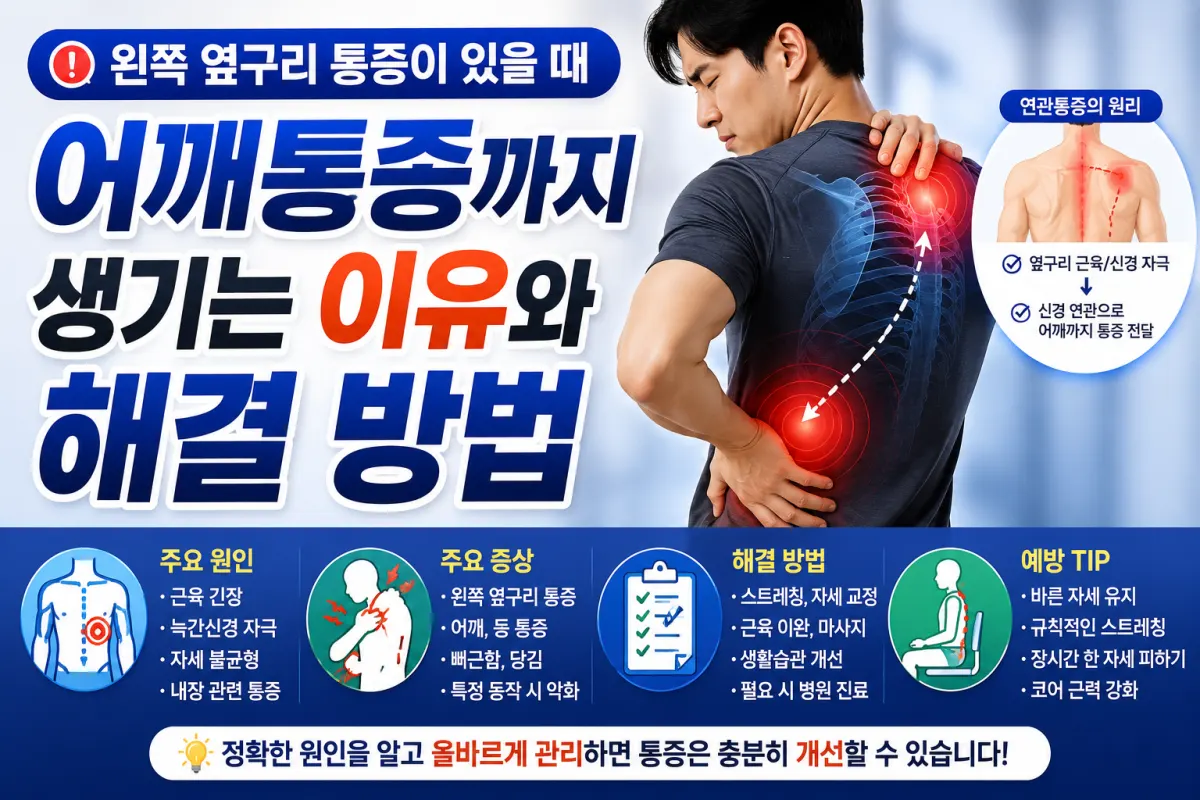
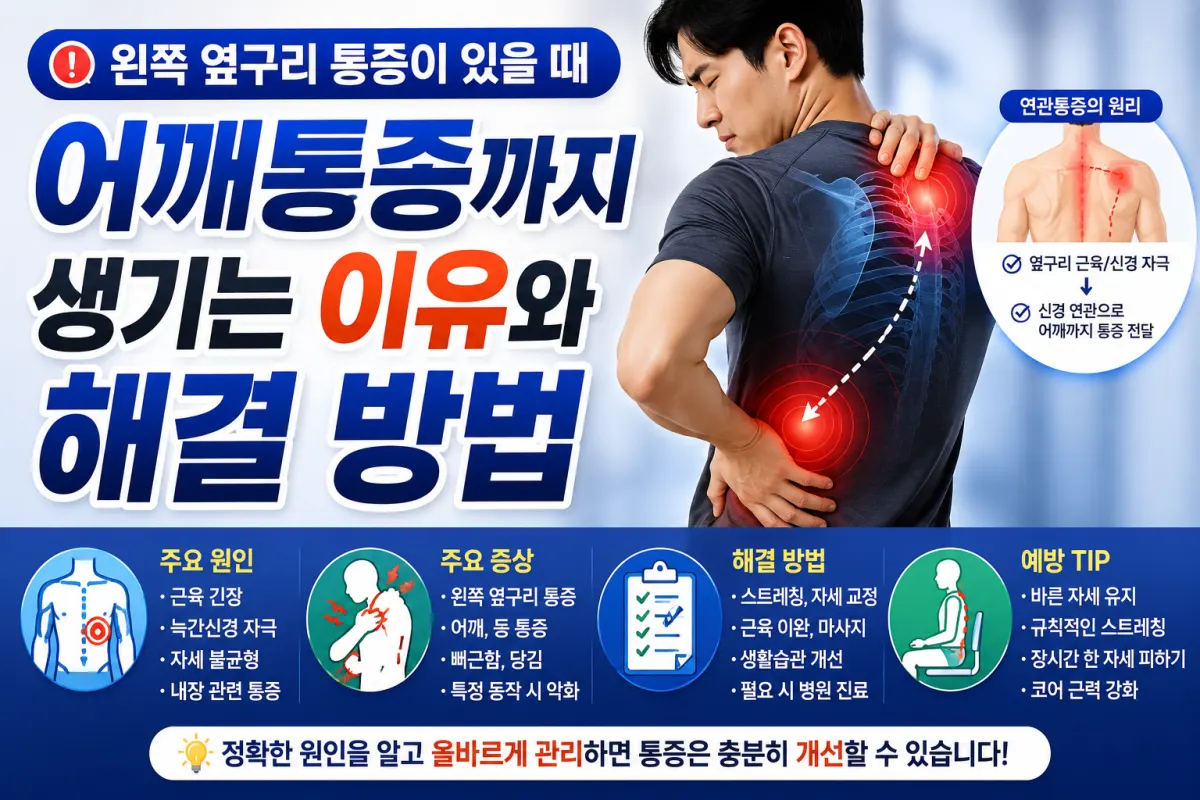
If you experience both left side rib pain and shoulder pain, many people worry whether it's just muscle tension or something more serious. In reality, although the ribs and shoulders seem far apart, body posture, breathing patterns, muscle tension, and nerve stimulation can connect these areas, causing pain to occur together.
Often, what starts as discomfort in the side may gradually spread to the shoulder, scapula area, and lower back over time. This article breaks down why left rib and shoulder pain often coexist, simple home remedies you can try, and warning signs that require medical evaluation—explained clearly for beginners.
Understanding Why Left Rib Pain and Shoulder Pain Occur Together
The most common cause is the body unconsciously adjusting posture due to pain in one area. For example, if your left side ribs hurt, you may shift your weight away from that side, causing tension and discomfort in the opposite shoulder. Habitual sitting or leaning to one side can make this pattern more pronounced.
Another cause relates to breathing-related muscles. The ribs, ribcage, upper back, and shoulders all move together when taking a deep breath. If you feel pulling in your side or stiffness spreading to your shoulders during deep inhalation, it could indicate muscle over-tension or issues with intercostal muscles (between the ribs). However, if pain is sharp, worsens with rest, or is accompanied by fever, vomiting, or difficulty breathing, medical evaluation is necessary.
Distinguishing Pain Patterns Helps Determine Solutions
Left rib pain can often be better understood based on its location and sensation. If it only hurts when moving, muscle or joint issues are likely. Persistent dull pain at rest may point to internal organ or nerve-related problems. For instance, pain that worsens when twisting your body suggests a muscular cause, while discomfort when lying on the left side could indicate pressure as the source.
When shoulder pain accompanies rib pain, check whether it feels like tightness around the scapula, pain when raising your arm, or stiffness extending to the neck. If both neck and shoulders feel stiff together, posture-related tension is likely. If rib pain spreads to the back and shoulders, it often indicates tightened muscles around the rib cage. In such cases, gentle movement within a pain-free range is more important than aggressive stretching.

Simple Home Remedies You Can Try Right Away
The first step is to reduce postures that trigger pain. If you've been sitting for a long time, stand up and walk gently every 30–60 minutes. Avoid leaning to one side; instead, keep your back against the chair’s support to maintain proper alignment. Light heat therapy can help relax tight muscles, though cold therapy may be better if swelling is present or if you recently injured yourself.
For example, in an office setting, sit upright and gently lift your shoulders toward your ears, then slowly lower them—repeat 5 times. Next, take a slow deep breath while feeling the side ribs soften with each inhale. Avoid aggressive stretching; move only when pain is below a 3 out of 10.
When to See a Doctor: Important Warning Signs
Muscle-related pain often improves with rest and posture correction, but some cases require medical attention. Seek help if left rib pain suddenly becomes severe, makes breathing difficult, or is accompanied by fever, chills, nausea, or abnormal urination. Pain spreading to the chest, back, or arm along with cold sweats also requires prompt evaluation.
Shoulder pain should also be assessed if it prevents lifting your arm, worsens at night disrupting sleep, or continues after an injury. Orthopedic specialists can evaluate joint, muscle, and nerve conditions, and may recommend imaging tests to identify the cause. For the most current diagnostic standards, check with the medical facility before visiting.
Avoiding Common Mistakes Improves Recovery
First mistake: Pushing through pain with exercise or aggressive massage. This can increase muscle tension instead of relieving it. In early stages, focus on gentle movement within a pain-free range rather than believing that "moving will make it better".
Second mistake: Ignoring rib pain while focusing only on shoulder discomfort. The root cause may involve overall body balance—similar to how back pain relief often requires addressing the whole spine. Third mistake: Assuming persistent symptoms are just muscle strain without checking for underlying causes. If pain continues beyond a few days or disrupts daily life, medical evaluation is needed.
Adjusting Daily Habits Reduces Recurrence
After pain subsides, review your habits to prevent recurrence. Position your monitor directly in front of you while working on a computer and place keyboard and mouse closer to your body so shoulders don't hunch forward. Avoid carrying bags on one shoulder for long periods; when lifting objects, turn your whole body instead of twisting at the waist.
Sleeping position matters too. Too high pillows can tense neck and shoulders, while sleeping curled up on one side may increase pressure on the ribs. If pain recurs frequently, note when it started, what positions make it worse, and accompanying symptoms—this helps doctors identify causes during appointments.
The Key: Identify Causes Without Overexertion
Left rib and shoulder pain together doesn't always mean a single cause. Common issues include posture problems, muscle tension, or overuse of breathing-related muscles. However, some cases require medical attention. The key is observing when and why pain occurs rather than ignoring it.
For beginners, start by correcting posture, stopping aggressive exercises, and applying light heat therapy and rest. If symptoms persist or worsen, consult an orthopedic specialist or appropriate department. Early detection of small signals leads to easier recovery.
FAQ
Q1. Does left rib pain with shoulder pain always mean a serious condition?
A. Not necessarily. It can stem from posture, muscle tension, or breathing-related muscle issues. However, if accompanied by fever, difficulty breathing, vomiting, or chest pain, medical evaluation is needed.
Q2. What can I try at home first?
A. Reduce pain-triggering postures, apply light heat therapy, take short walks, and practice gentle shoulder movements. Avoid stretching that increases pain.
Q3. When should I see a doctor?
A. See a healthcare provider if pain lasts more than one week, worsens over time, occurs after an injury, or is accompanied by breathing difficulties or fever. Check the medical facility's website for current diagnostic standards.
This article provides general health information only. If symptoms persist or worsen, consult a healthcare professional rather than relying on self-diagnosis.
FAQ
Does left rib pain with shoulder pain always mean a serious condition?
Not necessarily. It can stem from posture, muscle tension, or breathing-related muscle issues. However, if accompanied by fever, difficulty breathing, vomiting, or chest pain, medical evaluation is needed.
What can I try at home first?
Reduce pain-triggering postures, apply light heat therapy, take short walks, and practice gentle shoulder movements. Avoid stretching that increases pain.
When should I see a doctor?
See a healthcare provider if pain lasts more than one week, worsens over time, occurs after an injury, or is accompanied by breathing difficulties or fever. Check the medical facility's website for current diagnostic standards.
Korean Source
This article is an English localization of a Korean-language report from BlogScore. Original: 왼쪽옆구리통증이 있을 때 어깨통증까지 생기는 이유와 해결 방법