
Lee Sang-min's Trial Over Coup Case: Key Objections Raised by Lawyers
First-Instance Verdict in Han Deok-su's Coup Case
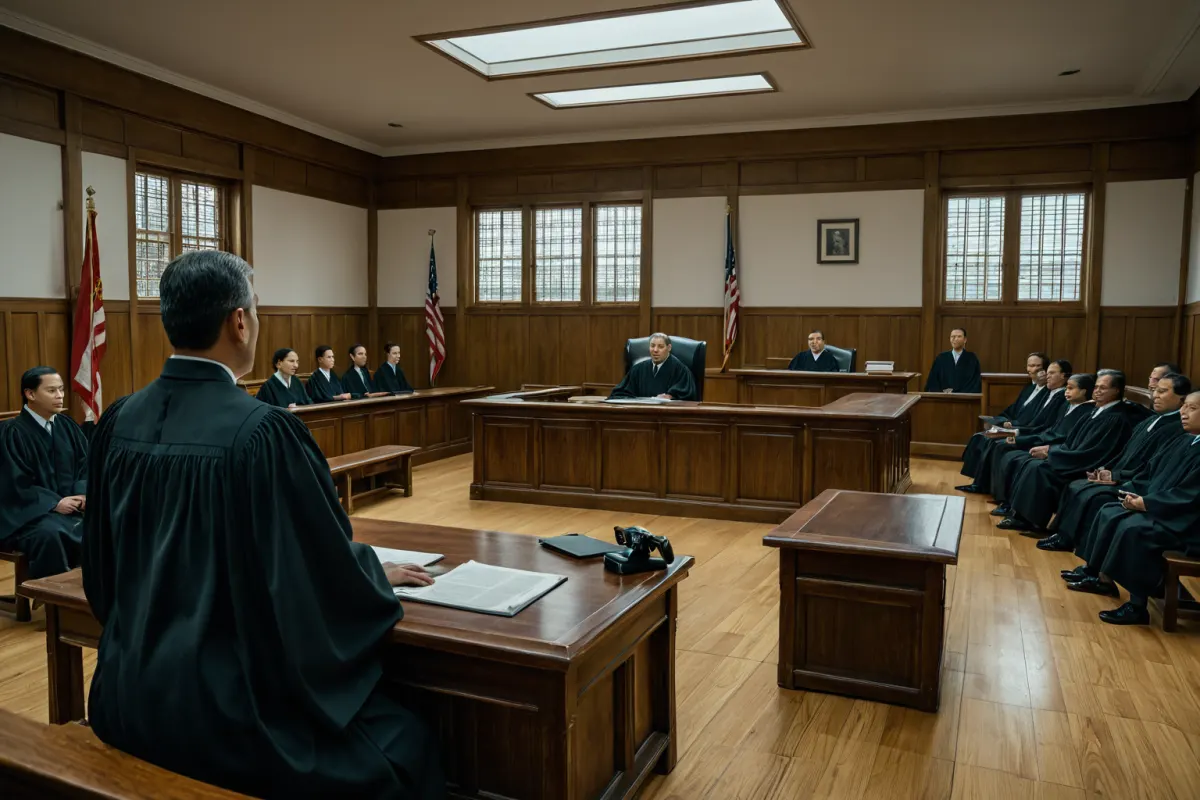
On January 21, 2026, the first-instance verdict for Han Deok-su on charges of coup was delivered. This case is directly linked to former President Yoon Suk Yeol's alleged role as a leader in the coup attempt, with courtroom disruptions and the detention of the defense team drawing significant attention.
Detention and Release of Defense Team
On November 19 during Han Deok-su's trial, Lee Sang-min refused to take an oath, which the court described as "a first in history." As a result, the defense team (Kim Yong-hyun, Lee Ha-sang, Yu Seung-soo, and Kwon Woo-hyeon) was detained for causing courtroom disorder but released on November 20.
The Seoul Central District Prosecutors' Office filed disciplinary complaints against Kim Yong-hyun's defense team on January 5. The court emphasized the seriousness of the proceedings by stating it was "a first in history." The detention and release process exemplifies the complexity of the coup case trial.
Court Recognizes Martial Law as Coup
On February 13, 2026, the court recognized martial law as part of a coup and issued orders for Lee Sang-min to cut power and water. This was a key ruling on whether the coup charge could be established, sparking controversy alongside objections from the defense.
The former President Yoon Suk Yeol's side has argued for an acquittal, raising the issue of a 4 billion won election cost refund that could affect party survival. This matter is linked to the coup case and became a focal point in political and legal debates.
Setting Precedent for Yoon Suk Yeol's Sentence
The first-instance verdict in Han Deok-su's case may serve as a benchmark for determining former President Yoon Suk Yeol's sentence for the coup charge. The case, which was broadcast live on January 21, 2026, is reported as the first court judgment on coup charges.
After Yoon Suk Yeol's defense concluded, it was reported that prosecutors are expected to propose a sentence, and the January 21 verdict may shift perceptions of his potential punishment.
Kim Gye-ri's Emotional Outburst
On February 19, 2026, Kim Gye-ri shed tears upon hearing about "Lee Sang-min's daughter" and requested an acquittal for Yoon Suk Yeol. This incident highlighted the emotional elements influencing the courtroom proceedings.
Regarding this, lawyer Go Eun mentioned that Han Deok-su's 23-year sentence is considered a severe penalty for coup charges, which could serve as a reference point for Yoon Suk Yeol's case.
Classroom Disruption and Defense Objections
On July 19, 2025, the court rejected a request to review detention, marking an important early ruling in Lee Sang-min's coup case. Later, on October 17, Lee Sang-min's side claimed the court ordered "opposition to martial law" and issued a safety warning to the fire chief.
After the July 19 rejection of the detention review, defense objections intensified. Kim Yong-hyun told the judge to remove his mask, causing a disruption within 20 minutes of the trial. This incident was widely reported as a typical example of courtroom disorder.
Referral to Supreme Court Plenary Session
On August 5, 2026, the Supreme Court referred the Han Deok-su and Lee Sang-min coup cases to a plenary session. This decision reflects the case's gravity and complexity, likely influenced by courtroom disruptions and defense objections.
The Lee Sang-min coup case trial has sparked multiple controversies: the detention and release of the defense team, the court recognizing martial law as a coup, Yoon Suk Yeol's plea for acquittal and election cost refund issue, Kim Gye-ri's emotional outburst, and Han Deok-su's first-instance verdict.
Legal Standards in Coup Trials
The Han Deok-su case is the first court judgment on coup charges, directly linked to former President Yoon Suk Yeol's alleged role as a leader in the coup. The analysis that the first-instance verdict could set a benchmark for Yoon Suk Yeol's sentence stems from this connection.
The court recognized martial law as part of a coup and ordered Lee Sang-min to cut power and water, which is considered a key ruling on whether the coup charge can be established, sparking controversy alongside defense objections.
Yoon Suk Yeol's Plea for Acquittal
The former President Yoon Suk Yeol's side argued for an acquittal on charges of leading the coup and raised the issue of a 4 billion won election cost refund that could affect party survival. This matter became a focal point in political and legal debates, analyzed as part of Yoon's strategy.
On October 17, 2025, Lee Sang-min's side claimed during the trial that the court ordered "opposition to martial law" and issued a safety warning to the fire chief, linking it to political disputes related to the coup case.
Process of Defense Team Detention and Release
Kim Yong-hyun's defense team was detained on November 19 but released on November 20. This measure followed courtroom disorder, with the court describing it as "a first in history." The Seoul Central District Prosecutors' Office filed a disciplinary complaint on January 5.
The detention and release process exemplifies the complexity of coup case trials, drawing attention to how exactly courtroom disruptions and defense objections unfolded.
Comparison with Han Deok-su's 23-Year Sentence
Lawyer Go Eun compared Han Deok-su's 23-year sentence to Yoon Suk Yeol's potential punishment, stating it represents a severe penalty. This serves as a reference point for determining coup-related sentences, which could be relevant to the Yoon Suk Yeol case.
The first-instance verdict in Han Deok-su's case was broadcast live on January 21, 2026, marking the first court judgment on coup charges and expected to serve as a key indicator for determining Yoon Suk Yeol's sentence.
Unconfirmed Facts
The exact connection between Han Deok-su's first-instance verdict and former President Yoon Suk Yeol's alleged role as leader of the coup has not yet been confirmed. While courtroom disruptions and defense objections have been reported, specific legal rulings remain ongoing.
Yoon Suk Yeol's plea for acquittal and the 4 billion won election cost refund issue have led to political debates, requiring further examination of their direct link to the coup case. Kim Gye-ri's emotional outburst highlighted emotional elements in the trial but its exact impact on the courtroom remains unclear.
Information to Verify
Further reporting is needed on whether Han Deok-su's first-instance verdict will serve as a benchmark for Yoon Suk Yeol's sentence. The detention and release of Kim Yong-hyun's defense team, along with the court's rulings, remain central points in legal debates.
Additional clarification is required regarding the court recognizing martial law as part of a coup, and the potential political implications of Yoon Suk Yeol's 4 billion won election cost refund issue on party survival.
Frequently Asked Questions
What sentence did Han Deok-su receive in his first-instance verdict for the coup charge?
On January 21, 2026, Han Deok-su received a first-instance verdict of 23 years' imprisonment for the coup charge. The case is reported as directly linked to former President Yoon Suk Yeol's alleged role as leader in the coup attempt.
What plea for acquittal did Yoon Suk Yeol's side make?
The former President Yoon Suk Yeol's side argued for an acquittal on charges of leading the coup and raised the issue of a 4 billion won election cost refund that could affect party survival. This matter became a focal point in political and legal debates.
How did the detention and release of the defense team proceed?
Kim Yong-hyun's defense team (Lee Ha-sang, Yu Seung-soo, and Kwon Woo-hyeon) was detained for causing courtroom disorder but released on November 20. The Seoul Central District Prosecutors' Office filed a disciplinary complaint on January 5, with the court describing it as "a first in history."
Frequently Asked Questions
The first-instance verdict in Han Deok-su's coup case, directly linked to former President Yoon Suk Yeol's alleged role as leader of the coup attempt, drew attention due to courtroom disruptions and the detention of the defense team. The court recognizing martial law as part of a coup was reported as a key ruling on establishing the coup charge, while Yoon Suk Yeol's plea for acquittal and the 4 billion won election cost refund issue became focal points in political and legal debates.
Go Eun's analysis comparing Han Deok-su's 23-year sentence to Yoon Suk Yeol's potential punishment has drawn attention as a reference point. Kim Gye-ri's emotional outburst during the trial was reported to have influenced courtroom proceedings, though its exact impact remains unclear.
Han Deok-su's first-instance verdict, directly linked to former President Yoon Suk Yeol's alleged role as leader of the coup attempt, is reported as the first court judgment on coup charges. Future trial processes and rulings will be closely watched.
You can view similar articles in one place.
View Related ArticlesFAQ
What sentence did Han Deok-su receive in his first-instance verdict for the coup charge?
On January 21, 2026, Han Deok-su received a first-instance verdict of 23 years' imprisonment for the coup charge. The case is reported as directly linked to former President Yoon Suk Yeol's alleged role as leader in the coup attempt.
What plea for acquittal did Yoon Suk Yeol's side make?
The former President Yoon Suk Yeol's side argued for an acquittal on charges of leading the coup and raised the issue of a 4 billion won election cost refund that could affect party survival. This matter became a focal point in political and legal debates.
How did the detention and release of the defense team proceed?
Kim Yong-hyun's defense team (Lee Ha-sang, Yu Seung-soo, and Kwon Woo-hyeon) was detained for causing courtroom disorder but released on November 20. The Seoul Central District Prosecutors' Office filed a disciplinary complaint on January 5, with the court describing it as "a first in history."
Korean Source
This article is an English localization of a Korean-language report from BlogScore. Original: 이상민 내란 사건 재판, 변호사가 제기한 주요 항의 사항