
Labor Unions Condemn 'Megagroup Law' as Policy Shifts Emerge
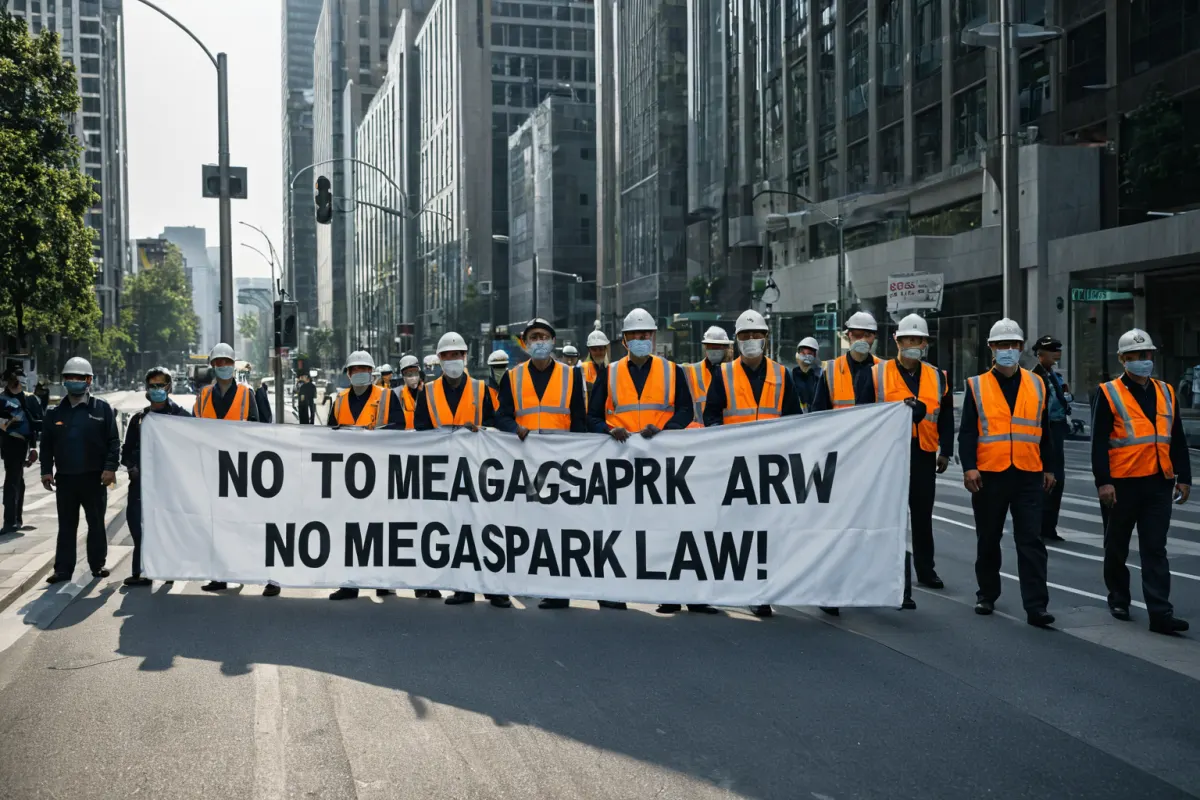
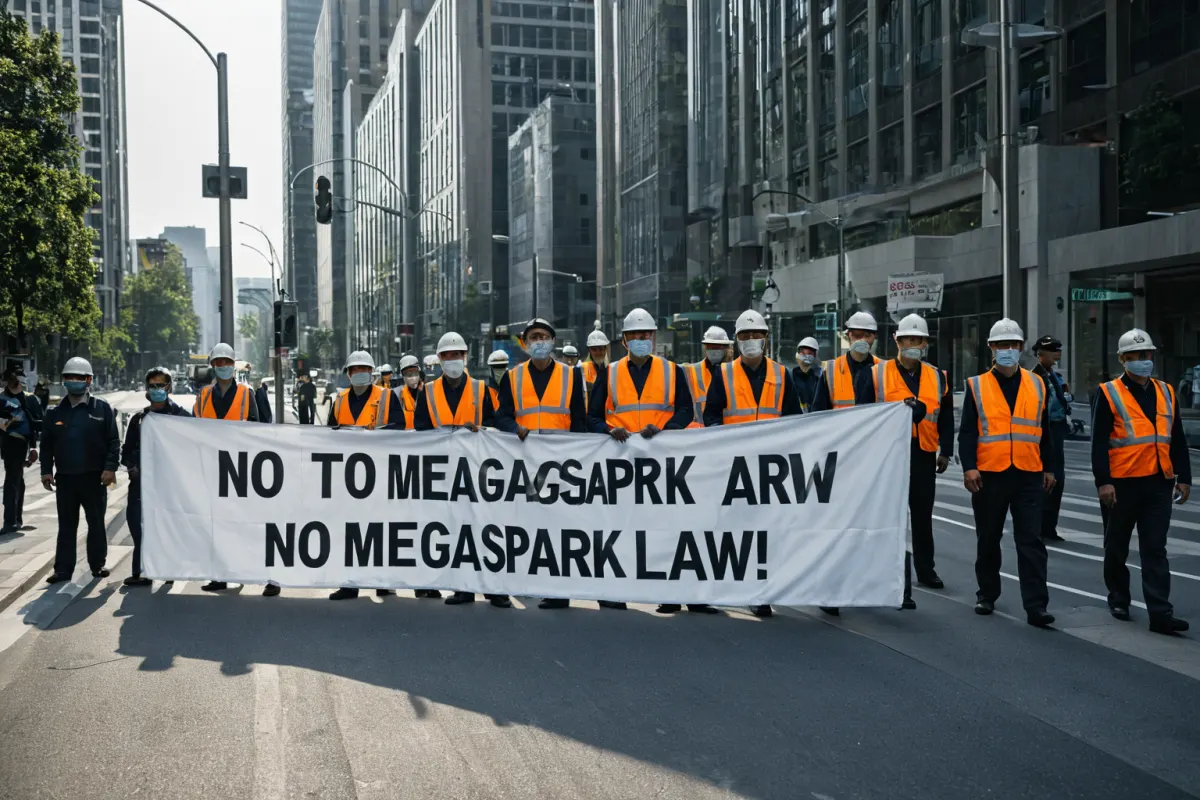
Labor Unions Condemn 'Megagroup Law'
The two major labor unions (Korean Confederation of Trade Unions and the Korean Democratic Trade Union) have labeled the 'Megagroup Law' as a step backward for workers' rights, strongly condemning it and demanding a meeting with President Yoon. The law is tied to government policies aimed at enhancing semiconductor industry competitiveness by easing labor regulations, which the unions characterize not as innovation but as labor deregulation.
On August 3, 2026, the two major unions held a press conference in outrage over 'Megagroup Law' exemptions from the 52-hour workweek, demanding a meeting with the president. This followed media coverage of their opposition to government policies easing labor regulations.
The Healthcare and Medical Workers Union resolved to win collective bargaining struggles, demanding institutionalization of healthcare worker standards and securing group negotiations with main contractors. After the rejection of minimum wage for subcontracted workers, backlash also occurred, marking a case where labor unions are expanding collective responses.
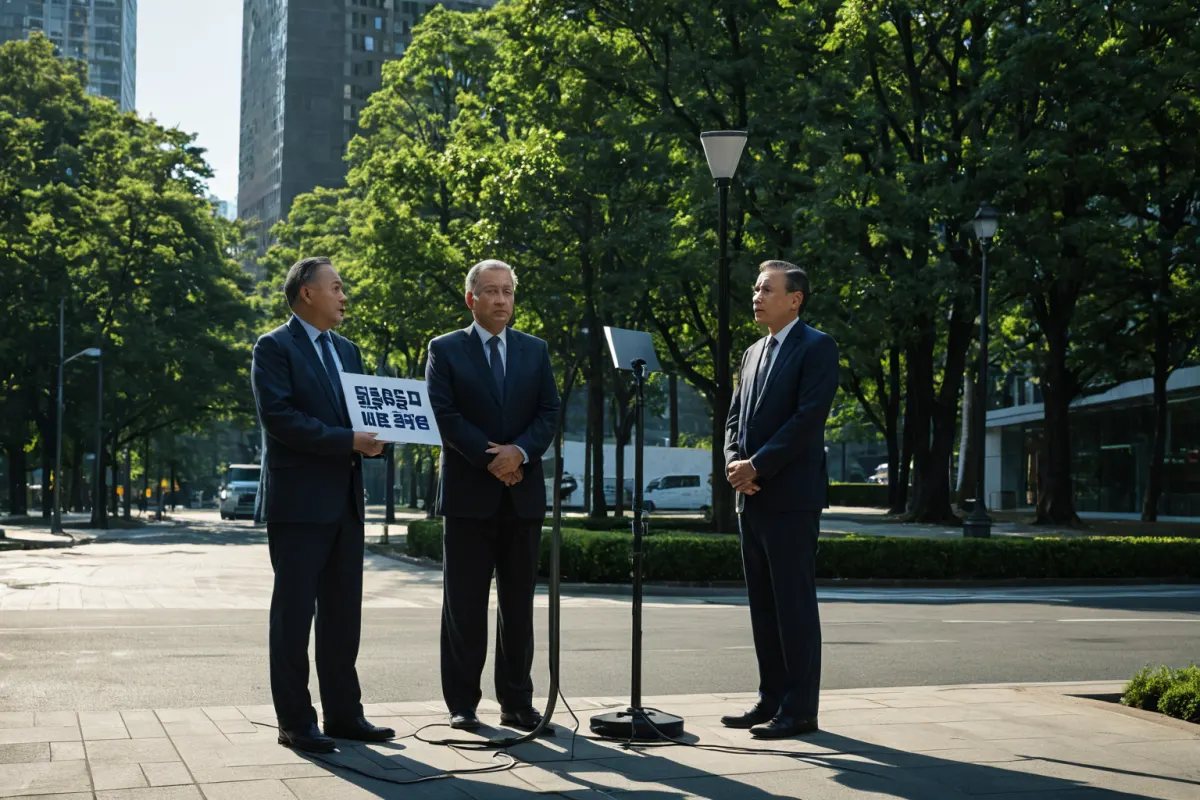
Condemnation of 'Megagroup Law' and Demand for Presidential Meeting
The two major unions strongly opposed the advancement of the 'Megagroup Law,' stating it would lead to a rollback of workers' rights. The law is part of government policies aimed at boosting semiconductor industry competitiveness, confirmed by media reports on August 3, 2026.
The government attempted to respond to the unions' condemnation by promoting the policy 'Relaxation of 52-hour workweek in Ho Nam Semiconductor Special Zone,' but labor unions criticized the lack of consultation. Notably, a collective bargaining introductory meeting was canceled due to all employers' absence.
The two major unions also warned of joint action and total struggle against policies relocating financial institutions to regional areas. This relates to debates over restarting public institution relocations, announced on June 29, 2026.
Expansion of Collective Labor Responses
The Healthcare and Medical Workers Union held a rally on June 19, 2026, to resolve to win their sectoral collective bargaining struggle, demanding institutionalization of healthcare worker standards and securing group negotiations with main contractors. This followed backlash after the rejection of minimum wage for subcontracted workers, showing an expansion in labor unions' collective responses.
Backlash occurred on June 12, 2026, due to the rejection of minimum wage for subcontracted workers, becoming a catalyst for labor unions collectively expressing opposition to government policies. The Healthcare and Medical Workers Union resolved to win their sectoral bargaining struggle, presenting specific demands for strengthening workers' rights.
On October 17, 2025, women's and labor groups also protested the abolition of the 'Women's Employment Policy Division' at the Ministry of Labor. This relates to policy changes addressing employment challenges faced by women, showing a trend of expanding collective responses from labor unions.
Deepening Conflict Between Government Policies and Labor Unions
The government announced on June 30, 2026, the restart of public institution relocations, intensifying its response to 'hard-fought' situations with financial unions. However, unions criticized policy implementation without consultation, holding rallies condemning the refusal of social dialogue.
On August 3, 2026, the two major unions announced strong opposition to the 'Megagroup Law' and demanded a meeting with the president. This case illustrates deepening conflict between government and labor unions, widely covered by multiple media outlets.
The two major unions warned on June 29, 2026, of joint action and total struggle against financial institutions' relocation policies. This represents strong opposition from unions to government policies on public institution relocations, intensifying social debate.
Condemnation of Refusal to Engage in Social Dialogue
The two major unions held a rally on October 11, 2018, condemning the Ministry of Economy and Finance for refusing social dialogue. This was a strong reaction to the government's refusal to engage with labor unions, showcasing collective responses from labor groups.
On August 3, 2026, the two major unions announced condemnation of the 'Megagroup Law' and demanded a presidential meeting, expressing strong opposition to policy implementation without negotiation. This shows labor unions are expanding their collective responses to government policies.
As of August 3, 2026, the two major unions' condemnation of the 'Megagroup Law' has been covered by multiple media outlets, reflecting deepening conflict between labor and government as they focus on semiconductor industry competitiveness.
Debate Over Labor Rights Rollback
The two major unions have argued that the 'Megagroup Law' is a bill causing a rollback of workers' rights, condemning it. This relates to government policies aimed at enhancing semiconductor industry competitiveness through eased labor regulations, sparking opposition from labor groups.
On August 3, 2026, the two major unions expressed outrage over 'Megagroup Law' exemptions from the 52-hour workweek, demanding a meeting with the president. This represents strong opposition to government policies easing labor regulations, widely reported by media outlets.
The Healthcare and Medical Workers Union resolved to win sectoral collective bargaining struggles, demanding institutionalization of healthcare worker standards and securing group negotiations with main contractors. This follows backlash after the rejection of minimum wage for subcontracted workers, showing an expansion in collective responses from labor unions.
Restarting Government Policies and Union Opposition
The government announced on June 30, 2026, the restart of public institution relocations to respond to 'hard-fought' situations with financial unions. However, unions criticized policy implementation without consultation, holding rallies condemning the refusal of social dialogue.
On August 3, 2026, the two major unions announced condemnation of the 'Megagroup Law' and demanded a presidential meeting. This case illustrates deepening conflict between government and labor unions, widely covered by multiple media outlets.
As of August 3, 2026, the two major unions' condemnation of the 'Megagroup Law' reflects an intensifying conflict between labor and government over policies aimed at boosting semiconductor industry competitiveness, raising concerns about potential rollback of workers' rights.
Verified Information
The background for the government's promotion of the 'Megagroup Law' is to enhance semiconductor industry competitiveness, aiming to boost business competitiveness through eased labor regulations. The two major unions have labeled it a rollback of workers' rights and condemned it.
The condemnation by the two major unions on August 3, 2026, regarding the 'Megagroup Law' and demand for a presidential meeting has been reported in multiple media outlets. This case shows deepening conflict between labor and government, requiring continued attention.
The Healthcare and Medical Workers Union's resolution to win sectoral collective bargaining struggles follows backlash after the rejection of minimum wage for subcontracted workers, showing an expansion in labor unions' collective responses to government policies.
Frequently Asked Questions
What is the 'Megagroup Law'?
The 'Megagroup Law' refers to legislation related to government policies aimed at enhancing semiconductor industry competitiveness by easing labor regulations. The two major unions have labeled it a rollback of workers' rights and condemned it.
What actions did the two major unions take?
The two major unions issued strong condemnation of the 'Megagroup Law' and demanded a meeting with the president. They also warned of joint action and total struggle against policies relocating financial institutions to regional areas.
What resolution did the Healthcare and Medical Workers Union make?
The Healthcare and Medical Workers Union resolved to win sectoral collective bargaining struggles, demanding institutionalization of healthcare worker standards and securing group negotiations with main contractors. This follows backlash after the rejection of minimum wage for subcontracted workers, showing an expansion in labor unions' collective responses.
Frequently Asked Questions
The two major unions have labeled the 'Megagroup Law' as a rollback of workers' rights and strongly condemned it, demanding a meeting with President Yoon. This represents opposition from labor to government policies aimed at enhancing semiconductor industry competitiveness through eased labor regulations, intensifying social debate.
The Healthcare and Medical Workers Union resolved to win sectoral collective bargaining struggles, demanding institutionalization of healthcare worker standards and securing group negotiations with main contractors. This follows backlash after the rejection of minimum wage for subcontracted workers, showing an expansion in labor unions' collective responses to government policies.
The government announced the restart of public institution relocations on June 30, 2026, aiming to respond to union opposition but faced criticism for implementing policies without consultation. This led to rallies condemning refusal of social dialogue, representing deepening conflict between labor and government, requiring continued attention.
You can view more articles on similar topics at once.
View Related ArticlesFAQ
What is the 'Megagroup Law'?
The 'Megagroup Law' refers to legislation related to government policies aimed at enhancing semiconductor industry competitiveness by easing labor regulations. The two major unions have labeled it a rollback of workers' rights and condemned it.
What actions did the two major unions take?
The two major unions issued strong condemnation of the 'Megagroup Law' and demanded a meeting with the president. They also warned of joint action and total struggle against policies relocating financial institutions to regional areas.
What resolution did the Healthcare and Medical Workers Union make?
The Healthcare and Medical Workers Union resolved to win sectoral collective bargaining struggles, demanding institutionalization of healthcare worker standards and securing group negotiations with main contractors. This follows backlash after the rejection of minimum wage for subcontracted workers, showing an expansion in labor unions' collective responses.
Korean Source
This article is an English localization of a Korean-language report from BlogScore. Original: 양대노총 규탄으로 인한 정책 변화와 현황