
Kingfisher: A Symbol of Hope in Nature and Its Meaning
The Natural Meaning and Symbol of Hope
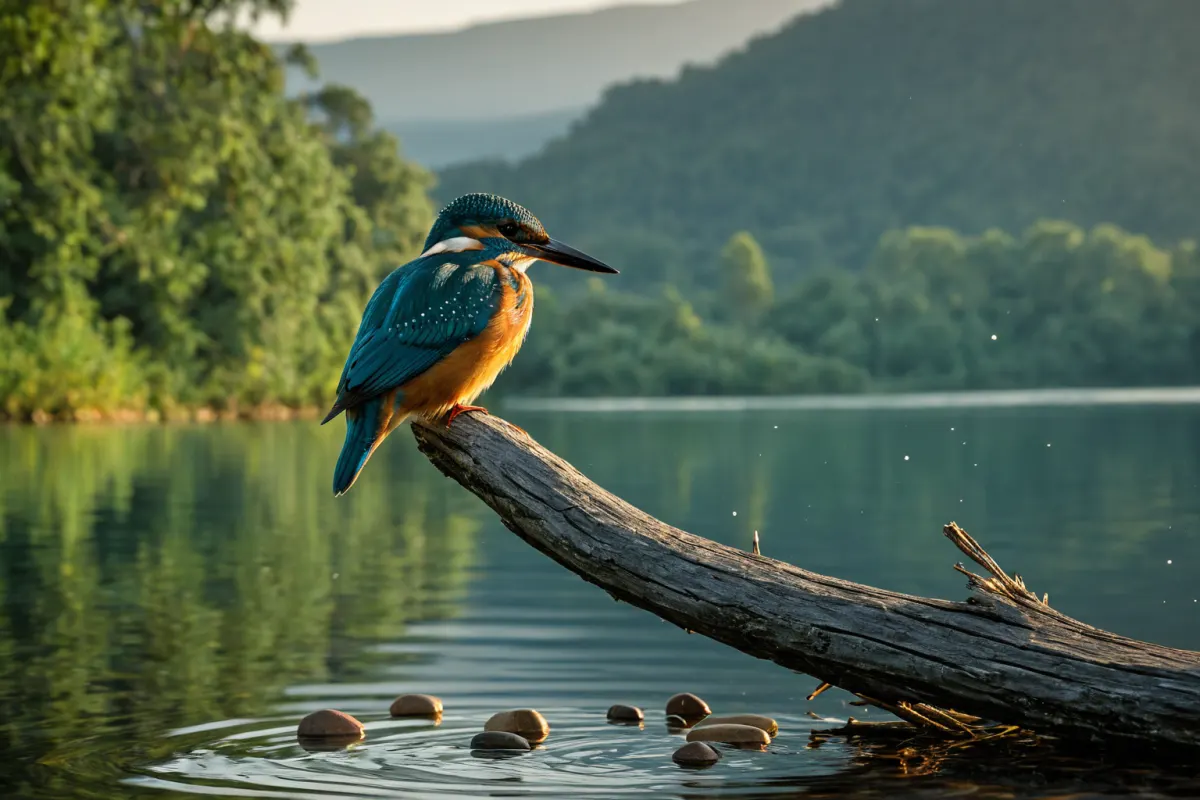
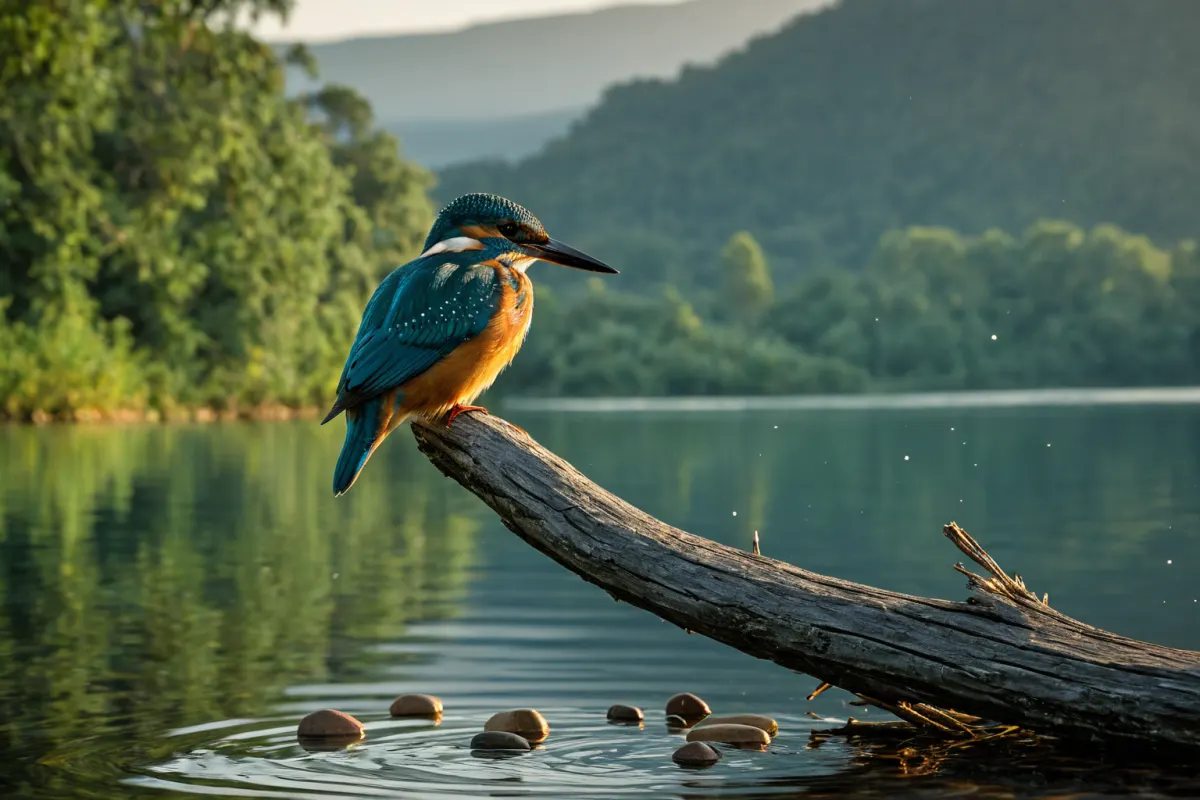
The kingfisher is regarded as a symbol of hope in nature. This bird inhabits areas near rivers and lakes, requiring clean water for survival, making it a key indicator of environmental health. Its presence signifies that the ecosystem is thriving, while its decline in regions affected by climate change and urbanization highlights the need for improved environmental policies.
Kingfisher and Environmental Health
The kingfisher serves as an important signal for environmental protection, as it can only thrive in clean water. Its presence indicates that a local ecosystem remains balanced, allowing us to monitor the health of nature. Observing kingfishers near rivers or lakes suggests that the area is environmentally stable. Research shows that regions with kingfishers tend to have higher biodiversity, reflecting the resilience and health of the ecosystem.
Symbolic Value of the Kingfisher
For centuries, the kingfisher has been seen as a symbol of hope and purity in culture and mythology. In Western literature, it is often depicted as a being that brings light even during dark times, delivering messages of hope to many. For example, in 19th-century British author George Eliot’s works, the kingfisher was symbolized as 'light in darkness,' hinting at inner strength to overcome personal struggles. In Korea, it is also valued as a creature that harmonizes with nature. Modern artists use the kingfisher as a theme in their work to convey environmental protection messages.
Protecting Kingfisher Habitats and Environmental Policy
Habitats where kingfishers live require strict water quality management and ecosystem conservation. Governments and non-governmental organizations have implemented various policies to prevent pollution of rivers and lakes, which play a crucial role in protecting the natural ecosystems that include kingfishers. For instance, regulations on industrial wastewater discharge and park development contribute to preserving kingfisher habitats. In recent years, the European Union has focused on restoring riverbank ecosystems through its 'Water Quality Improvement Project,' leading to an increase in kingfisher populations.
Ecological Characteristics of the Kingfisher
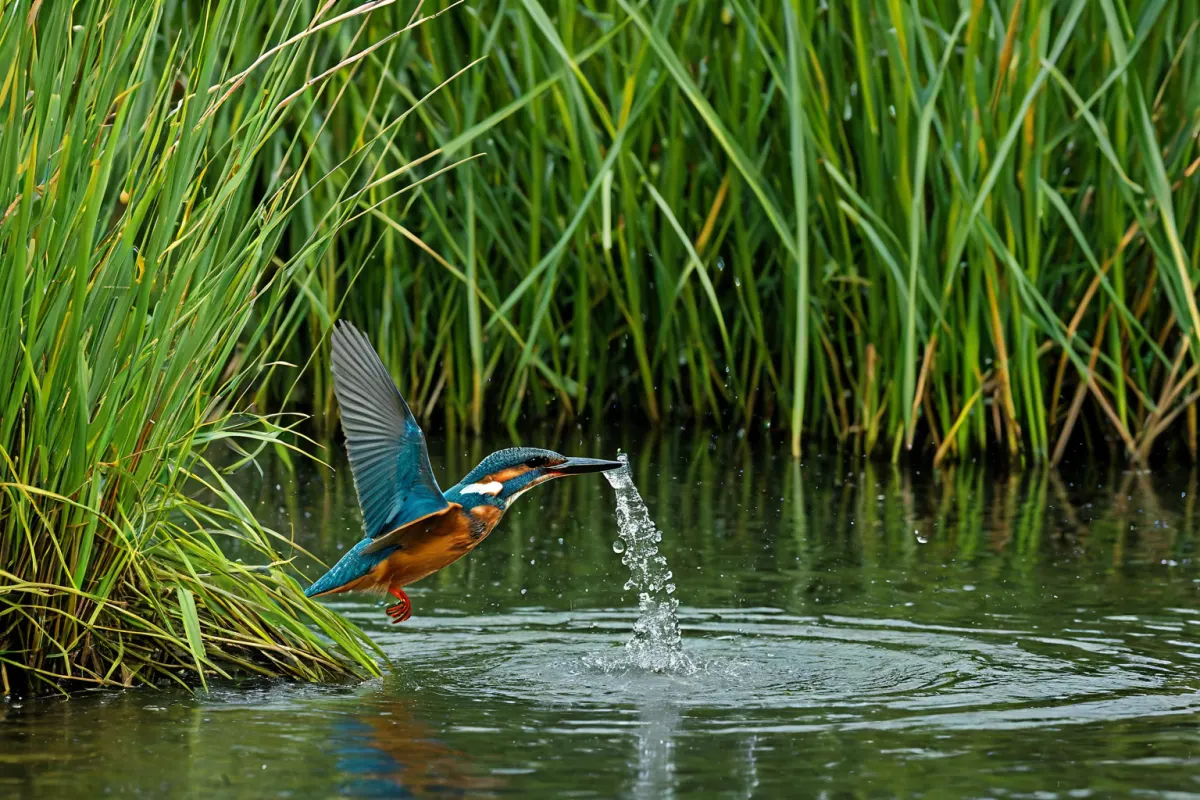
The kingfisher has short wings and a small body, primarily hunting for food underwater. It uses exceptional vision to locate and prey on small fish while submerged. Because its habitat requires clean water, pollution can force it to lose its home, negatively impacting the entire ecosystem. Research indicates that the primary diet of kingfishers consists of small fish and crustaceans, so a decline in these species directly affects their population.
The Relationship Between Humans and Kingfishers
The relationship between humans and kingfishers is mutually beneficial. Areas where kingfishers live are often ideal for recreational activities like walking along riverbanks or visiting lakeside parks, enhancing the appeal of these natural spaces. However, excessive human development can destroy habitats, making environmental protection efforts essential. With increased urbanization, more community involvement is needed to prevent habitat loss and preserve kingfisher populations.
Kingfisher in Cultural Symbolism
The kingfisher has established itself as a symbol of hope and purity across various cultures. In Western mythology, it is often portrayed as a being that brings light even amidst darkness, suggesting that humans can find hope during difficult times. The kingfisher also appears frequently in Korean literature and art as a representation of nature's beauty and harmony. At the 2019 'Nature and Art' exhibition in Seoul, installations featuring the kingfisher gained significant popularity, raising public awareness about environmental protection.
How to Observe Kingfishers
To observe kingfishers, look for clean rivers or lakes. Early morning or late evening are optimal times as they are more active during these hours, making them easier to spot. Observing in quiet areas allows you to witness their natural behavior more clearly. Using cameras or binoculars is recommended, and maintaining a quiet presence without disturbing the surroundings is important. Recently, online communities have developed apps and websites that provide location-based information about kingfisher habitats for enthusiasts.
Kingfishers and Environmental Change
Climate change has led to deteriorating water quality in many regions, negatively affecting kingfisher habitats. Their presence or absence can indicate environmental changes. For example, if kingfishers disappear from a particular river, it suggests that the water is polluted. Additionally, water scarcity due to climate change may lead to habitat reduction for kingfishers. Environmental researchers classify kingfishers as 'indicator species' to monitor ecosystem health.
Conservation Efforts for Kingfishers
Diverse conservation activities are being carried out globally to protect kingfishers. Riverbank clean-up initiatives and ecological restoration projects contribute to improving their habitats, which benefits not only kingfishers but also the overall health of ecosystems. In 2023, South Korea launched the 'Riverbank Ecological Conservation Campaign,' engaging local residents and students in riverbank clean-ups and planting activities to enhance habitats.
The Future of Kingfishers
The future of kingfishers depends on environmental policies and human efforts. If water quality management and habitat protection continue, the kingfisher will remain a symbol of hope in nature for years to come. However, if pollution worsens, their habitats may shrink, causing them to lose their symbolic role as beacons of hope. International organizations are strengthening cooperative frameworks for kingfisher conservation, aiming to contribute to broader ecosystem preservation.
Frequently Asked Questions
Where do kingfishers live?
Kingfishers inhabit areas near clean rivers and lakes. They prefer regions with good water quality as they require unpolluted water for survival.
What problems arise if kingfishers disappear?
If kingfishers disappear, it indicates that the local environment has deteriorated. This can have negative impacts on the entire ecosystem.
When is the best time to observe kingfishers?
Morning and evening are ideal times for observing kingfishers as they are more active during these periods. Observing in quiet places allows you to see their natural behavior more clearly.
You can find similar articles all in one place.
View Related ArticlesFAQ
Where do kingfishers live?
Kingfishers inhabit areas near clean rivers and lakes. They prefer regions with good water quality as they require unpolluted water for survival.
What problems arise if kingfishers disappear?
If kingfishers disappear, it indicates that the local environment has deteriorated. This can have negative impacts on the entire ecosystem.
When is the best time to observe kingfishers?
Morning and evening are ideal times for observing kingfishers as they are more active during these periods. Observing in quiet places allows you to see their natural behavior more clearly.
Korean Source
This article is an English localization of a Korean-language report from BlogScore. Original: 킹피셔: 자연에서 보는 희망의 상징과 그 의미