
Kim Yong vs. Han Minsu: A Comparison of Their Campaign Promises in the Democratic Party Leadership Race
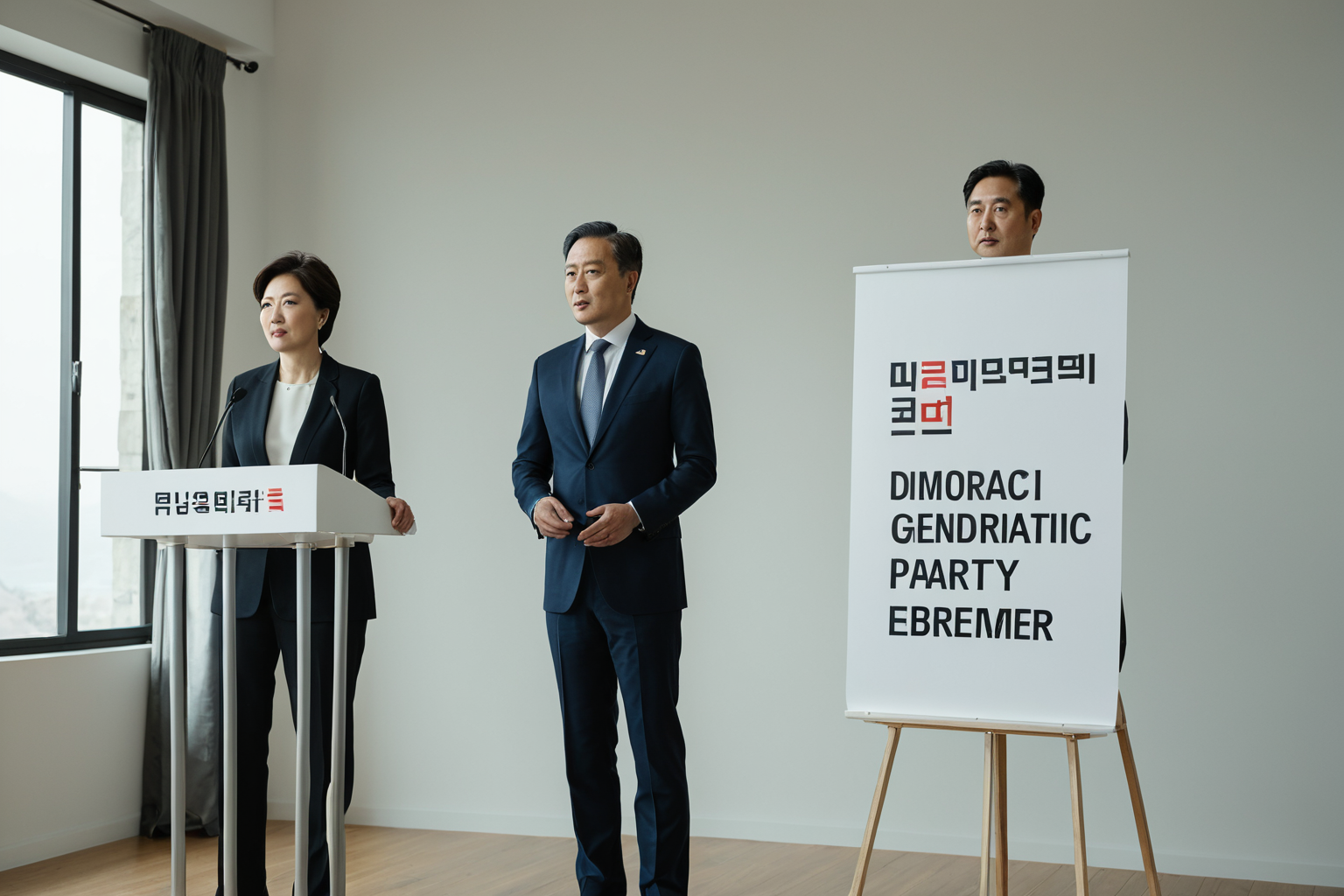
Kim Yong vs. Han Minsu: Campaign Promises in the Democratic Party Leadership Race
In the Democratic Party's highest committee primary, Kim Yong (pro-Moon) and Han Minsu (pro-Chung) drew attention for their campaign promises, though the final result showed a pro-Chung victory. Kim emphasized 'party member sovereignty' and a 'dominant win in Honam,' but finished sixth and was eliminated. Han secured fifth place and won election. The competition unfolded amid deepening factional divisions within the party, with the outcome indicating that the pro-Chung faction's unification strategy proved effective.
Kim Yong's Promises: Party Member Sovereignty and Honam Dominance
On August 2, Kim stated, 'Standing at a crossroads for the party… reflecting party member sovereignty in policies,' highlighting active participation by members. This was part of the pro-Moon strategy to promote internal democracy and strengthen member authority. Kim pledged to establish a structure that would incorporate members' opinions into the party's decision-making process through 'party member sovereignty.'
Kim aimed for a dominant victory in Honam region with his 'Honam dominance' strategy, targeting over 50% of votes in the first round. However, by August 15, reports indicated this plan had failed, and he finished sixth. The competition in Honam reflected divided voting between pro-Moon and pro-Chung factions within the party.
Han Minsu's Promises: Unification Leadership and Unity
On August 14, Han declared his candidacy for highest committee member with 'unifying leadership as both a pro-Moon and pro-Chung figure,' emphasizing unity. He positioned himself as the 'seed of unity within the progressive reform camp' to advance unification, which was part of the pro-Chung faction's strategy to gain more influence within the party. Han stressed cooperation between factions for the party’s future, promoting the message of 'unity beyond the pro-Moon and pro-Chung divide.'
On August 17, when the primary results were announced, Han secured fifth place and won election. This success demonstrated the effectiveness of the pro-Chung unification strategy, revealing that the pro-Chung faction had gained dominance in internal party conflicts. Han's promises were seen as a strategic move capable of shifting the party’s policy direction.
Final Primary Results: Narrow Margin and Factional Conflict
The August 17 primary results showed that Choi Min-hee took first place, followed by Park Sun-won, Seo Mi-hwa, Lee Sung-yun, and Han Minsu. The pro-Chung faction secured three of the five elected highest committee members, achieving a majority, while Kim Yong from the pro-Moon faction finished sixth and was eliminated. This outcome suggests a new leadership structure within the party led by the pro-Chung faction.
The margin between Kim and Han was just 0.15 percentage points, showing the delicate balance of division and unity within the party. The narrow gap indicates that voting was evenly split among factions, suggesting that future primaries will require more nuanced strategies to win over members.
Primary Process and Factional Conflict
On July 20, Democratic Party candidates for party leader and highest committee held a joint debate to present their visions and promises. This event solidified the pro-Moon (Kim Min-seok) versus pro-Chung (Han Minsu) divide, with voting patterns split in Jeonbuk region. The debate directly compared Kim Yong and Han Minsu's proposals, drawing significant member interest.
On August 16, Kim Min-seok secured first place in the party member vote for Seoul and Gyeonggi regions with 49.91%, showing pro-Moon strength. However, this result was not directly related to the highest committee primary, as internal factional conflicts deepened during the process. The Seoul-Gyeonggi voting pattern did not influence the highest committee election results, where the pro-Chung faction won decisively.
Comparison of Promises and Election Results
Kim Yong's 'party member sovereignty' emphasized internal democracy but proved less effective than Han Minsu's unification strategy in the primary. Han Minsu’s 'seed of unity within the progressive reform camp' signaled that the pro-Chung faction could lead the party, a strategic move seen as capable of shifting the party’s policy direction.
In the preliminary highest committee election, eight out of 14 candidates were elected. The pro-Chung faction secured three seats (a majority), while Kim Yong from the pro-Moon faction was eliminated. This reflects the growing influence of the pro-Chung faction within the Democratic Party.
Significance of Election Results: Pro-Chung Dominance and Internal Structural Shift
The pro-Chung faction securing a majority in the highest committee election indicates an internal structural shift within the Democratic Party. Han Minsu’s victory reflects the effectiveness of the pro-Chung unification strategy, with him entering leadership alongside Lee Sung-yun.
On August 17, reports highlighted Lee Sung-yun and Han Minsu's joint entry into party leadership, signaling a new leadership structure led by the pro-Chung faction. This suggests that the pro-Chung faction will gain greater influence within the party in the future.
Reader Note: Campaign Promises vs. Final Results
Kim Yong’s campaign focused on 'party member sovereignty' and a 'dominant win in Honam,' aiming for internal democracy and victory in the Honam region. However, he finished sixth, indicating that the pro-Chung strategy was more effective.
Han Minsu’s campaign centered around 'seed of unity within the progressive reform camp,' emphasizing unification leadership. He secured fifth place, confirming the pro-Chung faction's dominance.
Readers can check the Democratic Party’s official website or regular press releases for updates on election-related information. For a deeper understanding of internal party factional conflicts, reviewing party policy proposals and discussions is recommended.
Frequently Asked Questions
What was the margin between Kim Yong and Han Minsu?
The race was very close with just 0.15 percentage points separating them.
How many of the eight highest committee members did the pro-Chung faction secure?
The pro-Chung faction secured three seats, a majority.
What were Kim Yong's campaign promises?
He emphasized 'party member sovereignty' and 'Honam dominance.'
You can find similar articles in one place.
View Related ArticlesFAQ
What was the margin between Kim Yong and Han Minsu?
The race was very close with just 0.15 percentage points separating them.
How many of the eight highest committee members did the pro-Chung faction secure?
The pro-Chung faction secured three seats, a majority.
What were Kim Yong's campaign promises?
He emphasized 'party member sovereignty' and 'Honam dominance.'
Korean Source
This article is an English localization of a Korean-language report from BlogScore. Original: 최고위원 경쟁, 김용과 한민수의 공약 비교