
Kim Yo-jong Denies South Korea's Statement on DMZ Mine Incident: Why the Strong Reaction?
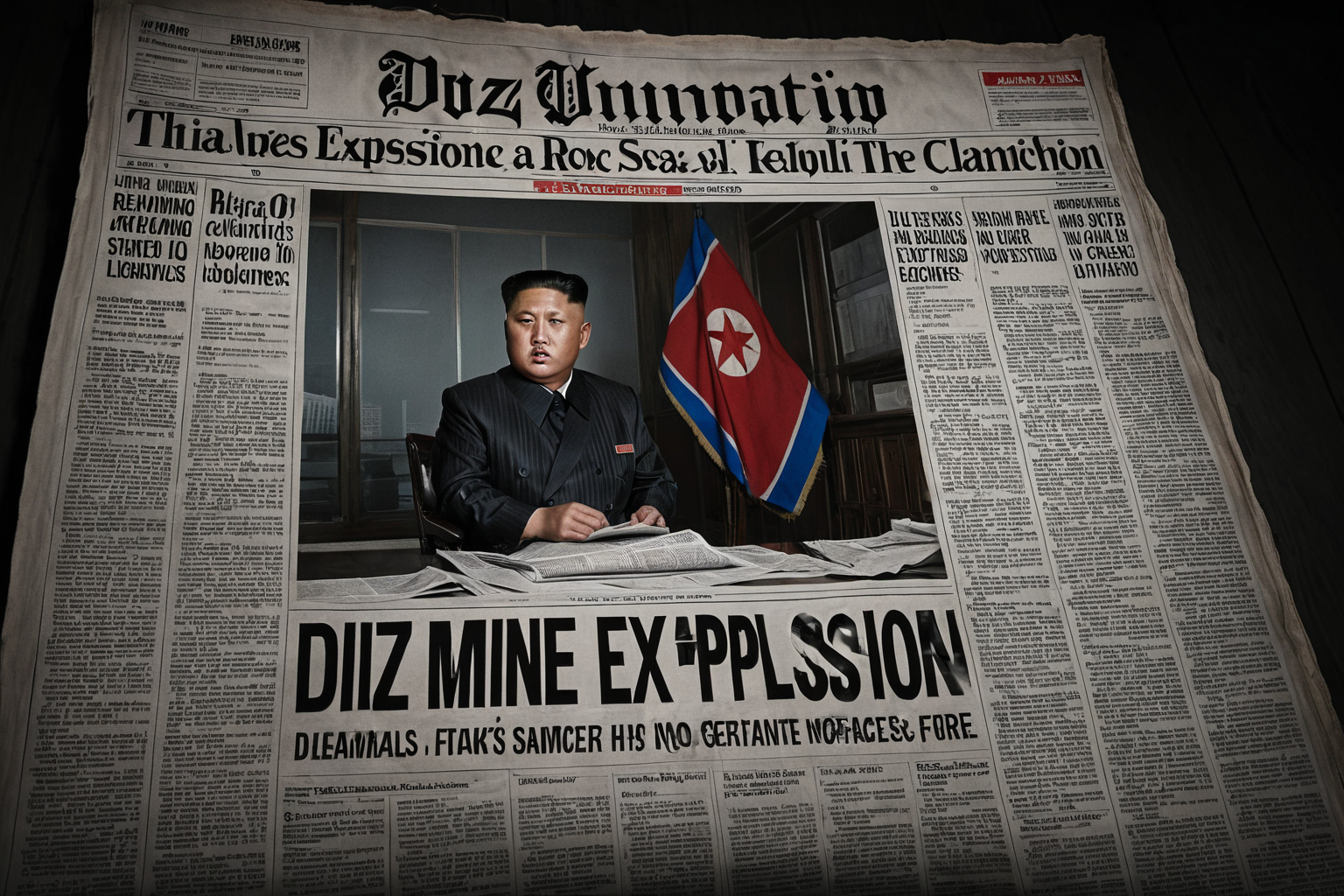
Key Points of Kim Yo-jong's Statement
Kim Yo-jong dismissed South Korea's military announcement regarding a mine explosion in the northern part of the Demilitarized Zone (DMZ), labeling it a 'fake farce by Seoul.' This came amid reports from multiple media outlets between September 29 and October 2, 2026, where North Korea warned of 'uncompromising retaliation' against South Korean forces for what they called an intentional provocation. Kim Yo-jong's remarks denied the South Korean military's account of the incident, framing it as a deliberate false claim.
On the evening of September 29 at 9:46 PM, Kim Yo-jong issued North Korea's official statement denying the 'northern DMZ mine' announcement and criticized it as a 'fake farce.' Additional remarks about consolidating retaliatory capabilities were made on the morning of September 30 at 12:26 AM. North Korea warned of 'uncompromising retaliation' against South Korean forces for what they termed an intentional provocation, signaling potential military escalation.
Notably, Kim Yo-jong highlighted concerns about disruptions to the 'fortification work,' indicating North Korea's worries over ongoing fortification efforts in the DMZ. Fortification refers to North Korea's strategic military defense system enhancement, suggesting possible tensions related to these activities.

Government Response and Political Reactions
The People Power Party criticized North Korea's denial as 'unprecedented audacity' and accused the government and military of inconsistent responses. On the morning of September 30 at 7:15 AM, the party released a statement condemning North Korea's remarks for their 'unprecedented audacity,' deepening debates over how South Korea should respond to North Korea's claims.
Criticisms regarding inconsistent government and military responses began around September 30, 2026. While the government denied North Korea's claims, the military warned of retaliation for actual firing, leading to differing stances that drew criticism from the People Power Party and some political circles.
Experts analyzed Kim Yo-jong's statement as potentially indicating a path toward renewed North-South dialogue, suggesting a 'cooling-off' phase. This interpretation views North Korea's rhetoric as balancing military tension with openness to diplomatic engagement, possibly signaling a strategic move to maintain dialogue channels while escalating tensions.
Kim Yo-jong's Further Criticisms
Kim Yo-jong criticized President Lee Jae-myung's 'reducing tension' remarks as the 'second act of a fake farce' and mocked South Korea-U.S. military training reductions as 'a dummy army's fate.' These comments were made on October 2, 2026, following his earlier criticism of President Lee's diplomatic efforts.
On August 21, 2026, Kim Yo-jong had previously mocked South Korea-U.S. military training cuts as 'a dummy army's fate,' reflecting North Korea's intent to heighten tensions through such rhetoric.
These remarks followed North Korea's denial of the mine incident and intensified debates over government and military responses. Kim Yo-jong's characterization of President Lee's diplomatic efforts as a 'fake farce' was seen as dismissive of South Korean foreign policy initiatives.
Expert Analysis
Experts believe Kim Yo-jong's statement could indicate North Korea is leaving room for dialogue with the U.S., suggesting a potential 'cooling-off' phase. This perspective views North Korea's rhetoric as balancing military tension with diplomatic openness, possibly signaling a strategic move to maintain engagement while escalating tensions.
On August 20, 2026, experts analyzed Kim Yo-jong's remarks as leaving room for U.S.-North Korea dialogue, suggesting a potential 'cooling-off' phase. This interpretation reflects North Korea's strategy of raising military tension while keeping diplomatic channels open.
Kim Yo-jong's comments are seen as an indication of a shift in North Korea's diplomatic approach, reflecting a strategic choice to maintain military pressure while preserving the possibility for dialogue with the U.S., aiming to balance both elements effectively.
Ranking Changes and Future Outlook
Why did Kim Yo-jong label South Korea's statement on the DMZ mine incident as 'Seoul's fake farce'?
North Korea denied South Korea's military announcement, characterizing it as a deliberate false claim. Kim Yo-jong used this to deny South Korea's account of the mine explosion in the northern DMZ, framing it as a planned provocation.
What is the nature of the inconsistency between government and military responses?
The criticism stems from differing approaches: while the government denied North Korea's claims, the military warned of retaliation for actual firing, leading to conflicting stances that drew political scrutiny.
How might Kim Yo-jong's remarks affect U.S.-North Korea relations?
Experts suggest her statement could leave room for dialogue between North and South Korea, potentially advancing toward a 'cooling-off' phase. This interpretation views North Korea as strategically balancing military tension with diplomatic openness to maintain engagement while escalating tensions.
You can explore more articles on this topic in one place.
View Related ArticlesFAQ
Why did Kim Yo-jong call South Korea's statement a 'fake farce'?
She denied the South Korean military's account of a DMZ mine incident, labeling it a deliberate false claim intended to provoke tension.
What is North Korea's stance on military training reductions with the U.S.?
North Korea mocked South Korea-U.S. military training cuts as 'a dummy army's fate,' indicating their intent to heighten tensions.
How do experts view Kim Yo-jong's remarks regarding diplomacy?
Experts suggest her statements may leave room for dialogue with the U.S., potentially leading to a 'cooling-off' phase in relations.
Korean Source
This article is an English localization of a Korean-language report from BlogScore. Original: 김여정 발표 부인, 왜 이렇게 반응이 심한가?