
The Historical Context and Key Issues Behind Kim Min-seok's Election as Democratic Party Leader
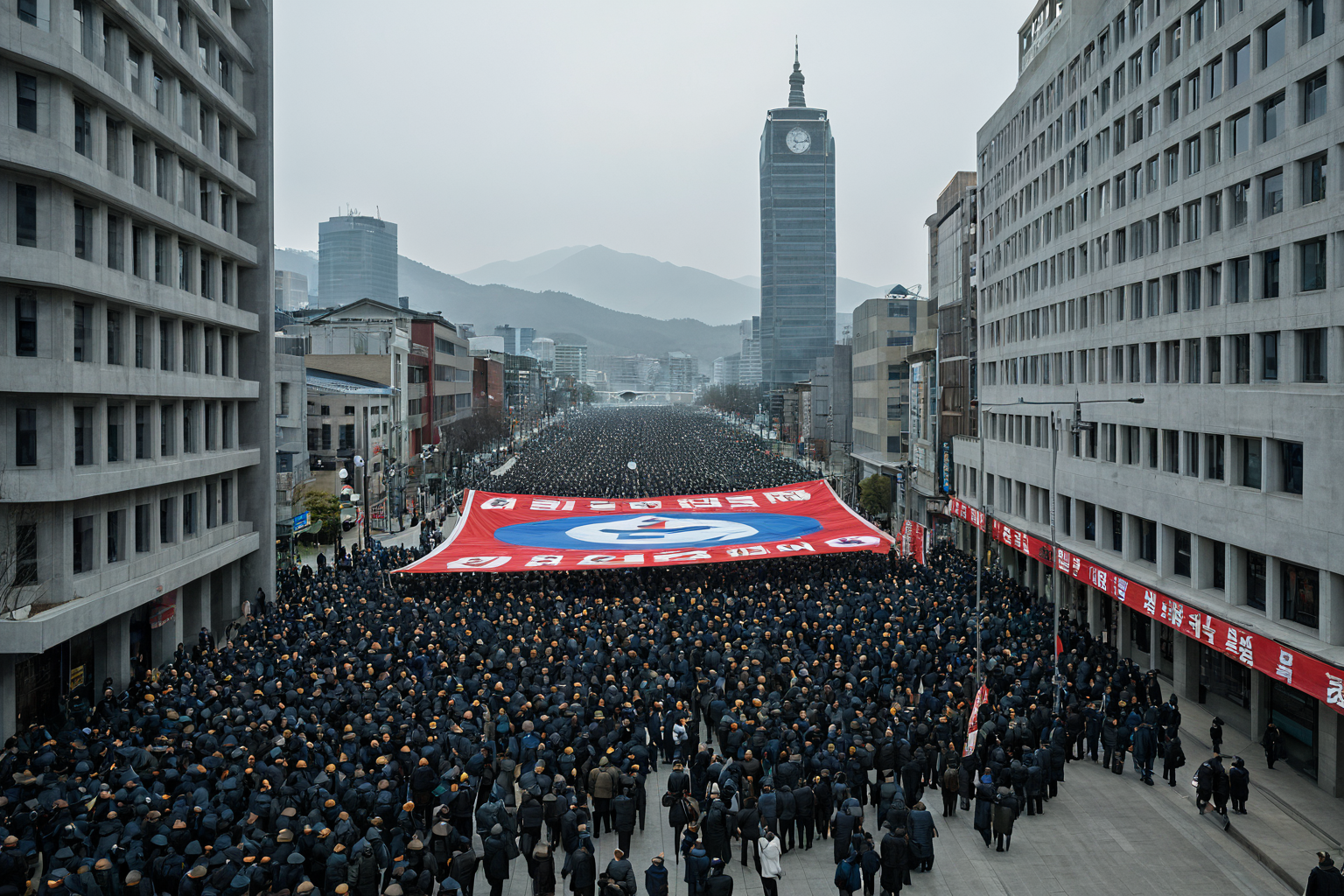
The Historical Background of Kim Min-seok's Leadership Election
On August 17, 2026, at the Democratic Party's national convention, Kim Min-seok was elected party leader with 54.08% of the vote under a preferential voting system, defeating Jeong Cheong-rae by an 8.38 percentage point margin. This marked the first time in the party's 70-year history that the national convention was held in Daejeon, carrying significant political meaning. Notably, Daejeon has traditionally been a Democratic Party stronghold, but recent internal divisions within the Chungcheong region—between progressive and conservative factions—have led to split voting patterns, making the venue selection for the convention noteworthy. The move is interpreted as an attempt by the Democratic Party to reestablish regional identity.

Election Results and Key Statements
Following his election, Kim Min-seok emphasized that 'the history of conservative parties is a humiliating history of impeachments and dictatorships,' positioning the Democratic Party as South Korea's sole historical party. This statement reflects an effort to reestablish the party's historical opposition to conservative forces. Specifically, by referencing 'impeachment' and 'dictatorship,' Kim appears to be drawing on critical perspectives regarding the 2016 impeachment of President Park Geun-hye and authoritarian regimes from the 1980s. This approach aims to clearly define the Democratic Party's historical role in democratization while reinforcing its opposition to conservative parties.
The national convention also saw key issues emerge, including the proposed 'Special Act on Administrative Capital,' discussions about 'exemptions to the 52-hour workweek rule,' and controversy surrounding the 'Shincheonji intervention theory.' The 'Special Act on Administrative Capital' has been actively advocated by the Democratic Party's Sejong City branch as a policy demand since Sejong was designated as the administrative capital, with calls for its enactment within the year. This signals potential political debates over the administrative capital issue.
Controversy around the 'Shincheonji intervention theory' emerged following a July 24 report by the Kyunghyang Shinmun, prompting Kim Min-seok's team to demand an apology from Choi Min-hee for spreading false information. This has intensified internal party conflicts. The Shincheonji controversy involves allegations about the relationship between the Democratic Party and Shincheonji, with growing calls for a thorough investigation.
The Historical Context of the Leadership Election
By holding its first-ever national convention in Daejeon—the traditional stronghold of the Democratic Party—this event symbolizes shifting regional political dynamics. While Daejeon has long been a Democratic Party base, recent reports indicate that voting patterns in the Chungcheong region have become concentrated. Notably, Kim Min-seok and Jeong Cheong-rae engaged in a tight race, with four regional party chairpersons from North Gyeongsang Province clashing, reflecting fragmented local voter sentiment.
Another key issue at the convention was the impeachment of Cho Hee-dae, which highlights internal progressive-conservative divisions within the party. Cho Hee-dae's impeachment relates to the 2016 Park Geun-hye impeachment case, where some conservative-leaning lawmakers opposed the impeachment. This indicates that while the Democratic Party seeks to reestablish its historical opposition to conservative parties, it must also address internal conflicts.
Key Issues and Controversies
The push for the 'Special Act on Administrative Capital' has been actively championed by Sejong City's Democratic branch, with Kim Min-seok facing pressure to enact it within the year. This law aims to expand administrative functions in Sejong and provide policy support, reflecting long-standing internal demands.
On the issue of 'exemptions to the 52-hour workweek rule,' Jeong Cheong-rae argued for strict compliance, while Kim Min-seok suggested discussion was necessary. This reflects differing approaches to labor policy within the party and may serve as an indicator of future economic direction. The 52-hour workweek law includes exceptions allowing more than 52 hours of work per week, making this debate significant for labor market structure.
The 'Shincheonji intervention theory' controversy emerged after a July 24 Kyunghyang Shinmun report. Kim Min-seok's team demanded an apology from Choi Min-hee for spreading false information, further deepening internal party divisions. The controversy involves suspicions about the relationship between the Democratic Party and Shincheonji, with growing demands for thorough investigation.
Promises and Controversies After Taking Office
Kim Min-seok has emphasized 'people-centered politics' and promised a 10-point increase in approval ratings. However, he faces challenges related to factional division within the party. Specifically, Kim highlighted economic policy improvements and social welfare as key priorities under his 'people-centered politics' approach.
1,063 Democratic Party members and supporters publicly expressed their support for Kim Min-seok, indicating a solid base of internal backing. However, concerns about potential fragmentation within this support base due to the Shincheonji controversy have been raised. This underscores the need for thorough investigation to resolve conflicts and rebuild trust.
Future Outlook and Strategic Directions
Kim Min-seok has stated his intention to build a 'creative horizontal relationship' with the president and government, reflecting an effort to strengthen cooperation with the administration as part of a political strategy. Specifically, the party plans to advance economic policies and social welfare improvements through collaboration with the government.
The push for enacting the 'Special Act on Administrative Capital' and redefining labor policy through discussions on the 52-hour workweek exemption are key issues that will shape future policy direction. The administrative capital law, in particular, is tied to ongoing demands from Sejong City's development policies, with continuous internal debate within the party.
A thorough investigation into the Shincheonji controversy is essential for rebuilding trust within the Democratic Party. This process will play a crucial role in resolving internal conflicts and restoring public confidence.
Verified Information
Kim Min-seok's election as party leader with 54.08% of the vote under preferential voting at the August 17, 2026, convention is confirmed. This marks the first time in the Democratic Party's 70-year history that a national convention was held in Daejeon—a politically significant event.
Kim Min-seok's statement about conservative parties being 'a humiliating history of impeachments and dictatorships' and his assertion that the Democratic Party is South Korea's sole historical party are confirmed. This reflects an effort to reestablish historical opposition to conservative forces.
The Shincheonji controversy emerged following a July 24 Kyunghyang Shinmun report, with Kim Min-seok's team demanding an apology from Choi Min-hee for spreading false information. This has intensified internal party conflicts.
Frequently Asked Questions
What was the main issue during Kim Min-seok's leadership election?
The key issues were the proposed 'Special Act on Administrative Capital,' discussions about 'exemptions to the 52-hour workweek rule,' and the controversy surrounding the 'Shincheonji intervention theory.'
Can Kim Min-seok's promise of a 10-point approval rating increase be realized?
Kim promised a 10-point increase in approval ratings by emphasizing 'people-centered politics' but faces uncertainty due to factional division within the party.
Why was the Democratic Party's national convention held in Daejeon?
This marked the first time in the party's 70-year history that a national convention was held in Daejeon, symbolizing a shift in regional political dynamics.
You can explore similar articles on this topic in one place.
View Related ArticlesFAQ
What was the main issue during Kim Min-seok's leadership election?
The key issues were the proposed 'Special Act on Administrative Capital,' discussions about 'exemptions to the 52-hour workweek rule,' and the controversy surrounding the 'Shincheonji intervention theory.'
Can Kim Min-seok's promise of a 10-point approval rating increase be realized?
Kim promised a 10-point increase in approval ratings by emphasizing 'people-centered politics' but faces uncertainty due to factional division within the party.
Why was the Democratic Party's national convention held in Daejeon?
This marked the first time in the party's 70-year history that a national convention was held in Daejeon, symbolizing a shift in regional political dynamics.
Korean Source
This article is an English localization of a Korean-language report from BlogScore. Original: 김민석 당대표 선출의 역사적 맥락과 주요 쟁점