
KDI Expands Economic Improvement Trends and Strategies to Boost Private Investment


Key Drivers Behind KDI's Expanded Economic Improvement Trends
The Korea Development Institute (KDI) has analyzed that improved economic conditions are expanding due to strong semiconductor exports. The sustained increase in semiconductor exports since 2023 is driving equipment investment and consumer activity, serving as a key engine for economic growth. However, slowing employment trends and persistent high inflation uncertainty continue to negatively impact economic outlooks.
Revised Growth Projections
KDI has raised its 2024 growth forecast from the previous 1.8% to 1.9%. This upward revision reflects increased semiconductor exports and expanded equipment investment, with further economic growth expected by 2026 as domestic demand recovers. KDI warns that without productivity improvements, the economy could reach a 0% growth rate by 2050, emphasizing the urgency of implementing long-term economic strategies.
Strategies to Activate Private Investment
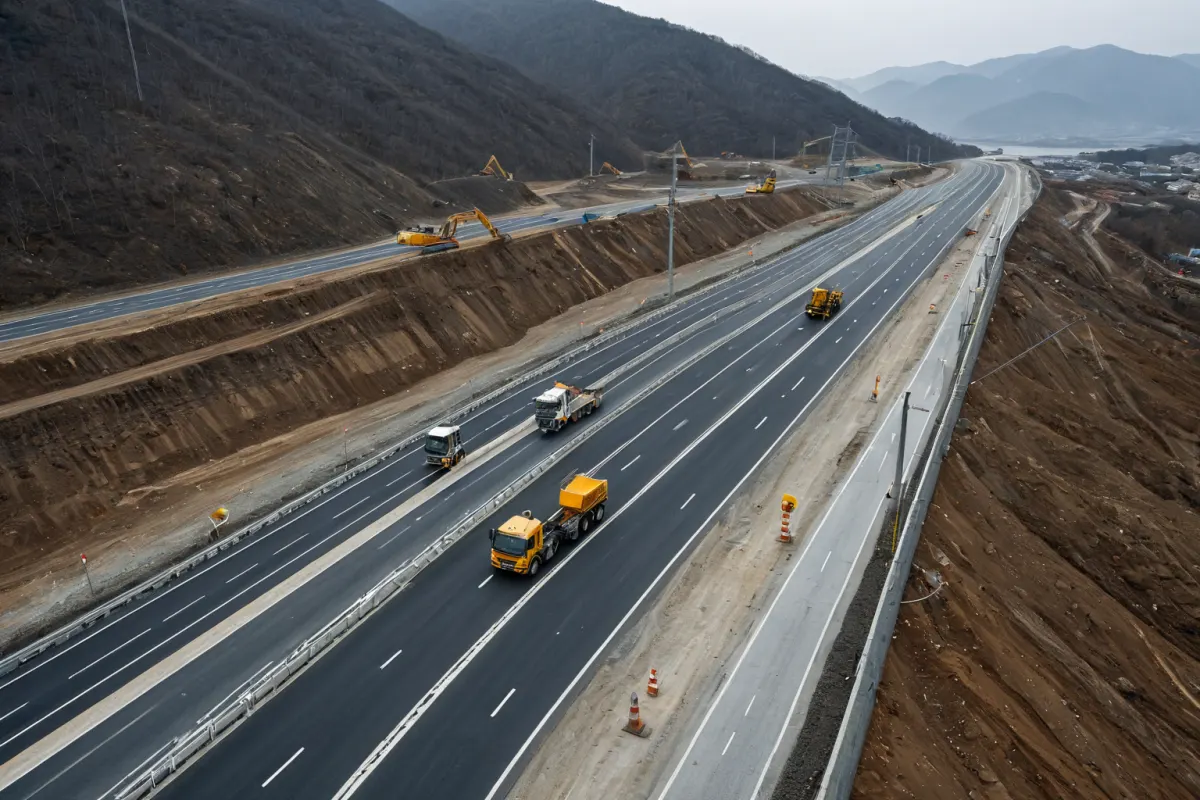
To boost private investment, next-generation Busan-type rapid rail and the Taean-Anseong and Hwaseong-Gwacheon expressway public-private partnership projects have passed feasibility assessments. These represent successful policy outcomes encouraging private sector participation, with infrastructure development expected to stimulate economic activity. KDI notes that if such private investment initiatives continue to expand, they could sustain increases in consumption and equipment investment.
Long-Term Economic Outlook and Need for Productivity Improvement
KDI warned in March 2023 that without productivity improvements, the economy could reach a 0% growth rate by 2050. This reflects concerns over declining labor productivity due to changing employment structures and consumer patterns. The government is advancing policies such as electric vehicle promotion and workplace environment improvement initiatives. In July 2024, KDI published research on improving electric vehicle promotion strategies, with a public tender for workplace environment improvement projects scheduled for September 2025.
Structural Analysis of Economic Improvement Trends
KDI states that the economic improvement driven by strong semiconductor exports is translating into increased equipment investment and consumer activity. According to a report from August 2026, semiconductor exports and equipment investment are growing at double-digit rates, leading economic growth. However, slowing employment trends and high inflation remain burdens, alongside ongoing international uncertainty due to Middle East tensions.
Case Study: Activating Private Investment
In May and June 2026, the feasibility assessments for the Hwaseong-Gwacheon expressway and Taean-Anseong private toll road projects were approved. These represent successful outcomes of government policies encouraging private investment in infrastructure, with large-scale projects like Busan-type rapid rail creating a foundation to attract private capital. Such initiatives are expected to contribute to domestic economic recovery and job creation.
Long-Term Strategies for Productivity Improvement
KDI research indicates that electric vehicle promotion policies serve as an important strategy for productivity improvement. The July 2024 study emphasized the potential of the electric vehicle industry to establish itself as a new high-value sector. Additionally, workplace environment improvement initiatives aim to boost productivity and worker satisfaction, with public tenders scheduled for September 2025.
Factors of Uncertainty in Economic Outlook
Slowing employment trends and high inflation continue to hinder the expansion of economic improvement. Since 2023, deteriorating employment indicators have led to reduced consumer confidence, potentially slowing domestic recovery. Additionally, Middle East tensions and global economic uncertainty could further negatively impact semiconductor export momentum.
Verification of Private Investment Activation Policies
KDI analysis suggests that if private investment activation policies prove successful, economic recovery could accelerate. The Taean-Anseong and Hwaseong-Gwacheon expressway projects are considered key initiatives for regional economic revitalization. KDI's August 2026 report highlighted how such infrastructure development would contribute to increased consumption and expanded equipment investment.
Response Strategies for Long-Term Economic Outlook
In warning of potential 0% growth by 2050 without productivity improvements, KDI emphasizes policies aimed at enhancing productivity. Electric vehicle promotion and workplace environment improvement initiatives are expected to contribute not only to short-term gains but also long-term productivity enhancement. The July 2024 study noted that expanding the electric vehicle industry could establish it as a new high-value sector.
Key Information for Readers to Note
KDI continues to monitor the effectiveness of economic improvement trends and private investment activation policies. Based on an August 2026 report, KDI confirmed increased consumer spending driven by semiconductor export momentum, providing a basis for domestic recovery forecasts. However, slowing employment trends and high inflation uncertainty remain key variables affecting economic outlooks.
Frequently Asked Questions
Q: Why did KDI warn that the economy could reach 0% growth by 2050?
A: Because without productivity improvements, declining labor productivity is expected due to changes in employment structures and consumer patterns.
Q: What are the main projects for activating private investment?
A: Next-generation Busan-type rapid rail, Taean-Anseong expressway, and Hwaseong-Gwacheon expressway public-private partnership projects.
Q: How is KDI improving electric vehicle promotion policies?
A: In July 2024, research outlined a strategic direction to position the electric vehicle industry as a new high-value sector.
Frequently Asked Questions
KDI analysis shows that while semiconductor export momentum is expanding economic improvement trends, slowing employment and high inflation uncertainty continue to negatively impact economic outlooks. The approval of feasibility assessments for next-generation Busan-type rapid rail, Taean-Anseong, and Hwaseong-Gwacheon expressway private investment projects marks a significant step toward economic recovery. However, KDI's warning that without long-term productivity improvements, the economy could reach 0% growth by 2050 underscores this as an urgent policy priority.
You can view similar articles in one place.
View Related ArticlesFAQ
Why did KDI warn that the economy could reach 0% growth by 2050?
Because without productivity improvements, declining labor productivity is expected due to changes in employment structures and consumer patterns.
What are the main projects for activating private investment?
Next-generation Busan-type rapid rail, Taean-Anseong expressway, and Hwaseong-Gwacheon expressway public-private partnership projects.
How is KDI improving electric vehicle promotion policies?
In July 2024, research outlined a strategic direction to position the electric vehicle industry as a new high-value sector.
Korean Source
This article is an English localization of a Korean-language report from BlogScore. Original: KDI 개선세 확대와 민간 투자 활성화 전략