
KAIST Develops Brain-Like Artificial Neuron Using Semiconductor 'Noise'
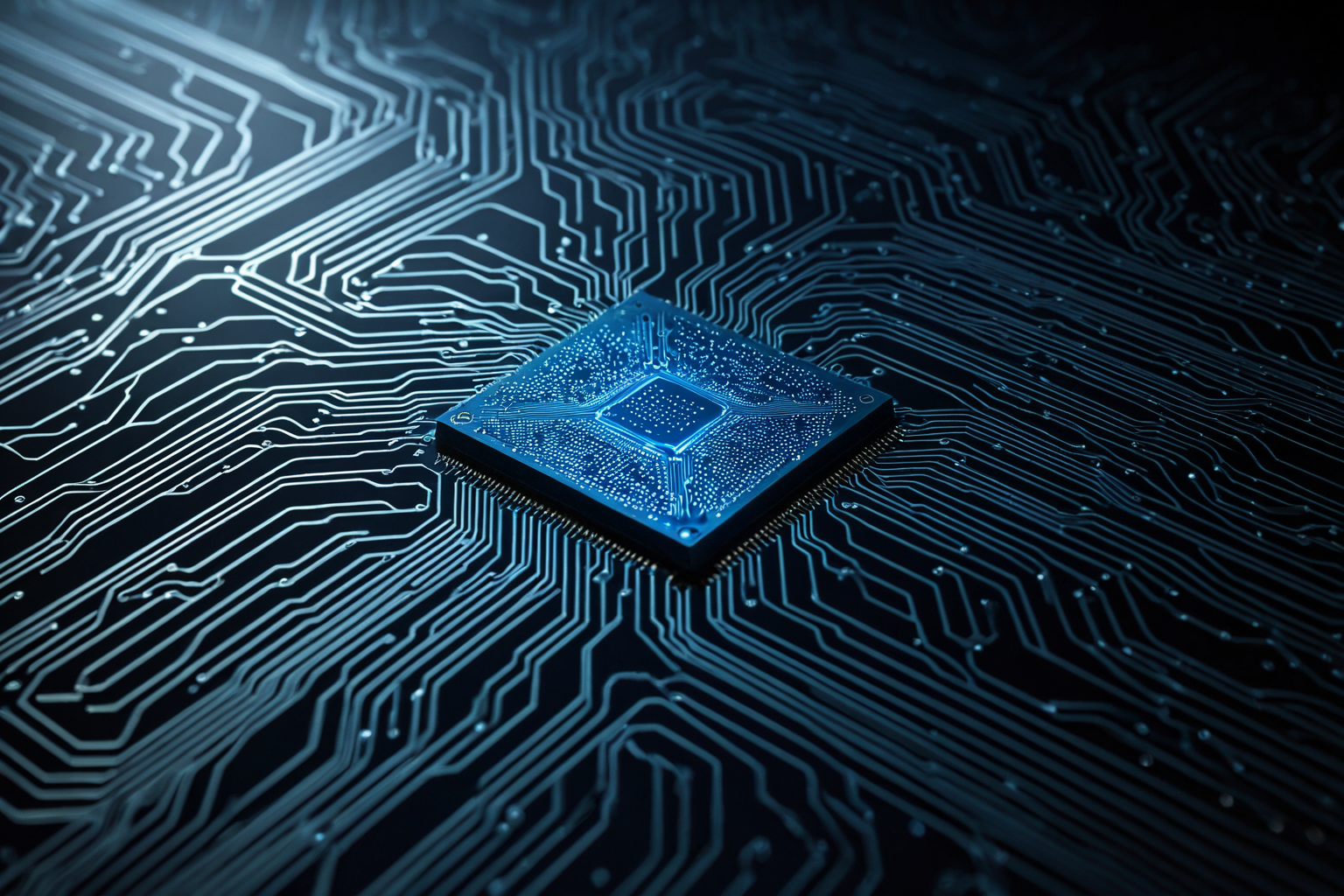
KAIST Develops Brain-Like Artificial Neuron Using Semiconductor 'Noise'
KAIST has developed artificial neuron technology that utilizes 'noise' occurring in semiconductors as an information processing resource, creating a system similar to the human brain. The technology reduces energy consumption by 27.7% compared to existing neural networks and features self-repair capabilities when damaged.
On November 26, 2025, KAIST announced the successful development of XAI (Explanation-AI) technology that visualizes AI decision-making structures at a circuit level. This advancement is expected to improve understanding of how AI makes decisions and contribute to more reliable artificial intelligence applications.
Professor Kim Kyung-min's team at KAIST has been researching 'neuron mimicry' technology since 2024, implementing brain learning and memory principles into semiconductor devices. In September 2025, their research demonstrated practical application potential for artificial neurons that utilize electrical noise as an information resource and feature self-repair capabilities when damaged.
This research will be showcased at the 'Ulsan Neuron AI+ 2026' event, which Ulsan Information Industry Promotion Agency announced would take place on September 4, 2026.
KAIST also anticipates that mimicking the brain's glucose-selective recognition mechanism could lead to new paradigms in appetite regulation. This was reported by DongA Science on July 9, 2025.
Visualizing AI Decision-Making Structures with XAI Technology
KAIST developed XAI (Explanation-AI) technology that visualizes the internal decision-making structure of AI at a circuit level. This technology aims to improve understanding of how AI makes decisions and contribute to more reliable artificial intelligence applications.
On November 26, 2025, KAIST announced the development of XAI technology, with related research results reported in various media outlets. The technology enhances AI transparency and helps users understand the AI decision-making process.
On December 3, 2025, Hankyoreh reported that XAI technology could contribute to securing trust in artificial intelligence by explaining AI decision processes. This is expected to become an essential technology for explaining AI decision-making processes.
On March 17, 2026, JoongAng Ilbo analyzed that KAIST's XAI technology could contribute to the development of AI regulatory policies. It is believed this will play a significant role in strengthening AI transparency and accountability.
Features of Semiconductor 'Noise' Utilizing Artificial Neurons
The semiconductor-based artificial neurons developed by KAIST utilize electrical noise as an information resource, featuring self-repair capabilities when damaged. This represents an ultra-low-power semiconductor mimicking human brain neural transmission, reducing energy consumption by 27.7% compared to existing neural networks.
On September 28, 2025, v.daum.net and Herald Business News reported on the self-repair features of this artificial neuron technology. The ability to self-recover when damaged is expected to enhance the reliability of AI devices.
On October 14, 2025, Maeil Business Newspaper explained in detail how KAIST's 'neuromorphic neuron' technology utilizes semiconductor noise for signal processing. This demonstrates new possibilities through the convergence of artificial intelligence and semiconductor technology.
On November 3, 2025, Daily Security reported that KAIST's artificial neuron technology has proven energy-saving effects, which is considered an important step in solving power consumption issues in AI devices.
Deciphering Brain Function and Applying Artificial Neural Networks
On January 16, 2024, Professor Kim Kyung-min's team at KAIST announced research results using artificial neural networks to decipher the 'musicality' of the human brain. This was evaluated as presenting a new approach to understanding brain functions.
On April 5, 2024, KAIST reported research results on solving computational challenges using neuromorphic neural networks. The technology has gained attention for its innovative achievements through the convergence of AI and semiconductors.
On April 17, 2025, KAIST announced the development of 'neuron mimicry' technology called 'Neuristor.' This technology functions as a 'frequency-switching neuron' that remembers and reacts like the brain, implementing intrinsic plasticity.
On September 28, 2025, KAIST reported on 'semiconductor neurons' that remember and react like the brain. The technology implements brain learning and memory principles into semiconductor devices, presenting possibilities for next-generation AI semiconductors.
Future Outlook and Upcoming Events
On May 7, 2026, Robot Newspaper reported that KAIST plans to hold 'AI Technology Seminar 2026.' This event is expected to showcase KAIST's latest AI achievements.
The Ulsan Information Industry Promotion Agency announced it will host the 'ULSAN Neuron AI+ 2026' event on September 4, 2026. The event plans to share the latest achievements related to KAIST's artificial neuron technology.
On July 9, 2025, DongA Science reported that mimicking the brain's glucose-selective recognition mechanism could lead to new paradigms in appetite regulation. This represents potential for a new research field through the convergence of brain science and artificial intelligence.
Information to Verify
The actual commercialization potential of KAIST's semiconductor 'noise' utilization technology, as well as its impact on AI regulatory policies, remains unconfirmed. Further research and verification are needed.
It also needs to be confirmed whether XAI technology for visualizing AI decision-making structures is actually provided to end users. This could play an important role in enhancing AI transparency and trustworthiness.
Additional data is required to determine how effective the self-repair capability of semiconductor neurons is in various environments, as well as their applicability across different scenarios.
Frequently Asked Questions
How does KAIST's semiconductor 'noise' utilization technology work?
The technology utilizes noise generated in semiconductors as an information processing resource to create artificial neurons similar to the human brain. It uses irregularities in electrical current for signal processing and features self-repair capabilities when damaged.
How does XAI technology explain AI decision-making processes?
XAI technology visualizes the internal decision-making structure of AI at a circuit level, helping users understand how AI arrives at its decisions. This enhances AI transparency and strengthens reliability.
What impact could this technology have on AI regulatory policies?
The increased transparency from XAI technology in AI decision-making processes can assist in developing regulatory policies. When users can understand the AI decision process, it enables more trustworthy AI applications.
Frequently Asked Questions
KAIST's artificial neuron technology that utilizes semiconductor 'noise' mimics brain structure to achieve energy savings and self-repair capabilities. Combined with XAI technology that enhances AI transparency and reliability, this represents new possibilities for next-generation AI semiconductors.
The XAI technology announced on November 26, 2025, is expected to become an important tool for understanding AI decision-making processes, with practical application cases of the technology set to be showcased at the 'ULSAN Neuron AI+ 2026' event in 2026.
KAIST's research achievements are anticipated to lead new innovations through the convergence of artificial intelligence and semiconductor technology, highlighting the potential impact of combining brain science with artificial intelligence on future technological development.
You can view similar articles in one place.
View Related ArticlesFAQ
How does KAIST's semiconductor 'noise' utilization technology work?
The technology utilizes noise generated in semiconductors as an information processing resource to create artificial neurons similar to the human brain. It uses irregularities in electrical current for signal processing and features self-repair capabilities when damaged.
How does XAI technology explain AI decision-making processes?
XAI technology visualizes the internal decision-making structure of AI at a circuit level, helping users understand how AI arrives at its decisions. This enhances AI transparency and strengthens reliability.
What impact could this technology have on AI regulatory policies?
The increased transparency from XAI technology in AI decision-making processes can assist in developing regulatory policies. When users can understand the AI decision process, it enables more trustworthy AI applications.
Korean Source
This article is an English localization of a Korean-language report from BlogScore. Original: KAIST 인공 뉴런 개발: 기술적 특징과 실제 적용 사례