
Jung Dong-yeong's Proposal to Replace North Korean Terms: Real-World Usage and Educational Status


Jung Dong-yeong's 'Chosun' Naming Proposal and Controversy Over Replacing 'Hostile Force'
South Korean Unification Minister Jung Dong-yeong has proposed officially referring to North Korea as 'Chosun' and replacing the term 'hostile force' with 'threat,' sparking debate within the government and media. President Yoon Suk Yeol expressed concern that such changes could fuel political disputes, urging a more measured approach.
Jung Dong-yeong's Proposal for 'Chosun' Naming and Replacing 'Hostile Force'
Minister Jung proposed using the term 'Chosun' officially to refer to North Korea and recommended replacing 'hostile force' with 'threat.' This appears to stem from his belief that official naming changes and language improvements are necessary to advance peaceful coexistence.
In a press conference on August 5, 2026, Minister Jung argued that using 'Chosun' could facilitate dialogue with North Korea. He specifically noted that the term 'hostile force' carries an antagonistic connotation, hindering efforts to build peaceful relations, and thus called for its replacement.
Government Response and President Yoon's Cautious Stance
President Yoon Suk Yeol described Minister Jung's proposal as 'questionable whether it adds value,' emphasizing the need for caution in changes that could spark political disputes. He stressed that such shifts should be approached carefully to avoid fueling division.
Following Minister Jung's remarks, some media outlets raised concerns that using 'Bukhyangmin' (a term proposed as a replacement for 'defector') might constitute human rights violations. Notably, Minister Jung suggested using 'Bukhyangmin' to refer to North Korean defectors, but reports indicate 34,000 defectors opposed this change.
Media outlets like Chosun Ilbo criticized Minister Jung's proposal, questioning 'which country's minister is this?' This highlighted that referring to North Korea as 'Chosun' is not internationally recognized.
Defector Opposition and UN Human Rights Committee Petition
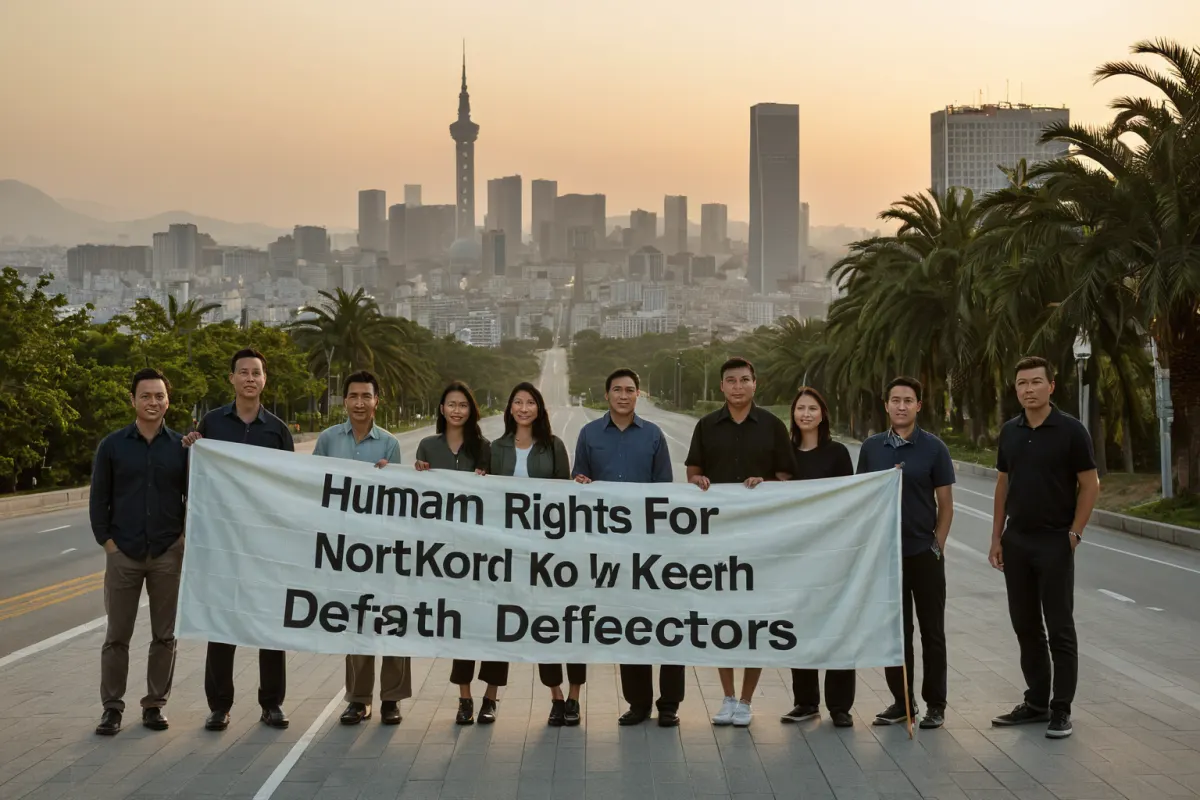
Defectors have condemned Minister Jung's push for the term 'Bukhyangmin,' labeling it a human rights violation, and filed a petition with the UN Human Rights Council. This reflects their concern over not having their identity respected.
After Minister Jung stated on July 14, 2026, that 'defector' should be replaced with 'Bukhyangmin,' opposition within the defector community intensified. Reports indicate that 34,000 defectors voiced opposition to this change, seen as a culmination of dissatisfaction with the government's unilateral policy.
Jung Dong-yeong's Proposal to Replace 'Hostile Force' and Media Coverage
Minister Jung suggested replacing 'hostile force' with 'threat,' aiming to foster dialogue for peaceful relations rather than using antagonistic language. However, some media criticized this as political word manipulation, noting that 'hostile force' has been officially used and its change might be politically motivated.
Choe Hyeon, a commentator, assessed Minister Jung's North Korea policy as 'realistically challenging... should be discounted,' suggesting his proposals may be out of touch with reality.
Government Policy Enforcement and Social Outcry
Minister Jung proposed using 'Bukhyangmin' as a replacement for 'defector,' but the government proceeded to enforce this change. Consequently, 34,000 defectors expressed opposition, intensifying social controversy.
Minister Jung began discussions on replacing 'defector' with 'Bukhyangmin' on September 19, 2025. By December 25, 2025, the government enforced the change, leading to significant backlash from the defector community.
The Unification Ministry also faced allegations of unauthorized sharing of defectors' personal information, raising transparency concerns and further fueling controversy.
Conflict Between President Yoon and Minister Jung
Minister Jung's proposals for using 'Chosun' and replacing 'hostile force' have created tension with President Yoon Suk Yeol's cautious stance. The president expressed concerns that such changes could ignite political disputes, urging a slower pace.
According to media reports, Minister Jung framed these changes as essential steps toward peaceful coexistence, while President Yoon described them as 'questionable whether they add value.' This highlights internal government conflict over the approach to inter-Korean relations.
Choe Hyeon also labeled Minister Jung's North Korea policy as 'idealistic,' pointing out its practical difficulties. This reflects a critical perspective on the minister's proposals.
Background and Controversy Behind Government Policy Changes
Minister Jung's proposal to refer to North Korea as 'Chosun' appears aimed at enhancing dialogue with the North, but it raises concerns about using a term not recognized internationally, potentially causing diplomatic issues.
The argument that 'hostile force' is antagonistic and hinders peaceful relations has drawn mixed reactions within the government. While some recommended replacing it with 'threat,' this term too has been criticized for lacking international recognition.
Controversy Over 'Bukhyangmin' as a Replacement Term
Minister Jung's suggestion to replace 'defector' with 'Bukhyangmin' sparked significant controversy over human rights concerns. Defectors argued that this term fails to respect their identity.
With 34,000 defectors opposing the change, they asserted that 'Bukhyangmin' could constitute a human rights violation. Filing a petition with the UN Human Rights Council marked the peak of this opposition.
Government Enforcement and Erosion of Public Trust
The government enforced the use of 'Bukhyangmin' despite 34,000 defectors opposing it, leading to heightened public distrust. The ministry also faced allegations of unauthorized sharing of personal data, further damaging transparency.
Minister Jung acknowledged that additional investigation into the alleged unauthorized sharing of defector information was needed but admitted this had already eroded public trust, potentially worsening government-citizen relations.
Conflict Between Minister Jung and President Yoon
While Minister Jung advocated for official naming changes and language improvements to promote peaceful coexistence, President Yoon urged caution, warning that such shifts could fuel political disputes. This reflects internal governmental tension over inter-Korean policy.
Commentator Choe Hyeon described Minister Jung's North Korea approach as 'idealistic,' highlighting its disconnect from practical realities.
Verified Information
Minister Jung Dong-yeong's proposals to refer to North Korea as 'Chosun' and replace 'hostile force' with 'threat' have generated significant debate, prompting President Yoon Suk Yeol to call for caution. Defectors opposed the use of 'Bukhyangmin,' filing a petition with the UN Human Rights Council, and despite 34,000 opposing views, the government proceeded with the policy change.
Frequently Asked Questions
What prompted Minister Jung Dong-yeong's proposal to use 'Chosun'?
Minister Jung believed that officially using 'Chosun' could facilitate dialogue with North Korea as part of efforts toward peaceful coexistence.
How did the proposal to replace 'hostile force' spark controversy?
While Minister Jung argued it would promote peace, some media criticized it as political word manipulation, noting that 'hostile force' has been officially used for years.
Why did defectors oppose the term 'Bukhyangmin'?
Defectors viewed 'Bukhyangmin' as a human rights violation that fails to respect their identity, leading them to file a petition with the UN Human Rights Council.
Frequently Asked Questions
The debate over Minister Jung Dong-yeong's proposals regarding North Korean terminology has highlighted tensions within South Korea's government and society. President Yoon Suk Yeol urged caution, while defectors opposed the changes as human rights violations, underscoring the importance of considering public opinion in policy-making.
You can explore more articles on similar topics here.
View Related ArticlesFAQ
What prompted Minister Jung Dong-yeong's proposal to use 'Chosun'?
Minister Jung believed that officially using 'Chosun' could facilitate dialogue with North Korea as part of efforts toward peaceful coexistence.
How did the proposal to replace 'hostile force' spark controversy?
While Minister Jung argued it would promote peace, some media criticized it as political word manipulation, noting that 'hostile force' has been officially used for years.
Why did defectors oppose the term 'Bukhyangmin'?
Defectors viewed 'Bukhyangmin' as a human rights violation that fails to respect their identity, leading them to file a petition with the UN Human Rights Council.
Korean Source
This article is an English localization of a Korean-language report from BlogScore. Original: 정동영 북한 용어 대체: 실제 사용 사례와 교육 현황