
July Employment Growth Rates by Industry: Service Sector Up 3.2%, Manufacturing at 1.5%
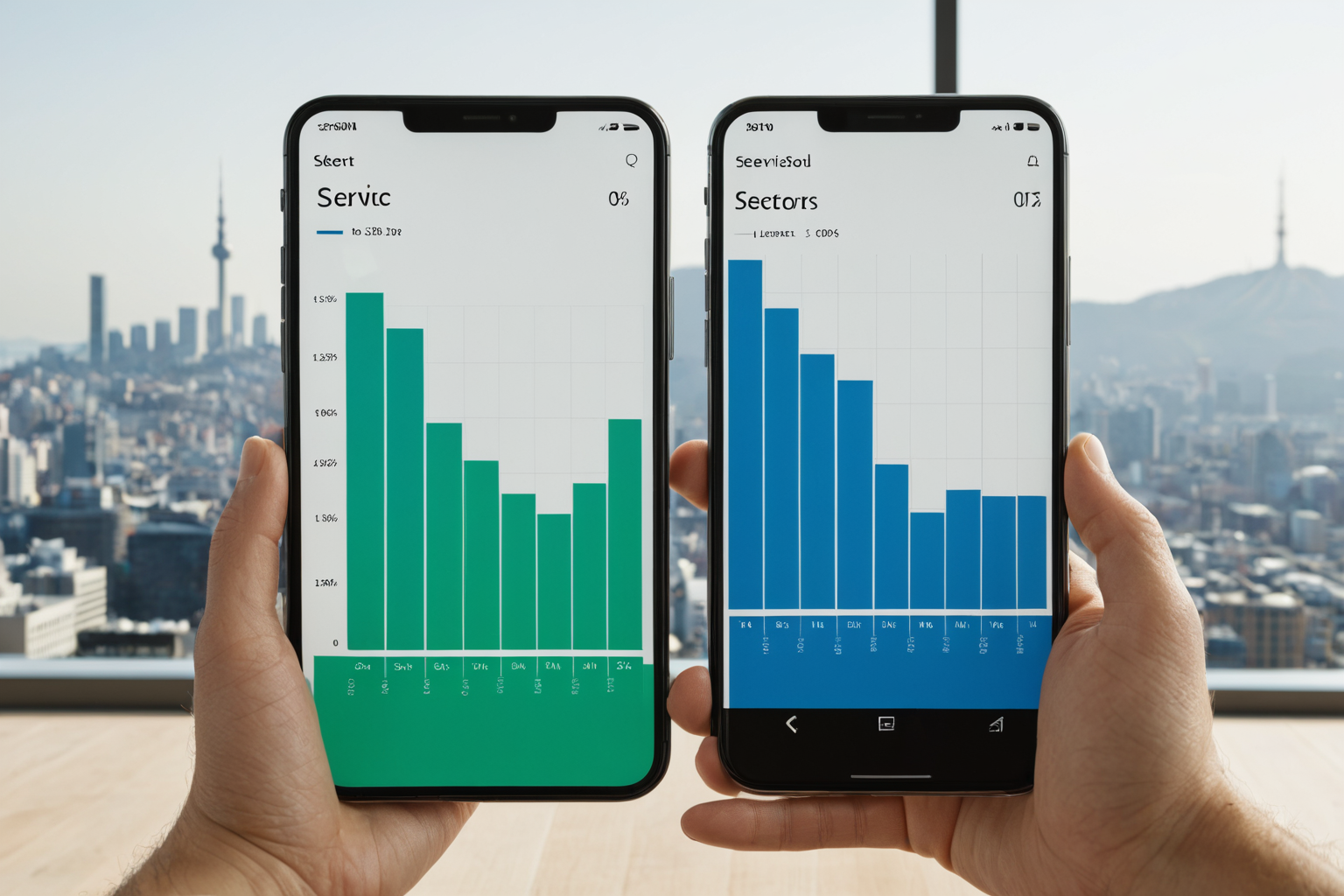
July Employment Growth Rates by Industry
South Korea's total employment increased by 108,000 workers in July, showing a two-digit growth rate for the first time in four months. The service sector saw a 3.2% increase, while manufacturing grew at a relatively lower rate of 1.5%.
This data reveals structural changes within the labor market. The disparity in employment growth rates across industries has become particularly pronounced, coinciding with the lowest employment elasticity rate in eight years.
Unemployment among young people reached its highest level in four years at 6.8%, especially with weak job growth for those in their twenties. Meanwhile, semiconductor exports rose by 179.6%, indicating positive trends in certain sectors.
Analysis of Employment Trends by Industry
The service sector recorded the highest employment growth rate at 3.2%, while manufacturing remained at 1.5%. This suggests that the manufacturing sector's employment situation is relatively weaker compared to the service industry.
Notably, in regions like Gyeonggi and Incheon as well as Chungbuk, the number of employed people increased but the employment rate declined—a mismatch reflecting how regional demographic and industrial structures impact the labor market.
In Changwon, new manufacturing job openings decreased by 11.8%, indicating ongoing employment challenges in certain areas despite overall growth in small and medium-sized manufacturing production and employment.
Structural Changes in the Labor Market
The lowest employment elasticity rate in eight years indicates a growing gap between economic growth and job creation. While semiconductor exports rose by 179.6%, the labor market remains in a cooling phase.
Over 1.1 million foreign workers residing in South Korea are accelerating structural changes in the labor market, reflecting the increasing influence of foreign labor on domestic employment dynamics.
The youth unemployment rate reaching its highest point in four years at 6.8% highlights challenges in creating jobs for young people. This is particularly evident in manufacturing and small business sectors where economic sentiment remains weak.
Contradiction Between Semiconductor Export Boom and Cooling Labor Market
The 179.6% increase in semiconductor exports represents a key driver of economic growth. However, the labor market continues to experience cooling conditions.
This contradictory situation reflects a mismatch between technological advancement and employment structure. While the semiconductor industry is growing due to strong export performance, job creation remains limited.
The lowest employment elasticity rate in eight years reveals structural issues where economic growth does not translate into increased employment, signaling the need for policy intervention.
Causes of Youth Employment Challenges
Youth unemployment reached its highest level in four years at 6.8%, reflecting difficulties in creating jobs for young people.
Particularly, declining economic sentiment in manufacturing and small businesses has directly impacted youth employment. Despite increased production in small manufacturing firms, the number of new employees grew relatively slowly.
The 11.8% decline in new manufacturing job openings in Changwon is an example linking regional industrial structure changes to youth employment challenges.
Future Outlook for Labor Market Structure
With over 1.1 million foreign workers residing in South Korea, structural changes in the labor market are accelerating. This indicates a shift away from traditional employment structures.
The slowdown in domestic job creation alongside rising foreign worker numbers shows significant structural shifts in the labor market, requiring policy attention.
The lowest employment elasticity rate in eight years suggests an intensifying gap between economic growth and employment increases. This points to the need for re-evaluating future policy directions.

Key Information to Note
The July employment growth rates by industry show service sector at 3.2% and manufacturing at 1.5%, reflecting structural changes within the labor market.
Youth unemployment reached its highest point in four years at 6.8%, highlighting challenges in creating jobs for young people, with regional variations observed.
While semiconductor exports rose by 179.6%—a key driver of economic growth—the labor market remains in a cooling phase, reflecting the gap between employment and economic growth.
Frequently Asked Questions
Why did service sector employment grow at 3.2% while manufacturing grew at only 1.5% in July?
The service sector showed strong growth, while manufacturing remained relatively weak. This reflects changes in industrial structure and the impact of policy measures.
What caused youth unemployment to reach its highest level in four years (6.8%)?
Youth job creation has become increasingly difficult, with weak economic sentiment particularly affecting manufacturing and small business sectors, worsening employment conditions.
How can the contradiction between semiconductor export growth and cooling labor market be explained?
Semiconductor export growth drove economic expansion, but job creation from this growth was limited. This resulted in low employment elasticity.
Frequently Asked Questions
The July employment growth rates by industry—3.2% for services and 1.5% for manufacturing—reflect structural changes within the labor market.
Youth unemployment at its highest level in four years (6.8%) shows challenges in creating jobs for young people, requiring policy attention.
Despite semiconductor exports rising by 179.6%, the labor market remains cool, with employment elasticity hitting an eight-year low, highlighting a gap between economic growth and job creation.
Structural changes in the labor market are accelerating due to increasing foreign worker numbers, emphasizing the need for future policy re-evaluation.
You can view similar articles on this topic all at once.
View Related ArticlesFAQ
Why did service sector employment grow at 3.2% while manufacturing grew at only 1.5% in July?
The service sector showed strong growth, while manufacturing remained relatively weak. This reflects changes in industrial structure and the impact of policy measures.
What caused youth unemployment to reach its highest level in four years (6.8%)?
Youth job creation has become increasingly difficult, with weak economic sentiment particularly affecting manufacturing and small business sectors, worsening employment conditions.
How can the contradiction between semiconductor export growth and cooling labor market be explained?
Semiconductor export growth drove economic expansion, but job creation from this growth was limited. This resulted in low employment elasticity.
Korean Source
This article is an English localization of a Korean-language report from BlogScore. Original: 7월 취업자 증가율 산업별 비교: 서비스업 3.2%, 제조업 1.5%