
Jeong Giseon and Bill Gates: Key Strategies for SMR Project in the U.S. Market
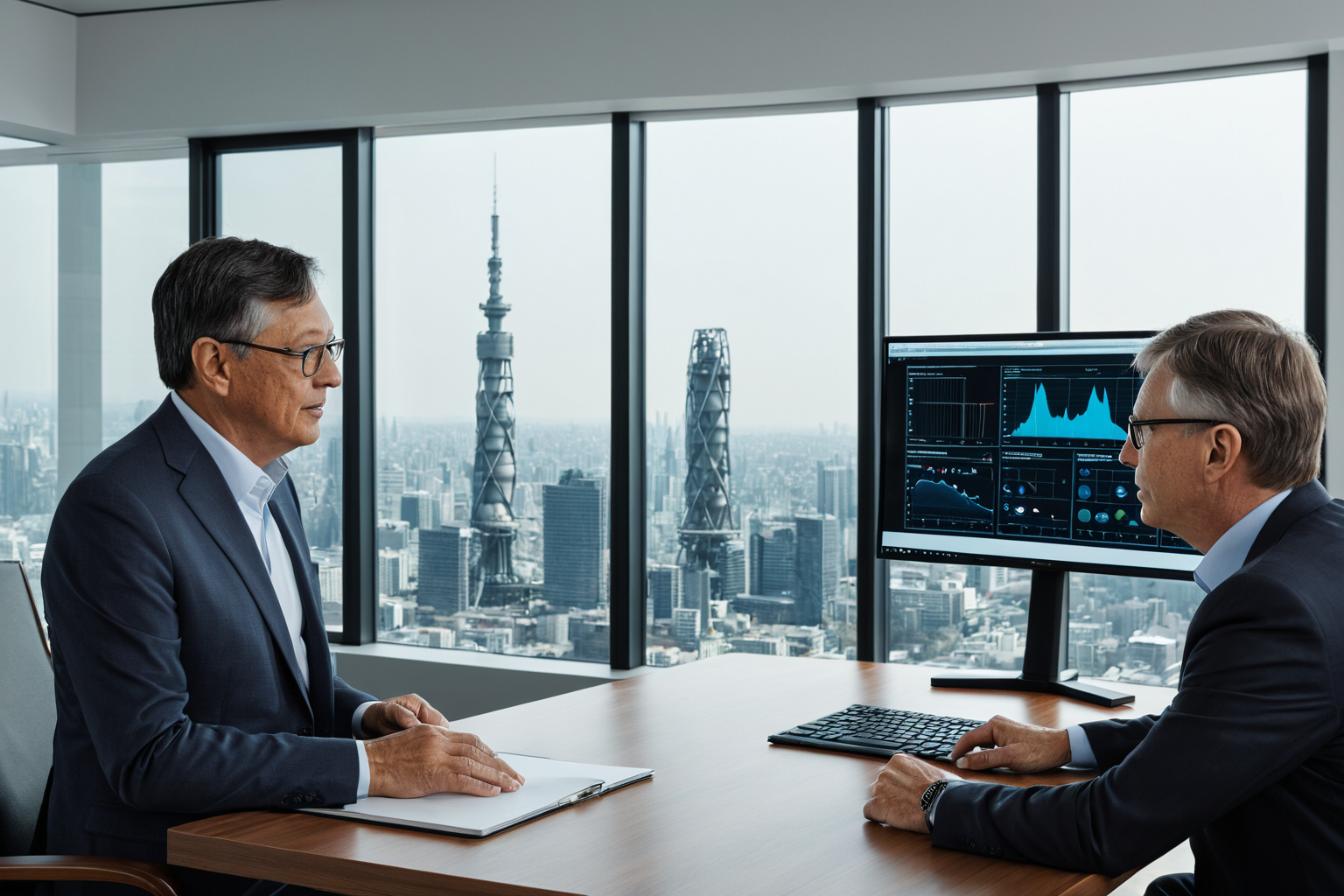
The image symbolizes a meeting between HD Hyundai Chairman Jeong Giseon and Bill Gates discussing strategies for entering the U.S. Small Modular Reactor (SMR) market, held during their fourth meeting in Seoul. The two are shown examining a reactor model and data analysis screens while engaging in strategic dialogue.
Core Partners and Technical Direction of SMR Project
During their fourth meeting in Seoul on early August 2026, HD Hyundai Chairman Jeong Giseon and Bill Gates finalized strategies for entering the U.S. SMR market. Major companies including HD Hyundai, TerraPower, Hyundai Engineering & Construction, SK Group, and Doosan participated in discussions to strengthen collaboration on sodium-cooled small modular reactor (SMR) projects.
Sodium-cooled SMRs offer higher safety and lower installation costs compared to traditional nuclear reactors, making them a technology gaining attention in the U.S. next-generation nuclear market. HD Hyundai and TerraPower plan to supply 2-3 reactor vessels annually to the U.S. market, which is expected to play a key role in securing an early foothold.
Jeong Giseon's '100-Year HD Hyundai' Vision Linked to SMR Project
Chairman Jeong Giseon has positioned AI power and SMR as core strategies for the '100-Year HD Hyundai' vision. This reflects a commitment to securing long-term competitiveness through next-generation energy technology, going beyond simple reactor supply.
Notably, during their meeting on August 13-14, 2026 in Seoul, Jeong Giseon and Bill Gates discussed the specifics of SMR projects and strategies for entering the U.S. market. This meeting marked Bill Gates' first visit to South Korea in a year, where he also joined with SK Group Chairman Choi Tae-won to accelerate collaboration on 'SMR & AI Power.'
Concrete Plans for U.S. Market Entry
HD Hyundai and TerraPower plan to supply 2-3 reactor vessels annually to the U.S. SMR market, aligning with government policies supporting next-generation nuclear technology development. This creates a favorable environment for rapid growth of the SMR sector.
Sodium-cooled SMRs offer high thermal efficiency and compact size, allowing flexible deployment across various locations in the U.S., reducing site constraints. This enables HD Hyundai and its partners to target diverse regions within the American market for early leadership.
Chairman Jeong Giseon is also collaborating with Bill Gates to strengthen cooperation in AI power through SMR projects. This integration of energy production and data processing is gaining attention as a key technology for future energy systems.
Building Strategic Alliances
HD Hyundai Chairman Jeong Giseon, Bill Gates, and SK Group Chairman Choi Tae-won are strengthening strategic alliances in SMR and AI power sectors. They have held two meetings within the past year to expand collaboration.
Bill Gates visited South Korea on August 13, 2026 specifically to discuss accelerating SMR & AI Power collaboration with Jeong Giseon and Choi Tae-won. The meeting was a strategic discussion aimed at speeding up market leadership in U.S. sodium reactor technology.
HD Hyundai, Hyundai Engineering & Construction, SK Group, and Doosan are participating in the SMR project to accelerate U.S. market entry. They are focusing on securing leadership in the next-generation nuclear market by aligning with U.S. government support policies.
The August 13-14, 2026 meeting in Seoul marked a strategic agreement for building an SMR alliance, laying a crucial foundation for entering the U.S. next-generation reactor market. This is a key project under Jeong Giseon's '100-Year HD Hyundai' vision.
Safety and Future Outlook of SMR Technology
Sodium-cooled SMRs provide higher stability compared to conventional reactors, with excellent cost efficiency. This aligns with U.S. government policies supporting next-generation nuclear technology development, leading to expectations of rapid market growth.
The collaboration between HD Hyundai and TerraPower is expected to directly impact market share expansion in the U.S., particularly through their plan to supply 2-3 reactor vessels annually, which will lay the foundation for SMR projects to move into full-scale operations.
Strategy of Combining SMR with AI Power
Chairman Jeong Giseon aims to build future energy systems by integrating SMR projects with AI power. This strategy combines energy production and data processing to increase efficiency, positioning it as a core technology for next-generation energy.
Jeong Giseon and Bill Gates are strengthening cooperation in SMR and AI power sectors, preparing multi-faceted business strategies within 10 years. This goes beyond simple reactor supply to target innovative development of energy technology.
Outlook for Market Entry
The U.S. SMR market is expected to grow rapidly through the 2030s. HD Hyundai and its partners are moving quickly to secure a leading position in this emerging sector.
Sodium-cooled SMRs benefit from U.S. government support policies, creating favorable conditions for market entry. This will be crucial for HD Hyundai and its partners to establish leadership in the next-generation nuclear market.
Investment Strategy for SMR Project
The investment strategy for SMR projects can be divided into three main areas: focused technology development, enhanced collaboration for U.S. market entry, and securing future competitiveness through integration with AI power.
Chairman Jeong Giseon is preparing the SMR project to evolve beyond simple reactor supply into a core technology for next-generation energy, leveraging these three strategies. To this end, HD Hyundai and TerraPower have planned to supply 2-3 reactor vessels annually in the U.S. market.
Key Partners in SMR Project
HD Hyundai, TerraPower, Hyundai Engineering & Construction, SK Group, and Doosan are participating in the SMR project. They are strengthening collaboration to enter the U.S. market, with a particular focus on developing sodium-cooled SMRs.
TerraPower specializes in reactor vessel manufacturing, making its partnership with HD Hyundai particularly effective. With alignment with U.S. government support policies, they are accelerating their entry into the SMR market.
Investment and Operational Direction of SMR Project
The SMR project will generate revenue through reactor vessel supply in the short term while securing competitiveness in the U.S. next-generation nuclear market for the long term. This is a core strategy under Jeong Giseon's '100-Year HD Hyundai' vision.
Jeong Giseon and Bill Gates are strengthening collaboration on SMR projects and AI power sectors, preparing multi-faceted business strategies within 10 years. This goes beyond simple reactor supply to target innovative development of energy technology.
Potential for Market Expansion
Sodium-cooled SMRs can be deployed across various locations in the U.S., particularly in urban areas and industrial zones with high energy demand. This is a key factor enabling successful market entry for SMR projects.
With U.S. government policies supporting next-generation nuclear technology development, the SMR market is expected to expand rapidly. HD Hyundai and its partners are moving quickly to secure an early position in this growing sector.
Safety Verification of SMR Technology
Sodium-cooled SMRs offer higher stability with fewer risks compared to traditional reactors, which is one reason why the U.S. government supports next-generation nuclear technology development.
The collaboration between HD Hyundai and TerraPower will enhance the safety of SMR projects and secure trust in the U.S. market, creating a solid foundation for successful implementation.
Combined Effect of SMR and AI Power
The integration of SMR projects with AI power can increase energy production efficiency. This enables predictive analysis of energy usage patterns through data processing and optimized energy supply.
Jeong Giseon and Bill Gates are working to maximize this combined effect, positioning it as a core strategy for next-generation energy technology.
Key Factors for SMR Project Success
The success of the SMR project depends on technological development, market entry strategies, and strengthened collaboration. HD Hyundai and TerraPower are comprehensively addressing these factors in their SMR project implementation.
With U.S. government support policies aligning with their efforts, entering the SMR market is expected to be smoother. This will play a crucial role for HD Hyundai and its partners to secure leadership in the next-generation nuclear market.
Frequently Asked Questions
The specific plans and progress of the SMR project are determined through collaboration among key figures such as HD Hyundai Chairman Jeong Giseon, Bill Gates, and SK Group Chairman Choi Tae-won. This strategic discussion on entering the U.S. next-generation nuclear market is attracting attention from investors and industry professionals.
Frequently Asked Questions
How does SMR differ from conventional reactors?
Sodium-cooled SMRs offer higher safety and lower installation costs compared to traditional reactors, making them a technology gaining attention in the U.S. next-generation nuclear market. They provide high thermal efficiency with compact size for flexible deployment across diverse locations.
Which major companies are participating in the SMR project?
HD Hyundai, TerraPower, Hyundai Engineering & Construction, SK Group, and Doosan are participating in the SMR project. They are strengthening collaboration to enter the U.S. market with a focus on developing sodium-cooled SMRs.
What is the investment strategy for the SMR project?
The investment strategy focuses on technology development, enhanced collaboration for U.S. market entry, and securing future competitiveness through integration with AI power. This is a core strategy under Jeong Giseon's '100-Year HD Hyundai' vision.
Frequently Asked Questions
Chairman Jeong Giseon and Bill Gates are playing an important role in advancing SMR project strategies for U.S. market entry. They aim to secure leadership in the U.S. next-generation nuclear market through sodium-cooled SMR development, while also integrating with AI power to establish a key position in future energy technology.
This strategy goes beyond simple reactor supply to target innovative development of energy technology. With alignment with U.S. government support policies, HD Hyundai and its partners are expected to successfully establish themselves in the SMR market.
Chairman Jeong Giseon has positioned the SMR project as a core strategy for realizing the '100-Year HD Hyundai' vision. This is not just about technology development but also securing long-term competitiveness, which will play an important role in future growth.
You can find more articles on similar topics here.
View Related ArticlesFAQ
How does SMR differ from conventional reactors?
Sodium-cooled SMRs offer higher safety and lower installation costs compared to traditional reactors, with high thermal efficiency and compact size for flexible deployment across diverse locations.
Which major companies are participating in the SMR project?
HD Hyundai, TerraPower, Hyundai Engineering & Construction, SK Group, and Doosan are participating in the SMR project, focusing on developing sodium-cooled SMRs for U.S. market entry.
What is the investment strategy for the SMR project?
The investment strategy focuses on technology development, enhanced collaboration for U.S. market entry, and securing future competitiveness through integration with AI power.
Korean Source
This article is an English localization of a Korean-language report from BlogScore. Original: 정기선 빌 게이츠 SMR사업 핵심 내용과 투자 전략