
Jeong Dong-yeong MP's Argument Against Designating North Korea as a 'Primary Adversary'
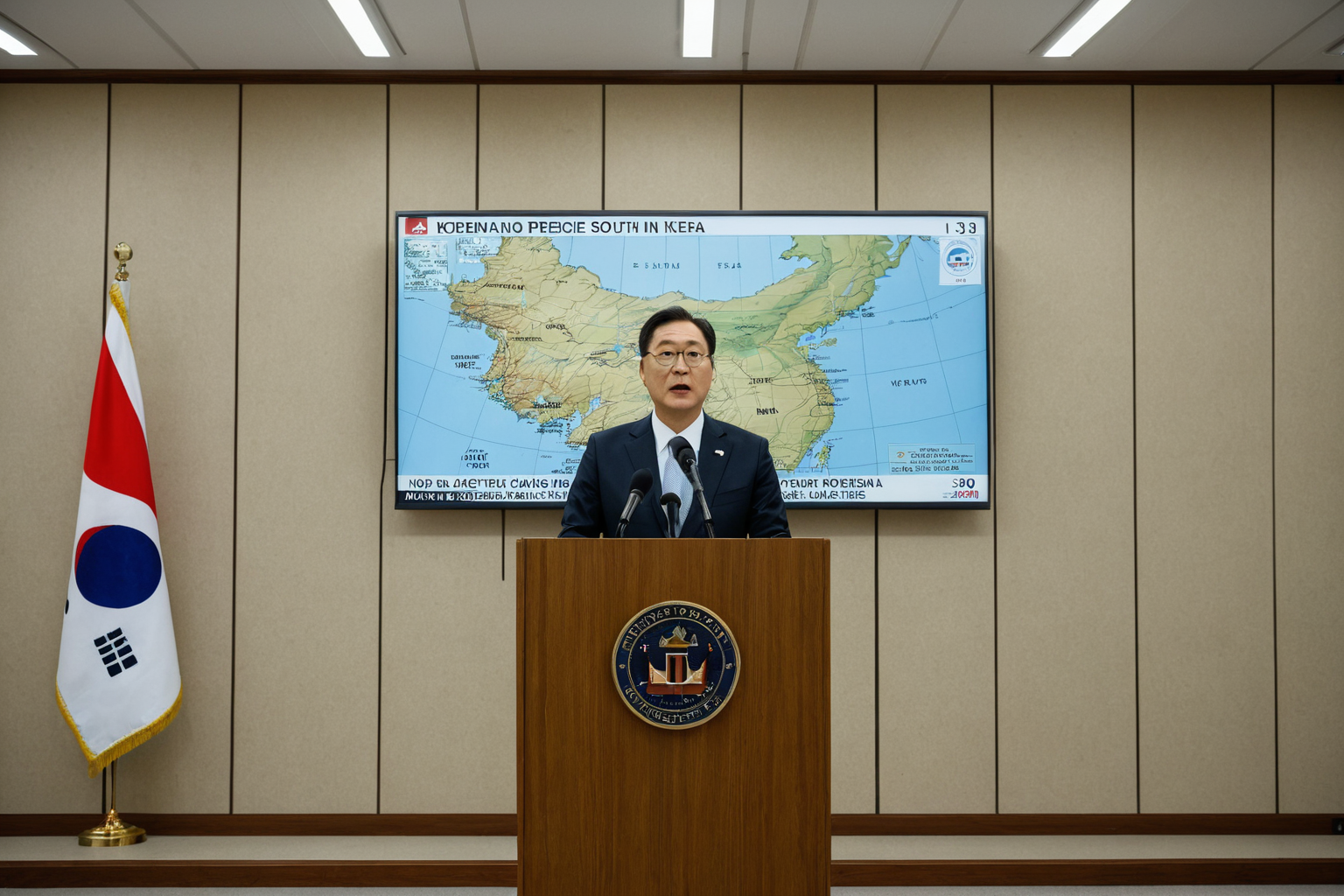
Jeong Dong-yeong MP's Statement on North Korea and Government Response
Jeong Dong-yeong, a South Korean lawmaker, has stated that North Korea should not be designated as a 'primary adversary,' raising questions about the direction of reunification policy. The debate, which lasted from July 2025 to August 2026, centered on abolishing the term 'primary adversary' and changing the name of the Ministry of Unification.
Political reactions have been polarized. Conservatives criticized Jeong for undermining national security by not labeling North Korea as an adversary, while Jeong argued that the concept is outdated and aligned with the Minister of Unification's stance.
Jeong Dong-yeong's Key Arguments
Jeong characterized North Korea as a 'threat' rather than an 'adversary,' questioning whether the term was included in the National Defense White Paper. After making his statement on July 14, 2025, alongside proposing a name change for the Ministry of Unification, his remarks were reported by newspapers like Maeil Business and JoongAng Ilbo.
Jeong also suggested referring to North Korea as 'Joseon' instead of 'North Korea,' which President Yoon Suk Yeol cautioned could become a political issue requiring careful handling. A report in Gyeonggi Ilbo on August 5, 2026, highlighted the ongoing debate and emphasized the president's call for caution.
Clash with Jeong Cheong-rae
Jeong Cheong-rae criticized labeling North Korea as a primary adversary, calling it a loss of security awareness. His comments on July 14, 2025, intensified the political divide between him and Jeong Dong-yeong.
Meanwhile, Han Dong-hoon argued that North Korea is an 'obvious primary adversary,' while Kim Young-hoon stated it was not. During a separate hearing on July 15, 2025, Jeong and Kim described North Korea as a 'threat' rather than an 'adversary,' contrasting with Han's stance.
Ministry of Unification Name Change Debate
Jeong proposed renaming the Ministry of Unification to the 'Ministry for the Korean Peninsula' and shifting from 'North Korea' to 'Joseon.' This reflects a policy shift aimed at improving relations with North Korea.
A July 14, 2025, report in JoongAng Ilbo noted Jeong's argument that labeling North Korea as an adversary is outdated, making it central to the political debate.
Government and Political Responses
President Yoon Suk Yeol urged Jeong to 'think carefully' about his remarks. A Maeil Business report on August 5, 2026, cited this statement as an attempt to ease political tensions.
Conservatives continued to argue that labeling North Korea as an adversary is essential for security awareness, while Jeong and Kim maintained the term was outdated. This debate has expanded into a broader discussion about the direction of reunification policy.
Jeong Dong-yeong's Cautious Language
A Gyeonggi Ilbo report on August 5, 2026, noted that President Yoon advised Jeong to be cautious about using 'Joseon' as a reference for North Korea. This reflects policy considerations aimed at improving inter-Korean relations.
Jeong's proposals—renaming the ministry, eliminating the term 'adversary,' and shifting to 'Joseon'—became central to the ongoing debate from 2025 to 2026.

Historical Context of the 'Primary Adversary' Concept
The term has long been part of South Korea's security policy, dating back to the Korean War in the 1950s when North Korea was designated as a primary adversary. This framework underpinned reunification efforts for decades.
Jeong's remarks in July 2025 reignited debate over the concept, signaling a need for new approaches to inter-Korean relations and reflecting contemporary changes.
Policy Shifts Within Government
The Minister of Unification echoed Jeong's stance by stating North Korea is not an adversary. A v.daum.net report on July 16, 2025, interpreted this as an effort to ease the debate over the term.
Conversely, Han Dong-hoon insisted North Korea was a 'clear primary adversary,' deepening divisions with conservative factions. The same day, a hearing featured a debate between Jeong, Kim, and Han.
Political Reactions
Jeong's remarks intensified political divides but also spurred new discussions on improving relations with North Korea. While conservatives criticized the omission of 'adversary' as a security lapse, Jeong argued it was outdated and called for policy reform.
A Maeil Business report on August 5, 2026, noted President Yoon's caution that Jeong's comments could become political issues, reflecting his effort to maintain neutrality.
Key Debate: 'Primary Adversary' vs. 'Threat'
The 'primary adversary' label frames North Korea as an enemy state, whereas viewing it as a 'threat' maintains vigilance while leaving room for dialogue and cooperation. Jeong and Kim advocated for the latter, signaling a new direction in reunification policy.
By contrast, Han Dong-hoon insisted on labeling North Korea as a 'clear primary adversary,' reflecting conservative support for traditional policies. This divide has expanded into broader debates about how to approach inter-Korean relations.
Progress in the Ministry Name Change Debate
Jeong's proposal to rename the Ministry of Unification sparked political debate but signaled a policy shift toward improving North Korea relations. A July 14, 2025, JoongAng Ilbo report mentioned the direction of renaming it to 'Ministry for the Korean Peninsula,' indicating a new approach to reunification.
While Jeong's suggestion to use 'Joseon' instead of 'North Korea' was his personal view, it pointed toward linguistic changes to foster better relations. President Yoon urged caution on this point in a Gyeonggi Ilbo report on August 5, 2026.
Government Policy Considerations
President Yoon's advice for Jeong to 'think carefully' demonstrated an effort to balance political tensions and consider policy shifts aimed at improving inter-Korean relations.
Jeong's statement that North Korea is not a primary adversary highlighted the direction of reunification policy, deepening political divides but also fostering new discussions. As reported on August 5, 2026, President Yoon warned against making his comments a political issue.
Strategic Approach by Jeong Dong-yeong
By advocating for abolishing the 'primary adversary' concept and renaming the ministry, Jeong aimed to improve inter-Korean relations. This strategy became central to the debate starting in 2025, contributing to easing political tensions while proposing a new policy direction.
Jeong's remarks emphasized the outdated nature of the 'primary adversary' label, signaling a potential shift in reunification policy.
Unverified Information and Need for Further Investigation
Specific details about when Jeong made his statement were covered in JoongAng Ilbo on July 14, 2025, and v.daum.net on July 16, 2025. The exact timing remains unclear.
President Yoon's 'think carefully' remark was cited in Maeil Business on August 5, 2026, but the context and circumstances require further investigation for accurate interpretation.
Core of the Debate: Direction of Reunification Policy
Jeong's statement proposed a new direction for improving inter-Korean relations, though it intensified political divisions. Abolishing 'primary adversary' status, renaming the ministry, and shifting to 'Joseon' were interpreted as signals of policy change, reflecting broader shifts in South Korea's diplomatic approach.
Frequently Asked Questions
Why did Jeong Dong-yeong say North Korea is not a primary adversary?
Jeong argued that the concept of 'primary adversary' is outdated and characterized North Korea as a 'threat.' This was seen as proposing a new direction for reunification policy.
What is the basis for suggesting North Korea be called 'Joseon'?
Jeong proposed using 'Joseon' to improve relations with North Korea, aiming to foster dialogue and cooperation. It reflects an effort to shift language toward more constructive engagement.
How did President Yoon respond to Jeong's remarks?
President Yoon advised caution, saying his comments could become a political issue. This reflected efforts to maintain neutrality while considering policy shifts for improved relations with North Korea.
Frequently Asked Questions
The debate sparked by Jeong Dong-yeong's remarks reflects broader trends toward rethinking inter-Korean relations. Abolishing the 'primary adversary' label, renaming the ministry, and adopting 'Joseon' as a term all signal a potential shift in reunification policy direction. While deepening political divides, these proposals have also encouraged new discussions.
President Yoon's caution underscores efforts to balance neutrality with policy considerations for better North Korean relations. This signals evolving diplomatic approaches in South Korea, which may shape future reunification policies.
You can find more articles on similar topics here.
View Related ArticlesFAQ
Why did Jeong Dong-yeong say North Korea is not a primary adversary?
Jeong argued that the concept of 'primary adversary' is outdated and characterized North Korea as a 'threat.' This was seen as proposing a new direction for reunification policy.
What is the basis for suggesting North Korea be called 'Joseon'?
Jeong proposed using 'Joseon' to improve relations with North Korea, aiming to foster dialogue and cooperation. It reflects an effort to shift language toward more constructive engagement.
How did President Yoon respond to Jeong's remarks?
President Yoon advised caution, saying his comments could become a political issue. This reflected efforts to maintain neutrality while considering policy shifts for improved relations with North Korea.
Korean Source
This article is an English localization of a Korean-language report from BlogScore. Original: 정동영 의원, 북한을 '주적'으로 규정하는 발언 뒤받침 근거는?