
Iran's Strait of Hormuz Blockade Measures and Real-World Response Strategy

Iran's Strait of Hormuz Passage Restrictions
Iran has announced measures restricting passage through the Strait of Hormuz, escalating tensions with the United States. The Iranian government passed a 'Strait of Hormuz Toll Bill' in its standing committee and is awaiting final voting. The U.S. appears to be responding by intensifying sanctions rather than conducting airstrikes.
Escalating Iran-U.S. Tensions
Iran declared a full closure of the Strait of Hormuz in response to U.S. airstrikes, confirming that it fired upon two vessels. The U.S. stated that passage remains normal despite Iran's closure announcement, reflecting mutual distrust between the two nations.
Iran has introduced a permit system for all vessels passing through the Strait of Hormuz, requiring pre-approval. This appears to be a response following large-scale U.S. airstrikes. While some vessels continue to pass through, others are turning back, creating uncertainty.
Quad Nations' Joint Statement
The Quad nations issued a joint statement supporting freedom of passage through the Strait of Hormuz. This appears to be an effort to strengthen international response amid concerns that Iran's measures could threaten energy supply chains.
Swiss negotiations continue as scheduled despite Iran's declaration of re-closing the Strait. Japan's Takaiichi urged Iran to open the Strait without additional tolls, seen as strengthening international pressure.
Impact on Middle East Logistics and Costs
Tensions over the Strait of Hormuz are spreading to logistics and costs in the Middle East region. Iran is working with Oman to develop temporary routes, while the U.S. is responding with sanctions rather than airstrikes.
The crisis in maritime logistics has reached its peak, affecting South Korean construction industries as well. There are concerns that sea-based logistics could be severely disrupted due to Iran's full closure declaration.
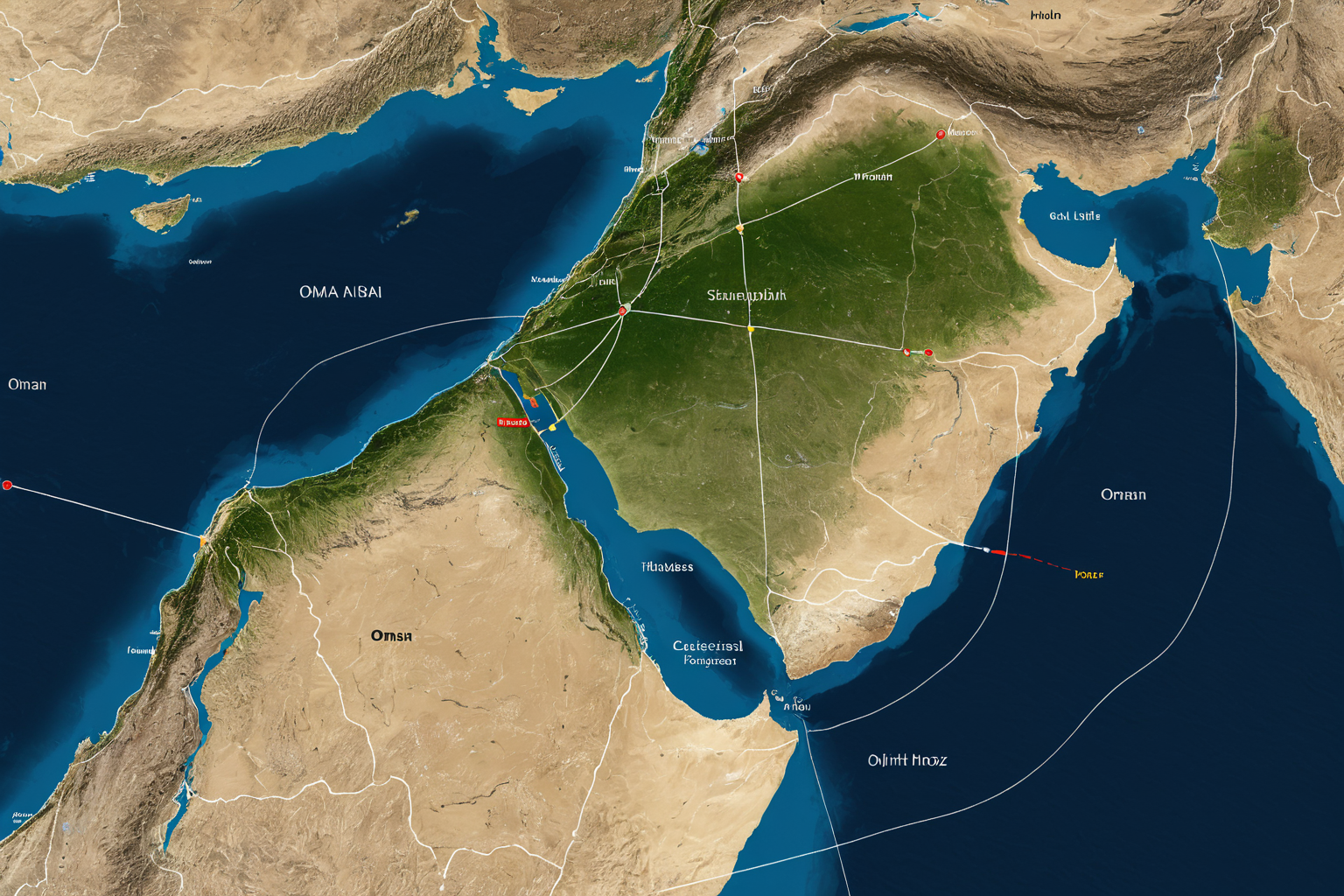
Implementation of Strait Passage Permit System
Iran has officially launched a permit system for passage through the Strait of Hormuz, requiring pre-approval for all vessels. This appears to be a response following large-scale U.S. airstrikes. On May 6, 2026, Iran announced this measure, and there were instances of four Qatari LNG tankers passing through despite the re-closure declaration.
U.S. Response Strategy
The U.S. is responding to Iranian strikes with sanctions rather than airstrikes. This appears to be a strategy to resolve Iran's measures through economic pressure. The U.S. has initiated a 'tit-for-tat' strategy targeting oil tankers belonging to the Iranian government.
Iran and the U.S. are displaying distrust in each other's reports. On June 16, 2026, both countries expressed differing views on Strait passage, reflecting deepening tensions.
Impact of Houthi Rebels
The Houthis' declaration of a maritime blockade against Saudi Arabia has also contributed to rising regional tension. On July 20, 2026, the Houthi rebels announced a blockade of Saudi Arabian waters, further threatening stability in the Middle East.
Iran's 'Strait of Hormuz Toll Bill'
The Iranian government passed the 'Strait of Hormuz Toll Bill' in its standing committee and is awaiting final voting. The bill appears to aim at imposing tolls on Strait passage.
On April 21, 2026, Iran's government passed this bill in the standing committee, and later on May 24, disputed U.S. media reports related to 'nuclear issues' and 'Hormuz'.
Progress of Swiss Negotiations
Swiss negotiations continue as scheduled despite Iran's declaration of re-closing the Strait. On June 21, 2026, negotiations proceeded despite Iran's announcement.
Japan's Takaiichi urged Iran to open the Strait without additional tolls on August 13, 2026, seen as strengthening international pressure.
Logistics Impact Analysis
Iran's measures restricting passage through the Strait of Hormuz could severely disrupt logistics in the Middle East region. Iran is working with Oman to develop temporary routes, which may help change shipping routes.
The U.S. is responding with sanctions rather than airstrikes, exacerbating economic instability in the Middle East. South Korean construction industries are also affected, as the maritime logistics crisis has reached its peak.
Quad Nations' Joint Statement
On May 27, 2026, Quad nations issued a joint statement supporting 'freedom of passage' through the Strait of Hormuz. This appears to be an international response to Iran's measures.
This joint statement aims to maintain stability in the Middle East amid concerns about energy supply chains being at risk. The Quad's response could contribute to easing tensions between Iran and the U.S.
Background of Iran-U.S. Tensions
On July 12, 2026, Iran declared a full closure of the Strait of Hormuz, bringing maritime logistics in the Middle East to its peak crisis point. This appears to be a response following U.S. large-scale airstrikes.
The U.S. conducted large-scale airstrikes on 140 Iranian sites on July 12, 2026, seen as a direct response to Iran's actions. Following this, Iran declared the full closure of the Strait and fired upon two U.S. vessels in response to the airstrikes.
Iran and the U.S. are displaying distrust in each other's reports. On June 16, 2026, both countries expressed differing views on Strait passage, reflecting deepening tensions.
Causes of the Situation
Iran's measures restricting passage through the Strait of Hormuz appear to be a response to U.S. pressure. The Iranian government passed the 'Strait of Hormuz Toll Bill' in its standing committee and is awaiting final voting.
The U.S. initiated a 'tit-for-tat' strategy targeting oil tankers belonging to the Iranian government on September 2, 2026, seen as a direct response to Iran's actions.
The Houthis' declaration of a maritime blockade against Saudi Arabia also contributes to rising regional tension. On July 20, 2026, the Houthi rebels announced a blockade of Saudi Arabian waters, further threatening Middle East stability.
Response and Safety Information
Iran is working with Oman to develop temporary routes, which could help change shipping routes and alleviate the logistics crisis in the Middle East region.
The U.S. is responding with sanctions rather than airstrikes, seen as an economic pressure strategy against Iran's measures. While maritime logistics and costs are under strain, some vessels continue to pass through.
The Quad nations' joint statement could contribute to strengthening international response. This appears necessary for stabilizing energy supply chains.
Information to Verify
It is important to verify the timing and outcome of Iran's final vote on the 'Strait of Hormuz Toll Bill,' direction of U.S. sanctions, and developments in Middle East shipping routes. Analysis of potential agreement during Swiss negotiations with Iran is also necessary.
The case of four Qatari LNG tankers passing through despite Iran's re-closure declaration could help mitigate logistics impact. This information may be crucial for the energy supply chain amid concerns about risks to the Middle East region.
Frequently Asked Questions
What is the potential impact of Iran's Strait of Hormuz passage restrictions on international trade?
The Strait of Hormuz is a critical route for global energy supplies. Restrictions could lead to logistics disruptions and rising costs, though some vessels continue to pass through, suggesting full disruption may be avoided.
What response have the Quad nations made?
The Quad nations issued a joint statement supporting freedom of passage through the Strait of Hormuz, seen as strengthening international pressure.
How are Swiss negotiations progressing?
Swiss negotiations continue as scheduled despite Iran's declaration of re-closing the Strait. This appears to be an effort to resolve tensions through international dialogue and cooperation.
Frequently Asked Questions
Iran's recent measures restricting passage through the Strait of Hormuz have escalated tensions with the U.S., prompting Iran to work with Oman on temporary routes while the U.S. responds with sanctions. Tensions in Middle East logistics and costs are spreading, with international society responding through Quad nations' joint statement.
Swiss negotiations continue as scheduled despite Iran's re-closure declaration, with Japan's Takaiichi strengthening international pressure through his remarks. International efforts to secure freedom of passage through the Strait of Hormuz continue, seen as vital for stabilizing energy supply chains in the Middle East.
You can view similar articles on this topic together.
View Related ArticlesFAQ
What is the potential impact of Iran's Strait of Hormuz passage restrictions on international trade?
The Strait of Hormuz is a critical route for global energy supplies. Restrictions could lead to logistics disruptions and rising costs, though some vessels continue to pass through, suggesting full disruption may be avoided.
What response have the Quad nations made?
The Quad nations issued a joint statement supporting freedom of passage through the Strait of Hormuz, seen as strengthening international pressure.
How are Swiss negotiations progressing?
Swiss negotiations continue as scheduled despite Iran's declaration of re-closing the Strait. This appears to be an effort to resolve tensions through international dialogue and cooperation.
Korean Source
This article is an English localization of a Korean-language report from BlogScore. Original: 이란 호르무즈 해협 통항 금지 조치에 대한 실전 대응 전략