
The International Relations Impact of Iran's Ban on Passage Through the Strait of Hormuz
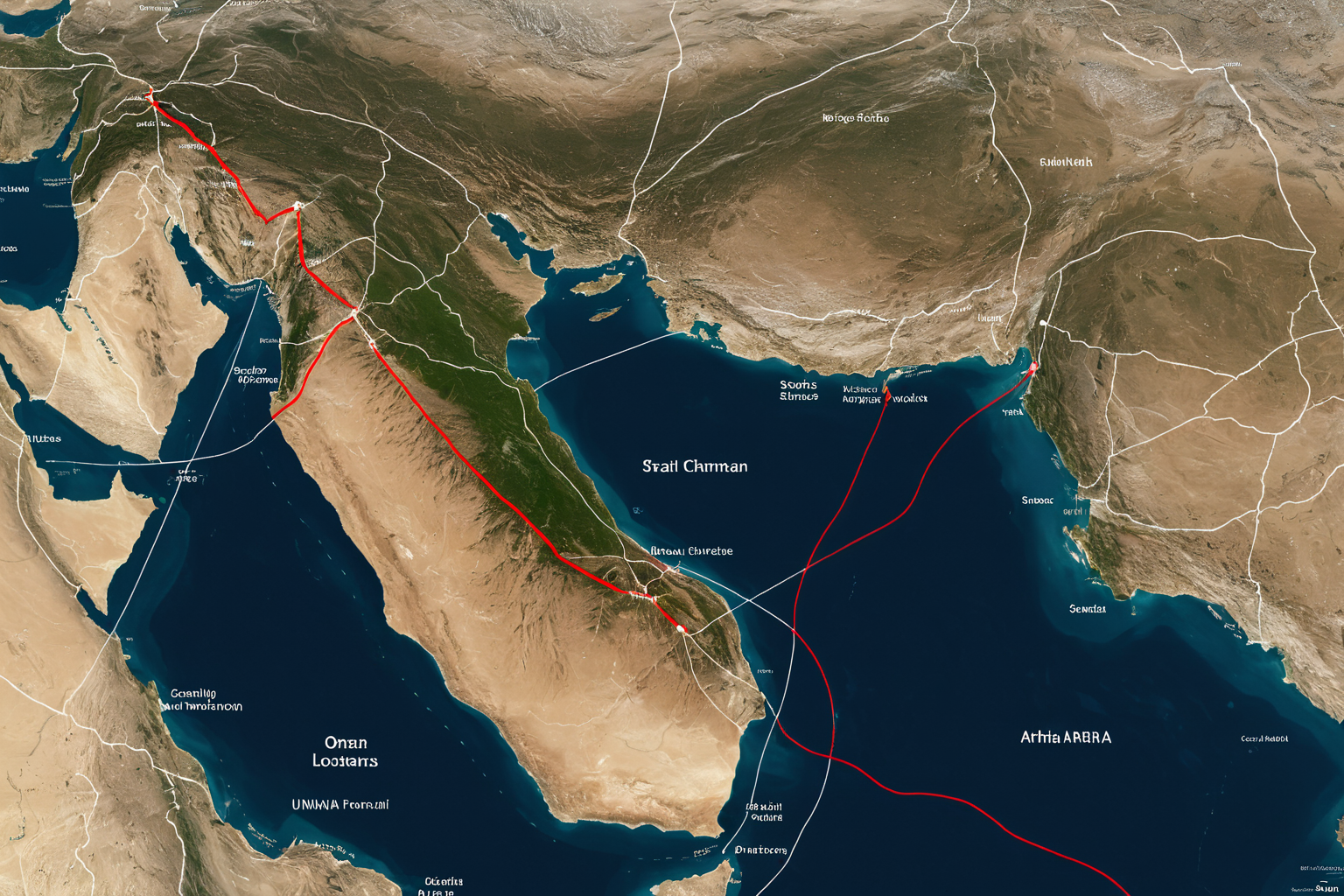
The Ban on Passage Through the Strait of Hormuz and Its Impact on Global Markets
Iran's decision to ban passage through the Strait of Hormuz has intensified tensions between the U.S. and Iran. On May 30, 2026, the U.S. announced a prohibition on negotiations with Iran regarding passage through the strait, while Oman rejected U.S. demands and continued talks. This has led to negative impacts on global oil prices and stock markets.
The Strait of Hormuz is a critical route for global energy supply chains. Iran's ban directly triggered a rise in oil prices. On August 6, 2026, international oil prices surged after four consecutive trading days, with Brent crude rising by 1.3%. At the same time, New York markets saw the Dow Jones fall 0.85% and SK Hynix ADR drop 5% due to Hormuz-related risks.
Iran has stated that it will lift the ban on passage if Iran receives compensation for frozen assets. This was officially announced on July 29, 2026, marking a key condition set by the Iranian government. Oman continues to reject U.S. demands for distancing from Iran and is actively pursuing negotiations, as confirmed by the Omani government on June 5, 2026.
Changes in Oil Prices and Stock Markets
The uncertainty surrounding Hormuz passage negotiations has caused a significant rise in international oil prices. On August 6, 2026, oil prices surged after four trading days, linked to U.S. naval blockade warnings. Rising oil prices have led to a stronger dollar, which recorded its largest two-week gain in recent weeks.
New York markets also experienced sharp declines. The Dow Jones fell 0.85%, and SK Hynix ADR plummeted 5%. This demonstrates the direct impact of Hormuz risks on stock markets. Additionally, manufacturing production costs rose by 4.7%, showing a K-shaped polarization in industrial recovery.
The need for responses to supply chain disruptions in semiconductors and pharmaceutical raw materials like 'bromine' has been highlighted. These sectors are highly dependent on the Middle East (98%), making them vulnerable to restrictions on Hormuz passage. This issue was mentioned in a report dated April 13, 2026, emphasizing vulnerabilities in industries heavily reliant on the Middle East.

Hormuz Passage Negotiations and Economic Impact
The U.S. has intensified military actions and economic sanctions to regain control of the Hormuz Strait. On July 8, 2026, the U.S. struck dozens of Iranian targets, escalating tensions. Trump declared that 'Hormuz is secured by the United States,' marking a peak in U.S.-Iran tensions.
On August 25, 2026, Iran warned of an 'aggressive response' to further economic sanctions from the U.S., heightening the Hormuz crisis. Iran has also taken measures to re-block the strait, with prospects for a second round of negotiations between the U.S. and Iran being discussed.
The involvement of China could influence whether Iran faces international isolation. On August 24, 2026, Trump stated that 'it's unsurprising if Iran is isolated without China's participation,' highlighting China's pivotal role.
Long-Term Inflation Concerns Due to Hormuz Passage Restrictions
Korea's energy supply chain has been warned about due to the Hormuz passage restrictions. A report issued on March 5, 2026, highlighted this warning, emphasizing vulnerabilities in energy supply chains heavily dependent on the Middle East.
If Hormuz passage restrictions continue long-term, rising oil prices could intensify inflation concerns. A report dated March 10, 2026, presented this outlook. Rising oil prices may lead to increased production costs, negatively affecting the broader economy.
Urgent responses are needed for supply chains of semiconductors and pharmaceutical raw materials like 'bromine,' which have high Middle Eastern dependency (98%). This issue was emphasized in a report dated April 13, 2026, signaling the need for supply chain diversification.
Negotiations Between the U.S. and Iran and Military Responses
The U.S. announced it would prohibit negotiations with Iran regarding Hormuz passage. On May 30, 2026, the U.S. government officially declared a ban on talks with Iran over strait passage, part of intensified economic sanctions against Iran.
Oman has rejected U.S. demands and continues to pursue negotiations. On June 5, 2026, Oman's government announced it would reject U.S. calls for distancing from Iran and continue discussions about the Hormuz Strait. This is seen as maintaining a neutral stance in the Middle East.
Iran has set compensation for frozen assets as a condition to lift the passage ban. On July 29, 2026, the Iranian government officially announced this condition, creating room for international debate.
Predictions for Hormuz Passage Negotiations
A second round of U.S.-Iran negotiations is planned. This was mentioned in a report dated April 19, 2026, following Iran's re-blockade of the Hormuz Strait.
The uncertainty surrounding Hormuz passage negotiations has led to negative impacts on oil prices and stock markets. On August 6, 2026, international oil prices surged, and New York markets declined.
Restrictions on Hormuz passage have caused a rise in manufacturing production costs and a K-shaped polarization in industrial recovery. A report dated July 2, 2026, analyzed these economic effects.
Key Information to Verify
The specific dates and government announcements regarding Iran's ban on Hormuz passage need verification. The U.S. announcement on May 30, 2026, prohibiting negotiations with Iran over strait passage is confirmed as a fact.
Maintaining Oman's neutral stance is important. Oman's rejection of U.S. demands and commitment to continue talks, announced by the Omani government on June 5, 2026, is notable.
Iran's condition for lifting the ban—compensation for frozen assets—has sparked international debate. Announced officially by Iran on July 29, 2026, this will significantly influence future negotiations.
Frequently Asked Questions
How have oil prices changed due to the Hormuz passage ban?
The uncertainty in Hormuz passage negotiations led to a sharp increase in international oil prices. On August 6, 2026, oil prices surged after four trading days, with Brent crude rising by 1.3%.
What impact has the Hormuz passage negotiation had on stock markets?
Hormuz-related risks caused a decline in New York markets. The Dow Jones fell 0.85%, and SK Hynix ADR dropped 5%.
Why has the need for supply chain responses been raised for semiconductors and pharmaceutical raw materials with high Middle Eastern dependency?
Semiconductors and pharmaceutical raw material 'bromine' have a 98% reliance on the Middle East, making their supply chains vulnerable to Hormuz passage restrictions. This was mentioned in a report dated April 13, 2026.
Frequently Asked Questions
The ban on passage through the Strait of Hormuz has caused significant market shocks globally. It has led to rising oil prices, stock market declines, and increased manufacturing production costs. The vulnerability of supply chains in industries heavily dependent on the Middle East has become more prominent, offering important insights for future economic policies.
As U.S.-Iran tensions escalate, the outlook for Hormuz passage negotiations remains uncertain. Oman's neutral stance and China's potential involvement will play significant roles in upcoming talks. Additionally, if Hormuz restrictions continue long-term, rising oil prices could heighten inflation concerns, requiring careful attention in economic policy-making.
Iran's condition regarding compensation for frozen assets has emerged as a central point in negotiations. This has sparked international debate and may significantly shape the global economic environment depending on future negotiation outcomes.
You can view similar articles all at once.
View Related ArticlesFAQ
How have oil prices changed due to the Hormuz passage ban?
The uncertainty in Hormuz passage negotiations led to a sharp increase in international oil prices. On August 6, 2026, oil prices surged after four trading days, with Brent crude rising by 1.3%.
What impact has the Hormuz passage negotiation had on stock markets?
Hormuz-related risks caused a decline in New York markets. The Dow Jones fell 0.85%, and SK Hynix ADR dropped 5%.
Why has the need for supply chain responses been raised for semiconductors and pharmaceutical raw materials with high Middle Eastern dependency?
Semiconductors and pharmaceutical raw material 'bromine' have a 98% reliance on the Middle East, making their supply chains vulnerable to Hormuz passage restrictions. This was mentioned in a report dated April 13, 2026.
Korean Source
This article is an English localization of a Korean-language report from BlogScore. Original: 이란 호르무즈 해협 통항 금지 조치의 국제 관계 영향