
Iran's Ban on Vessel Passage Through Hormuz Strait: Impacts and Strategic Responses


Iran's Law Banning Passage Through Hormuz Strait Approved
The Iranian parliament's standing committee unanimously approved a law banning U.S. and Israeli vessels from passing through the Hormuz Strait. The law stipulates a fine of 20% of cargo value for violations, with the Hormuz route to be 'temporarily separated' to block passage by hostile nation vessels. Iran has dismissed Trump's claim of 'complete control over Hormuz' as the worst misinformation.
Law Details and Implementation Plan
Iran announced that entry into the Hormuz Strait will be managed by the Iranian government, while departure will be jointly managed with Oman. This temporary separation aims to block passage by hostile vessels, after which only the central route will operate. Following approval, Iran has warned of selective passage for U.S. and Israeli ships, imposing a 20% fine on cargo for violations.
Global Oil Prices and Market Reaction
International oil prices rose by over 3% amid market tension due to Iran's ban on Hormuz Strait passage. However, some reports indicate that oil prices are trending downward due to forecasts of slowing oil demand. Concerns about a potential 'dual blockade' extending to the Red Sea have heightened instability in global energy markets.
U.S. Rebuttal and International Response
The U.S. has rebutted Iran's passage ban, stating it has no right to block navigation. This emphasizes that the U.S. government cannot invalidate Iran's law, highlighting a legal disagreement between nations. Meanwhile, South Korea's oil refining industry is focusing on diversifying supply routes to prepare for potential dual blockade scenarios involving Hormuz Strait and the Red Sea.
Iran's Historical Context and Recent Events
Iran announced its law banning U.S. and Israeli vessel passage through the Hormuz Strait on August 6, 2026, aiming to block vessels from nations Iran designates as 'hostile.' This follows previous declarations of a full closure of Hormuz after incidents like U.S. military airstrikes. On June 11, 2026, following U.S. airstrikes, Iran declared a full closure of the Hormuz Strait. By April 22, 2026, efforts to formalize passage fees and restrict vessels from hostile nations were underway.
Iran's Position and International Legal Dispute
Despite Trump's statements on a deal, Iran continues to enforce strict monitoring of Hormuz Strait navigation. Tensions have risen following explosions near the Red Sea on June 12. Iran has dismissed 'complete control over Hormuz' as misinformation, criticizing U.S. actions without international legal basis. This reflects Iran's claim to management authority over maritime passage.
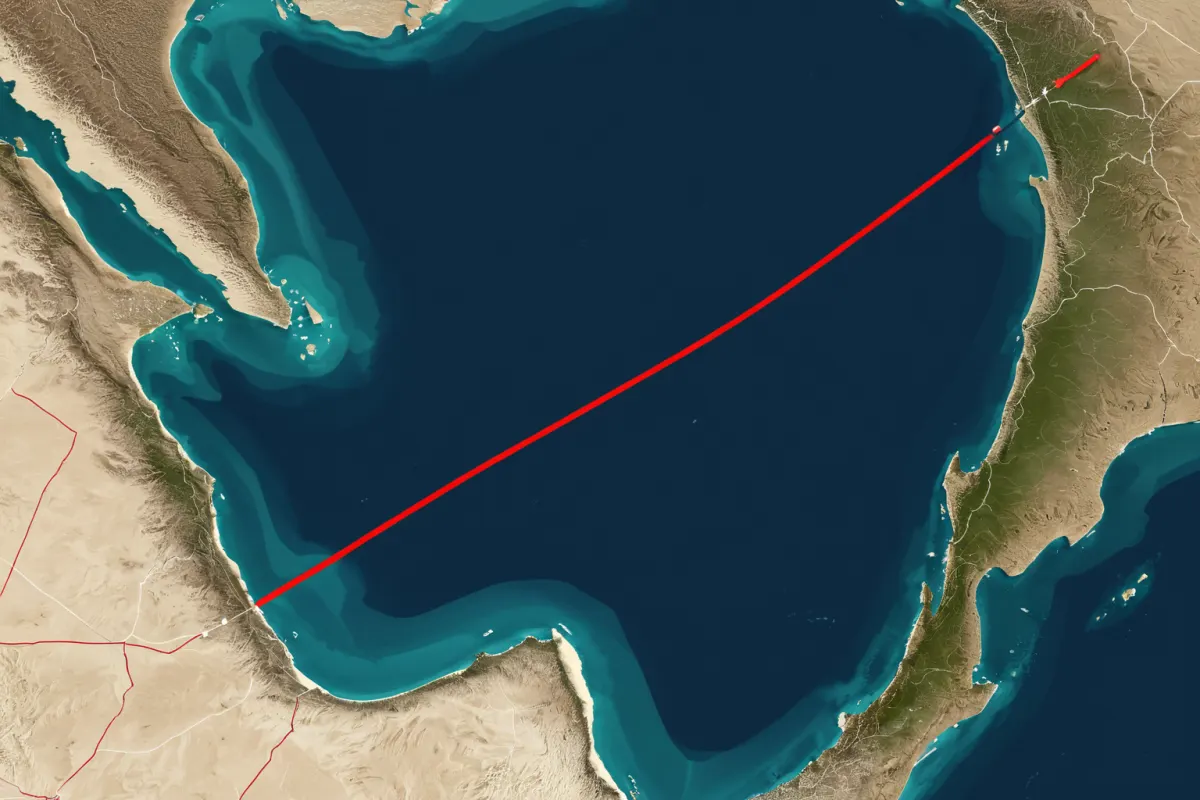
Concerns Over Dual Blockade of Hormuz Strait and Red Sea
Iran's ban on Hormuz Strait navigation has led to a contraction in oil supply chains, with particular concern over a potential 'dual blockade' extending to the Red Sea. As the Red Sea is a major maritime route from the Middle East to Europe, this could significantly impact global energy markets. South Korea's refining industry is focusing on securing supply sources in Africa and South America as part of its strategy to diversify oil supply routes.
Iran-U.S. Tensions Over Maritime Passage
Iran and the U.S. are clashing over maritime passage due to tensions involving Israel. The U.S. maintains it cannot invalidate Iran's law, while Iran criticizes U.S. actions as lacking international legal basis. This conflict is expected to significantly affect Middle East stability and global energy markets.
Slowing Oil Demand and Market Outlook
Despite the Hormuz Strait passage restrictions, oil prices are trending downward due to forecasts of slowing oil demand. This reflects growing concerns about a global economic slowdown. While Iran's measures may cause short-term price increases, long-term trends suggest a decline driven by reduced demand.
Strategic Responses and Safety Information
South Korea's refining industry is strengthening its strategy to diversify oil supply routes in response to Iran's Hormuz Strait passage ban. Efforts include securing new suppliers in Africa and South America, while also managing risks through the multi-directional diversification of existing supply chains. Additionally, they are considering increasing their oil reserves to account for market volatility.
Key Information to Verify
The law's approval and implementation schedule appears to begin on August 6, 2026, with the separation of the Hormuz route and imposition of passage fees expected after August 7. Iran's claim of 'temporary separation' reflects a plan to operate only the central route, which may conflict with international maritime law. While the U.S. states it has no authority to invalidate Iran's measures, this stance risks escalating tensions between the two nations.
Frequently Asked Questions
Why did Iran implement a ban on passage through the Hormuz Strait?
Iran is implementing the ban to block U.S. and Israeli vessels from passing through the Hormuz Strait, as part of measures to prevent navigation by nations designated as 'hostile.' This follows previous full closures after incidents like U.S. military airstrikes.
How has the U.S. responded?
The U.S. has stated it has no right to block navigation, emphasizing that it cannot invalidate Iran's law.
How will the Hormuz Strait passage ban affect global oil prices?
Oil prices initially rose by over 3% but are now trending downward due to slowing demand forecasts. This reflects a combination of Middle East instability and concerns about a global economic slowdown.
Frequently Asked Questions
Iran's law banning passage through the Hormuz Strait is expected to significantly impact global energy markets. Rooted in tensions between Iran, the U.S., and Israel, this issue has broadened into questions of Middle East stability and international maritime law. South Korea's refining industry is managing risk by diversifying supply routes, with ongoing monitoring required for market fluctuations.
You can view similar articles in one place.
View Related ArticlesFAQ
Why did Iran implement a ban on passage through the Hormuz Strait?
Iran is implementing the ban to block U.S. and Israeli vessels from passing through the Hormuz Strait, as part of measures to prevent navigation by nations designated as 'hostile.' This follows previous full closures after incidents like U.S. military airstrikes.
How has the U.S. responded?
The U.S. has stated it has no right to block navigation, emphasizing that it cannot invalidate Iran's law.
How will the Hormuz Strait passage ban affect global oil prices?
Oil prices initially rose by over 3% but are now trending downward due to slowing demand forecasts. This reflects a combination of Middle East instability and concerns about a global economic slowdown.
Korean Source
This article is an English localization of a Korean-language report from BlogScore. Original: 이란 호르무즈 해협 통항 금지 조치의 실제 영향과 대응 전략