
Hyundai Motor Group Shares Physical AI Success Story for Boosting Productivity
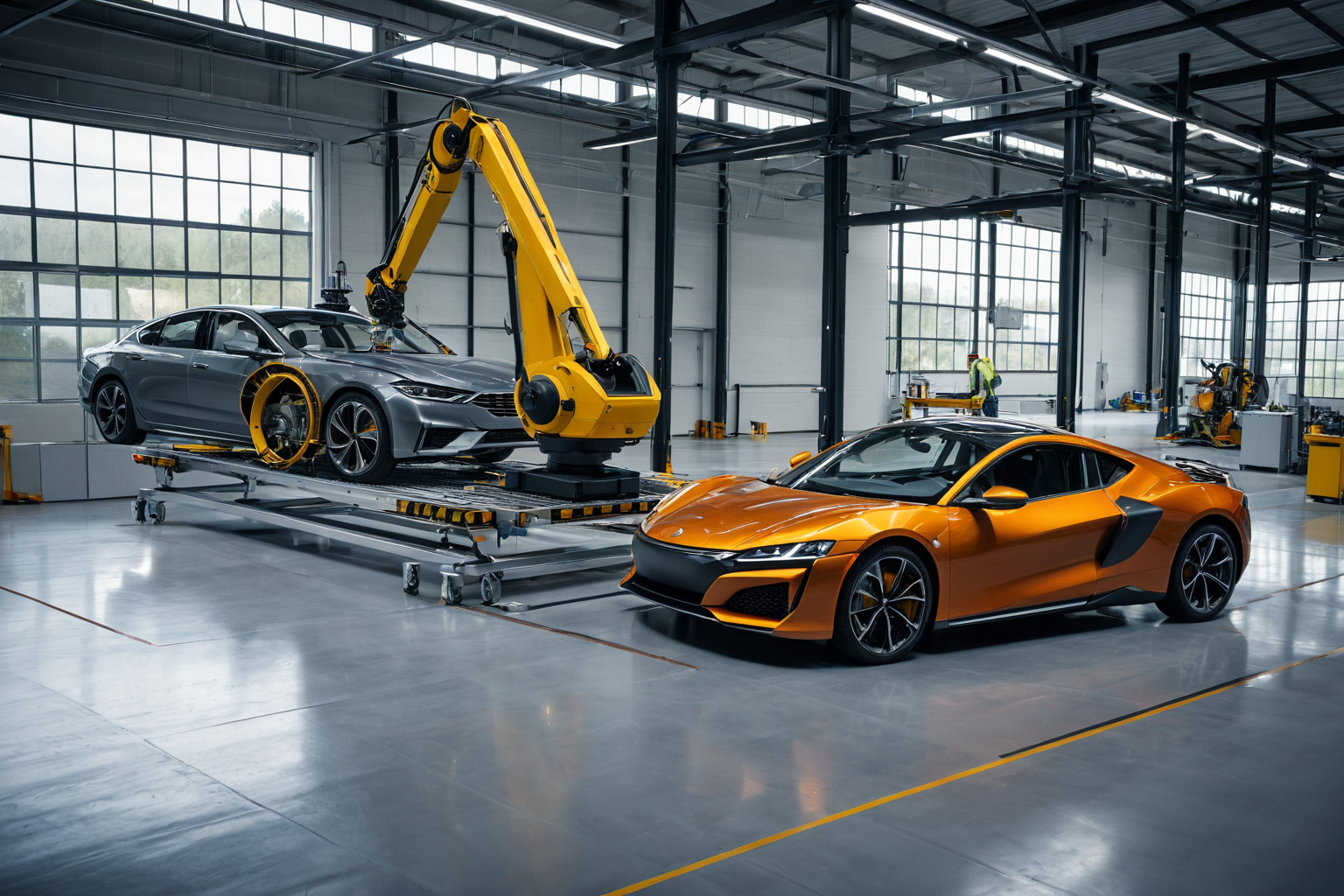
Hyundai Motor Group's Physical AI Implementation Case and Results
Hyundai Motor Group has successfully implemented 'Physical AI,' significantly reducing collision test analysis time by 90%, as part of its broader AI innovation strategy. Chairman Euisun Chung, who personally learned coding to lead the company-wide AI transformation, expanded quality management through AI adoption at supplier factories, achieving a cost savings effect of 52 billion won (approximately $4.6 million).
Key Achievements of Physical AI Implementation
Hyundai Motor Group successfully reduced collision test analysis time by 90%, cutting the process from 10 hours to just one hour. By extending AI adoption to supplier factories, they expanded 'quality management,' resulting in a cost savings effect of 52 billion won (approximately $4.6 million).
Chairman Euisun Chung's Direct Involvement and CES 2026 Declaration
Chairman Euisun Chung will declare 'Physical AI' at the 2026 CES, outlining plans to combine robotics and AI for innovation in manufacturing and maintenance. He also announced a plan to deploy Atlas robots starting in 2028, which is a key strategy accelerating Hyundai Motor Group's company-wide AI transformation.
Company-Wide AI Transformation and Employee Participation
80% of Hyundai Motor Group employees are currently using AI as part of the ongoing 'Physical AI' transformation. Chairman Euisun Chung has personally learned coding to actively participate in the company-wide AI innovation initiative. The group also implemented an AI predictive maintenance system on 1,400 SDF robots with MachineX (MakinaLabs), reducing maintenance costs and time.
Negative Reactions from Small and Mid-Sized Enterprises and Implementation Barriers
Small and mid-sized enterprises are reacting negatively to Physical AI adoption due to high initial investment costs and concerns about potential failures. This indicates a structural challenge in spreading Hyundai Motor Group's success story to smaller companies, highlighting the need for solutions that can be applied to small businesses.
Key Schedules Related to Physical AI Implementation
Key schedules include declaring 'Physical AI' at CES on January 8, 2026; implementing an AI predictive maintenance system on 1,400 SDF robots with MachineX (MakinaLabs) on April 23, 2026; reporting negative reactions from small and mid-sized enterprises regarding Physical AI adoption on May 26, 2026; announcing company-wide AI achievements and accelerating transformation on August 12, 2026; and planning to deploy Atlas robots starting in 2028.
Correct Meaning and Application Areas of Physical AI
'Physical AI' aims at innovation through the combination of robotics technology and AI in real manufacturing and logistics settings. Hyundai Motor Group has achieved results in various fields such as collision test analysis, maintenance, and quality management using this approach. Unlike previous AI adoption that focused on software, Physical AI emphasizes application in physical spaces.
Case Studies and Data Verification
The 90% reduction in collision test analysis time was confirmed in materials released on August 13, 2026. The case of supplier factory AI adoption is included in a report dated May 26, 2026, detailing negative reactions from small and mid-sized enterprises. The cost savings of 52 billion won (approximately $4.6 million) was verified through collaboration with MachineX on April 23, 2026.

Future Outlook for Physical AI Implementation
Hyundai Motor Group plans to deploy Atlas robots starting in 2028, marking a new phase of Physical AI implementation. To help spread this success to small and mid-sized enterprises, government and supplier support is needed, along with policies that reduce initial investment burdens.
Barriers to Physical AI Adoption for Small Businesses
Small and mid-sized enterprises hesitate to adopt Physical AI due to concerns about high initial costs and potential failures. This reflects structural challenges such as limited resources and lack of technical capability compared to large corporations, indicating the need for tailored support programs and education.
Combined Effect of Physical AI and Robotics
Hyundai Motor Group has innovated in manufacturing and maintenance by combining robotics technology with AI through 'Physical AI.' The AI predictive maintenance system deployed on 1,400 SDF robots reduced maintenance costs and time. This marks a shift from traditional manual maintenance to data-driven prediction.
Chairman Euisun Chung's Participation in AI Transformation
Chairman Euisun Chung actively participates in the company-wide AI innovation by personally learning coding, demonstrating the leadership's commitment to technological advancement. News reports on August 12, 2026, highlighted his direct involvement in coding education.
Key Sources Related to Physical AI Implementation
Hyundai Motor Group's success with Physical AI has been reported in multiple news articles. Key sources include the CES declaration on January 8, 2026; implementation of an AI predictive maintenance system on April 23, 2026; company-wide AI achievements announcement on August 12, 2026; and negative reactions from small enterprises reported on May 26, 2026.
Definition and Scope of Physical AI
'Physical AI' refers to the application of AI in physical spaces. Hyundai Motor Group has achieved innovation in manufacturing and logistics settings such as collision test analysis, maintenance, and quality management using this approach. It is considered a new methodology that emphasizes direct application in real work environments, unlike previous software-centric AI adoption.
Verified Data and Key Schedules
The 90% reduction in collision test analysis time was confirmed in materials released on August 13, 2026. The supplier factory AI adoption case is included in a report dated May 26, 2026. The cost savings of 52 billion won (approximately $4.6 million) was verified through collaboration with MachineX on April 23, 2026.
Future Outlook for Physical AI
Hyundai Motor Group plans to deploy Atlas robots starting in 2028, marking a new phase of Physical AI implementation. To help spread this success to small and mid-sized enterprises, government and supplier support is needed, along with policies that reduce initial investment burdens.
Frequently Asked Questions
What is Physical AI?
Physical AI combines robotics technology and AI to achieve innovation in real manufacturing and logistics settings. It directly applies to physical tasks such as collision test analysis, maintenance, and quality management.
What are Hyundai Motor Group's achievements with Physical AI implementation?
They reduced collision test analysis time by 90%, expanded quality management through AI adoption at supplier factories, achieving a cost savings effect of 52 billion won (approximately $4.6 million).
Are small and mid-sized enterprises facing difficulties adopting Physical AI?
Yes, small and mid-sized enterprises are reacting negatively due to concerns about high initial investment costs and potential failures. This reflects structural challenges such as limited resources and lack of technical capability compared to large corporations.
Frequently Asked Questions
Hyundai Motor Group's Physical AI implementation has shown tangible results in reducing collision test analysis time, expanding AI adoption at supplier factories, and achieving cost savings. Chairman Euisun Chung's direct involvement and the 2026 CES declaration of 'Physical AI' have been key milestones. The negative reactions from small and mid-sized enterprises highlight challenges in adopting this technology due to high initial costs and potential failures, indicating a need for support programs that can help spread these benefits to smaller businesses.
You can view similar articles on this topic all at once.
View Related ArticlesFAQ
What is Physical AI?
Physical AI combines robotics technology and AI to achieve innovation in real manufacturing and logistics settings. It directly applies to physical tasks such as collision test analysis, maintenance, and quality management.
What are Hyundai Motor Group's achievements with Physical AI implementation?
They reduced collision test analysis time by 90%, expanded quality management through AI adoption at supplier factories, achieving a cost savings effect of 52 billion won (approximately $4.6 million).
Are small and mid-sized enterprises facing difficulties adopting Physical AI?
Yes, small and mid-sized enterprises are reacting negatively due to concerns about high initial investment costs and potential failures. This reflects structural challenges such as limited resources and lack of technical capability compared to large corporations.
Korean Source
This article is an English localization of a Korean-language report from BlogScore. Original: 현대차그룹 피지컬 AI를 활용한 생산성 향상 사례 공유