
How to Write SEO Titles That Boost Click-Through Rates


The Title Is the First Impression in Search Results
Search engines consider titles very important when evaluating content.
But even more important is the human user.
Search results often display many articles on the same topic together.
Users decide within seconds which article to click on.
The title has the greatest influence at that moment.
A good title alone can significantly change click-through rates.
Articles That Don't Get Clicked Aren't Read
No matter how great the content is, if it doesn't get clicked, it's meaningless.
For example, an article with the same content might be written as:
❌ "Learn SEO"
Instead of:
✅ "What Is SEO? A Simple Guide for Beginners to Understand Search Engine Principles"
This version creates a stronger desire to click.
Users judge whether an article will solve their curiosity or be worth reading based on the title alone.
Conditions of a Good SEO Title
A title that works well for both search engines and users shares common characteristics.
Includes Core Keywords Naturally
The keyword people are searching for should be included naturally in the title.
For example, if the keyword is "AdSense approval period," it's best to include it directly in the title.
Clearly States What Users Will Gain
Users want to know what they'll learn by reading an article.
For example:
"SEO Stories" is less effective than:
"The Essential SEO Principles Every Beginner Must Know"
A title with a clear purpose works better.
Not Too Long
If the title is too long, it might get cut off in search results.
Place key information at the beginning for best effect.
Aim to convey the main point within 30-40 characters for optimal impact.
Reads Naturally
Forcing keywords can reduce trustworthiness.
For example, writing:
❌ "SEO SEO Learn SEO Methods SEO Lessons" is not recommended.
A natural-sounding sentence that people would read naturally is best.
Why People Click on Certain Titles
Titles with high click-through rates typically share these features:
Solve curiosity or questions.
Predict specific content clearly.
Gives the impression that it's easy to understand for beginners.
Creates a sense of real usefulness.
For example:
"WordPress" is less effective than:
"How to Install WordPress, Done in 10 Minutes Even for Beginners"
Incorporate Numbers for Clarity
Numbers help readers understand the content at a glance.
Examples include:
7 Principles for SEO Success
10 Ways to Improve Click-Through Rate in Titles
How Long Does AdSense Approval Take on Average?
Numbers make information clear, but avoid overusing them—ensure they match the actual content.
Overstated Titles Don't Last
In the past, clickbait titles were common to attract clicks.
Examples include:
The Guaranteed Way to Get Approved
100% Successful SEO
A Strategy That Never Fails
While exaggerated titles might get initial clicks, users who feel disappointed are likely to leave the page quickly.
Since Google prioritizes user satisfaction, this approach can be counterproductive in the long run.
Title and Content Must Match
The title should accurately reflect what's covered in the article.
For example, if the title is "AdSense Approval Period," but most of the content discusses AdSense history instead of approval timelines, users won't be satisfied.
A good title is a concise summary of the main point of the article.
Reflect Search Intent in Your Title
Even with the same keyword, user intent can vary.
For example, someone searching "laptop recommendations" might be looking for:
Price comparisons
Performance comparisons
Recommended products
Reflecting this search intent in the title can increase click-through rates.
Questions to Ask Before Publishing
Before publishing, check if your title meets these criteria:
Does it include the core keyword?
Does it address user curiosity?
Is it too long?
Are there exaggerated claims?
Does it match the article content?
Does it make someone want to click?
Using this checklist alone can significantly improve title quality.
Good vs. Bad Title Examples
Bad Titles
SEO
Blogging Stories
Introduction to Search Engines
Good Titles
What Is SEO? A Complete Guide for Beginners
Top SEO Strategies to Increase Blog Traffic
How Do Search Engines Like This Kind of Content?
A simple title change can significantly impact click-through rates.
Continuously Improve Your Titles
If an article isn't performing well, changing the title alone can improve click-through rates.
You can even update already published articles by:
Using clearer language
Reflecting search intent more accurately
Adding or refining core keywords
This approach can enhance SEO performance.
A good title isn't created in one go—it's a continuous improvement process.
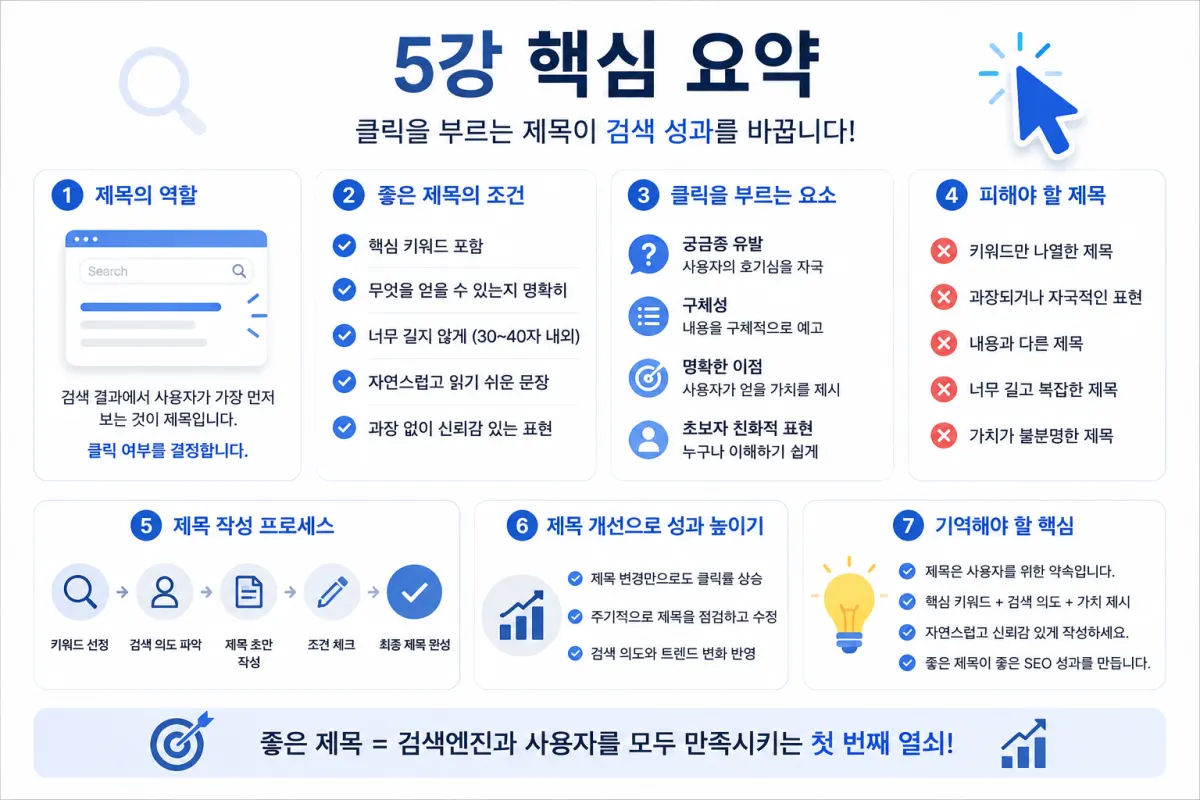
Key Takeaways from This Lesson
This lesson covered how to write SEO titles that boost click-through rates.
The key points to remember are:
A title is the first impression in search results.
Naturally include core keywords.
Clearly communicate what users will gain from reading.
Honest titles that build trust work better long-term than exaggerated ones.
The title must accurately reflect the article's content.
Titles reflecting search intent increase click-through rates.
Continuously refine your titles even after publishing for better SEO results.
A good title isn't created for search engines—it's a promise to users that makes them want to click first.
In the next lesson, we'll dive into "How to Properly Use H1, H2, and H3 Tags" to create content structures that search engines understand easily.
FAQ
Why is a good title important for SEO?
A good title serves as the first impression in search results, influencing whether users click on your content. It should include keywords naturally, reflect user intent, and accurately summarize the article's content.
How long should an SEO title be?
Keep SEO titles between 30-40 characters to avoid truncation in search results while clearly conveying the main point.
Can exaggerated titles improve click-through rates?
Exaggerated titles might get initial clicks, but they often lead to higher bounce rates and lower user satisfaction. Google prioritizes user experience, so honest titles are better for long-term SEO success.
Korean Source
This article is an English localization of a Korean-language report from BlogScore. Original: [SEO 5강] 클릭률을 높이는 SEO 제목 작성 방법