
How to Participate in Physical AI Proof-of-Work Projects: A Step-by-Step Guide


The Physical AI Proof-of-Work initiative is not just about showcasing technology—it's a program to verify whether robotics, sensors, and control systems function properly in actual environments. Typically, participation involves checking the announcement, preparing a proposal, forming a consortium, responding to evaluations, and signing an agreement. The core focus is demonstrating that your technology can be implemented directly in real-world settings.
At first glance, the name might seem complex, but the process itself is straightforward. Instead of testing technology that works well in labs, this program verifies whether it operates reliably in actual spaces like factories, logistics centers, agriculture, caregiving, or mobile environments.
The Core Meaning of Physical AI Proof-of-Work
Physical AI refers to artificial intelligence connected to physical devices—such as robotic arms, mobile robots, autonomous vehicles, and smart equipment—not just models that work on screens. Therefore, the proof-of-work program evaluates not only technical performance but also field usability, safety, response speed, and error recovery capabilities.
For example, if you're developing a robot to sort boxes in a logistics center, it's more important whether it can recognize objects under changing lighting conditions, stop when people suddenly walk by, or maintain stable operation over long periods than simple recognition accuracy. This practical validation is the essence of the proof-of-work program.
You can explore similar articles in one place.
View Related ArticlesBasic Process for Participation
The typical process begins by reviewing the announcement and checking eligibility requirements, followed by teams formed by lead institutions or participating companies submitting proposals. After document evaluation and presentation reviews, selected participants sign agreements and begin implementing their proof-of-work plans.
A common point of confusion is whether just having technology is sufficient. In reality, the program evaluates not only technical capabilities but also the test location, operational personnel, equipment setup plans, and data collection methods. It's about demonstrating that your plan can be executed effectively, not just creating a good product.
For instance, if a startup proposes an AI-based inspection robot, their proposal should include:
- Where the testing will take place
- Who will handle operation and management
- What data will be collected during the proof-of-work period
- How to address potential failures
A well-structured plan like this is more likely to be viewed as "feasible" in evaluations.
Frequently Evaluated Criteria
The Physical AI Proof-of-Work program typically assesses technical capability, business viability, field applicability, and broader impact. Technical capability refers to model performance or control stability; business viability means future commercialization potential; field applicability measures suitability in real operating environments; and broader impact evaluates the possibility of expanding to other industries.
What matters most is specificity—not flashy language. Saying "innovative AI robot" is weak, but stating "targeting 95% or higher classification accuracy in indoor logistics settings with continuous 8-hour daily operation data collection over three months" is much more convincing.
Judges are more interested in how and where your technology will solve problems than just claiming it's great. Therefore, it's better to present verification metrics before expected outcomes in your documentation.
Why Proof-of-Work Sites and Centers Are Necessary
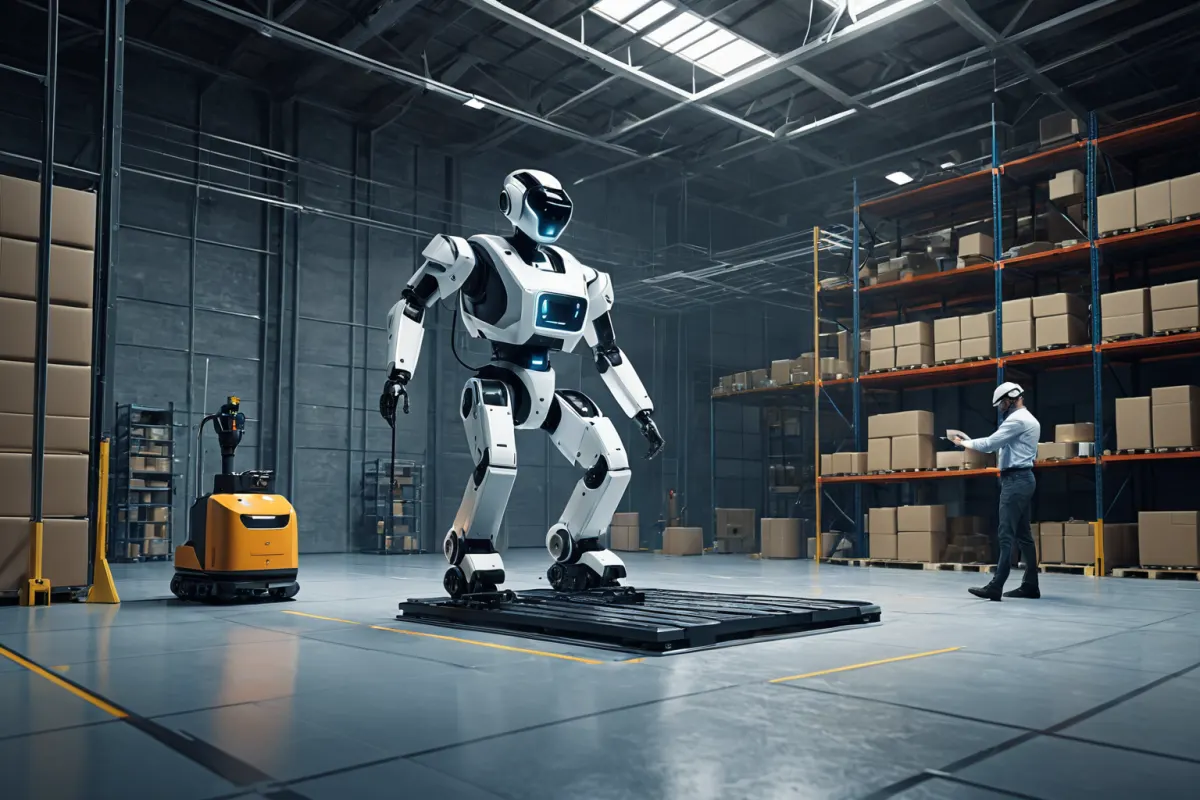
Physical AI is difficult to test in typical office environments because it requires moving equipment, safety measures, and repeated testing. This is why proof-of-work sites or centers are important. Terms like "Jeonbuk Physical AI Proof-of-Work Site" or "Physical AI Proof-of-Work Lab" exist for this reason.
These spaces aren't just rental facilities—they serve as test beds for securing field data, connecting equipment, and verifying risk factors. Regional proof-of-work programs often involve collaboration between local universities, research institutions, and businesses, making it important to understand the cooperative structure in advance.
For example, a setup like Jeonbuk University's Physical AI Proof-of-Work Lab connects university research capabilities with corporate product development goals. In such cases, participants aren't just submitting technology—they're likely preparing joint research plans and experimental operation plans as well.
Common Oversights in Preparation
The most overlooked aspect is data preparation. Since Physical AI relies on real movement and environmental changes, failing to specify which sensor data will be collected and at what intervals makes it difficult to produce clean proof-of-work results.
Another key point is safety. When robots or autonomous equipment are involved, potential accident scenarios must be addressed in advance, along with operational standards like emergency stops, role separation, and designated testing zones. Project managers trust plans that operate smoothly without issues more than flashy demos.
For example, if you're participating in a project involving indoor autonomous mobile robots for material transport, your plan should clearly specify how the robot handles narrow corridors (slowing down), detects people (stopping after warning), and manages low battery (automatically returning).
Step-by-Step Preparation Guide
If you're starting out, following this sequence will reduce stress:
- Check eligibility and deadlines in the announcement
- Determine if your technology is suitable for proof-of-work testing
- Secure test locations and partner institutions
- Define performance metrics and data collection methods
- Create your proposal by aligning budget, equipment needs, and plans
This approach shows that the Physical AI Proof-of-Work program is less like a vague contest and more like submitting an operational plan. It's especially important to clearly define roles between lead institutions and demand-side organizations—such as who provides equipment and who handles operations.
Common terms in participation documents include "field validation," "commercialization potential," "proof-of-work environment suitability," and "performance verification metrics." Understanding these keywords will make it easier to read proposals or supporting materials.
Key Points for Regional Programs (e.g., Jeonbuk Physical AI Proof-of-Work)
Regional programs are typically designed with connections to local industrial ecosystems. Therefore, when considering a program like the Jeonbuk Physical AI Proof-of-Work initiative, it's important to check if it aligns with the region's main industries. Industries requiring strong field presence—such as agriculture, manufacturing, logistics, and mobility—are often well-matched for proof-of-work needs.
Regional programs frequently involve collaboration between universities, research institutes, businesses, and local governments, making consortium participation more common than individual submissions. In such cases, clearly defining roles among technology providers, field testing locations, and operational support organizations is key.
When searching for information, you'll find terms like "Physical AI Proof-of-Work," "Physical AI proof-of-work lab," "Physical AI proof-of-work site," and "core technology proof-of-work" mixed together. Ultimately, these refer to the same type of initiative, so focusing on the purpose and scope outlined in the official announcement is more accurate than relying on the name.
FAQ
Q1: Can anyone participate in Physical AI Proof-of-Work programs?
It depends on the specific call for proposals, but typically businesses, universities, research institutions, and consortia are the main participants. Individual participation is less common than corporate or collaborative group submissions.
Q2: What's the most important thing to prepare for this program?
More important than technical documentation is having a clear test location, operational plan, performance metrics, and data collection strategy. You need to show precisely how you'll validate your technology in real conditions.
Q3: Can prior field experience help if the proposal is weak?
Yes, it can be beneficial. If you have evidence of testing in similar environments, safety operation records, or customer feedback, it's easier to demonstrate proof-of-work feasibility and receive higher evaluation scores.
The Physical AI Proof-of-Work program isn't about "showing" your technology—it's about proving it works in real-world conditions. When preparing for participation, align with the announcement requirements, test environment, and collaboration structure first, then fill in performance metrics and expected outcomes. Since specific details vary by program, always confirm against the official call for proposals before applying.
Continue exploring similar topics.
View Category ArticlesFAQ
Q1: Can anyone participate in Physical AI Proof-of-Work programs?
It depends on the specific call for proposals, but typically businesses, universities, research institutions, and consortia are the main participants. Individual participation is less common than corporate or collaborative group submissions.
Q2: What's the most important thing to prepare for this program?
More important than technical documentation is having a clear test location, operational plan, performance metrics, and data collection strategy. You need to show precisely how you'll validate your technology in real conditions.
Q3: Can prior field experience help if the proposal is weak?
Yes, it can be beneficial. If you have evidence of testing in similar environments, safety operation records, or customer feedback, it's easier to demonstrate proof-of-work feasibility and receive higher evaluation scores.
Korean Source
This article is an English localization of a Korean-language report from BlogScore. Original: 피지컬 AI 실증 사업 추진 방식과 참여 절차 정리